
Mastering the Water Pump Replacement on Your 1988 Ford Ranger
A Comprehensive Guide to Restoring Your Truck's Cooling System
- Crucial First Steps: Begin by ensuring the engine is cool and the cooling system is completely drained. This prevents scalding and provides a safer working environment.
- Fan Clutch Nut Direction: Be aware that the fan clutch nut on many 1988 Ford Rangers (especially 2.9L models) is a left-hand thread. This means you turn it clockwise to loosen it.
- Importance of Proper Torque: While not always readily available for older models, applying the correct torque specifications for the water pump bolts is vital for preventing leaks and ensuring long-term reliability.
Understanding Your 1988 Ford Ranger's Cooling System
The water pump is a critical component in your 1988 Ford Ranger's cooling system, responsible for circulating coolant throughout the engine block, cylinder head, and radiator. This continuous flow helps dissipate the immense heat generated during the combustion process, preventing your engine from overheating. A faulty water pump can lead to significant engine damage, including leaks, head gasket damage, and ultimately, a failed motor. Recognizing the symptoms of a failing water pump, such as coolant leaks, an engine running hotter than normal, or unusual noises from the pump bearing, is crucial for timely replacement.
While the basic function of a water pump remains consistent across various Ford Ranger models, the specific steps and tools required for replacement can vary slightly depending on the engine size (e.g., 2.3L, 2.9L, 3.0L). This guide focuses on the general process, highlighting key considerations for the 1988 model year.
Tools and Materials Required for Water Pump Replacement
Before you begin, gather all the necessary tools and materials to ensure a smooth and efficient replacement process. Having everything on hand will minimize interruptions and allow you to focus on the task.
Essential Tools
- Wrench set (including open-end and socket wrenches)
- Ratchet and extensions
- Torque wrench
- Drain pan for coolant
- Pliers
- Screwdrivers
- Fan clutch holding tool (e.g., T84T-6312-C) or a suitable alternative
- Shop rags or towels
- Wire brush for cleaning mating surfaces
Required Materials
- New water pump (ensure it's compatible with your 1988 Ford Ranger's engine, e.g., 2.9L, 2.3L)
- New water pump gasket (often included with the pump)
- New coolant (check your owner's manual for the correct type and capacity)
- RTV silicone sealant (optional, but recommended for a better seal)
- New accessory drive belts (recommended, especially if old ones show wear)
- New radiator hoses (upper and lower, recommended for preventative maintenance)
You can find water pumps and related components for your 1988 Ford Ranger at various auto parts stores like O'Reilly Auto Parts, Advance Auto Parts, RockAuto, and through OEM parts suppliers. Prices for water pumps can range from approximately $30.99 to over $80, depending on the brand and supplier.
Step-by-Step Water Pump Replacement Procedure
Replacing the water pump on your 1988 Ford Ranger involves a series of carefully executed steps. Adhering to these instructions will help ensure a successful repair.
Preparation and Disassembly
1. Safely Prepare the Vehicle
Ensure the engine is completely cool to avoid severe burns from hot coolant or engine components. Park the vehicle on a level surface, engage the parking brake, and consider placing wheel chocks for added safety. Disconnect the negative terminal of the battery to prevent accidental electrical issues.
2. Drain the Cooling System
Place a large drain pan under the radiator. Open the radiator drain cock (usually located at the bottom of the radiator on one of the end tanks, often on the driver's side) and remove the radiator cap to allow the coolant to drain completely. Some coolant may also drain from the engine block when the water pump is removed, so keep the drain pan in position.
3. Remove the Fan Shroud and Fan Assembly
To gain access to the water pump, you'll need to remove the fan shroud. This typically involves removing a few bolts (often two 10mm bolts at the top). Once the bolts are out, carefully lift the fan shroud from the vehicle. Next, address the fan and fan clutch. The fan clutch is attached to the water pump shaft. For 1988 Ford Rangers, particularly with the 2.9L engine, the fan clutch nut is often a left-hand thread. This means you will turn the nut clockwise to loosen it. You may need a specialized fan clutch holding tool (like Ford tool T84T-6312-C) and a large wrench to loosen this nut. If you don't have the special tools, some techniques involve using a long wrench and applying tension to the belt while trying to loosen the nut. Alternatively, you might need to loosen the water pump pulley bolts while the belts are still providing some tension to help with the fan clutch nut.
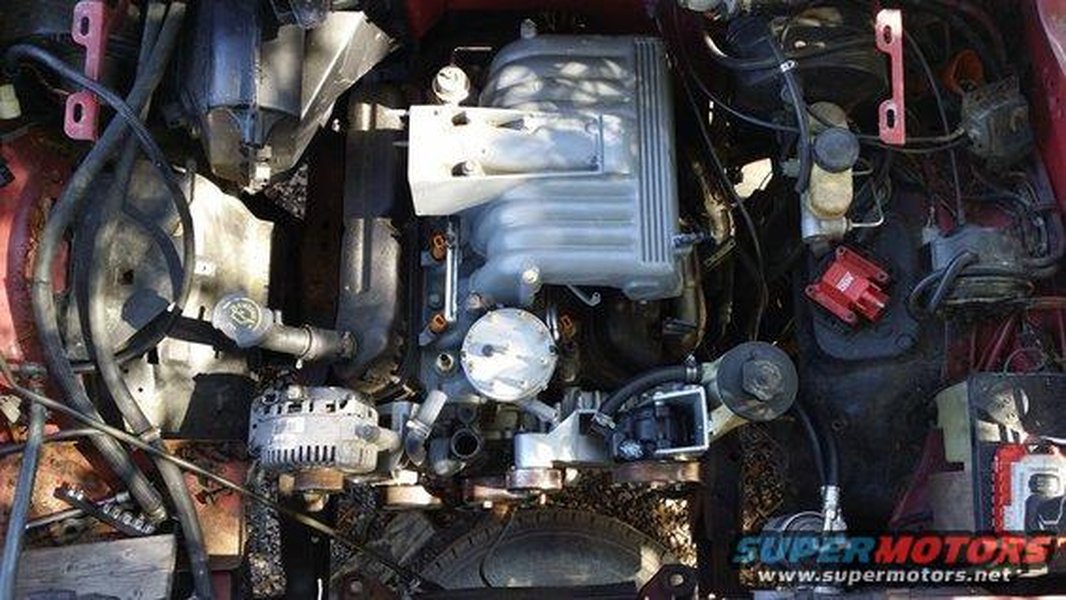
An overhead view of a 1988 Ford Ranger engine bay.
4. Loosen and Remove Drive Belts and Pulley
Locate the accessory drive belt tensioner. On some models, you might not have an automatic tensioner, and you'll need to manually loosen components like the alternator to relieve belt tension. Once tension is released, remove the serpentine belt(s). Next, loosen the four bolts that attach the water pump pulley to the water pump hub. After loosening, remove the water pump pulley.
5. Disconnect Hoses and Braces
Disconnect the lower radiator hose from the water pump. Also, disconnect the heater hose at the pump. Some models may require removing the alternator adjusting arm and any throttle body braces that obstruct access to the water pump.
6. Remove the Old Water Pump
Carefully remove the water pump-to-engine attaching bolts. There are typically 11 bolts holding the water pump in place. Note the location of each bolt as they may vary in length. Once all bolts are removed, gently pry the old water pump assembly away from the engine block. Be prepared for any remaining coolant to spill. Discard the old gasket.
Installation and Reassembly
1. Prepare the Mounting Surface
Thoroughly clean the old gasket material from the engine block's mounting surface. Use a gasket scraper or a wire brush, being careful not to damage the surface. A clean, smooth surface is essential for a proper seal with the new water pump gasket.
2. Install the New Water Pump
Apply a thin, even coat of RTV silicone sealant to both sides of the new water pump gasket (if not pre-applied to the pump). Carefully position the new gasket onto the water pump, then align the new water pump with the mounting holes on the engine block. Insert the water pump bolts. Start all bolts by hand to ensure they are not cross-threaded. Torque the water pump bolts incrementally in a crisscross pattern to the manufacturer's specified torque. For a 2.9L engine, the torque specification for the water pump bolts is typically around 14-16 ft-lbs (17-21 Nm). Refer to a service manual for the exact specifications for your specific engine.
3. Reconnect Hoses and Accessories
Reconnect the lower radiator hose and the heater hose to the new water pump. Reinstall any alternator adjusting arms or throttle body braces that were removed earlier.
4. Reinstall Pulley, Belts, and Fan Assembly
Reattach the water pump pulley, tightening its four bolts. Reinstall the accessory drive belts, ensuring they are properly routed and tensioned. Reinstall the fan assembly and fan shroud. Remember, the fan clutch nut is often a left-hand thread, so turn it counter-clockwise to tighten it.
5. Refill Cooling System and Bleed Air
Close the radiator drain cock. Refill the cooling system with the appropriate coolant. It's often recommended to elevate the front end of the truck slightly when refilling to help air escape. Start the engine and run the heater on high (if applicable) to open the cooling system's internal gates and circulate the coolant. Monitor the temperature gauge closely. As the engine warms up, the thermostat will open, allowing coolant to flow through the entire system. Continuously check the coolant level in the radiator and reservoir, topping off as needed until the system is full and no more air bubbles are visible. Check for any leaks around the new water pump and hose connections.
Cost and Complexity Assessment
The cost and complexity of replacing a water pump on a 1988 Ford Ranger can vary based on several factors, as illustrated in the radar chart below. This chart provides a general assessment of different aspects of the replacement process.
As the radar chart illustrates, the "Part Cost" for a water pump remains relatively consistent whether you choose to do it yourself or have a professional perform the repair. However, the "Labor Complexity," "Tool Requirement," and "Time Investment" vary significantly. An experienced DIYer will find the task less complex and quicker, requiring fewer specialized tools compared to a novice. A professional mechanic, with their expertise and specialized tools, will complete the job with the least time and effort, and significantly reduce the "Risk of Additional Damage." The "Risk of Additional Damage" is highest for a novice due to potential errors during disassembly or reassembly, such as improper torqueing or damaging other components. The average cost for a Ford Ranger water pump replacement by a professional can range between $604 and $731, which largely covers the labor.
Visual Guidance for Water Pump Replacement
Watching a video tutorial can provide invaluable visual context and tips that complement written instructions. Below is a highly relevant video demonstrating a water pump replacement on a 1988 Ford Ranger 2.9L engine. This video provides a direct visual walkthrough of the process, helping you understand each step more clearly, from draining the coolant to managing the fan clutch and finally reassembling the components.
This video focuses specifically on the 2.9L engine, which is common in 1988 Ford Rangers, addressing nuances like the left-hand thread on the fan clutch nut and navigating the tighter spaces. It’s an excellent resource for anyone undertaking this repair, offering practical advice that might not be fully conveyed in text alone.
Common Issues and Troubleshooting Tips
While replacing a water pump is a straightforward repair for many, certain challenges can arise, especially with older vehicles like the 1988 Ford Ranger. Being aware of these potential issues can help you troubleshoot effectively.
Fan Clutch Nut Issues
As mentioned, the fan clutch nut on some 1988 Ford Rangers is a left-hand thread, meaning it loosens by turning clockwise. Many individuals struggle with this, attempting to loosen it counter-clockwise, which only tightens it further. If you find the fan clutch wrench set too thick to fit between the pulley and the water pump, you may need a thinner wrench or a specialized tool.
Stuck Bolts and Gaskets
Over time, bolts can corrode and become difficult to remove. Apply penetrating oil to stubborn bolts and allow it to soak. Use a breaker bar if necessary, but be careful not to strip the bolt heads. Similarly, old gaskets can be stubbornly adhered to the engine block. Take your time to thoroughly scrape off all old gasket material to ensure a clean mating surface for the new pump, preventing future leaks.
Air Pockets in Cooling System
After replacing the water pump and refilling the coolant, it's critical to bleed any trapped air from the cooling system. Air pockets can lead to localized overheating and inadequate coolant circulation. Running the engine with the heater on high and ensuring the front of the vehicle is slightly elevated can help purge air. Continuously monitor the coolant level and temperature gauge during this process.
Signs of a Failing Water Pump
A water pump failure can manifest in several ways:
- Coolant Leaks: Often, a leaky water pump is indicated by coolant dripping from the front of the engine, especially from the weep hole near the pump bearing.
- Overheating Engine: If the water pump isn't circulating coolant effectively, the engine temperature will rise, potentially leading to overheating.
- Whining or Grinding Noises: Worn bearings within the water pump can produce a distinct whining, grinding, or howling sound that changes with engine RPM.
- Loose Pulley: If the water pump pulley wobbles or has excessive play, it indicates a failing bearing.
Comparison of Water Pump Brands
When selecting a new water pump for your 1988 Ford Ranger, you'll encounter various brands, each with its own reputation for quality and price point. It's important to consider which brand offers the best balance for your needs.
| Brand | Typical Price Range | Quality/Reliability | Availability | Notes |
|---|---|---|---|---|
| Motorcraft (OEM) | Higher | Excellent (OEM Fit and Finish) | Ford dealerships, specialized online retailers | Designed specifically for Ford vehicles; often includes factory warranty. |
| Gates | Mid-range | Very Good (Reputable aftermarket) | Most auto parts stores, online retailers | Known for belts and hoses, their water pumps are generally well-regarded. |
| GMB | Mid-range | Good | Most auto parts stores, online retailers | A common aftermarket choice, often providing good value. |
| Duralast (AutoZone) | Mid-range | Good (Store brand) | AutoZone stores | Store brand, often comes with a good warranty, quality can vary by specific part. |
| Carquest Premium (Advance Auto Parts) | Mid-range | Good (Store brand) | Advance Auto Parts stores | Similar to Duralast, a house brand offering decent quality and warranty. |
| SKP / TRQ | Lower to Mid-range | Fair to Good | Online retailers (e.g., 1A Auto, PartsGeek) | Often more budget-friendly options, suitable for those looking to save on parts cost. |
While choosing an OEM (Original Equipment Manufacturer) part like Motorcraft often guarantees the best fit and longevity, aftermarket brands such as Gates and GMB offer reliable alternatives at a more accessible price point. Store brands like Duralast and Carquest Premium can also be viable options, often backed by their respective retailers' warranties.
Frequently Asked Questions
What are the common symptoms of a bad water pump on a 1988 Ford Ranger?
Is the fan clutch nut on a 1988 Ford Ranger a left-hand thread?
Do I need special tools to replace the water pump?
How much does it cost to replace a water pump on a 1988 Ford Ranger?
Conclusion
Replacing the water pump on your 1988 Ford Ranger is a manageable task for most DIY enthusiasts with the right tools, information, and a bit of patience. By following the step-by-step instructions outlined in this guide, understanding the nuances like the left-hand thread of the fan clutch nut, and taking precautions for a clean installation and proper coolant bleeding, you can successfully restore your truck's cooling system. This repair not only saves you money on labor costs but also provides valuable experience in maintaining your classic Ford Ranger, ensuring it continues to run reliably for years to come.
Recommended Searches
- Explore detailed engine diagrams for the 1988 Ford Ranger 2.9L V6.
- Learn how to properly flush your Ford Ranger's cooling system.
- Understand common causes and solutions for Ford Ranger overheating problems.
- Discover the recommended coolant types for your 1988 Ford Ranger.
