
Exploring 2-Adic Valuation and Iwasawa Theory: A Detailed Analysis
An in-depth synthesis of advanced number theory concepts with comprehensive insights
Key Insights at a Glance
- 2-Adic Valuation Fundamentals – Understanding the measure of evenness and properties across integers and rational numbers.
- Iwasawa Theory Essentials – Exploring the structure of number fields, class groups, and the intimate connection to p-adic L-functions.
- Interplay and Applications – Investigating how 2-adic valuation provides critical tools within Iwasawa theory and broader number theory research.
Comprehensive Examination of 2-Adic Valuation
Fundamental Definitions and Interpretations
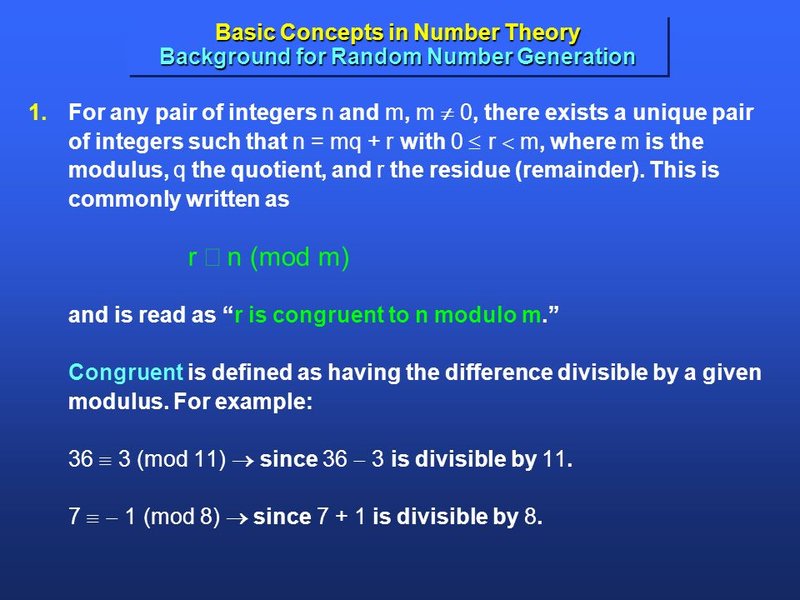
The 2-adic valuation is a specialized version of the p-adic valuation focusing on the prime number 2. For any nonzero integer n, the 2-adic valuation v₂(n) is defined as the largest natural number k such that 2k divides n. This valuation provides a unique metric for measuring the "evenness" or divisibility properties of integers and can be naturally extended to rational numbers.
Mathematical Expression
For an integer n, if n = 2k·m with m odd, then v₂(n) = k. This also induces the 2-adic absolute value defined as |n|₂ = 2−v₂(n), a measure distinct from the usual absolute value.
Analytical Implications and Applications
The concept plays a pivotal role in analyzing arithmetic sequences such as Fibonacci sequences or Stirling numbers. Researchers have deduced properties for quadratic sequences and other combinatorial structures using the 2-adic valuation framework. For instance, when analyzing the 2-adic valuation of the n-th Fibonacci number or various quadratic polynomials, the valuation reveals patterns of boundedness, unboundedness, and periodicity that provide deeper insight into their structure.
Beyond integer sequences, extensions have been examined to incorporate rational and even real numbers under certain conditions. This characteristic makes 2-adic valuation a versatile tool in modern number theory, impacting the study of class groups, elliptic curves, modular forms, and various L-functions.
In-Depth Exploration of Iwasawa Theory
Structural Overview and Core Themes
Iwasawa theory is a branch of algebraic number theory that investigates the intricate structure and growth of algebraic objects, predominantly ideal class groups in infinite towers of number fields. Developed initially by Kenkichi Iwasawa in the mid-20th century, this theory harnesses p-adic methods to unravel the asymptotic behavior of class numbers in cyclotomic fields.
Cyclotomic Fields and Ideal Class Groups
A central object of study in Iwasawa theory is the cyclotomic field, created by adjoining roots of unity to the rational numbers. In these fields, ideal class groups reveal significant information about the underlying arithmetic structure. The theory posits that there exists a deep connection between the p-adic properties of L-functions and the growth patterns of these groups.
Main Conjecture and p-adic L-Functions
One of the cornerstones of Iwasawa theory is the Main Conjecture, which relates the asymptotic behavior of class numbers in cyclotomic extensions to special values of p-adic L-functions. This conjecture, proven by Mazur and Wiles, has been fundamental in linking analytic properties (via L-functions) with algebraic invariants (via class groups) in power series derived from the p-adic setting.
Furthermore, examinations of p-adic L-functions within this framework shed light on deep arithmetic phenomena, such as the distribution of primes and arithmetic properties of modular forms.
Interrelation with 2-Adic Valuation
Although 2-adic valuation and Iwasawa theory address different aspects of number theory, there exists an important crossover. In the study of ideal class groups using Iwasawa theory, the 2-adic valuation is often used to measure structures within the group. In particular, filtrations on these groups can be defined via 2-adic valuations, thereby providing a refined analysis of their arithmetic properties.
Applications of 2-adic valuation in Iwasawa theory extend to investigating elliptic curves and modular forms. For example, by analyzing the 2-adic valuation of L-functions related to elliptic curves, researchers glean insights into the behavior and distribution of rational points on these curves.
Integration Through Visual and Tabular Representation
Radar Chart Overview
The following radar chart illustrates the relative emphasis and interplay between various facets of 2-adic valuation and Iwasawa theory, as synthesized from multiple research directions:
Tabular Summary of Research Aspects
The table below provides a comparative summary of key research topics concerning 2-adic valuation and Iwasawa theory:
| Concept | Key Features | Applications | References |
|---|---|---|---|
| 2-Adic Valuation |
|
|
|
| Iwasawa Theory |
|
|
Visual Representations with Images and Video
Relevant Images
The images below provide visual cues into the realm of advanced mathematics:
 This image represents the classical chalkboard environment where mathematical theories are developed and discussed.
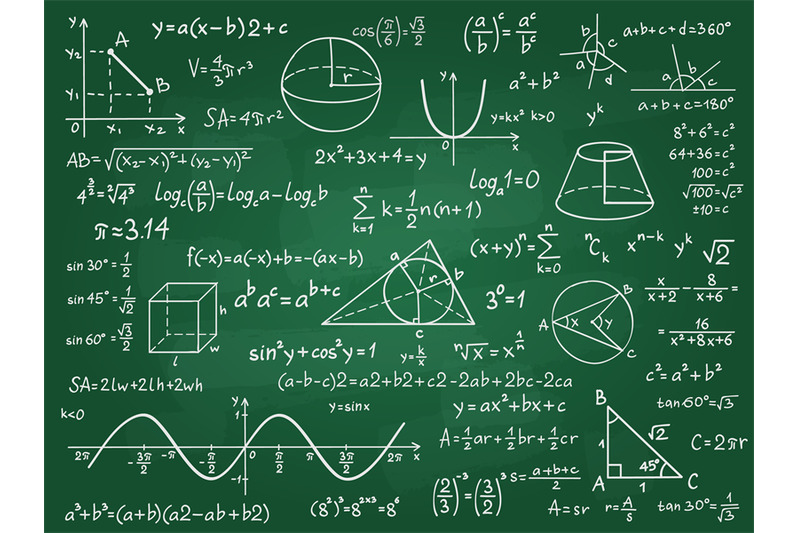 The second image highlights algebraic and calculus expressions on a chalkboard, reinforcing the educational aspects of number theory.
Embedded YouTube Video
To further elucidate the relationship between p-adic concepts and number theory, the video below offers an introduction to the intricacies of Iwasawa theory. It is an accessible resource for understanding the big picture and the subtle role played by p-adic methods in modern mathematics.
FAQ Section
What is the key idea behind 2-adic valuation?
How does Iwasawa theory utilize p-adic concepts?
What are typical applications of the 2-adic valuation?
References
- ThatsMaths Article - ThatsMaths.com
- Math StackExchange Discussion - Math.StackExchange
- 2-adic Valuation of Stirling Numbers - Project Euclid
- Iwasawa Theory - Wikipedia
- Introduction to Iwasawa Theory - Math-Unipd
Recommended Related Queries
Last updated April 3, 2025