
Unraveling the 2018 Mount Etna Eruption: A Close Call for Casualties
Exploring the seismic impacts and human resilience during one of Europe's most active volcano's recent activities.
Key Insights from the 2018 Mount Etna Event
- No Direct Fatalities: The 2018 Mount Etna eruption itself, which began on December 24, 2018, resulted in no confirmed deaths directly from volcanic activity.
- Earthquake-Related Injuries: A significant magnitude 4.8 to 5.0 earthquake on December 26, 2018, triggered by the eruption, caused injuries to at least 10 people and structural damage.
- Historical Context of Safety: Mount Etna has a remarkably low historical fatality record due to its predictable eruptive patterns and effective regional preparedness, making it one of the safest active volcanoes globally for human populations.
The 2018 eruption of Mount Etna, Europe's most active volcano, was a powerful natural event that captured global attention, yet remarkably, it did not claim any lives directly. Beginning on December 24, 2018, this flank eruption showcased the volcano's dramatic capabilities, from spewing ash plumes that disrupted air travel to generating lava flows from new fissures. While the volcanic activity itself was intense, its immediate human impact was limited to injuries caused by a related seismic event rather than the eruption's direct effects.
The Eruption's Unfolding Drama: December 2018
The December 2018 eruption was not an isolated incident but the culmination of weeks of escalating volcanic unrest. Leading up to Christmas Eve, Mount Etna exhibited signs of increasing overpressurization within its magmatic system, evidenced by weak Strombolian activity and significant seismic swarms. One notable seismic swarm occurred on November 20, 2018, affecting the western flank, followed by another crucial swarm in the south-eastern belt between December 23 and 24.
On December 24, sudden and clear signs of an impending eruption became apparent around 07:30 GMT, leading to the opening of an eruptive fissure. This marked the beginning of a four-day period of intense activity, characterized by lava flows from both new and existing fissures on the southern flank, and substantial ash emissions that led to the closure of airspace around the volcano and covered nearby villages. This Christmas 2018 event is widely considered by volcanologists as the catalyst for a new phase of vigorous paroxysmal activity that continued into 2019 and 2021, allowing the volcano to release accumulated magma through spectacular lava fountains and towering ash columns.
A radar chart illustrating the multi-faceted impact and characteristics of the 2018 Mount Etna eruption, highlighting its seismic, environmental, and human dimensions.
Seismic Shocks and Human Impact
While the eruption itself was non-fatal, a significant magnitude 4.8 to 5.0 earthquake on December 26, 2018, closely followed the onset of the eruption. This seismic event, triggered by the volcanic activity, was the primary cause of injuries and structural damage. At least 10 people sustained injuries in Sicily, with some reports indicating 28 people experiencing minor injuries, and two individuals rescued from a collapsed building. Other affected individuals sought medical attention for panic attacks or shock. The earthquake also caused damage to buildings, including homes and churches, on the eastern slopes near the volcano.
Despite the damage and injuries, it is consistently reported across multiple sources that there were no fatalities directly attributable to either the volcanic eruption or the associated earthquake. This outcome highlights the effectiveness of early warning systems, community awareness, and prompt emergency responses by Italian authorities.
A Historical Perspective on Etna's Safety Record
Mount Etna's 2018 eruption further underscores its unique historical record concerning human fatalities. Despite being one of the world's most active volcanoes, Etna has an extraordinarily low number of confirmed deaths directly linked to its eruptions throughout recorded history. Since approximately 1500 B.C., only 77 confirmed deaths have been directly attributed to Etna's eruptive activity. The most recent confirmed fatalities before 2018 occurred in 1987, when two tourists tragically died during a sudden explosion near the summit. Interestingly, even the devastating 1669 eruption, which famously destroyed the city of Catania, resulted in no reported deaths, largely due to the slow-moving nature of the lava flows, allowing residents ample time to evacuate.
The relatively low fatality count from Etna's eruptions is often attributed to several factors:
- Predictable Eruptive Style: Etna's eruptions are often effusive, involving slow-moving lava flows that allow for timely evacuations.
- Extensive Monitoring: Continuous and advanced monitoring systems provide crucial early warnings of impending activity.
- Public Awareness and Preparedness: Local populations are generally well-informed about volcanic risks and preparedness measures.
Visualizing the Eruption's Impact and Context
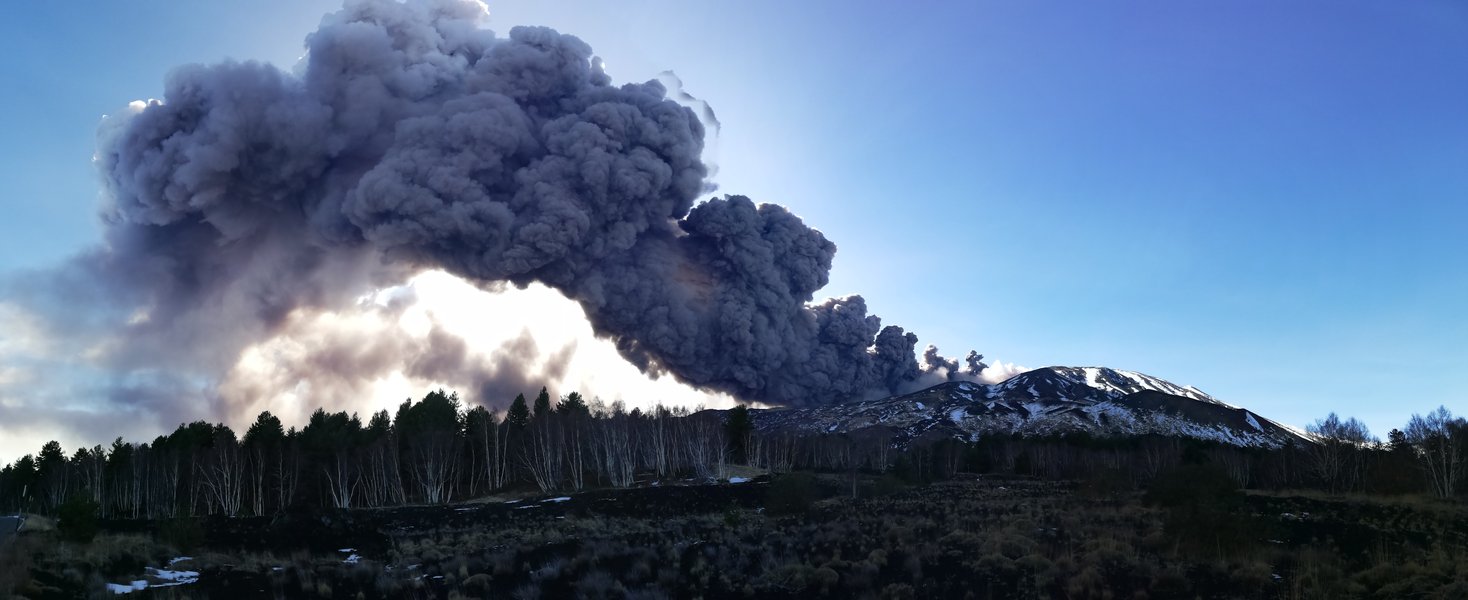
Mount Etna erupting on December 24, 2018, sending ash plumes skyward.
The images and video footage from the 2018 eruption vividly capture the spectacle and the immediate aftermath. The eruption on Christmas Eve led to dramatic scenes of ash plumes and lava flows, forcing the closure of nearby airspace, including Catania Airport. The associated earthquake further complicated the situation, leading to widespread concern but, thankfully, no loss of life.
The Mount Etna 2018 Eruption in Video
To truly grasp the scale and dynamic nature of the 2018 Mount Etna eruption, the video "Etna erupts on Christmas Eve 2018: huge lava flow travels..." offers a compelling visual account. This footage captures the new flank eruption that commenced on December 24, 2018, illustrating the opening of new fractures in the volcano's summit area and the subsequent movement of significant lava flows. It provides an immersive perspective on the event, showcasing the raw power of Etna and the immediate environmental changes it instigated, from incandescent lava streams against the night sky to ash plumes affecting local visibility.
Video capturing the eruption of Mount Etna on Christmas Eve 2018, showing immense lava flows.
The video serves as a crucial documentation of the eruption's progression, allowing viewers to witness the new flank eruption, the formation of fissures, and the impressive lava flows. This footage not only highlights the immediate visual impact of the eruption but also provides a dynamic understanding of the geological processes at play, underscoring why such events, despite their intensity, are often managed without direct fatalities due to the nature of Etna's effusive eruptions and robust monitoring.
Key Characteristics of the 2018 Eruption
The 2018 Mount Etna eruption, classified as a Volcanic Explosivity Index (VEI) 2 event, though relatively small in VEI terms, was significant for its intensity and the associated seismic activity. The primary characteristics included:
- New Eruptive Fissure: The opening of a new fissure on the southeastern flank, a key geological feature of the event.
- Lava Flows and Ash Emissions: Significant lava flows and ash plumes that disrupted local life and air travel.
- Extensive Seismic Swarm: Over 130 earthquakes, including the notable magnitude 4.8-5.0 tremor, accompanied the eruption, impacting a wide area.
- Property Damage: More than 400 buildings were damaged, with some partial collapses, predominantly due to the earthquake.
Impact and Mitigation Table
The table below summarizes the various impacts of the 2018 Mount Etna eruption and the factors that helped mitigate potential fatalities.
| Impact Category | Details of Impact | Mitigation Factors / Outcomes |
|---|---|---|
| Direct Volcanic Activity | Lava flows from new fissures, significant ash plumes. | No direct fatalities due to slow lava movement and effective air traffic control. |
| Seismic Activity | Magnitude 4.8-5.0 earthquake (Dec 26), numerous smaller tremors. | At least 10 injuries (physical, panic attacks), no fatalities. Rapid emergency response. |
| Infrastructure Damage | Over 400 buildings damaged, including homes and churches; roads affected. | Targeted evacuations, structural resilience in many buildings, quick recovery efforts. |
| Airspace & Transportation | Airspace closure around Mount Etna, flight disruptions at Catania Airport. | Temporary, managed disruptions; rerouting of flights minimized risks. |
| Environmental Impact | Ashfall on nearby villages and agricultural land. | Localized impact; measures for clean-up and agricultural support. |
The Interplay of Volcanic Activity and Seismic Events
The 2018 Etna event powerfully illustrated the complex relationship between volcanic eruptions and seismic activity. The intense overpressurization within the volcano's plumbing system not only drove the flank eruption but also created conditions conducive to the significant earthquake. This interplay is a critical aspect of understanding volcanic hazards, particularly for active volcanoes like Etna, where structural weaknesses and magma movement can combine to produce both eruptive and seismic events.
A mindmap detailing the interconnected elements and consequences of the 2018 Mount Etna eruption, from its volcanic and seismic aspects to its human impact and mitigation strategies.
Frequently Asked Questions (FAQ)
How many people died during the 2018 Mount Etna eruption?
What caused the injuries during the 2018 Mount Etna event?
Is Mount Etna typically a deadly volcano?
What kind of damage did the 2018 eruption cause?
Conclusion
The 2018 Mount Etna eruption stands as a testament to both the raw power of nature and the effectiveness of modern volcanic monitoring and emergency preparedness. Despite significant volcanic activity and a strong associated earthquake, the fact that no fatalities were recorded is a remarkable outcome. This event reinforced Mount Etna's reputation as a frequently active but relatively safe volcano, largely due to its predictable eruptive behavior and the robust safety measures in place. The injuries and property damage sustained serve as a stark reminder of the potential hazards, even in non-fatal eruptions, emphasizing the continuous need for vigilance and preparedness in volcanic regions.
Recommended Further Reading
- Explore the historical patterns and significant eruptions of Mount Etna.
- Delve deeper into the intricate relationship between volcanic eruptions and seismic events.
- Understand the advanced monitoring technologies used to predict and manage volcanic activity in Italy.
- Learn about community preparedness and evacuation strategies in areas surrounding active volcanoes like Etna.