
Unraveling the Tectonic Secrets Behind Mount Etna's 2018 Flank Eruption
The intricate dance between Earth's internal forces and volcanic instability that shaped a dramatic event.
- Magma Intrusion and Dyke Formation: The primary trigger for the 2018 flank eruption was the forceful intrusion of magma into the shallow plumbing system of Mount Etna, leading to the formation of extensive feeder dykes that fractured the volcanic edifice.
- Activation of Pre-Existing Faults: This magmatic pressure interacted critically with Mount Etna's unstable southeastern flank, activating ancient tectonic faults and causing significant ground deformation and seismic activity.
- Seismic Swarms and a Powerful Earthquake: The eruption was heralded and accompanied by intense seismic swarms and a notable Mw 4.9 earthquake, which directly facilitated the opening of eruptive fissures and demonstrated the profound coupling between volcanic and tectonic processes.
The 2018 flank eruption of Mount Etna, which commenced on December 24, 2018, was not merely a display of volcanic power but a profound demonstration of the complex interplay between deep-seated tectonic processes and the volcano's dynamic magmatic system. This event, occurring on one of the world's most active volcanoes, provided critical insights into how regional stresses and internal volcanic forces converge to trigger significant eruptive episodes.
The Genesis of the Eruption: Magma Intrusion and Fracturing
At the heart of the 2018 eruption was the forceful intrusion of magma into the shallow crust beneath Mount Etna. This process, often referred to as dyke intrusion, played a pivotal role in setting the stage for the flank eruption. A dyke is essentially a sheet-like intrusion of magma into a pre-existing fracture or a newly formed crack in the host rock. In the case of Etna in 2018, this magmatic surge caused significant strain and deformation within the volcanic edifice.
The Role of Magma Ascent and Dyke Formation
Leading up to December 24, 2018, an active intrusion of magma began to pressurize the shallow conduit system of Mount Etna. This ascending magma didn't merely push upwards; it propagated laterally, forming a North-South oriented feeder dyke approximately 4 km below sea level. While this initial dyke did not breach the surface, its propagation stretched the volcanic edifice considerably. This stretching subsequently triggered the opening of an eruptive fracture on the southeastern flank, fed by a shallower dyke that supplied magma directly to the vents.
Borehole dilatometers and continuous GPS data vividly recorded these strain changes, confirming the tensile forces exerted by the rising magma. The ground deformation was extensive and intense, characterized by an upward movement of magma and a simultaneous reactivation of the eastern flank's gravitational sliding motion. Satellite DInSAR deformation data further corroborated these observations, providing a comprehensive picture of the volcano's structural response to the magmatic intrusion.
Figure 1: Radar Chart illustrating the relative influence of key tectonic and volcanic factors on the 2018 Mount Etna flank eruption. The values are conceptual and reflect the perceived dominance of each factor.
The Tectonic Response: Earthquakes and Fault Activation
The magmatic intrusion was not an isolated event; it triggered and interacted with the pre-existing tectonic vulnerabilities of Mount Etna, leading to significant seismic activity and visible surface ruptures. This dynamic interplay between volcanic pressurization and tectonic faulting was crucial for the eruption to manifest as a flank event.
Seismic Swarms as Precursors and Accompaniments
Weeks before the eruption, Mount Etna experienced intensified Strombolian activity, particularly at the New Southeast Crater (NSEC), accompanied by ash emissions and audible explosions. Crucially, this period was marked by notable seismic swarms, indicating increasing tectonic stress. A significant swarm occurred on November 20, 2018, in the upper southern-western sector of the volcano, with hypocenters ranging from 15 to 27 km depth. These swarms signified the internal stresses building within the volcanic system, partly due to the ascending magma pushing against the brittle crust.
As the eruption unfolded on December 24, a renewed seismic swarm accompanied it. The distribution of this seismicity was highly consistent with the observed ground displacements and the formation and kinematics of the eruptive fissures. This direct correlation underscored the deep connection between the magma movement and the seismic response of the volcanic edifice.
The Pivotal Mw 4.9 Earthquake of December 26
Two days into the eruption, on December 26, 2018, a significant magnitude 4.9 (Mw) earthquake struck the southeastern flank of Mount Etna. This earthquake, located at a shallow depth of less than 1 km and approximately 5 km northwest of Acireale, was a direct consequence of the complex volcano-tectonic interaction. It caused extensive damage, injuries, and displaced over 1100 people.
The earthquake was caused by slip along fractures and faults that were activated by the dyke intrusion and the ongoing flank deformation during the eruptive episode. Surface ruptures and ground displacements directly linked to this earthquake and the dyke intrusion have been extensively documented, providing tangible evidence of the coupling between magmatic pressure and tectonic faulting. This event served as a clear demonstration of how eccentric magma upraise can release potential energy by activating peripheral faults in structurally complex volcanoes, especially those undergoing lateral spreading.
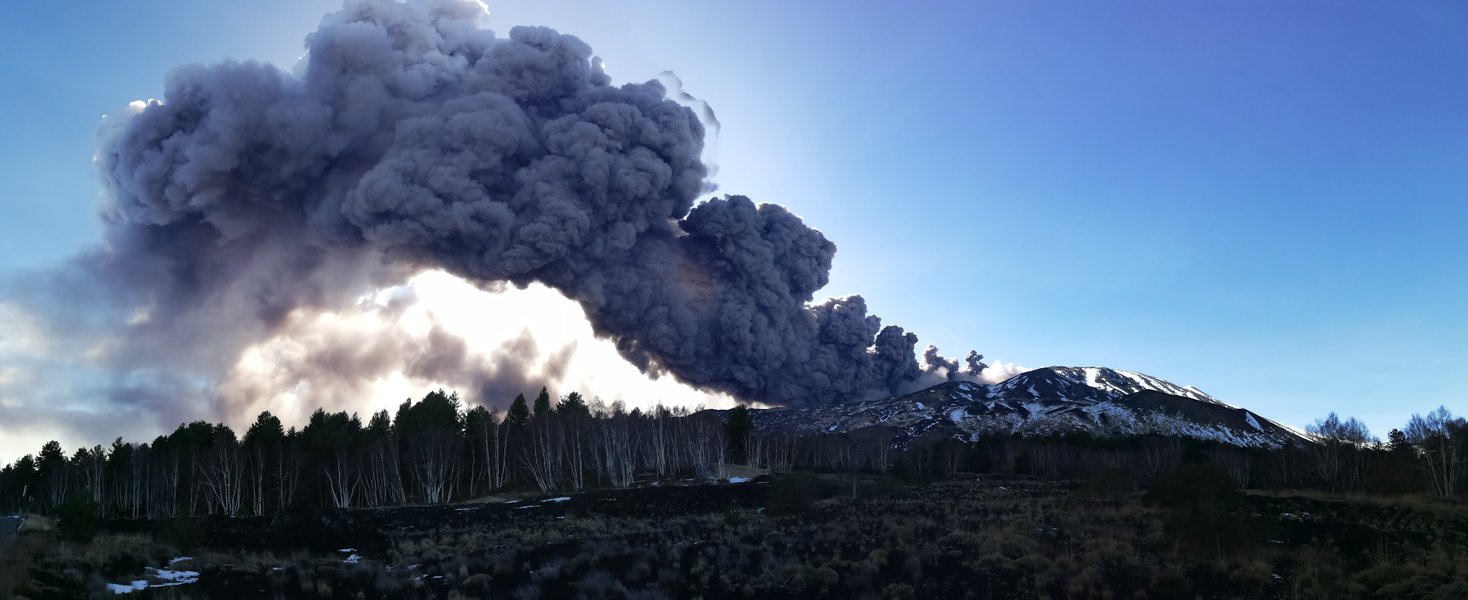
Figure 2: Mount Etna erupting on December 24, 2018, showcasing the dramatic ash plumes that accompanied the flank eruption.
Regional Tectonic Context and Flank Instability
Mount Etna's location is intrinsically linked to its complex geodynamic setting, which plays a fundamental role in its frequent eruptive activity and flank instability. This regional tectonic framework provides the backdrop against which internal magmatic processes unfold.
The Convergence of Tectonic Plates
Mount Etna is situated near the convergence zone of the African and Eurasian tectonic plates in eastern Sicily. This dynamic boundary results in a complex stress field characterized by extensional, compressional, and strike-slip faulting. The interaction of these plates leads to the subduction of the oceanic African plate beneath the Eurasian plate. This process releases water, which reduces the melting point of rocks in the mantle, thereby generating magma. The subsequent buildup of pressure from this magma within the volcano's plumbing system is a primary trigger for eruptions, releasing gases, rocks, and lava.
Lateral Spreading and Structural Weaknesses
The southeastern flank of Mount Etna is particularly susceptible to gravitational sliding and lateral spreading towards the Ionian Sea. This instability is exacerbated by the regional tectonic setting, which includes a pervasive fault system. The dyke intrusion during the 2018 eruption exploited these pre-existing tectonic weaknesses, facilitating the propagation of magma and the opening of eruptive fissures. The pressure increase from the magma ascent, coupled with the inherent instability of the flank, created a powerful feedback loop that amplified the eruption's effects.
The result was not only an eruption but also significant ground deformation, including horizontal displacements and localized collapses, particularly evident during the December 26 earthquake. This demonstrates how the volcano's dynamic setting, involving magma movement coupled with structural deformation of the edifice, fundamentally controls flank eruptions at Etna.
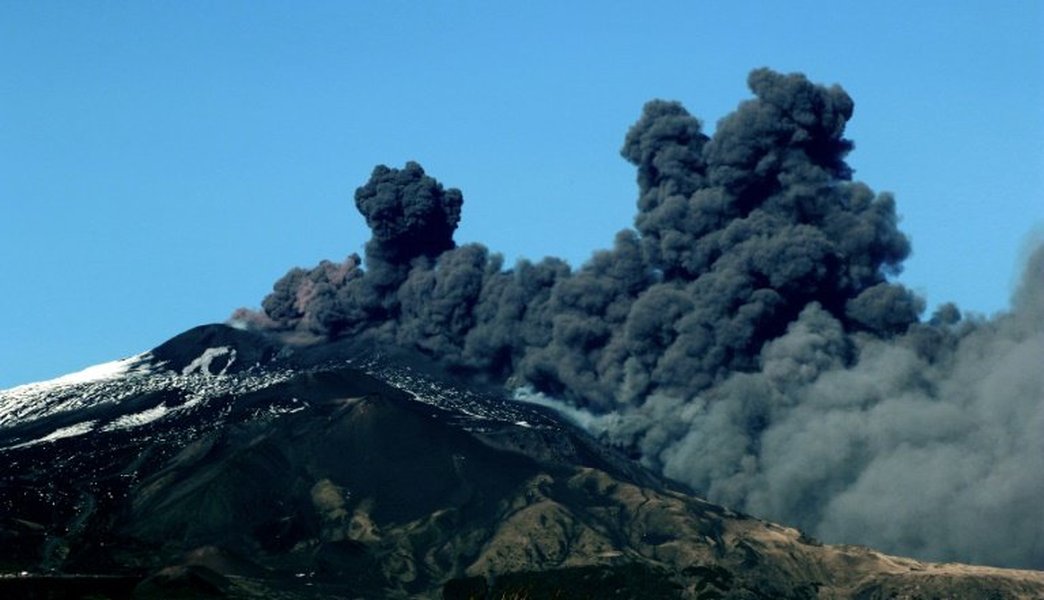
Figure 3: An aerial perspective showing Mount Etna’s ongoing eruption, illustrating the scale of the volcanic activity and ash dispersion.
The Interplay of Volcanic and Tectonic Mechanisms
The 2018 Mount Etna flank eruption serves as a prime example of a volcano-tectonic event, where magmatic processes and crustal stresses are inextricably linked. This section synthesizes the key mechanisms and their synergistic effects.
Detailed Overview of Contributing Factors
| Tectonic/Volcanic Factor | Mechanism and Contribution to 2018 Eruption | ||
|---|---|---|---|
| Magma Intrusion | A large batch of magma entered the upper feeding system, causing significant pressurization and tensile strain. This forced the formation of new fractures and dykes, providing pathways for lava to reach the surface. | ||
| Dyke Formation | A N-S trending feeder dyke formed 4 km below sea level, stretching the volcanic edifice. This led to the opening of a shallower eruptive fissure on the southeastern flank, fed by a second, shallower dyke. | ||
| Ground Deformation | Extensive upward movement of magma and reactivation of the eastern flank's gravitational sliding. Monitored by DInSAR, GPS, and tiltmeters, this deformation indicated the stress buildup preceding and during the eruption. | ||
| Seismic Swarms | Weeks of weak Strombolian activity followed by intense seismic swarms (e.g., Nov 20, 2018), with hypocenters 15-27 km deep. These indicated increasing internal pressure and stress release through faulting. | ||
| Mw 4.9 Earthquake (Dec 26) | A pivotal shallow earthquake (less than 1 km depth) directly triggered by the magma intrusion and flank deformation. It caused surface ruptures, damage, and facilitated further magma ascent by releasing accumulated stress along existing faults. | ||
| Flank Instability & Spreading | Mount Etna's southeastern flank is structurally unstable and prone to seaward movement. The magmatic pressure exacerbated this instability, activating pre-existing tectonic faults and promoting the opening of eruptive fissures. | Regional Tectonic Setting | Etna's location at the African-Eurasian plate boundary introduces extensional, compressional, and strike-slip stresses. This regional framework influences crustal weaknesses, facilitating magma ascent and contributing to the volcano's inherent instability. |
Table 1: Comprehensive breakdown of the volcanic and tectonic factors that contributed to the 2018 Mount Etna flank eruption.
Visualizing the Complex Interactions
To further illustrate the interconnectedness of these phenomena, consider the following mindmap, which visually represents how the tectonic and volcanic elements converged to trigger the 2018 eruption:
Figure 4: Mermaid.js Mindmap depicting the interconnected tectonic and volcanic factors leading to the 2018 Mount Etna flank eruption.
The mindmap clarifies that the magma intrusion directly caused ground deformation and initiated the eruption, while simultaneously activating existing tectonic faults due to the added pressure. These activated faults, situated in a region of ongoing plate convergence and flank instability, then produced significant seismic activity, including the large Mw 4.9 earthquake, which further facilitated the opening and widening of eruptive fissures.
Visual Evidence of the Eruption
The 2018 flank eruption was extensively documented, providing visual proof of the dynamic processes at play. The footage captures the intense activity and the immediate consequences of the volcano-tectonic interaction.
A Glimpse into the Event
Video 1: This video, titled "Etna erupts on Christmas Eve 2018: huge lava flow travels ...", vividly captures the initial moments of the 2018 Mount Etna flank eruption. It showcases the opening of new fractures in the summit area and the subsequent large lava flows that descended the volcano's flanks. This footage is highly relevant as it directly illustrates the eruptive manifestations that were triggered by the underlying tectonic and magmatic processes discussed, offering a real-time perspective of the event's commencement and the scale of its impact.
Frequently Asked Questions (FAQ)
What is a flank eruption?
How do seismic swarms indicate an impending eruption?
What is a dyke intrusion and how does it relate to eruptions?
Why is Mount Etna's southeastern flank particularly unstable?
What is DInSAR analysis, and how was it used in monitoring the 2018 eruption?
Conclusion
The 2018 Mount Etna flank eruption serves as a compelling case study of how volcanic and tectonic forces are intricately intertwined. The event was primarily triggered by a significant magma intrusion that led to the formation of dykes, which in turn fractured the volcanic edifice. This magmatic pressure critically interacted with the unstable southeastern flank of Etna, reactivating pre-existing tectonic faults. The seismic swarms and the powerful Mw 4.9 earthquake that accompanied the eruption were direct consequences of this volcano-tectonic coupling, demonstrating how accumulated stress was released and new pathways for magma were created. Mount Etna's location within a complex regional tectonic setting, characterized by plate convergence and flank spreading, provides the fundamental framework for such dynamic interactions, underscoring why it remains one of the most active and studied volcanoes globally.
Recommended Further Exploration
- Explore the geochemical characteristics of Mount Etna's magma and its implications for eruptive styles.
- Investigate the mechanisms and historical instances of large-scale volcano flank collapses.
- Delve into how regional tectonic stress fields influence the frequency and intensity of volcanic eruptions worldwide.
- Discover the cutting-edge technologies used for real-time monitoring of active volcanoes and forecasting eruptions.