
Beyond the Iron Curtain: How 21st Century Communism Redefines a Century-Old Ideology
Exploring the evolution of communist thought and practice from rigid state control to diverse, market-influenced, and theoretically renewed forms.
Communism, an ideology that profoundly shaped the 20th century, has not vanished but rather transformed in the 21st. Understanding contemporary communism requires looking beyond its past manifestations, particularly the Soviet model, and recognizing its diverse and often surprising adaptations in a globalized world. This article delves into the crucial differences distinguishing 21st-century communism from its 20th-century predecessor, examining shifts in economic policy, ideological underpinnings, geopolitical influence, and theoretical development.
Core Distinctions at a Glance
- Economic Pragmatism: Many states with ruling communist parties have embraced market mechanisms, a stark contrast to the centrally planned economies of the past.
- Ideological Diversification: 21st-century communism sees a broader range of interpretations, often blending with nationalism or incorporating democratic and participatory ideals, moving away from monolithic Marxism-Leninism.
- Altered Global Landscape: The collapse of the Soviet Union diminished the international communist bloc, leading to a more decentralized and less confrontational global presence for remaining and emerging communist movements.
The Blueprint of 20th Century Communism
A Century of Revolution, Centralization, and Ideological Orthodoxy
Twentieth-century communism was largely defined by the rise and influence of the Soviet Union and its allies. Following the Russian Revolution of 1917, Marxist-Leninist ideology became the cornerstone for states aiming to establish a classless society through the abolition of private property and state control over the means of production.
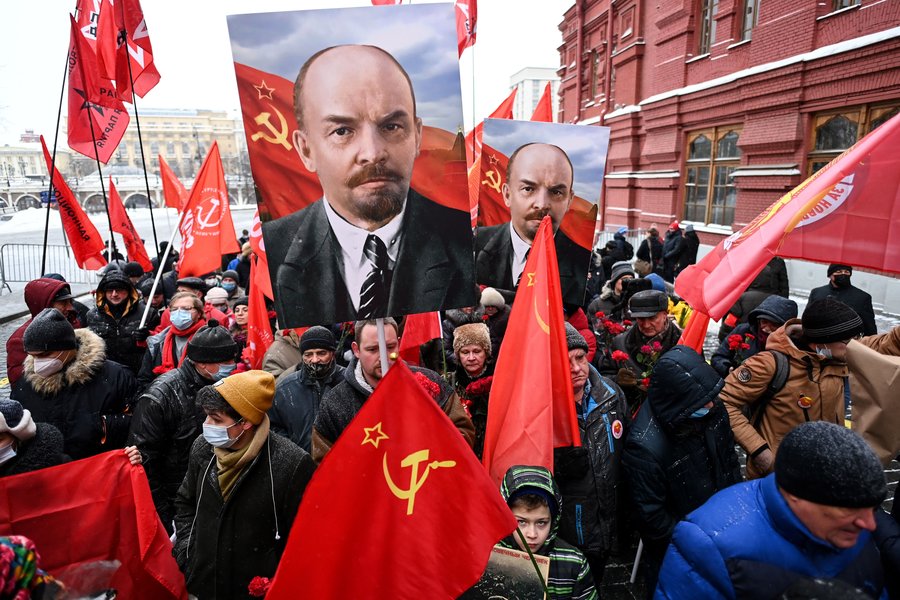
A visual of a Communist Party rally, hinting at the ideology's continued, albeit changed, presence.
Key Characteristics:
- Centralized Economic Planning: Economies were typically state-controlled, with five-year plans dictating production and distribution. Market forces were largely suppressed.
- Authoritarian Governance: Most communist states operated under single-party rule, with the Communist Party holding absolute political power. Dissent was often repressed.
- Revolutionary Zeal: Many 20th-century communist movements advocated for, or came to power through, violent revolution, aiming to overthrow existing capitalist structures.
- Internationalism and Bloc Politics: The Cold War era saw a bipolar world, with the Soviet Union leading an international communist bloc. The goal was often worldwide proletarian revolution.
- Ideological Rigidity: Marxism-Leninism, and later interpretations like Maoism, provided a strict ideological framework that guided state policy and social life.
This model, while achieving rapid industrialization in some cases, often led to economic inefficiencies, suppression of individual freedoms, and ultimately, as seen with the Soviet Union's collapse in 1991, systemic crises.
The Metamorphosis: Communism in the 21st Century
Adaptation, Pragmatism, and New Theoretical Frontiers
The fall of the Berlin Wall and the dissolution of the Soviet Union marked a profound turning point. Communist states and movements that survived or emerged in the 21st century have had to adapt to a new global order dominated by market capitalism and democratic ideals. This has led to significant departures from 20th-century norms.
Embracing Market Mechanisms: "Market Leninism"
Perhaps the most striking difference is the economic transformation in countries like China, Vietnam, and Laos. These nations, while maintaining the political dominance of the Communist Party, have integrated significant market-based reforms. This hybrid model, sometimes termed "Market Leninism," allows for private enterprise, foreign investment, and participation in global trade. This pragmatic approach contrasts sharply with the dogmatic rejection of market forces typical of 20th-century communist economies. North Korea remains a notable exception, adhering to a more traditional centrally controlled system.
Ideological Flexibility and National Focus
The rigid ideological frameworks of the past have softened. In the 21st century, communism, especially in ruling states, often intertwines with strong nationalist sentiments. The emphasis has shifted from international proletarian revolution to national development, sovereignty, and cultural identity. This provides a broader base of legitimacy. For example, "Xi Jinping Thought" in China blends Marxist principles with Chinese history and national rejuvenation goals.
Shifting Political Landscapes and Strategies
While authoritarian control persists in some states, the nature of that control and the strategies of communist movements globally have evolved. The global communist movement is far more decentralized and diminished compared to its 20th-century peak. Many contemporary communist theorists and parties advocate for gradual, institutional, or electoral paths to achieve socialist goals, rather than violent revolution. There's also an increasing focus on participatory social, economic, and political structures, aiming to counter the centralization that characterized past regimes.
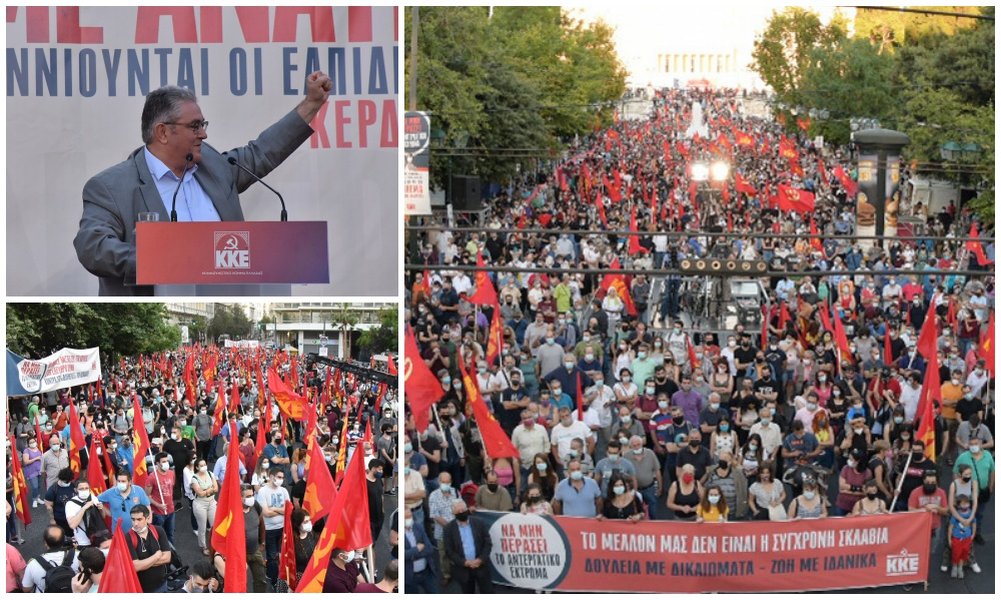
Modern communist party rally in Greece, illustrating ongoing activism within democratic frameworks.
New Theoretical Currents and Social Movements
The 21st century has witnessed a revival of interest in communism as a radical philosophical idea, with theorists re-examining its core tenets and distancing themselves from the "economism and statism" of 20th-century regimes. Movements like "Socialism of the 21st Century" in Latin America have sought to blend socialist principles with indigenous traditions, democratic processes, and a focus on gradual, non-violent change. Contemporary communist thought increasingly engages with issues such as environmentalism, feminism, anti-imperialism, and the concept of "the commons" as alternatives to capitalist commodification.
Visualizing the Transformation: Communism Across Centuries
The shift in communist ideology and practice can be complex. The following radar chart offers a visual comparison of key attributes between archetypal 20th-century communism, 21st-century state communism (e.g., China's model), and 21st-century theoretical/movement-based communism. The scores are illustrative, representing general tendencies rather than precise data points, to highlight the conceptual differences.
This chart illustrates how 20th-century communism typically scored high on economic centralization, ideological purity (in its dominant form), and revolutionary zeal. In contrast, 21st-century state communism often shows reduced economic centralization (due to market reforms) but retains high authoritarianism. Theoretical and movement-based communism in the 21st century tends to emphasize democratic participation and shows lower revolutionary zeal in the traditional sense, with varied ideological purity as new ideas are integrated.
Mapping the Ideological Evolution
Communism's journey from the 20th to the 21st century involves a branching and reinterpretation of its core ideas. The mindmap below illustrates this evolution, highlighting key shifts and the emergence of new theoretical strands. It shows how the foundational concepts of 20th-century communism led to a period of transition and critique, which in turn fostered the diverse forms of communism we see today.
& Authoritarianism"] id2c["Economic Stagnation in Centralized Economies"] id3["21st Century Communism"] id3a["State-Led Adaptations"] id3a1["Market Leninism (e.g., China, Vietnam)
- Economic Liberalization
- Maintained Party Control"] id3a2["Nationalist Inflections"] id3b["Theoretical & Movement-Based Developments"] id3b1["Socialism of the 21st Century (Latin America)
- Democratic & Participatory Focus
- Indigenous Influences"] id3b2["Renewed Philosophical Interest
(e.g., Žižek, Badiou)"] id3b3["Focus on 'The Commons'"] id3b4["Integration of Contemporary Issues
(Environment, Feminism, Anti-Globalization)"] id3b5["Decentralized & Networked Forms"] id3c["Persistence of Traditional Forms (e.g., North Korea)"] id3d["Ideological Diversification
(Eurocommunism influences, Autonomism)"]
This mindmap visualizes the lineage from the more monolithic structures of 20th-century communism to the multifaceted and often critically re-evaluated approaches of the 21st century, reflecting responses to historical experiences and new global challenges.
Comparative Overview: 20th vs. 21st Century Communism
The following table provides a side-by-side comparison of key differentiating features between 20th-century and 21st-century communist ideologies and practices. This helps to crystallize the significant shifts that have occurred.
| Feature | 20th Century Communism (Predominant Model) | 21st Century Communism (General Trends & Variations) |
|---|---|---|
| Economic System | Centrally planned state-controlled economy; abolition of private property; minimal market mechanisms. | Mixed models; "Market Leninism" in some states (e.g., China, Vietnam) with significant market integration and private enterprise; continued critique of capitalism; exploration of communal/commons-based economies in theoretical spheres. |
| Political Structure | Single-party authoritarian rule; highly centralized state. | Continued single-party rule in some states (e.g., China, Vietnam, North Korea); advocacy for democratic, participatory, and decentralized models in many theoretical currents and newer movements ("Socialism of the 21st Century"). |
| Ideology | Predominantly Marxism-Leninism, often with rigid interpretations (e.g., Stalinism, Maoism). Focus on class struggle and proletarian internationalism. | More diverse: continued Marxism-Leninism in some states but often blended with nationalism (e.g., "Xi Jinping Thought"); emergence of new theories drawing on post-structuralism, autonomism, environmentalism, and feminism. Re-evaluation of past statist approaches. |
| Path to Power/Change | Emphasis on violent revolution to overthrow capitalism. | Varied: revolutionary rhetoric persists in some groups, but many advocate for gradual, institutional, electoral, or grassroots social change. Less emphasis on violent overthrow in mainstream movements. |
| Global Stance | Strong international communist bloc (Soviet influence); Cold War bipolarity; aim for world revolution. | Diminished and decentralized international movement; remaining communist states often focus on national interests and pragmatic foreign policy; global justice movements may draw inspiration but lack unified bloc structure. |
| View of History & Past | Often celebratory of revolutionary origins, with less public critique of internal failings. | More critical engagement with the legacies of 20th-century communist states, including authoritarianism and economic shortcomings. Effort to learn from past mistakes and develop non-statist, anti-authoritarian alternatives. |
Understanding Communism: Historical and Contemporary Perspectives
To grasp the evolution from 20th to 21st-century communism, it's helpful to understand the core ideas and historical context. The following video provides an overview of communism, covering its origins, evolution, and current significance. This foundation can help contextualize the specific shifts discussed in this article.
This video from "Economic Update" discusses the historical trajectory of communism, which serves as a backdrop to understanding the specific transformations and divergences that characterize its 21st-century forms. It helps to see how classical definitions and historical applications have been challenged and reinterpreted over time.
Frequently Asked Questions (FAQ)
Is communism still a global force in the 21st century?
While not the global bloc it was during the Cold War, communism persists. A few countries are still officially ruled by communist parties (e.g., China, Vietnam, Laos, Cuba, North Korea), though their economic systems vary significantly. Additionally, communist parties and movements exist in many other countries, participating in democratic processes or advocating for radical change. There's also a renewed intellectual interest in communist theory as a critique of capitalism and a framework for alternative social organization.
How has "Market Leninism" changed traditional communist economics?
"Market Leninism," most prominently seen in China and Vietnam, represents a significant departure. It combines the continued political monopoly of the Communist Party (Leninism) with the adoption of market-based economic mechanisms (capitalism). This includes allowing private property, encouraging foreign investment, and participating in global trade. This is a stark contrast to the centrally planned, state-owned economies that characterized 20th-century communism, which largely eschewed market forces.
What is "Socialism of the 21st Century" and how does it relate to communism?
"Socialism of the 21st Century" is a term often associated with left-wing governments and movements in Latin America (e.g., initially in Venezuela under Hugo Chávez, Bolivia under Evo Morales). While drawing on socialist and sometimes Marxist ideas, it emphasizes democratic processes, participatory governance, regional cooperation, and often incorporates indigenous traditions and environmental concerns. It seeks to create alternatives to neoliberal capitalism but generally aims for gradual change through existing political systems, distinguishing it from the revolutionary, state-centric communism of the 20th century. It represents an attempt to find a unique path to socialism that avoids the perceived pitfalls of both Soviet-style communism and unregulated capitalism.
Are 21st-century communist theories less authoritarian than 20th-century practices?
Many 21st-century communist theorists are indeed trying to articulate a vision of communism that is anti-authoritarian and democratic. They explicitly critique the statism, centralization, and repression associated with 20th-century communist states. These newer theories often emphasize grassroots democracy, worker self-management, decentralization, and the importance of individual freedoms alongside collective well-being. However, it's important to distinguish these theoretical explorations from the practices of existing states ruled by communist parties, some of which remain highly authoritarian.
Recommended Further Exploration
To delve deeper into the nuances of modern communist thought and practice, consider exploring these related queries:
- What is Market Leninism and how does it function in countries like China and Vietnam?
- Explore the core tenets of Socialism of the 21st Century in Latin America.
- How do contemporary communist theorists address the historical failures of 20th-century communist states?
- What role does nationalism play in 21st-century communist ideologies?
References

Last updated May 7, 2025