
Unlock Your Strength: A 3-Day Dumbbell, Push-up & Pull-up Power Plan
Build muscle and boost fitness with this minimalist equipment routine designed for maximum results.
Embarking on a strength training journey doesn't require a fully equipped gym. With just a set of dumbbells, a pull-up bar, and your own bodyweight, you can effectively build muscle, increase strength, and improve overall fitness. This comprehensive 3-day workout plan leverages these tools to provide a balanced and challenging routine, perfect for home workouts or minimal gym setups.
Workout Highlights
Key Takeaways from This Program
- Efficient Structure: Utilizes a Push/Pull/Full Body split to target all major muscle groups effectively across the week, ensuring balanced development and adequate recovery.
- Minimal Equipment, Maximum Impact: Leverages dumbbells for versatile resistance training, push-ups for chest and triceps development, and pull-ups for back and biceps strength, proving extensive equipment isn't necessary for results.
- Focus on Progression: Built around compound movements and includes strategies for progressive overload (increasing weight, reps, or difficulty) to ensure continuous strength and muscle gains over time.
The Workout Philosophy: Push, Pull, Full Body
Why This Split Works
This program follows a Push/Pull/Full Body structure, a highly effective way to organize strength training. Here's the breakdown:
- Push Day: Focuses on exercises where you push resistance away from your body, primarily targeting the chest, shoulders, and triceps.
- Pull Day: Concentrates on exercises where you pull resistance towards your body, working the back, biceps, and rear shoulders.
- Full Body Day: Incorporates exercises for the lower body (using dumbbells) and reinforces upper body movements, ensuring comprehensive muscle engagement and boosting overall weekly training volume.
This split allows for focused intensity on specific muscle groups each session while ensuring adequate recovery time before working them again. A typical schedule might be Monday (Push), Wednesday (Pull), and Friday (Full Body), with rest days in between.
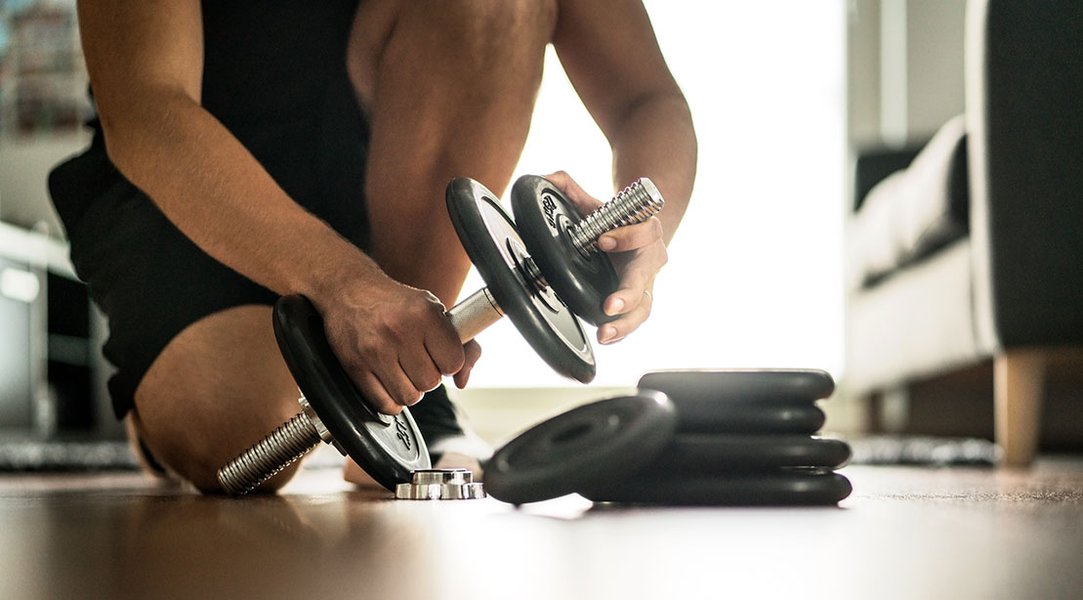
Dumbbells offer versatile resistance for a complete workout.
Before You Start: Warm-up and Cool-down
Always begin each workout with a 5-10 minute warm-up. This could include light cardio like jumping jacks, jogging in place, or dynamic stretches such as arm circles, leg swings, and torso twists. Warming up increases blood flow to the muscles and prepares your body for exercise, reducing injury risk.
After each workout, dedicate 5-10 minutes to cooling down with static stretches. Hold each stretch for 20-30 seconds, focusing on the muscles worked during the session. Cooling down helps improve flexibility and aids in muscle recovery.
The 3-Day Workout Plan
Day 1: Push Power (Chest, Shoulders, Triceps)
Focus: Building Upper Body Pushing Strength
This session targets the muscles responsible for pushing movements. Aim for controlled repetitions, focusing on the muscle contraction.
- Dumbbell Bench Press / Floor Press: 3-4 sets of 8-12 repetitions.
Technique: Lie on a bench or the floor with knees bent, feet flat. Hold dumbbells at chest level, palms facing forward or slightly inward. Press the dumbbells straight up, extending your arms fully but without locking the elbows. Slowly lower the weights back to the starting position. The floor press variation limits the range of motion slightly but is excellent for building pressing strength and is easier on the shoulders. - Dumbbell Overhead Press (Seated or Standing): 3 sets of 8-12 repetitions.
Technique: Sit or stand upright, holding dumbbells at shoulder height, palms facing forward. Press the dumbbells straight overhead until your arms are fully extended. Control the descent back to the starting position. Keep your core engaged to stabilize your torso. - Push-ups: 3-4 sets of As Many Reps As Possible (AMRAP) with good form.
Technique: Place hands slightly wider than shoulder-width apart. Maintain a straight line from head to heels. Lower your chest towards the floor by bending your elbows, keeping them relatively close to your body (not flared out wide). Push back up forcefully.
Modification: If standard push-ups are too difficult, perform them on your knees or elevate your hands on a sturdy surface (incline push-ups). To increase difficulty, elevate your feet (decline push-ups) or try variations like diamond push-ups (hands close together) for more triceps focus, or plyometric push-ups for explosive power. - Dumbbell Lateral Raises: 3 sets of 10-15 repetitions.
Technique: Stand or sit holding dumbbells at your sides, palms facing your body. With a slight bend in your elbows, raise the dumbbells out to the sides until your arms are parallel to the floor. Focus on lifting with your shoulders, not momentum. Slowly lower back down. - Dumbbell Lying Triceps Extensions: 3 sets of 10-15 repetitions.
Technique: Lie on your back (bench or floor). Hold dumbbells above your chest with palms facing each other or inward. Keeping your upper arms stationary, bend your elbows to lower the dumbbells towards the sides of your head. Extend your arms to press the dumbbells back up, focusing on squeezing the triceps.
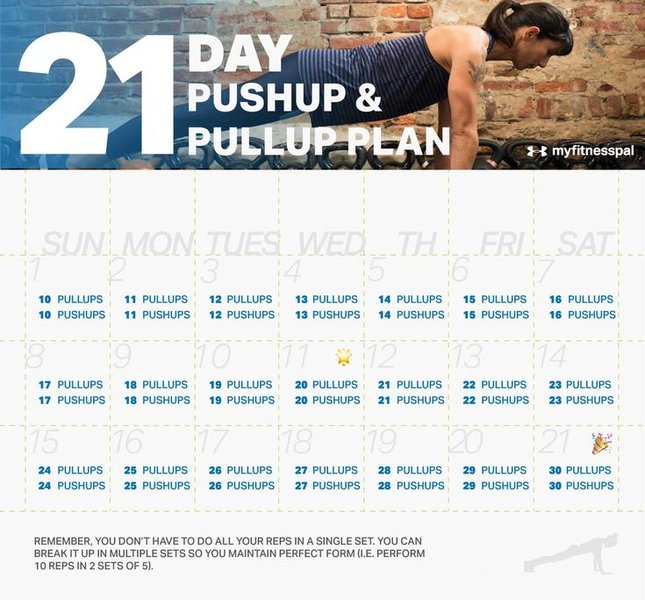
Push-ups and pull-ups are fundamental bodyweight exercises for upper body strength.
Day 2: Pull Strength (Back, Biceps, Rear Shoulders)
Focus: Developing Upper Body Pulling Power
This workout targets the muscles used to pull resistance towards you, crucial for posture and balanced upper body development.
- Pull-ups: 3-4 sets of AMRAP with good form.
Technique: Grip a pull-up bar with an overhand grip (palms facing away), hands slightly wider than shoulder-width. Hang with arms fully extended. Pull your body up until your chin clears the bar, focusing on squeezing your back muscles. Lower yourself slowly and under control.
Modification: If you can't do full pull-ups, use assistance bands, an assisted pull-up machine, or perform negative pull-ups (jump or step up to the top position and lower yourself as slowly as possible). Alternatively, perform inverted rows using a low bar or sturdy table. - Dumbbell Bent-Over Rows: 3-4 sets of 8-12 repetitions.
Technique: Stand with feet shoulder-width apart, holding dumbbells with palms facing your body. Hinge at your hips, keeping your back straight, until your torso is nearly parallel to the floor. Let the dumbbells hang towards the ground. Pull the dumbbells towards your lower chest/upper abdomen, squeezing your shoulder blades together at the top. Lower slowly. - Dumbbell Single-Arm Rows: 3 sets of 10-15 repetitions per arm.
Technique: Place one knee and the same-side hand on a bench or sturdy surface for support. Let the dumbbell hang straight down in the opposite hand. Pull the dumbbell up towards your hip, keeping your elbow close to your body and squeezing your back muscles. Lower under control. Complete all reps for one arm before switching. - Dumbbell Bicep Curls: 3 sets of 10-15 repetitions.
Technique: Stand or sit holding dumbbells at your sides, palms facing forward. Keeping your elbows tucked in, curl the weights up towards your shoulders, squeezing your biceps at the peak. Lower slowly. Avoid using momentum or swinging. - Dumbbell Hammer Curls: 3 sets of 10-15 repetitions.
Technique: Perform like standard bicep curls, but keep your palms facing your body (neutral grip) throughout the movement. This variation targets the biceps brachii, brachialis, and brachioradialis (forearm). - Dumbbell Rear Delt Flyes: 3 sets of 12-15 repetitions.
Technique: Sit on the edge of a bench or chair, or stand and hinge forward at the hips with a flat back, letting the dumbbells hang towards the floor. With a slight bend in the elbows, raise the dumbbells out to the sides, squeezing your shoulder blades together. Focus on using your rear deltoids. Lower under control.
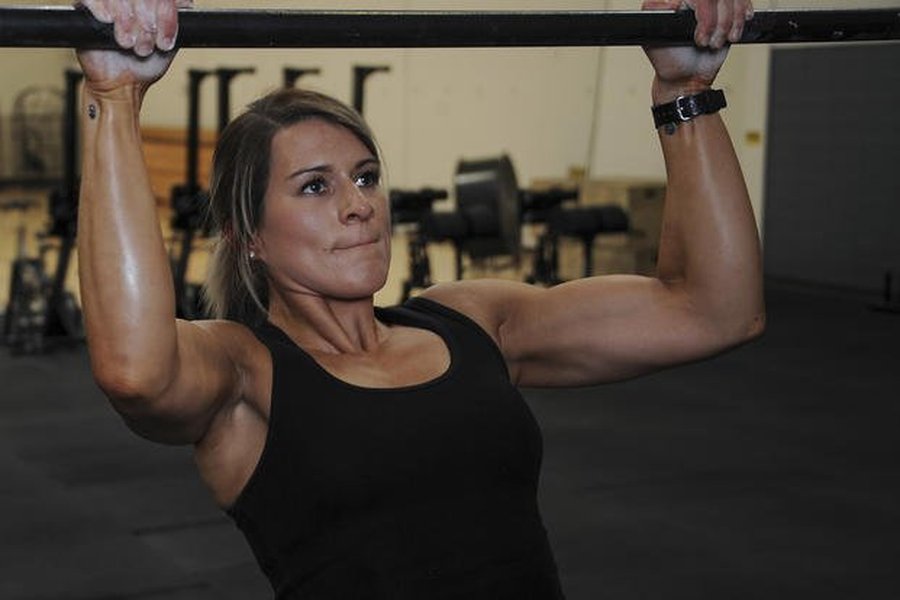
Mastering the pull-up is a significant strength milestone.
Day 3: Full Body Integration
Focus: Lower Body Strength & Overall Conditioning
This session combines lower body dumbbell exercises with integrated upper body push and pull movements for a comprehensive, full-body workout.
- Dumbbell Goblet Squats: 3-4 sets of 10-15 repetitions.
Technique: Hold one dumbbell vertically against your chest with both hands. Stand with feet slightly wider than hip-width apart, toes pointing slightly outwards. Keeping your chest up and back straight, lower your hips down and back as if sitting in a chair. Go as deep as possible while maintaining good form (ideally thighs parallel to the floor or lower). Drive through your heels to return to the starting position. - Dumbbell Romanian Deadlifts (RDLs): 3-4 sets of 10-12 repetitions.
Technique: Stand with feet hip-width apart, holding dumbbells in front of your thighs with palms facing your body. Keep a slight bend in your knees throughout the movement. Hinge at your hips, pushing them backward while keeping your back straight. Lower the dumbbells towards the floor, keeping them close to your legs. Feel the stretch in your hamstrings. Stop when you feel a good stretch or just before your back starts to round. Return to the starting position by squeezing your glutes and hamstrings. - Dumbbell Lunges: 3 sets of 8-10 repetitions per leg.
Technique: Stand holding dumbbells at your sides. Step forward with one leg, lowering your hips until both knees are bent at approximately 90 degrees. Ensure your front knee stays behind your toes and your back knee hovers just above the ground. Push off your front foot to return to the starting position. Alternate legs or complete all reps for one leg before switching. - Push-ups: 2-3 sets of AMRAP.
Technique: Perform as described on Day 1. Choose a variation that challenges you. - Pull-ups / Assisted Pull-ups / Rows: 2-3 sets of AMRAP.
Technique: Perform as described on Day 2. Choose a variation appropriate for your strength level. - Plank: 3 sets, hold for 30-60 seconds.
Technique: Position yourself on your forearms and toes, keeping your body in a straight line from head to heels. Engage your core, glutes, and quads. Avoid letting your hips sag or rise too high.
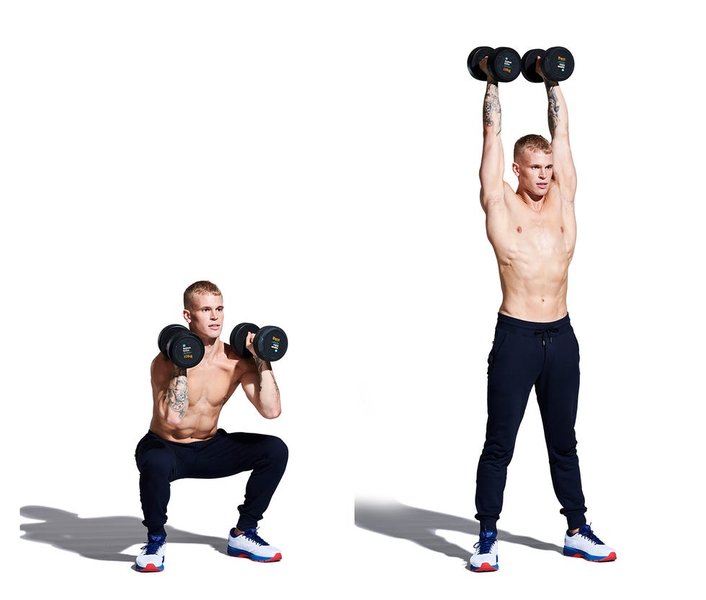
Compound dumbbell exercises like squats and deadlifts build functional strength.
Workout Summary Table
Your Weekly Strength Schedule
This table provides a quick overview of the 3-day split, highlighting the focus and key exercises for each session.
| Day | Focus | Key Dumbbell Exercises | Key Bodyweight Exercises | Primary Muscle Groups |
|---|---|---|---|---|
| Day 1 (e.g., Monday) | Push | DB Bench/Floor Press, DB Overhead Press, DB Lateral Raises, DB Triceps Extensions | Push-ups | Chest, Shoulders, Triceps |
| Day 2 (e.g., Wednesday) | Pull | DB Bent-Over Rows, DB Single-Arm Rows, DB Bicep Curls, DB Hammer Curls, DB Rear Delt Flyes | Pull-ups (or variations) | Back, Biceps, Rear Deltoids, Forearms |
| Day 3 (e.g., Friday) | Full Body | DB Goblet Squats, DB Romanian Deadlifts, DB Lunges | Push-ups, Pull-ups (or variations), Plank | Legs, Glutes, Hamstrings, Core, Back, Chest, Shoulders, Arms |
Visualizing the Workout Structure
Mindmap Overview
This mindmap illustrates the organization of the 3-day strength plan, showing the split, daily focus, and types of exercises involved.
(Dumbbells, Push-ups, Pull-ups)"] id1["Workout Split"] id1a["Push Day"] id1a1["Focus: Chest, Shoulders, Triceps"] id1a2["Exercises: DB Presses, Push-ups, Lateral Raises, Triceps Extensions"] id1b["Pull Day"] id1b1["Focus: Back, Biceps, Rear Delts"] id1b2["Exercises: Pull-ups, DB Rows, Curls, Rear Delt Flyes"] id1c["Full Body Day"] id1c1["Focus: Legs, Core, Integrated Upper Body"] id1c2["Exercises: DB Squats, RDLs, Lunges, Push-ups, Pull-ups, Plank"] id2["Key Components"] id2a["Dumbbells"] id2b["Push-ups"] id2c["Pull-ups"] id2d["Progressive Overload"] id2e["Warm-up / Cool-down"] id2f["Rest & Recovery"]
Program Effectiveness Analysis
Rating Key Training Aspects
This chart evaluates the 3-day workout plan across several important training dimensions. The scores reflect how effectively the program addresses each aspect using only dumbbells, push-ups, and pull-ups.
As the chart shows, this plan excels in providing balanced upper body training and simplicity due to minimal equipment. It offers solid strength and hypertrophy potential, good core engagement, and scalability for beginners. While effective for the lower body using dumbbells, it naturally has less emphasis compared to dedicated barbell leg days, which is expected given the equipment constraints.
Video Demonstration: Full Body Dumbbell Workout
See the Movements in Action
Visual guides can be incredibly helpful for learning proper exercise form. This video demonstrates various full-body exercises using dumbbells, similar to those included in this plan. Observing the technique can help you perform the movements safely and effectively, maximizing your results and minimizing injury risk. Pay attention to the tempo, range of motion, and body positioning shown.
While this specific video provides a general full-body dumbbell workout routine, the principles and exercise demonstrations are highly relevant to the movements incorporated in the Push, Pull, and Full Body days outlined above.
Essential Considerations for Success
Maximizing Your Gains Safely
Progressive Overload
To continuously build strength and muscle, you must progressively challenge your body. This is known as progressive overload. Aim to:
- Increase Weight: Once you can comfortably complete all sets and reps for an exercise with good form, slightly increase the dumbbell weight (e.g., by 2.5-5 lbs).
- Increase Repetitions: If increasing weight isn't possible, try adding 1-2 more repetitions per set.
- Increase Sets: Add an extra set to one or more exercises.
- Decrease Rest Time: Slightly reduce the rest time between sets (e.g., from 90 seconds to 75 seconds).
- Improve Form/Tempo: Slow down the eccentric (lowering) phase of lifts or add pauses to increase time under tension.
- Increase Difficulty: Use harder variations of push-ups and pull-ups.
Track your workouts (exercises, weights, sets, reps) to monitor your progress and plan future increases.
Form Over Weight
Always prioritize correct form over lifting heavier weights or doing more reps. Poor form not only reduces the effectiveness of the exercise but significantly increases the risk of injury. If you're unsure about your form, watch reliable videos, train in front of a mirror, or consider recording yourself.
Rest and Recovery
Muscle growth and repair happen during rest, not during the workout itself. Ensure you take the scheduled rest days between workouts (e.g., Tuesday, Thursday, Saturday, Sunday). Listen to your body; if you feel excessively fatigued or sore, an extra rest day might be beneficial. Aim for 7-9 hours of quality sleep per night, as sleep is crucial for recovery.
Nutrition and Hydration
Support your training efforts with adequate nutrition and hydration. Consume a balanced diet rich in protein (essential for muscle repair and growth – aim for around 0.7-1 gram per pound of body weight), complex carbohydrates (for energy), and healthy fats. Stay well-hydrated by drinking plenty of water throughout the day, especially before, during, and after workouts.
Frequently Asked Questions (FAQ)
Your Questions Answered
How long should I rest between sets?
Rest periods depend on your goals and the exercise. For heavier compound movements (like squats, presses, rows) aiming for strength (lower reps), rest 90 seconds to 2 minutes. For exercises with higher repetitions (10-15+) aiming more for hypertrophy or endurance, rest 60-90 seconds. For core exercises like planks, rest 30-60 seconds between holds.
What if I can't do pull-ups yet?
That's very common! There are several ways to work towards your first pull-up:
- Assisted Pull-ups: Use resistance bands looped around the bar and under your feet/knees to reduce the amount of bodyweight you lift. Use progressively lighter bands as you get stronger.
- Negative Pull-ups: Start at the top position (use a box or jump up) and lower yourself down as slowly as possible (aim for 3-5 seconds or more).
- Inverted Rows: Lie under a sturdy low bar or table, grip it, and pull your chest towards the bar/edge, keeping your body straight. This works similar muscles but is less demanding.
- Lat Pulldowns (if available): While this plan focuses on minimal equipment, if you have access to a lat pulldown machine, it can help build the required strength.
- Dumbbell Rows: Consistently performing dumbbell rows will also strengthen the back muscles needed for pull-ups.
How heavy should my dumbbells be?
Choose a weight that allows you to complete the target number of repetitions with good form, but makes the last 1-2 reps challenging. If you can easily do more reps than prescribed, the weight is too light. If you struggle to reach the minimum rep count with good form, it's too heavy. You might need different weights for different exercises (e.g., heavier for squats/rows, lighter for lateral raises/curls). Adjustable dumbbells are a great space-saving and versatile option.
Can I do this workout more than 3 days a week?
This program is designed for 3 days per week to allow for adequate recovery, which is crucial for muscle growth and preventing overtraining. Training the same muscle groups too frequently without enough rest can hinder progress and increase injury risk. If you have more time and energy, you could incorporate active recovery (like light walking, stretching, or foam rolling) or other forms of exercise like cardio or mobility work on your off days. Listen to your body and prioritize recovery.
Recommended Further Exploration
Dive Deeper into Strength Training
- Explore advanced dumbbell-only workout variations for continued progress.
- Discover effective strategies specifically designed to increase your pull-up and push-up numbers.
- Learn about nutrition strategies tailored for muscle gain when training primarily at home.
- Compare the benefits of different workout splits like Push/Pull/Legs versus Full Body routines.
References
Sources Used for This Guide
Last updated April 26, 2025