
Unlocking the Past: Navigating the Market for 5.25" Floppy Disk Readers
Discover how to acquire essential hardware for accessing vintage 5.25" floppy disks in today's digital age.
Key Insights into 5.25" Floppy Disk Reader Acquisition
- Scarcity and Niche Market: New 5.25" floppy disk drives are no longer mass-produced, making them a niche item. Most available drives are used, refurbished, or new old stock (NOS), primarily found in vintage computing markets.
- Connectivity Challenges: Modern PCs lack native 5.25" floppy drive interfaces. Specialized USB controllers like the FC5025 or KryoFlux are essential for bridging the gap between vintage drives and contemporary systems, enabling data transfer.
- Diverse Sourcing Options: Online marketplaces like eBay and Amazon, specialized retro computing stores such as Retro PC Store, and international platforms like AliExpress are the primary avenues for purchasing these legacy readers and their necessary adapters.
Retrieving data from archaic 5.25" floppy disks might seem like a daunting task in our era of cloud storage and terabyte hard drives. However, for enthusiasts, data recovery specialists, or those simply trying to revisit digital memories, the ability to read these historical media formats remains crucial. This comprehensive guide outlines the various avenues and considerations for acquiring a 5.25" floppy disk reader, detailing where to buy, what to look for, and how to connect these vintage devices to modern computers.
Understanding 5.25" Floppy Disk Readers: Beyond Obsolete Technology
A 5.25" floppy disk reader is, at its core, a 5.25-inch floppy disk drive. These drives were a staple of personal computing from the late 1970s through the 1980s, offering varying capacities from 160 KB to 1.2 MB. By the mid-1990s, they were largely supplanted by the more compact and durable 3.5-inch floppy disks. Consequently, new manufacturing of 5.25" drives has ceased, transforming them into sought-after items in a specialized market.
Today, finding a reader typically involves navigating a market of used, refurbished, or "new old stock" (NOS) units. These drives come in two primary forms: internal drives designed to fit into computer cases with a compatible 34-pin floppy controller interface, and less commonly, external units, often requiring a separate USB adapter to connect to modern machines. It's crucial to understand that an "all-in-one" external USB 5.25" floppy drive, akin to common 3.5" USB drives, is exceedingly rare or non-existent in commercial production.
The Landscape of 5.25" Floppy Drive Formats
When seeking a 5.25" floppy drive, it's important to be aware of the different formats these disks utilized. There were variations in track density (e.g., 40 tracks per inch (TPI) for single-sided or double-sided disks, and 80 TPI for high-density disks), and whether they were single-sided or double-sided. High-density (HD) drives, which typically support 1.2 MB disks, generally have the capability to read all earlier formats. However, it is critical to note that HD drives should typically not be used to write to lower-density 40-track disks, as this can lead to data corruption or drive issues due to incompatible magnetic coercivity and track widths.
Primary Sources for 5.25" Floppy Disk Readers
The market for 5.25" floppy disk readers is predominantly online, spanning a mix of large e-commerce platforms and niche vintage computing retailers. Here are the most reliable sources:
Online Marketplaces: eBay and Amazon
eBay: The Go-To for Vintage Hardware
eBay stands out as the most robust platform for acquiring 5.25" floppy drives. Sellers often list used, refurbished, or NOS units from various manufacturers like TEAC, Panasonic, IBM, and Mitsumi. You can find both the drives themselves and sometimes bundles that include necessary USB controller adapters. Prices can range widely depending on the drive's condition, rarity, and included accessories. When purchasing from eBay, it's advisable to check seller ratings and product descriptions meticulously, especially concerning the drive's functionality and included cables or adapters.
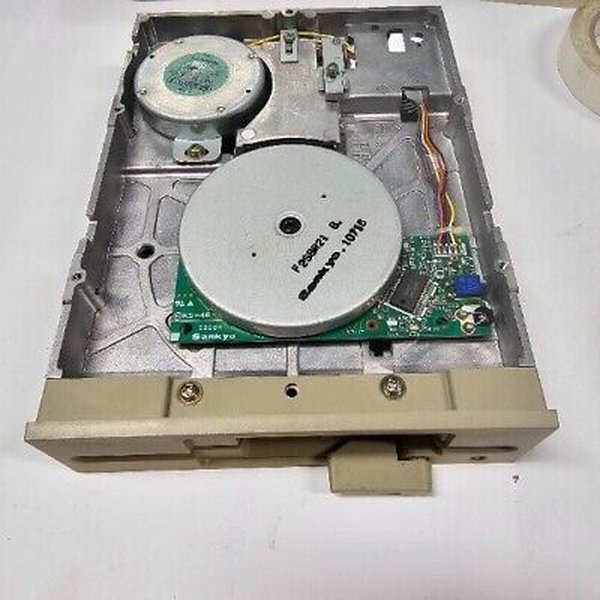
An example of a vintage Toshiba 5.25" floppy disk drive available on eBay.
Amazon: Limited but Notable Listings
While Amazon's primary focus is on modern electronics, it occasionally features listings for 5.25" floppy drives, often refurbished or OEM models. For instance, the TEAC FD-55GFR 142-U (1.2MB capacity) has appeared with descriptions highlighting USB connectivity—though this usually implies an external USB adapter is either integrated or required. It's crucial to verify product descriptions on Amazon, as some listings for "5.25 floppy drive" might mistakenly refer to 3.5" drives physically housed in a 5.25-inch bay adapter. Amazon also offers SATA/IDE to USB adapters that, with additional bridging hardware, might potentially connect a 5.25" drive, although this is less common for floppy drives.
Specialized and Niche Retailers
Retro PC Store: Curated Vintage Hardware
For collectors and serious retro computing enthusiasts, specialized stores like Retro PC Store offer a curated selection of vintage hardware, including internal 5.25" floppy drives such as the EPSON SD-600. These drives are typically new or refurbished and are ideal if you're building or maintaining an authentic vintage PC setup. While prices may be higher than on general marketplaces, these retailers often provide better assurance of functionality and compatibility with legacy systems.
Floppydisk.com: For Drives and Media
Floppydisk.com is a specialized vendor known for its focus on floppy disk products, including both new 5.25" high-density floppy disks and information regarding compatible drives. While direct online sales of drives might require contacting them, they are a valuable resource for understanding available models and sourcing the media itself.
AliExpress: International Options for Budget-Conscious Buyers
AliExpress can be a source for 5.25" floppy drives, often at competitive prices due to direct sourcing from international sellers. Listings might include unbranded or new old stock drives. While potentially more affordable, buyers should be mindful of longer shipping times and carefully vet seller ratings for authenticity and reliability. Some USB adapters specifically designed for 5.25" drives may also be found here.
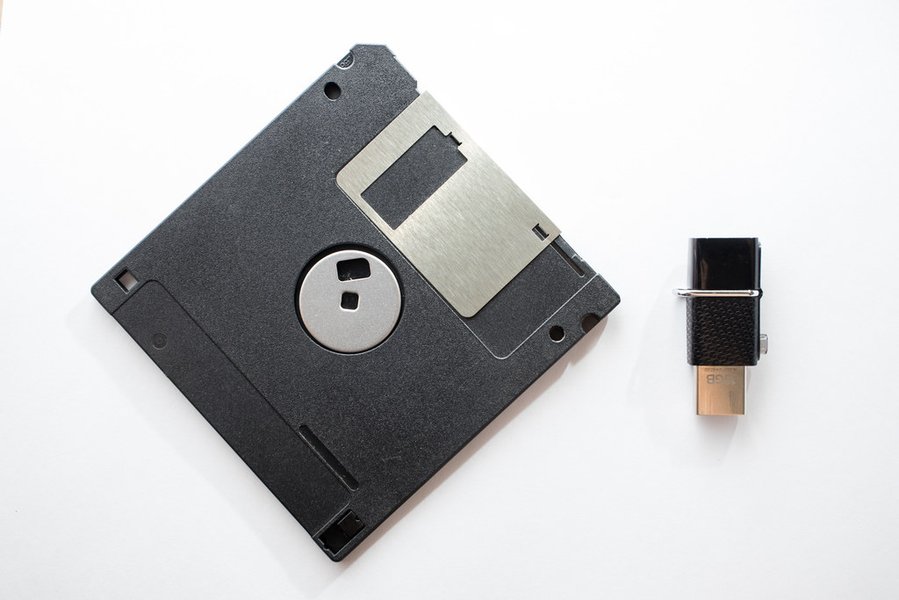
An old floppy disk juxtaposed with a modern USB thumb drive, illustrating the evolution of storage.
Connecting to the Modern World: Adapters and Controllers
A significant hurdle in using 5.25" floppy drives today is their interface incompatibility with modern PCs. Unlike many 3.5" floppy drives that can be adapted with readily available USB converters, 5.25" drives use a different, older interface rarely found on contemporary motherboards. Therefore, direct plug-and-play functionality is generally not possible without specialized hardware.
The Indispensable FC5025 USB 5.25" Floppy Controller
The **FC5025 USB 5.25" Floppy Controller** is perhaps the most practical solution for connecting a vintage 5.25" floppy drive to a modern computer's USB port. This device acts as a bridge, converting the drive's signals to a USB-compatible format. It allows for reading (and often imaging) 5.25" floppy disks on various operating systems, including Windows and Mac, typically requiring specific software like "Disk imaging and Recovery" or "MacDIB." It is important to note that the FC5025 primarily supports reading from disks and generally does not support writing.
KryoFlux: Advanced Preservation Tool
Another powerful USB disk controller is the **KryoFlux**, developed by the Software Preservation Society. This device is highly versatile, capable of creating image files from a vast array of disk formats, including those from MS-DOS, Apple, and Commodore systems. Unlike the FC5025, KryoFlux also supports writing to floppies, making it a comprehensive solution for advanced users and archival purposes. It offers both command-line and graphical interfaces and is compatible with Linux, Mac, and Windows.
Alternative Approaches
Some users opt for an older PC that still retains a native 5.25-inch floppy drive interface (e.g., a Pentium III-era machine). Data can then be transferred from this older machine to a modern one via network transfer, USB storage, or even a 3.5" floppy drive if available on the older PC. This method bypasses the need for specialized modern adapters but requires maintaining an older, functional computer system.
Understanding Key Considerations Before Purchase
Before purchasing a 5.25" floppy disk reader, several factors should be considered to ensure compatibility and successful data retrieval:
Disk Compatibility and Formats
As mentioned, 5.25" floppy disks came in various formats (e.g., 360KB, 720KB, 1.2MB). High-density (1.2MB) drives are generally backward-compatible for reading all formats. However, writing to lower-density disks with a high-density drive is generally not recommended due to differences in magnetic coercivity and track width, which can lead to unreliable data or disk degradation.
Condition of Old Disks
Floppy disks, especially those stored for decades, can degrade. Issues like degaussing (loss of magnetic data) or physical damage can prevent successful reading, even with a perfectly functioning drive. Data recovery from severely degraded disks may require specialized services or advanced tools beyond a standard reader.
Required Software for Data Transfer
Simply having the hardware isn't enough; you'll need software to interpret and transfer the data. For disks formatted with standard operating systems like MS-DOS, basic file explorers might suffice once connected via a USB adapter. However, for disks from non-DOS systems (e.g., Apple II, Commodore 64) or for creating bit-for-bit disk images, specialized software or imaging tools (like those used with FC5025 or KryoFlux) are often essential.
Performance and Usability of 5.25" Floppy Disk Readers
To provide a clearer picture of the capabilities of 5.25" floppy disk readers in a modern context, here is a radar chart evaluating them across several key attributes. These values are based on general observations and user experiences in the retro computing community.
This radar chart illustrates the comparative strengths and weaknesses of different approaches to reading 5.25" floppy disks. The FC5025 solution excels in modern OS compatibility for reading, while KryoFlux offers superior read/write capabilities for comprehensive archival. Utilizing an older, directly integrated PC provides excellent read/write functionality, but its compatibility with modern operating systems is naturally low. Availability of new units for any approach remains very low across the board, reflecting the vintage nature of this technology. Cost efficiency varies, with older PCs potentially being more expensive upfront but versatile, and specialized controllers requiring an initial investment in addition to the drive itself. Data transfer speed is generally limited by the inherent speed of floppy drives, so it remains low across all methods compared to modern storage.
Architecting the Approach to 5.25" Floppy Access
The following mindmap visually organizes the key components and considerations for setting up a 5.25" floppy disk reading solution. It highlights the relationships between the hardware, software, and various acquisition paths.
This mindmap serves as a visual guide to the multifaceted process of accessing 5.25" floppy disks. It categorizes the essential hardware, software, and purchasing avenues, alongside critical considerations such as disk types and personal expertise. Understanding these interconnected elements is vital for successfully navigating the complexities of legacy media retrieval.
Deep Dive: Building Your Own External 5.25" USB Floppy Drive
While dedicated commercial external 5.25" USB floppy drives are rare, many enthusiasts opt to create their own by adapting an internal 5.25" drive with a specialized USB controller. The process typically involves sourcing an internal 5.25" drive (often from eBay or a vintage parts dealer) and pairing it with a controller board like the FC5025 or KryoFlux. This setup allows you to connect the vintage drive to a modern computer via USB, bypassing the need for an antiquated floppy disk controller on the motherboard.
The following video provides an excellent illustration of how to approach such a project, demonstrating the ingenuity required to bridge the gap between old and new technology:
"How to build a working external 5.25" USB Floppy Drive" demonstrates a DIY solution for accessing old floppy disks.
This video, titled "How to build a working external 5.25" USB Floppy Drive," showcases a fascinating experiment where a user successfully converts an external 3.5" USB floppy drive's controller to operate a much older, larger 5.25" drive. This seemingly paradoxical feat highlights the adaptability and resourcefulness often necessary when dealing with legacy computing hardware. The video delves into the technical challenges and surprising successes of connecting a drive that theoretically should not work with modern USB interfaces. It provides practical insights into the physical modifications and electronic bridging required, demonstrating that with the right approach, even seemingly obsolete hardware can be brought back into functional use.
Comprehensive Comparison of 5.25" Floppy Reader Solutions
To further assist in decision-making, here's a table summarizing the main characteristics and considerations for different 5.25" floppy disk reader solutions:
| Solution Type | Availability | Connection to Modern PC | Read/Write Capability | Ideal Use Case | Average Cost Range (Hardware Only) |
|---|---|---|---|---|---|
| Internal 5.25" Drive + FC5025 USB Controller | Good (used/NOS drives, new controllers) | USB (via controller) | Read (primarily); Write (limited/not supported) | Bulk data recovery, general access to MS-DOS/standard formats. | $70 - $150 (drive + controller) |
| Internal 5.25" Drive + KryoFlux Controller | Good (used/NOS drives, new controllers) | USB (via controller) | Read & Write (extensive format support) | Archival, data preservation of non-standard/copy-protected disks, retro gaming. | $150 - $300 (drive + controller) |
| Dedicated Older PC with 5.25" Drive | Moderate (finding working old PCs) | Native interface; data transfer via network/USB on old PC | Full Read & Write (dependent on OS/drivers) | Authentic vintage computing experience, very specific legacy system compatibility. | $50 - $200 (complete system) |
| External "USB" 5.25" Drives (Rare/OEM) | Very Limited (niche/refurbished/misidentified) | USB | Read (primarily) | Simple plug-and-play if found, but often mislabeled or unreliable. | $30 - $100 (if genuine) |
Frequently Asked Questions (FAQ)
What is a 5.25" floppy disk reader?
Can I buy a new 5.25" floppy drive with USB connectivity?
Where are the best places to find 5.25" floppy disk readers?
Do 5.25" floppy disk drives read and write all types of 5.25" disks?
What software do I need to use a 5.25" floppy drive with a modern PC?
Conclusion
Acquiring a 5.25" floppy disk reader in today's technological landscape requires navigating a niche market primarily composed of used or specialized hardware. While a direct, off-the-shelf external USB reader akin to modern 3.5" floppy drives is largely unavailable, effective solutions exist. The most practical approach involves sourcing a vintage 5.25" internal floppy drive and pairing it with a dedicated USB controller like the FC5025 or KryoFlux. These adapters bridge the technological gap, enabling communication with modern computers and allowing for the retrieval and preservation of valuable data from these historical storage media. Whether for nostalgic purposes, data recovery, or digital archaeology, the means to access 5.25" floppy disks are still within reach for those willing to explore the options in the retro computing community.
Recommended Further Exploration
- How to image 5.25" floppy disks for digital preservation?
- What are the best software tools for reading vintage floppy disk formats?
- What are the challenges and solutions for long-term digital data preservation?
- What are the technical differences between 3.5" and 5.25" floppy disk technologies?
Referenced Search Results
 amazon.com
amazon.com
amazon.com
amazon.com
amazon.com
amazon.com
amazon.com
amazon.com
amazon.com
amazon.com
amazon.com