
Unleash the Magic: How 6DoF Motion Bases are Revolutionizing Filmmaking
Discover the innovative use of 6DoF motion platforms in the film industry, enhancing realism and flexibility in movie production.
Key Highlights of 6DoF Motion Base Applications in Film
- Enhanced Realism: 6DoF motion platforms provide actors and filmmakers with the ability to simulate complex movements, creating more believable and immersive scenes.
- Versatile Applications: From simulating vehicle movements to replicating intricate stunt sequences, 6DoF motion bases offer a wide range of applications in filmmaking.
- Seamless Integration: These platforms seamlessly integrate with CGI, Unreal Engine, and other VFX tools, streamlining the production process and enhancing visual effects.
Understanding 6DoF Motion Bases
A 6DoF (Degrees of Freedom) motion platform simulates movement across three axes of rotation (pitch, roll, and yaw) and three axes of translation (heave, surge, and sway). This technology is engineered to replicate motions experienced by an object or vehicle in these six directions, creating an immersive simulation experience. The six degrees of freedom are individually defined as X, Y, Z, θ-X, θ-Y, θ-Z, and often referred to as surge, sway, heave, roll, pitch, and yaw.
Applications of 6DoF Motion Bases
6DoF motion platforms are used extensively in various industries, including military, commercial, and entertainment sectors, and are fully electric, digitally controlled, and require minimal maintenance. In the film industry, they offer unique capabilities for enhancing realism and flexibility.
- Flight Simulation: Simulating asymmetric flights and ground handling correctly.
- Train Simulation: Replicating surge and sway, crucial for realistic train movements.
- Vehicle Simulation: Simulating driving and racing with high precision, including collision, drift, and bumps.
The Role of 6DoF Motion Bases in Modern Filmmaking
Motion base systems are transforming filmmaking by providing unmatched precision and realism. They enable dynamic action sequences, seamless CGI integration, and immersive storytelling. These systems integrate seamlessly with CGI, Unreal Engine, and third-party software, offering filmmakers the precision and flexibility needed to create dynamic, immersive scenes. Customizable motion bases, enhanced with 6DoF joystick control and Matlab Simulink compatibility, ensure productions are both realistic and technically superior.
Enhancing Visual Effects
Motion platforms synchronize CGI elements with physical movements for seamless effects, enhancing LED wall environments by syncing motion with virtual scenes. They also simulate dynamic pans, tilts, and zooms with unparalleled precision, allowing for camera movements that would be otherwise impossible to achieve.
Key Advantages of 6DoF Motion Platforms
- Complex and Realistic Simulation: Delivers a higher level of realism compared to 2DOF and 3DOF platforms.
- Additional Degrees of Freedom: Provides more axes of movement for comprehensive simulation.
- Higher Level of Immersion: Creates a more engaging and believable experience for both actors and viewers.
Companies Utilizing 6DoF Motion Bases
Several companies specialize in providing 6DoF motion platforms for the film industry. These platforms are used to create realistic and demanding scenes involving vehicles, both land and aircraft.
Leading Providers of 6DoF Motion Platforms
Here's a brief overview of some notable companies and their offerings:
- Motion Systems: Offers a range of motion platforms, including the PS-6TM-2500, known for its reliability, quiet operation, and impressive performance. These platforms can handle heavy load cockpits and cabins, making them suitable for stunt scenes and vehicle simulations.
- Servos & Simulation: Provides customizable six-axis motion base platforms with varying weight capacities, suitable for military, commercial, and entertainment applications.
- DOF Reality: Specializes in cost-effective motion simulators designed for users who want to experiment with motion simulation on a limited budget.
- Loft Dynamics: Focuses on highly dynamic 6DoF motion platforms for flight simulation, emphasizing safety, high performance, and quick response times.
- Gforcefactory: Offers the Edge 6D, a full motion simulator capable of producing all six movements, suitable for home and small business use.
Technical Specifications and Customization
6DoF motion platforms come with various technical specifications and customization options to meet the specific needs of different film projects. These platforms are designed for reliable, round-the-clock operation without overheating issues.
Customization Options
-
Payload Capacities: Platforms can handle a wide range of payloads, from 50 kg to 14 tons, accommodating various props, sets, and equipment.
-
Control Systems: Systems can be controlled in several ways, often requiring a simple ±10VDC control input.
-
Integrated Top Platforms: Come with an integrated top platform that can be modified to fit specific requirements.
Motion Capture Integration
Motion capture technology is often integrated with 6DoF motion platforms to record the movements of actors and objects. This data is then used to animate digital character models in 2D or 3D computer animation. The combination of motion capture and motion platforms enhances the realism and accuracy of simulated movements.
Visual Examples of 6DoF Motion in Action
The following images demonstrate the application of motion control and motion capture technologies in filmmaking, showcasing how complex camera movements and actor performances are enhanced through these tools.

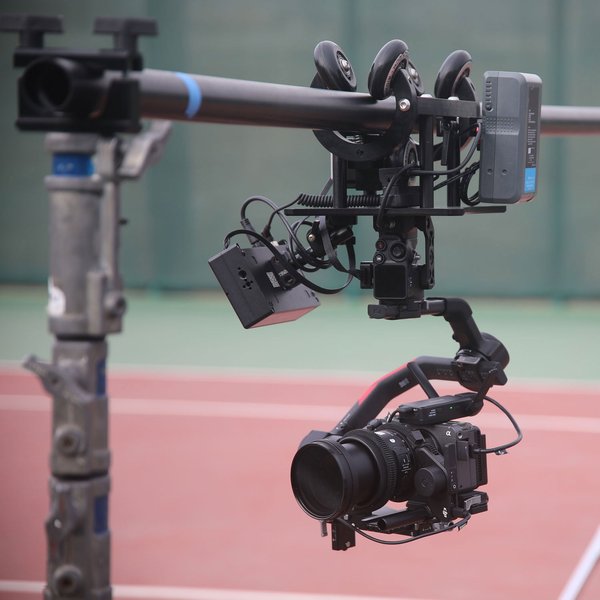


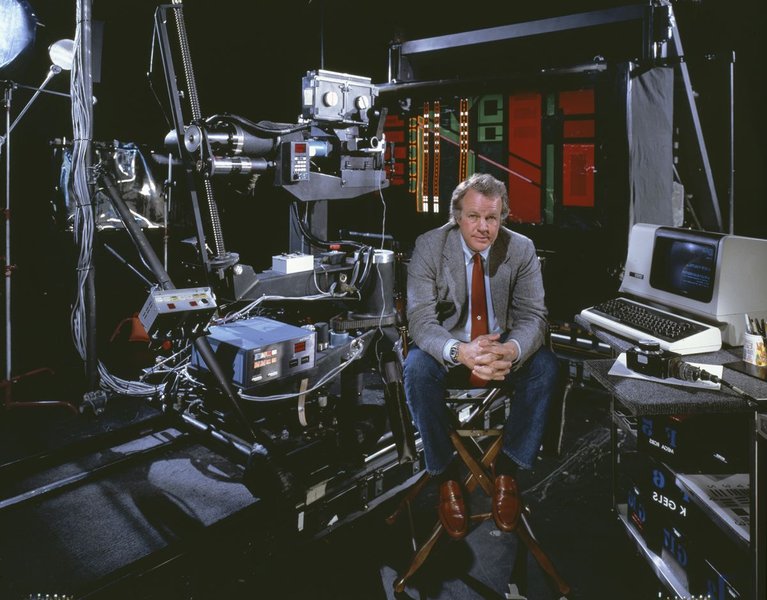
These images illustrate various motion control systems and camera rigs used in the film industry to achieve complex and precise movements. From overhead systems to sliders and advanced camera rigs, these tools enable filmmakers to create dynamic and visually stunning scenes. The integration of motion capture technology further enhances the realism of digital effects and character animations, providing a seamless blend of physical and virtual elements in modern filmmaking.
Integrating Motion Graphics with 6DoF Motion Bases
Motion graphics play a crucial role in modern filmmaking, adding an artificial world of animation, text, designs, and digital effects. When combined with 6DoF motion bases, these elements create an even more immersive and engaging experience for the audience.
Enhancing Title Sequences
Title sequences set the mood and style of a movie, highlighting the biggest names and themes. Motion graphics are often used extensively in title sequences, either as standalone elements or in combination with film footage. Websites like Motion Array offer vast libraries of stock motion graphics that can be customized to fit the specific needs of a film.
In-Film Graphics
Motion graphics are also used throughout films to enhance storytelling, provide information, and create visual interest. Examples include animated logos, ads, backgrounds, bumpers, and lower thirds. These elements can be seamlessly integrated with scenes captured using 6DoF motion bases to create a cohesive and visually stunning final product.
Cost and Budget Considerations
While 6DoF motion platforms offer significant advantages in terms of realism and flexibility, it’s important to consider the cost and budget implications. The cost of these platforms can vary widely depending on factors such as payload capacity, customization options, and the complexity of the control system.
Cost-Effective Solutions
For filmmakers on a limited budget, there are cost-effective motion simulator options available. Companies like DOF Reality offer motion simulators designed for users who want to experiment with motion simulation without breaking the bank. Additionally, stock motion graphics from websites like Motion Array provide affordable ways to enhance visual effects and title sequences.
Professional Motion Graphic Designers
If the budget allows, hiring a professional motion graphic designer can ensure a unique and high-quality result. While designer firms and freelance designers can be expensive, they can create custom graphics that perfectly match the vision of the film.
Applications Beyond Entertainment
While primarily used in the film and entertainment industry, 6DoF motion platforms have applications in various other fields. These include military training, commercial simulations, and even medical applications.
Training and Simulation
In training applications, 6DoF motion platforms are used to simulate real-world scenarios for pilots, drivers, and other professionals. The realistic motion cues provided by these platforms enhance the effectiveness of training programs and improve skill development.
Research and Development
Motion capture technology, often integrated with 6DoF motion platforms, is also used in research and development. For example, Purdue University uses motion capture in robotics development to study and replicate human movements in robots.
Motion Capture: Capturing the Nuances
Motion capture technology is integral to modern filmmaking, allowing filmmakers to record and translate the movements of actors into digital characters. This process involves sampling the movements of one or more actors multiple times per second.
How Motion Capture Works
Motion capture records the movements of actors, not their visual appearance. This is particularly useful when creating characters with exaggerated features or movements that would be impossible for a human performer to replicate. By capturing the nuances of an actor's performance, filmmakers can create more believable and engaging digital characters.
Motion Capture in Film Production
Motion capture is used extensively in films, television shows, and video games to animate digital character models. By recording the actions of human actors, filmmakers can create realistic and dynamic animations that enhance the overall quality of the production.
Motion Control: Precision in Every Frame
Motion control is a technique used in filmmaking to achieve precise and repeatable camera movements. This involves using computer-controlled systems to move the camera along a predetermined path. This allows for complex shots that would be impossible to achieve manually.
Benefits of Motion Control
Motion control offers several benefits to filmmakers. It allows for precise and repeatable camera movements, which is essential for creating seamless visual effects. It also allows for complex shots that would be impossible to achieve manually, such as time-lapse sequences and multi-layered composites.
Applications of Motion Control
Motion control is used in a wide range of filmmaking applications, including visual effects, time-lapse photography, and product shots. By using motion control, filmmakers can create visually stunning and technically sophisticated shots that enhance the overall quality of the production.
Table of 6DoF Motion Platform Providers and Their Applications
This table provides a summary of companies that provide 6DoF motion platforms and their typical applications in the film industry.
| Company | Platform | Applications | Key Features |
|---|---|---|---|
| Motion Systems | PS-6TM-2500 | Stunt scenes, vehicle simulations | Reliable, quiet operation, high payload capacity |
| Servos & Simulation | Customizable 6DoF Platforms | Military, commercial, entertainment | Wide range of weight capacities, customizable |
| DOF Reality | Cost-Effective Simulators | Motion simulation experiments | Affordable, suitable for limited budgets |
| Loft Dynamics | 6DoF Motion Platform | Flight simulation | Highly dynamic, safe, quick response time |
| Gforcefactory | Edge 6D | Home and small business use | Compact, smooth and accurate motion |
Motion Capture Explained
This video, titled "How Motion is Captured in Movies," offers a comprehensive overview of the motion capture process used in film, television, and video games. It delves into the techniques and technologies employed to record and translate the movements of actors into digital characters. The video provides valuable insights into how motion capture enhances the realism and dynamics of animated characters, making it an indispensable tool in modern filmmaking. The video is relevant because it elucidates the intricate process of motion capture and its significance in creating lifelike animations, essential for understanding the broader context of 6DoF motion base applications in the film industry.
Frequently Asked Questions (FAQ)
References
Last updated April 10, 2025