
Unlocking the Academic Foundations Behind "Echo Shift"
Exploring dynamic gameplay mechanics, adaptive systems, and innovation in 2D action-platforming
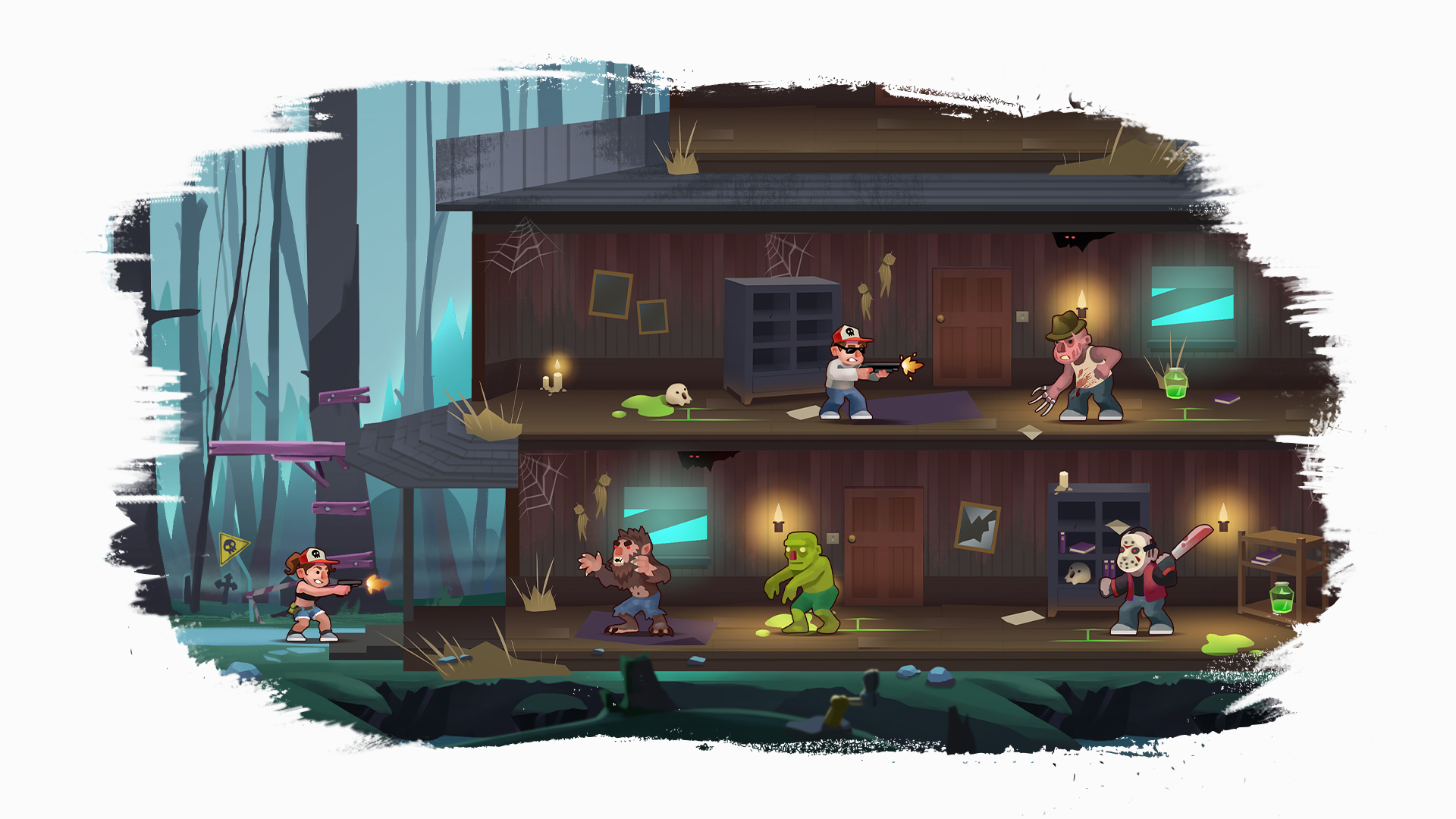
Key Insights
- Procedural Content Generation: Challenges and methodologies in crafting dynamic levels and environments.
- Adaptive Gameplay and Real-Time Combat: Balancing player skill with real-time strategic choices through adaptive difficulty.
- Emergent Gameplay and Minimalism: The impact of minimal asset design and modular mechanics on emergent player strategies.
Academic Problem Statements in Relation to "Echo Shift"
1. Procedural Content Generation and Dynamic Environments
Procedural Content Generation (PCG) is central to "Echo Shift" as it offers the means to deliver unpredictable and varied challenges. Many academic journals discuss the inherent challenges in designing objective functions that can generate dynamic, interesting environments in real time. For example, one of the core problems is how to calibrate algorithms such that the generated levels are not only diverse but also adhere to the particular pacing and visual language of the game. Then, designers must balance exploration with structured levels that guide player progression. Academic research often refers to "rhythm groups" in 2D platformers, where level progression is broken into segments that maintain a continuous flow of action.
Challenge of Optimization and Variety
A prominent problem statement from the literature is: "How can a procedurally generated level maintain an optimal balance between randomness and intentional design so that the challenge remains fresh for the player while preserving a coherent game flow?" Researchers have tackled these issues by exploring various algorithms that integrate both authorial intent and dynamic variation, suggesting methods like reinforcement learning to adjust difficulty in real time.
2. Adaptive Difficulty and Real-Time Combat Systems
In "Echo Shift," the real-time combat and environmental manipulation introduce a layer of adaptive difficulty. Academic references in this domain seek to answer: "What mechanisms can be implemented in adaptive systems to monitor player behavior and adjust game difficulty in real time without disrupting the game’s pace?" Studies often highlight the use of real-time feedback loops where the game’s response is mediated by the player’s immediate performance. In such systems, metrics (such as reaction time, errors, and successful maneuvers) are captured and analyzed to fine-tune the challenge level dynamically.
Balancing Challenge and Engagement
The research points out that adaptive difficulty systems need to strike a balance between being too lenient and overly harsh. It is essential for maintaining a game design ethos where players feel challenged yet are not frustrated by insurmountable levels. The design challenge here extends to creating algorithms that adjust the parameters in a way that seems natural, maintaining the real-time pace of combat while using environmental shifts strategically.
3. Emergent Gameplay Via Minimal Asset and Modular Mechanics
"Echo Shift" leverages minimalistic design and modular mechanics to allow emergent gameplay—where players are encouraged to experiment with various tactics using a limited set of actions. Academic investigations into emergent gameplay often center around the question: "How can simple rules and a minimal asset approach foster complex and varied player interactions?" Research on emergent behavior in games suggests that a high level of modularity in mechanics can lead to unexpected strategies and player creativity.
Exploring Emergence from Simplicity
The concept of emergent gameplay is one of the most compelling within game studies. It argues that minimal assets do not necessarily limit a game’s complexity if those assets are used in a modular and flexible framework. For "Echo Shift," the design challenge lies in creating multiple uses for the environment manipulation mechanic – whether it be for creating temporary platforms, forming defensive barriers, or deflecting enemy projectiles – without explicitly scripting every possible interaction. This open approach encourages players to develop new strategies, thus enriching the overall gameplay experience.
4. Strategic Environmental Control and Player Experience
Central to the player experience in "Echo Shift" is the ability to dynamically control the environment during combat. Academic research in this area tends to focus on the impact of visual and interactive environmental changes on player engagement and decision-making processes. A significant problem statement here is: "How do changes in the game's physical environment, prompted by player actions, affect cognitive load and decision-making in high-pressure scenarios?"
Visual Effects and Cognitive Engagement
Studies have noted that while environmental control introduces a visually engaging element, it also increases the cognitive demands on the player. The challenge for game designers is to ensure that these visual effects are not merely decorative but serve a functional purpose that enhances gameplay clarity and satisfaction. The optimal integration of these effects can help reduce the reaction time required and may also provide intuitive cues that support the player’s strategic choices.
5. Integration of Automated Playtesting and Feedback Loops
An emerging area in academic game research relates to the integration of automated playtesting (APT) as part of iterative design practices. For a game like "Echo Shift," automated playtesting can be vital in evaluating how players interact with dynamically generated environments and adaptive difficulty mechanics. The key question being examined in academic circles is: "How can automated systems be employed effectively to refine dynamic game elements and ensure balanced gameplay?"
Leveraging Reinforcement Learning for Level Testing
Researchers advocate for the use of reinforcement learning frameworks, where artificial agents simulate a variety of gameplay styles to identify potential pitfalls in level design and adaptive systems. This approach not only speeds up the testing process but also provides statistical insights into player performance across a myriad of potential scenarios. Automated playtesting contributes not only to refining the game mechanics but also forms a basis for iterative improvements, ensuring that each procedural iteration meets a predefined standard of challenge and engagement.
Comprehensive Overview of Related Research Areas
The study of academic literature pertinent to "Echo Shift" overlaps several fields within game development and design. Below is an integrated table summarizing key research areas, associated problem statements, and the relevant academic references:
| Research Area | Problem Statement | Academic Reference |
|---|---|---|
| Procedural Content Generation | How to automate level design that maintains quality, coherence, and player engagement? | Northeastern University Thesis - Northeastern University Repository |
| Adaptive Difficulty | How to balance adaptive challenges for diverse player skills in real-time? | Procedural Content Generation Survey - ResearchGate |
| Emergent Gameplay | How do minimal assets and modular mechanics foster complex strategies? | Human vs. Procedural Level Generation - Academia.edu |
| Environmental Control | How do dynamic visual effects and environmental changes impact player cognition? | Dynamic Environments Research - DiVA Portal |
| Automated Playtesting | How can reinforcement learning refine the balance between challenge and accessibility? | Level Design & Procedural Generation - Game Developer |
Deep Dive into Specific Academic Concepts
Procedural Content Generation Methodologies
Academic discussions on procedural generation focus on algorithms that produce levels and narratives based on a set of initial parameters. In “Echo Shift,” the system’s ability to create fresh challenges relies on dynamically generated environments where every playthrough offers a unique combination of obstacles and opportunities. Core concepts include using objective functions that are optimized through iterative feedback and employing randomness balanced with engineered design constraints. Researchers often debate the trade-off between too much randomness — which can lead to incoherent levels — and overly deterministic design, urging the use of hybrid models that incorporate both procedural rules and designer input.
Hybrid Models
Hybrid models that combine procedural methods with handcrafted guidelines serve as a promising solution. These models maintain the pivot of authorial intent while introducing enough variability so players constantly encounter fresh challenges. Advanced methods involve reinforcement learning, wherein AI agents iteratively test levels and adjust parameters to fine-tune difficulty and coherence.
Real-Time Adaptive Systems
When considering adaptive difficulty for real-time combat, the focus shifts towards how systems can evaluate data from gameplay sessions and adjust parameters on-the-fly. Research in this area shows that dynamic difficulty adjustment (DDA) mechanisms rely on continuous monitoring of player performance metrics, such as completion time, errors made, and successful maneuvers. These systems can employ regression models or machine learning classifiers to predict the appropriate level of challenge. In "Echo Shift," such a system would ideally be responsive enough to modify aspects of both the environment and enemy behaviors to suit individual play styles.
Integration With Game Mechanics
Successful integration requires that the adaptive system works seamlessly with the kinetic pace of action-platforming. In literature, questions have been raised about latency in adjustment and perceptible fairness. Consequently, system designers strive for minimal disruption to gameplay, ensuring that difficulty adjustments feel intuitive rather than invasive. The challenge remains to test, validate, and iteratively improve these systems through simulation and automated playtesting.
Emergent Gameplay Through Minimalism
Emergent gameplay arises when players exploit simple game mechanics in unexpected ways. In the context of "Echo Shift," the “shift” ability, despite its minimal asset footprint, opens up a wide array of strategic uses. Academic research in emergent systems often highlights examples where simple rules lead to a rich spectrum of possibilities, thereby increasing both depth and longevity in gameplay. Through modular design, developers can allow a limited set of abilities to interact synergistically, creating complex and emergent strategies that aren't directly programmed. This not only raises player engagement but also encourages a personal play style, forming a unique gaming identity tailored to individual strengths and creativity.
Key Observations
Observations indicate that when game mechanics are designed with open-ended interactions in mind, players tend to develop nuanced strategies that extend beyond the basic rules of the game. This can be supported by case studies from well-known titles that emphasize player freedom and modular interaction, offering valuable insights for systems like those in "Echo Shift."
Strategic Implications of Environmental Manipulation
Another crucial academic inquiry centers on the interplay between player-driven environmental changes and combat dynamics. The literature explores how visual feedback, combined with the immediate payoff of environmental manipulation, heightens decision-making processes. For "Echo Shift," challenges include ensuring that temporary platforms and barriers not only provide physical support but also serve as intuitive guides for strategic movement and defense during combat. One research angle examines how such environmental cues can reduce cognitive load during high-stress combat sequences, thereby improving overall game fluidity and responsiveness.
Interactivity and User Experience
The academic consensus emphasizes that the effective design of environmental manipulation mechanics results in heightened immersion and player satisfaction. It highlights the importance of clear visual distinctions between static and dynamically created elements, which can further streamline a player's decision-making process under pressure.
References
Below is a curated list of academic sources that provide deeper insights into the research areas related to "Echo Shift":
- Procedural Content Generation Thesis - Northeastern University Repository
- Procedural Content Generation for Games: A Survey - ResearchGate
- A Framework for Analysis of 2D Platformer Levels - ResearchGate
- Dynamic Environments in Game Design - DiVA Portal
- Level Design in Procedural Generation - Game Developer
- Procedural vs. Handcrafted Level Generation - Academia.edu
Recommended Queries for Deeper Insights

Last updated March 25, 2025