
Unraveling Accommodative Abnormalities: Diagnosis, Therapy, and Developmental Insights
A Comprehensive Guide to Eye Focusing Disorders and Their Management
Accommodation is the eye's remarkable ability to change focus from distant to near objects, a crucial visual skill essential for everyday tasks, especially reading and computer use. This complex process involves the crystalline lens altering its shape through the contraction and relaxation of the ciliary muscle. When this system malfunctions, it leads to accommodative dysfunctions, impacting visual clarity, comfort, and even learning. These abnormalities are common in both children and adults, particularly those with high near-work demands.
Key Highlights in Addressing Accommodative Abnormalities
- Comprehensive Diagnostic Approach: Identifying accommodative abnormalities requires a multifaceted evaluation, including tests like accommodative amplitude, facility, and relative accommodation, alongside a thorough assessment of binocular vision.
- Tailored Treatment Strategies: Management options range from corrective lenses and optical aids to highly effective vision therapy and, in some cases, pharmacological interventions, all aimed at restoring comfortable and efficient focusing.
- Developmental and Behavioral Impact: Accommodative dysfunctions significantly affect academic performance, concentration, and daily activities, emphasizing the importance of early diagnosis and consistent treatment, especially in pediatric populations.
Understanding the Spectrum of Accommodative Abnormalities
Accommodative abnormalities are diverse, each presenting unique challenges related to the eye's focusing mechanism. These conditions can disrupt daily routines, particularly for students and professionals engaged in extensive near work.
Accommodative Insufficiency: The Under-Focusing Challenge
Accommodative insufficiency (AI) is characterized by a reduced ability to stimulate or sustain accommodation, meaning the eyes struggle to focus adequately on close objects. This is often described as the amplitude of accommodation being lower than expected for the patient's age. It's a common condition, affecting approximately 3-10% of children, teens, and university students.
Symptoms frequently include blurred vision during near work, headaches, eyestrain, fatigue, and a general avoidance of close-up tasks. While AI is distinct from presbyopia (age-related focusing difficulty), both involve difficulty engaging the near vision system. In some instances, AI may be functional, where the child doesn't develop normal focusing abilities, or acquired, potentially due to injury, concussion, or systemic causes like diabetes or multiple sclerosis. It's often found in conjunction with convergence insufficiency, another binocular vision disorder.
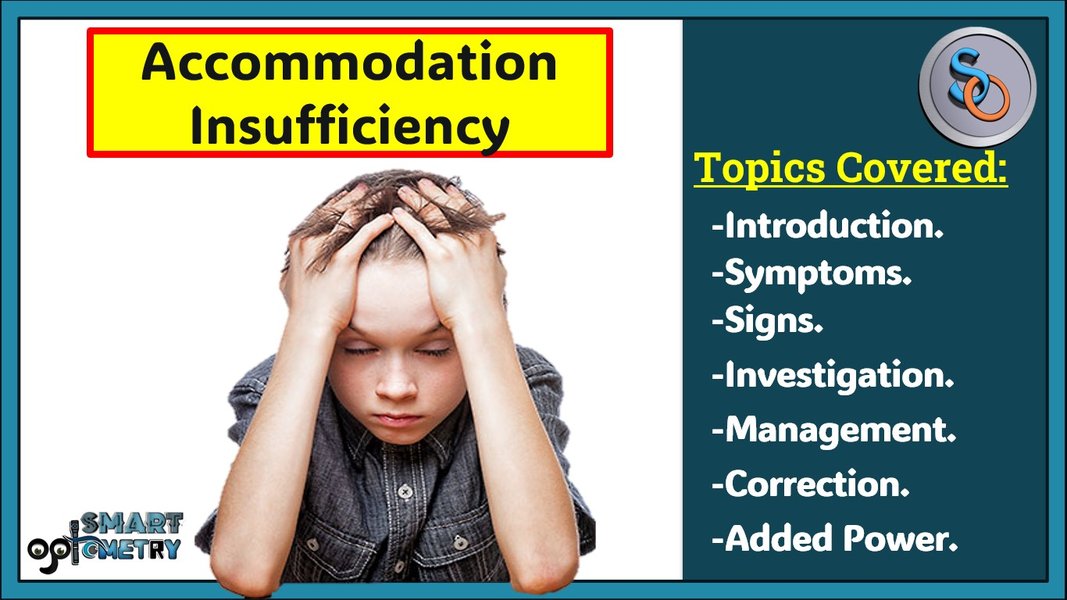
An illustration depicting the visual challenges associated with Accommodative Insufficiency, where near objects appear blurry due to insufficient focusing power.
Accommodative Excess: The Over-Focusing Predicament
In contrast to insufficiency, accommodative excess (AE), also known as excessive accommodation or accommodation spasm, occurs when an individual uses more than normal accommodation for near work. This can manifest as a persistent over-focusing or an inability to readily relax accommodation. It implies the eyes are focusing closer than the actual object's distance.
Individuals with AE may experience symptoms like blurred vision for both near and distance, especially transient blur when looking up after prolonged near tasks. It can also lead to visual stamina reduction and impact binocular vision. Young hypermetropes (farsighted individuals) might physiologically use excessive accommodation for clear vision, while young myopes (nearsighted individuals) performing extensive near work may also exhibit this condition, often associated with excessive convergence. Untreated AE can increase the risk of induced myopia later in life.
Accommodative Infacility: The Sluggish Focus
Accommodative infacility, or accommodative inertia, describes a condition where the eye's focusing system is slow to change focus or has a significant lag between the stimulus to accommodation and the actual accommodative response. This translates to difficulty shifting focus quickly and accurately between different distances, such as looking from a blackboard to a notebook.
Patients often report blurred distance vision immediately after sustained near work. It can also cause headaches, eye fatigue, and blurred vision at both near and distance. The prevalence of accommodative infacility has been reported in various populations, affecting school-aged children and young adults, and can even be induced or worsened by extensive computer work.
Ill-Sustained Accommodation: The Endurance Test
Ill-sustained accommodation is a specific type of accommodative insufficiency where the initial range of accommodation is normal, but the ability to maintain that focus deteriorates rapidly with prolonged near work. This means the eyes can achieve clear focus initially but cannot sustain it for extended periods, leading to fatigue and blur over time. It highlights a stamina issue within the accommodative system.
Diagnostic Pathways: Uncovering Accommodative Abnormalities
Accurate diagnosis is paramount for effective treatment. Optometrists are frequently the first healthcare practitioners to identify accommodative dysfunctions. A comprehensive eye exam for accommodative and vergence disorders must include an evaluation of alignment, accommodation, vergence, and eye movement skills.
Key Diagnostic Tests
Several clinical tests are utilized to assess the nuances of accommodative function:
Accommodative Amplitude Measurement
This test determines the maximum focusing power an individual can exert. Methods include:
- Push-up Test: A target is moved closer to the eye until it blurs.
- Pull-away Test: The target is moved away from a blurred near point until it becomes clear.
- Minus Lens to Blur: Increasing minus lenses are introduced until the near target blurs.
The results are compared to age-expected norms (e.g., using Hofstetter's formula). A measured value two or more diopters below the minimum typically indicates insufficient accommodation. While subjective, these tests are crucial, though objective methods may provide more accurate measurements in young children.
Accommodative Facility Testing
This dynamic test assesses the speed and flexibility of the eye's focusing system. It typically involves accommodative flippers (lenses of varying powers, e.g., ±1.50D or ±2.00D) which the patient flips while maintaining clarity of a near target. The rate is measured in cycles per minute (cpm).
- Monocular Accommodative Facility (MAF): Evaluates each eye's ability to stimulate and relax accommodation independently. Reduced MAF (e.g., ≤6 cpm) suggests a problem with accommodative flexibility, often seen in infacility.
- Binocular Accommodative Facility (BAF): Assesses the combined accommodative and vergence system. Reduced BAF (e.g., ≤3 cpm) can indicate accommodative insufficiency or a vergence disorder.
Failing to clear the minus lens side (indicating difficulty stimulating accommodation) points towards accommodative insufficiency, while failing the plus lens side (difficulty relaxing accommodation) points towards accommodative excess. Factors like target complexity, manual facility, and reaction time can influence results.
Relative Accommodation Tests (NRA/PRA)
These tests measure the amount of plus or minus lens power that can be added while maintaining a clear, single, near target.
- Negative Relative Accommodation (NRA): Measures the amount of additional plus lens power a patient can accept before blur, indicating the amount of accommodative relaxation possible. A low NRA can suggest accommodative excess.
- Positive Relative Accommodation (PRA): Measures the amount of additional minus lens power a patient can accept before blur, indicating the maximum accommodative stimulation possible. A low PRA can suggest accommodative insufficiency.
Near Point of Convergence (NPC)
Although primarily a vergence test, NPC is often assessed alongside accommodative tests as these systems are intricately linked. A receded NPC can indicate convergence insufficiency, which frequently co-occurs with accommodative insufficiency.
Objective Refraction Techniques
Objective methods like retinoscopy (e.g., Monocular Estimation Method - MEM retinoscopy) and autorefraction provide insights into the accommodative response without subjective input from the patient, which can be particularly useful in children or uncooperative patients. Lag of accommodation (the difference between the accommodative stimulus and response) can be objectively measured, providing crucial diagnostic information.
This radar chart illustrates the typical performance profile across different accommodative tests for individuals with common accommodative abnormalities, compared to a healthy baseline. Each spoke represents a specific diagnostic metric, with higher values indicating better performance (e.g., higher amplitude, faster facility, wider range). The chart helps visualize how each condition uniquely impacts the accommodative system. For instance, Accommodative Insufficiency often shows a significantly reduced Amplitude and PRA, while Accommodative Excess might have a low NRA and difficulty relaxing accommodation. Accommodative Infacility is primarily characterized by low facility rates. This visual representation aids in understanding the distinct characteristics of each disorder in a multi-dimensional way.
Treatment Approaches for Accommodative Abnormalities
Treatment for accommodative dysfunctions is tailored to the specific diagnosis and severity of the condition. The primary goal is to alleviate symptoms, improve visual comfort, and enhance the eye's ability to maintain focus efficiently, especially during near tasks.
Optical Correction: Lenses as Aids
Corrective lenses are often the first line of treatment, especially for accommodative insufficiency. These may include:
- Plus Lenses for Near Work: For accommodative insufficiency, low-plus lenses (e.g., reading glasses or bifocals) are prescribed for near tasks. These lenses reduce the accommodative demand, allowing the eyes to relax and focus more comfortably. The amount of plus power needed can be determined by tests like NRA/PRA or MEM findings. Studies suggest that even +1.00D lenses can significantly improve accommodative amplitudes and reading velocity after several weeks.
- Eyeglasses for Accommodative Excess: While seemingly counterintuitive, specific lens prescriptions can help manage accommodative excess by encouraging relaxation of the ciliary muscle. Cycloplegic drugs, which temporarily paralyze the ciliary muscle, may also be used in some cases to break accommodative spasm.
This video provides an excellent overview of accommodative dysfunction, breaking down its various types and explaining how they can impact a child's ability to learn and focus. It contextualizes the importance of understanding these conditions from a developmental perspective, highlighting how a seemingly simple "eye focusing problem" can have profound effects on academic performance and daily life.
Vision Therapy: Training the Eyes and Brain
Vision therapy (VT) is a highly effective treatment for most accommodative dysfunctions, particularly when the cause is functional rather than organic. It's a customized program of exercises designed to strengthen eye muscles, improve visual skills, and fine-tune the accommodative response. VT aims to teach the eyes and brain to work together more efficiently, reducing strain and improving performance.
Core Principles of Vision Therapy
Vision therapy for accommodative disorders often emphasizes the manipulation of blur, disparity, and target proximity to retrain the visual system. It focuses on improving:
- Accommodative Amplitudes: Increasing the maximum focusing power.
- Accommodative Facility: Enhancing the speed and ease of changing focus.
- Reducing Latency: Minimizing the delay in accommodative response.
- Integration with Vergence: Coordinating focusing with eye teaming skills.
- Oculomotor Skills: Improving eye tracking.
Common Vision Therapy Activities
Exercises may include:
- Accommodative Flippers: Patients practice rapidly clearing targets through plus and minus lenses, improving flexibility.
- Pencil Push-ups: Focusing on print on a pencil as it moves closer and farther, training dynamic focusing.
- Near-Far Charts: Alternating focus between distant and near charts to improve speed and accuracy of accommodative shifts.
- Brock Strings: Used to integrate accommodation with vergence (eye teaming).
- Computer-Based Vision Therapy: Software programs designed to target specific accommodative skills.
Therapy Duration and Effectiveness
Vision therapy can be performed in-office under guidance and reinforced with home-based exercises. For accommodative excess, 16 to 24 sessions of office therapy are often recommended. If complicated by conditions like head trauma, it might extend to 32-48 sessions. For accommodative insufficiency, cure rates with vision therapy can range from 80% to 100%. Noticeable improvement typically occurs within several weeks to a few months, depending on consistency and individual response.
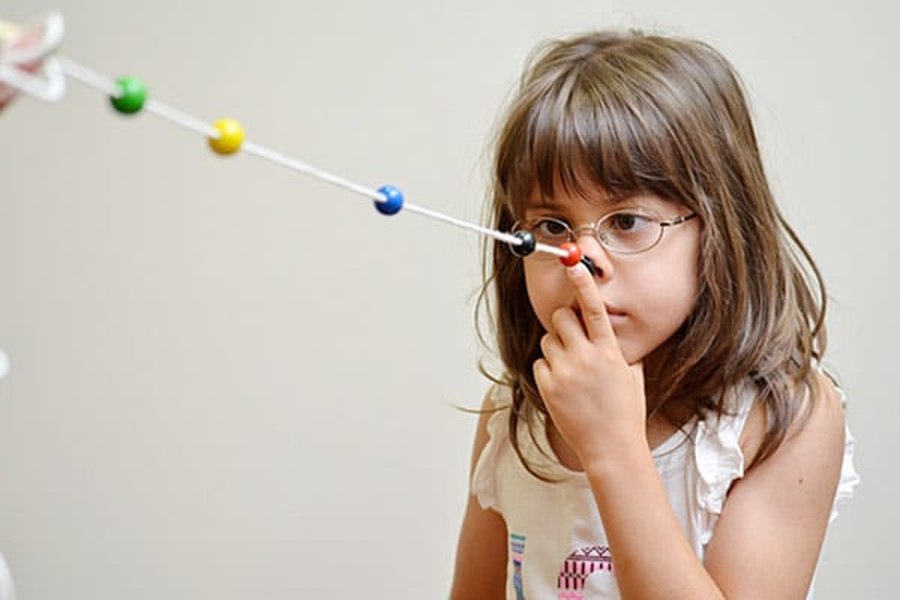
A child wearing glasses while engaged in reading, illustrating a common approach to managing accommodative dysfunctions through optical correction.
Pharmacological Agents
In certain cases, especially for accommodative excess or spasm, pharmacological agents like cycloplegic drugs (e.g., atropine, cyclopentolate) may be used. These medications temporarily relax the ciliary muscle, reducing the excessive focusing effort. They are generally used under careful medical supervision and are often combined with other treatments.
Visual Hygiene and Lifestyle Adjustments
Educating patients on proper visual hygiene is crucial for managing accommodative dysfunctions, especially those with functional etiologies. This includes:
- Taking regular breaks during near work (e.g., the 20-20-20 rule: every 20 minutes, look at something 20 feet away for 20 seconds).
- Maintaining appropriate working distances.
- Ensuring adequate lighting for near tasks.
- Avoiding prolonged screen time without breaks.
Impact on Development and Behavior
Accommodative abnormalities can have significant developmental and behavioral consequences, particularly in children:
- Academic Performance: Blurred vision, eye strain, and headaches can directly impede reading fluency, comprehension, and overall academic achievement. Children may avoid near-work tasks, leading to difficulties in school.
- Attention and Concentration: The discomfort and effort required to maintain clear vision can lead to reduced attention spans, difficulty concentrating, and symptoms that may mimic ADHD.
- Fatigue and Frustration: Constant effort to focus can cause significant visual and general fatigue, leading to frustration and behavioral issues.
- Binocular Vision Disorders: Accommodative dysfunctions often co-occur with vergence disorders (e.g., convergence insufficiency or excess), creating a more complex visual challenge that further impacts reading and learning.
Early diagnosis and consistent treatment are vital to mitigate these impacts, allowing individuals, especially children, to develop essential visual skills and achieve their full potential.
Comparative Overview of Accommodative Abnormalities
This table summarizes the key characteristics, common symptoms, diagnostic findings, and general treatment approaches for each accommodative abnormality, providing a clear comparison for a better understanding of these distinct conditions.
| Condition | Description | Common Symptoms | Key Diagnostic Findings | Primary Treatment Approaches |
|---|---|---|---|---|
| Accommodative Insufficiency (AI) | Inability to sufficiently stimulate or sustain accommodation; eyes struggle to focus on near objects. | Blurred near vision, headaches from near work, eyestrain, fatigue, avoidance of near tasks, difficulty concentrating. | Reduced Accommodative Amplitude (below age norm), low PRA, low Binocular Accommodative Facility (BAF), increased accommodative lag. | Plus lenses for near, optometric vision therapy (strengthening accommodation, facility training), lifestyle adjustments. |
| Accommodative Excess (AE) | Persistent over-focusing or inability to relax accommodation readily; eyes focus closer than actual object. | Blurred vision (near and distance, especially after near work), headaches, eyestrain, visual stamina reduction, transient blur. | Low NRA, difficulty clearing plus lenses on accommodative facility tests, may show reduced accommodative facility rates for relaxation. | Vision therapy (learning to relax accommodation), corrective lenses (specific prescriptions), cycloplegic drugs (rarely, for spasm), visual hygiene. |
| Accommodative Infacility | Slow or difficult change in focus between different distances (e.g., near to far); significant lag between stimulus and response. | Blurred vision when shifting gaze (e.g., board to book), headaches, eyestrain, general fatigue. | Significantly reduced Monocular and Binocular Accommodative Facility (low cpm rates) for both stimulating and relaxing accommodation. | Vision therapy (speed and flexibility training with flippers, near-far charts), lifestyle adjustments. |
| Ill-Sustained Accommodation | Normal initial accommodative amplitude but rapid decay of focusing ability with prolonged near work. | Initial clarity followed by increasing blur, fatigue, and discomfort during extended reading or computer use. | Normal initial amplitude of accommodation, but objective measures show decreased accommodative response over time with sustained near work. | Vision therapy (focus on stamina and endurance), appropriate optical correction for near, visual hygiene. |
Frequently Asked Questions (FAQ)
What is "accommodation" in the context of vision?
Can accommodative abnormalities be permanently corrected?
Are these conditions only found in children?
How long does vision therapy take for accommodative disorders?
Conclusion
Accommodative abnormalities, encompassing insufficiency, excess, infacility, and lack of sustainability, are common vision dysfunctions that significantly impact an individual's ability to focus clearly and comfortably. From a developmental and behavioral standpoint, these conditions can lead to reduced academic performance, attention issues, and visual fatigue. Comprehensive diagnostic testing, including assessments of accommodative amplitude, facility, and relative accommodation, is crucial for accurate identification. Fortunately, with appropriate treatment strategies—ranging from corrective lenses and optical aids to personalized vision therapy programs and, in specific instances, pharmacological interventions—most individuals can achieve substantial improvement in their visual comfort and efficiency, thereby enhancing their quality of life and overall well-being.
Recommended Further Exploration
- How does vision therapy improve accommodative function?
- Relationship between convergence insufficiency and accommodative dysfunction
- Impact of screen time on accommodative health in children
- Objective vs. subjective methods for assessing accommodation
References
Last updated May 21, 2025