
Unlocking the Blueprint: The Chemical Secrets of ACE Inhibitors and Their Therapeutic Power
Delving into the Structure-Activity Relationships and Classification of Angiotensin-Converting Enzyme Inhibitors

- 1.Key Insights into ACE Inhibitors
- 2.The Core Mechanism: Competitive Inhibition of ACE
- 3.Structure-Activity Relationships (SAR) Driving Efficacy
- 4.Mermaid Mindmap: A Structural Overview of ACE Inhibitors
- 5.Comparing ACE Inhibitors: A Pharmacological Perspective
- 6.Understanding ACE Inhibitor Pharmacology
- 7.Delving Deeper: The SAR of ACE Inhibitors
- 8.Frequently Asked Questions About ACE Inhibitors
- 9.Conclusion: The Precision of ACE Inhibitor Design
- 10.Recommended Further Exploration
- 11.Referenced Search Results
Key Insights into ACE Inhibitors
- Zinc-Binding Moiety is Key: The primary classification of ACE inhibitors hinges on the specific chemical group that binds to the zinc atom in the active site of the ACE enzyme, leading to sulfhydryl, dicarboxylate, and phosphinate classes.
- Competitive Inhibition Mechanism: ACE inhibitors function as competitive inhibitors, effectively blocking the active site of the angiotensin-converting enzyme and preventing the conversion of angiotensin I to angiotensin II, which is crucial for blood pressure regulation.
- Enalapril: A Prodrug Masterpiece: Enalapril exemplifies how structural modifications, like its prodrug status (converting to enalaprilat in the body), can significantly enhance drug properties such as oral bioavailability and therapeutic efficacy.
Angiotensin-Converting Enzyme (ACE) inhibitors are a cornerstone in the management of cardiovascular conditions, particularly hypertension. Their therapeutic efficacy stems directly from their meticulously designed chemical structures, which enable them to precisely target and inhibit the ACE enzyme. Understanding their classification and the intricate structure-activity relationships (SAR) provides a profound insight into how these drugs exert their beneficial effects and why specific structural features are critical for their function.
The Core Mechanism: Competitive Inhibition of ACE
At the heart of ACE inhibitor action lies their ability to competitively inhibit the angiotensin-converting enzyme. ACE is a zinc metallopeptidase responsible for converting angiotensin I, a relatively inactive decapeptide, into the potent vasoconstrictor angiotensin II. By binding to the active site of ACE, these inhibitors block angiotensin I from accessing the catalytic site, thereby preventing the formation of angiotensin II. This interruption of the Renin-Angiotensin-Aldosterone System (RAAS) leads to vasodilation, reduced sodium and water retention, and ultimately, a decrease in blood pressure.
The competitive nature of this inhibition means that ACE inhibitors vie with the natural substrate (angiotensin I) for the same binding site on the enzyme. This interaction is often non-covalent but highly specific, involving key structural elements of the inhibitor with the enzyme's active site. The zinc ion (Zn2+) within the ACE active site is a critical component for enzymatic activity, and ACE inhibitors are designed to chelate or bind to this zinc atom, effectively neutralizing the enzyme's function.
The Crucial Role of Zinc-Binding Moieties
The classification of ACE inhibitors is fundamentally based on the chemical group responsible for binding to the zinc atom in the enzyme's active site. This zinc-binding moiety (ZBG) is paramount to their inhibitory action and defines three primary structural classes:
- Sulfhydryl-containing agents: These were among the earliest ACE inhibitors developed. Captopril is a classic example, featuring a sulfhydryl group that interacts with the zinc ion. While effective, this class was sometimes associated with certain adverse effects.
- Dicarboxylate (carboxyl)-containing agents: This is a widely represented class, including drugs like Enalapril, Lisinopril, Ramipril, and Perindopril. These inhibitors utilize a carboxylate group to chelate the zinc atom. They generally offer improved side-effect profiles compared to sulfhydryl-containing agents.
- Phosphinate (phosphonate)-containing agents: Fosinopril is a prominent example of this class, where a phosphinate group forms the critical bond with the zinc. Phosphinate inhibitors can exhibit longer durations of action.
These distinct chemical structures influence not only the binding affinity to ACE but also the drug's overall pharmacokinetic properties, such as bioavailability, half-life, and potential adverse effects.
Comparative Analysis of ACE Inhibitor Classes based on Key Pharmacological Attributes.
This radar chart illustrates a comparative assessment of the three main classes of ACE inhibitors across several important pharmacological attributes. It highlights how structural differences, particularly in the zinc-binding moiety, contribute to variations in their binding affinity to the ACE enzyme, their oral bioavailability (how well they are absorbed), their metabolic stability, their selectivity for the ACE enzyme over other targets, and their overall duration of action. For instance, while all classes demonstrate good zinc-binding affinity, dicarboxylate and phosphinate classes often show superior oral bioavailability and longer durations of action compared to sulfhydryl-containing agents, reflecting advancements in drug design and SAR optimization.
Structure-Activity Relationships (SAR) Driving Efficacy
The efficacy and specificity of ACE inhibitors are intricately linked to their structure-activity relationships. Medicinal chemists have painstakingly optimized these drugs by systematically modifying their chemical structures to enhance their binding to the ACE enzyme, improve their pharmacokinetic profiles, and minimize side effects. Key structural features influencing ACE inhibition include:
- Peptide Mimicry: Many ACE inhibitors are designed to mimic the peptide structure of angiotensin I, allowing them to fit into the S1/S1' pockets of the ACE active site. This mimicry is often achieved through a proline-derived scaffold, which also contributes to oral bioavailability.
- Optimal Chain Length: The length of the chemical chain between the carboxylate group (in dicarboxylate inhibitors) and the zinc-binding group is crucial for potent and selective binding. An optimal chain length ensures proper positioning of the zinc-binding moiety and other interacting groups within the active site.
- Hydrophobic Substituents: The presence of hydrophobic substituents, particularly at specific positions like P1', can significantly increase potency and selectivity by facilitating interactions with hydrophobic pockets within the enzyme's active site.
- Prodrug Strategy: The development of prodrugs, such as enalapril, is a sophisticated SAR strategy. Enalapril itself is inactive but undergoes hepatic hydrolysis to its active form, enalaprilat. This prodrug approach improves oral absorption and extends the drug's duration of action.
Enalapril: A Case Study in SAR Optimization
Enalapril stands out as a prime example of successful SAR optimization. It is a prodrug, meaning it is administered in an inactive form and then metabolized in the liver to its active metabolite, enalaprilat. Enalaprilat is the true competitive inhibitor of ACE. The key structural difference between enalapril and enalaprilat lies in the ethyl ester group of enalapril, which is hydrolyzed to a free carboxylate group in enalaprilat. This esterification in enalapril significantly enhances its oral bioavailability compared to enalaprilat itself, which would be poorly absorbed.
Unlike earlier sulfhydryl-containing ACE inhibitors such as captopril, enalapril (and thus enalaprilat) lacks a sulfhydryl group. This structural distinction is believed to contribute to a reduced incidence of certain adverse effects associated with the sulfhydryl group, such as skin rashes and taste disturbances. The L-proline moiety within enalapril's structure also plays a vital role in its binding and oral absorption.
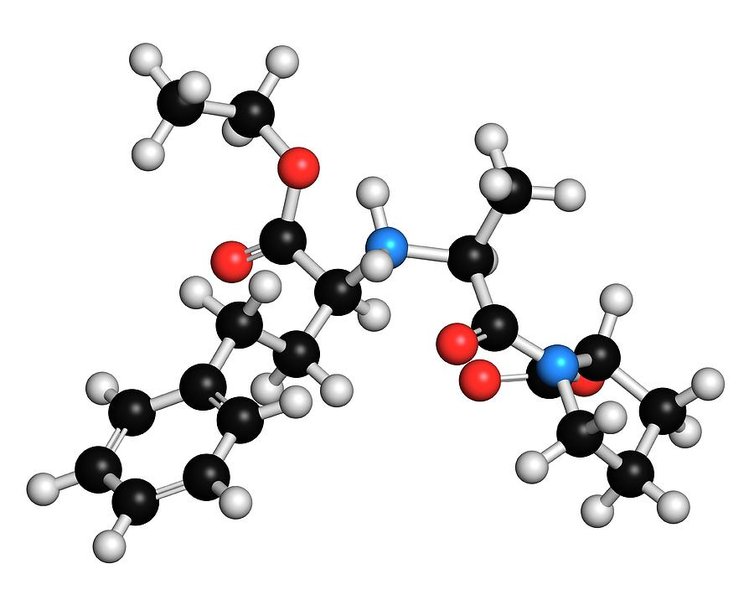
A molecular representation of Enalapril, highlighting its complex chemical structure.
Mermaid Mindmap: A Structural Overview of ACE Inhibitors
To further illustrate the multifaceted nature of ACE inhibitors, their classification, and key structural features, here's a mindmap summarizing the interconnected concepts.
Mindmap illustrating the classification, mechanism, and structure-activity relationships of ACE inhibitors.
Comparing ACE Inhibitors: A Pharmacological Perspective
While sharing a common mechanism of action, individual ACE inhibitors exhibit variations in their pharmacological profiles due to subtle differences in their chemical structures. These variations can impact factors such as onset of action, duration of effect, and specific metabolic pathways.
| ACE Inhibitor | Classification | Prodrug Status | Key Structural Features | Clinical Considerations |
|---|---|---|---|---|
| Captopril | Sulfhydryl | No | Contains a sulfhydryl group; first orally active ACE inhibitor. | Rapid onset, shorter duration of action; some association with skin rash and taste disturbances. |
| Enalapril | Dicarboxylate | Yes (to Enalaprilat) | Ethyl ester prodrug; hydrolyzed to active enalaprilat (lacks sulfhydryl). | Good oral bioavailability, longer duration of action than captopril; widely used. |
| Lisinopril | Dicarboxylate | No | Hydrophilic, not a prodrug; direct-acting. | Renally excreted unchanged, long half-life; suitable for once-daily dosing. |
| Fosinopril | Phosphinate | Yes | Contains a phosphinate group; ester prodrug. | Dual elimination (hepatic and renal); may be advantageous in renal impairment. |
| Ramipril | Dicarboxylate | Yes (to Ramiprilat) | Prodrug, highly lipophilic. | Extensive tissue distribution, long duration of action; evidence for cardiovascular protection beyond blood pressure lowering. |
Comparative table of notable ACE inhibitors, highlighting their classification, prodrug status, and unique characteristics.
The development of ACE inhibitors has been a triumph of medicinal chemistry, showcasing how a deep understanding of enzyme mechanisms and structure-activity relationships can lead to highly effective therapeutic agents. The continuing evolution of these drugs, including the exploration of domain-selective inhibitors, promises further refinements in cardiovascular pharmacotherapy.
Understanding ACE Inhibitor Pharmacology
To deepen the understanding of how ACE inhibitors function, it's beneficial to visualize their interaction within the body's systems. The following bar chart illustrates various pharmacokinetic and pharmacodynamic aspects, reflecting the impact of structural variations.
Pharmacokinetic Profiles of Selected ACE Inhibitors.
This bar chart provides an overview of various pharmacokinetic parameters for several key ACE inhibitors, including the prodrug enalapril and its active form, enalaprilat. The data illustrates how structural differences manifest in terms of onset of action, bioavailability, plasma half-life, and the primary routes of metabolism and excretion. For instance, the high hepatic metabolism of enalapril highlights its prodrug nature, while lisinopril's low bioavailability but high renal excretion illustrates a different pharmacokinetic strategy. These variations are direct consequences of the unique chemical structures and their interactions with biological systems, demonstrating the intricate balance between molecular design and therapeutic outcomes.
Delving Deeper: The SAR of ACE Inhibitors
For those interested in a more in-depth exploration of the Structure-Activity Relationship of ACE inhibitors, this video provides valuable visual and auditory explanations.
Understanding the intricacies of ACE inhibitor structure and activity.
This video provides a comprehensive lecture on the Structure-Activity Relationship (SAR) of ACE Inhibitors. It visually details how specific chemical groups and their arrangements within the molecule contribute to the drug's ability to bind to the angiotensin-converting enzyme and inhibit its function. This deep dive is particularly relevant as it explains the rationale behind the design of various ACE inhibitors, including the crucial role of zinc-binding moieties and peptide mimetics in achieving therapeutic efficacy and favorable pharmacokinetic profiles. It serves as an excellent resource for anyone seeking a more detailed understanding of the chemical underpinnings of these important medications.
Frequently Asked Questions About ACE Inhibitors
What is the primary mechanism of action for ACE inhibitors?
How are ACE inhibitors classified based on their chemical structure?
What is a prodrug, and why is Enalapril considered one?
What role does the zinc-binding moiety play in ACE inhibitor function?
Are there any common side effects associated with specific structural classes of ACE inhibitors?
Conclusion: The Precision of ACE Inhibitor Design
The intricate design of ACE inhibitors, characterized by their diverse chemical structures and precise interactions with the angiotensin-converting enzyme, underscores a remarkable achievement in medicinal chemistry. Their classification into sulfhydryl, dicarboxylate, and phosphinate groups based on their zinc-binding moieties highlights a fundamental aspect of their mechanism of action. The extensive exploration of structure-activity relationships has led to the development of highly effective and well-tolerated drugs like Enalapril, showcasing how subtle chemical modifications can profoundly impact pharmacokinetic properties, therapeutic efficacy, and patient safety. By understanding these chemical blueprints, we gain a deeper appreciation for the targeted approach to treating cardiovascular diseases and the ongoing innovation in pharmaceutical research.
Recommended Further Exploration
- Explore the detailed mechanism of action of the angiotensin-converting enzyme.
- Investigate the pharmacokinetics and pharmacodynamics of various ACE inhibitors.
- Learn about the ongoing development of novel ACE inhibitors and their structural innovations.
- Understand the comparison between ACE inhibitors and Angiotensin Receptor Blockers (ARBs) in hypertension management.