
Acticide MKB3 in Solvent-Based Systems: Unpacking Compatibility and Performance
Exploring the nuances of using this primarily water-based biocide in solvent-borne formulations.
Acticide MKB3 is a widely recognized biocide, but questions often arise regarding its suitability for solvent-based systems given its inherent formulation. This overview delves into its composition, compatibility, application guidelines, and critical considerations when incorporating it into solvent-borne coatings and materials.
Key Insights at a Glance
Essential Takeaways on Acticide MKB3 for Solvent Systems
- Primarily Water-Based, Yet Adaptable: Acticide MKB3 is fundamentally a water-based biocide dispersion. However, it is frequently cited for its notable compatibility and potential effectiveness when correctly incorporated into certain solvent-based coating formulations.
- Synergistic Protection Powerhouse: It employs a potent combination of three active ingredients – 2-Octyl-2H-isothiazol-3-one (OIT), Pyrithione zinc, and Terbutryn – further enhanced by Thor's proprietary AMME™ technology for robust, long-lasting protection against fungal and algal growth.
- Crucial Handling and Stability Nuance: A critical point of caution is that while Acticide MKB3 can be compatible within a broader solvent-based system, the direct dilution of the Acticide MKB3 emulsion itself with neat organic solvents is generally advised against, as this can lead to instability of the emulsion.
Understanding Acticide MKB3: Core Characteristics
Composition and Primary Design
Acticide MKB3, developed by Thor Specialties, is engineered primarily for the protection of surface coatings, paints, adhesives, and similar products from unsightly and damaging fungal and algal growth. It is supplied as a white to beige aqueous dispersion with a characteristic odor. Its physical characteristics typically include a pH range of 7.0 to 8.0 and a solid content between 26.0% and 32.0%.
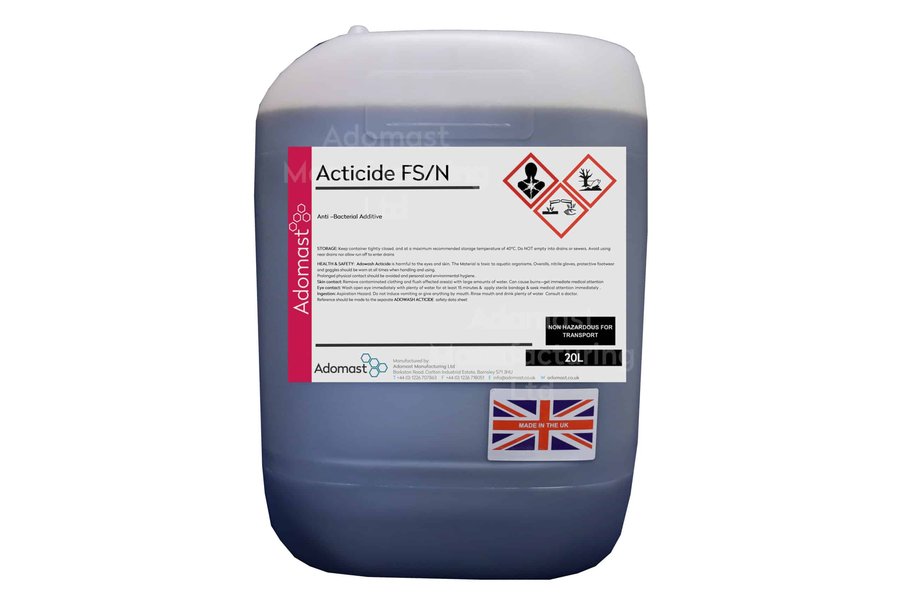
A representative image of an Acticide product container, illustrating industrial biocide packaging. Acticide MKB3 would be similarly packaged.
Active Ingredients and AMME™ Technology
The efficacy of Acticide MKB3 stems from a synergistic blend of active substances. This formulation leverages Thor's AMME™ (Advanced Micro-Encapsulation Technology) which enhances the stability of these active ingredients against environmental stressors such as alkaline pH, ultraviolet (UV) exposure, and leaching. This technology aims to provide improved, long-term preservation of the treated articles.
The key active components are:
- 2-Octyl-2H-isothiazol-3-one (OIT): Typically present at around 45.00 g/kg. OIT is a broad-spectrum biocide effective against fungi and algae.
- Pyrithione zinc: Also around 45.00 g/kg. It is well-known for its anti-fungal and anti-bacterial properties, commonly used in anti-fouling paints and anti-dandruff shampoos.
- Terbutryn (ISO): Approximately 80.00 g/kg. Terbutryn is an effective algicide, often used in coatings to prevent algal defacement.
This combination provides a broad spectrum of anti-fungal and anti-algal activity, making it particularly effective for dry-film preservation of coatings.
Navigating Acticide MKB3 in Solvent-Based Formulations
The Compatibility Conundrum: A Water-Based Biocide in a Solvent Environment
The central question for many formulators is how a water-based product like Acticide MKB3 performs in solvent-based systems. While its primary design is aqueous, several sources and industry applications suggest that Acticide MKB3 can exhibit good compatibility and even provide solvency benefits when thoughtfully incorporated into certain solvent-borne coating formulations. Its dispersion nature allows for integration if handled correctly, leveraging its protective qualities in a wider range of coating types.
It's crucial to understand that "compatibility" in this context refers to the ability of Acticide MKB3 to be dispersed and remain effective within the final solvent-based product matrix without causing adverse effects like phase separation, loss of biocidal activity, or degradation of coating properties. This often depends on the specific solvent blend, resin system, and other additives present in the formulation.
Critical Consideration: The "No Direct Dilution with Organic Solvents" Caveat
A highly important point, emphasized in technical literature, is the stability of the Acticide MKB3 emulsion itself. While the biocide can be part of a stable solvent-based formulation, directly diluting the concentrated Acticide MKB3 water-based emulsion with organic solvents is generally not recommended. This action can disrupt the emulsion's stability, potentially leading to a breakdown of the dispersion, precipitation of active ingredients, or loss of efficacy. Therefore, the method of incorporation into a solvent-based system is key, often involving careful addition at an appropriate stage of manufacturing, possibly when other stabilizing components are present.
Reported Benefits in Solvent-Based Applications
When successfully incorporated, Acticide MKB3 can offer several advantages to solvent-based coatings:
- Broad-Spectrum Dry-Film Protection: Effectively controls a wide range of fungi and algae that can deface and degrade exterior and interior coatings.
- Enhanced Stability: The AMME™ technology contributes to better stability of the active ingredients against alkaline pH and UV radiation, which are common challenges for exterior solvent-based coatings.
- Material Compatibility: It has been reported to show good compatibility with various raw materials and ingredients typically found in solvent-borne coating formulations.
- Ease of Handling (Relative): As a water-based dispersion, it can sometimes offer easier handling and incorporation compared to some solvent-based or powder biocides, provided the emulsion stability caveat is respected.
Practical Application Guidelines
Recommended Dosage and Incorporation Method
The typical use level for Acticide MKB3 ranges from 0.25% to 1.5% by weight (w/w), which translates to approximately 2.5 to 15 grams of Acticide MKB3 per kilogram of the final product. The exact dosage depends on several factors, including the susceptibility of the formulation to microbial attack, the environmental conditions the end-product will face, the desired level of protection, and local regulatory requirements.
For optimal results and to maintain stability, it is generally recommended to add Acticide MKB3 as late as possible in the production process. If possible, addition within a closed system is preferred to minimize exposure and maintain the integrity of the biocide. Thorough compatibility testing with the specific solvent-based formulation is always advised before large-scale production.
Summary of Key Biocidal Properties
The following table outlines the active ingredients in Acticide MKB3 and their primary roles:
| Active Ingredient | Typical Concentration (g/kg in Acticide MKB3) | Primary Biocidal Function |
|---|---|---|
| 2-Octyl-2H-isothiazol-3-one (OIT) | ~45.00 | Broad-spectrum fungicide and algicide |
| Pyrithione zinc | ~45.00 | Fungicide and algicide, some bactericidal activity |
| Terbutryn (ISO) | ~80.00 | Potent algicide, also effective against fungi |
This synergistic combination ensures robust protection against a wide array of microbial contaminants commonly found on coated surfaces.
Comparative Efficacy Profile of Acticide MKB3
Visualizing Biocidal Strengths
The radar chart below offers an opinionated visualization of Acticide MKB3's performance characteristics compared to theoretical generic biocides designed purely for solvent or water-based systems. The scores (on a scale where higher is generally better or stronger, with an axis minimum of 3 for clarity) reflect its strengths in fungal and algal protection, stability due to AMME™ technology, and its nuanced compatibility with solvent systems. It highlights that while Acticide MKB3 excels in water-based scenarios and offers good UV/pH stability, its application in solvent systems is marked "compatible with caveats" rather than being its primary design focus.
Conceptualizing Acticide MKB3 Usage
A Mindmap of Key Considerations
To better understand the multifaceted nature of Acticide MKB3, particularly when considering its use in solvent-based systems, the following mindmap outlines the interconnected factors. It starts with the core identity of the biocide, branches into its application in solvent systems highlighting both potential and limitations, and concludes with essential safety and handling aspects.
OIT, Zinc Pyrithione, Terbutryn"] id1c["AMME™ Technology
Enhanced Stability (UV, pH, Leaching)"] id2["Use in Solvent-Based Systems"] id2a["Reported Compatibility"] id2b["Potential Solvency Benefits"] id2c["Application Timing: Late Stage"] id2d["Typical Dosage: 0.25-1.5% w/w"] id3["Critical Limitations & Caveats"] id3a["Emulsion Stability: Do NOT dilute with neat organic solvents"] id3b["Not inherently solvent-based"] id3c["Requires Formulation Testing"] id4["Key Benefits When Incorporated"] id4a["Broad-Spectrum Protection
(Fungi & Algae)"] id4b["Dry-Film Preservation"] id4c["Good UV & Alkaline pH Resistance"] id5["Safety & Handling"] id5a["Refer to MSDS/SDS"] id5b["Personal Protective Equipment (PPE)"] id5c["Good Ventilation Required"] id5d["Hazardous Classification"]
This mindmap illustrates that while Acticide MKB3 is primarily water-based, its robust active ingredients and protective technology allow for its consideration in solvent-based systems, provided careful attention is paid to incorporation methods and potential emulsion stability issues.
Safety and Handling Imperatives
Essential Precautions for Safe Use
Acticide MKB3 is classified as a hazardous substance. According to safety data sheets, it can be harmful if swallowed, may cause serious eye irritation, and is known to cause allergic skin reactions. Some classifications also note potential risks to reproductive health or the unborn child, and it is very toxic to aquatic life with long-lasting effects. Therefore, stringent adherence to safety protocols is paramount.
Protective Measures:
- Ventilation: Always ensure good ventilation in areas where Acticide MKB3 is handled and processed.
- Personal Protective Equipment (PPE): Wear appropriate PPE, including chemical-resistant gloves, safety goggles or a face shield, and protective clothing to prevent skin and eye contact.
- Avoid Inhalation: Prevent inhalation of mists or aerosols. If ventilation is insufficient, use appropriate respiratory protection.
- Handling: Avoid direct contact with the skin and eyes. Wash hands thoroughly after handling. Do not eat, drink, or smoke when using this product.
- Storage: Store in original, tightly closed containers in a cool, dry, well-ventilated area away from incompatible materials and direct sunlight.
- Spills and Disposal: In case of spills, contain and collect appropriately. Dispose of waste and containers in accordance with local, regional, and national regulations. Avoid release to the environment.
It is crucial to consult the product's specific Material Safety Data Sheet (MSDS) or Safety Data Sheet (SDS) provided by the manufacturer for comprehensive safety, handling, storage, and emergency information before use.
Frequently Asked Questions (FAQ)
Is Acticide MKB3 inherently a solvent-based biocide?
No, Acticide MKB3 is fundamentally a water-based dispersion. Its active ingredients are suspended in an aqueous medium. While it can be compatible with certain solvent-based systems, it is not a solvent-based product itself.
Can I directly mix or dilute Acticide MKB3 with organic solvents?
It is generally cautioned against directly diluting the Acticide MKB3 emulsion with organic solvents. This can lead to instability of the emulsion, potentially causing the biocide to become ineffective or the formulation to break down. Incorporation into a solvent-based system should be done carefully, often at a later stage of production and after compatibility testing.
What are the main active ingredients in Acticide MKB3?
Acticide MKB3 contains a synergistic combination of three active ingredients: 2-Octyl-2H-isothiazol-3-one (OIT), Pyrithione zinc, and Terbutryn (ISO).
What is AMME™ technology and how does it benefit Acticide MKB3?
AMME™ (Advanced Micro-Encapsulation Technology) is a proprietary technology by Thor Specialties. It is designed to enhance the stability and efficacy of the active biocidal ingredients in Acticide MKB3, particularly against degradation from factors like alkaline pH, UV light exposure, and leaching, leading to longer-lasting protection.
What are the typical dosage rates for Acticide MKB3?
The recommended dosage for Acticide MKB3 is typically in the range of 0.25% to 1.5% by weight (w/w) of the final product, which is equivalent to 2.5 to 15 grams per kilogram. The precise amount will depend on the specific application, the level of microbial challenge expected, and regulatory considerations.
Recommended Further Exploration
Delve Deeper into Related Topics
- What are the detailed mechanisms and benefits of AMME technology in biocide formulations?
- What are the common challenges and solutions when incorporating water-based additives into solvent-borne coating systems?
- How do the biocidal profiles of OIT, Zinc Pyrithione, and Terbutryn compare individually and in synergy?
- What are the industry best practices for conducting compatibility and efficacy testing of biocides in new paint or coating formulations?
References
Sources for More Information
Last updated May 21, 2025