
Teaching Methods in Human Action Recognition and Localization
Exploring why structured teaching approaches are vital for advanced action analysis systems
Key Highlights
- Enhanced Model Training: Teaching methods enable systematic training of deep learning models with accurate data annotation and iterative feedback.
- Robust Feature Extraction: They allow for the extraction and analysis of complex spatio-temporal features essential for recognizing and localizing actions.
- Real-world Adaptability: Careful teaching methods help systems adapt to diverse environments and variable conditions, ensuring reliability in practical applications.
Introduction
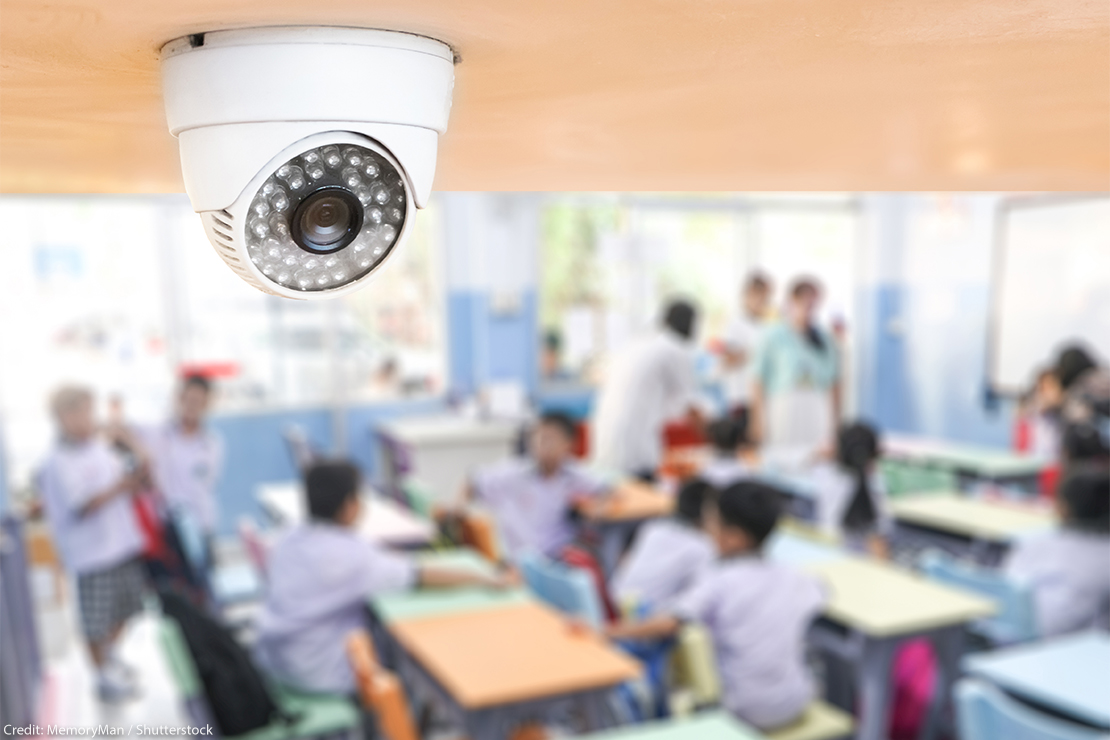
Human action recognition and localization are critical facets of modern computer vision and artificial intelligence. As our world becomes more data-driven, the ability to accurately identify and pinpoint human activities within video sequences has found immense applications across domains such as video surveillance, sports analysis, human-computer interaction, healthcare, and even classroom management. Teaching methods, particularly those leveraging machine learning and deep learning, serve as the backbone for these advancements by providing structured ways to train complex models that can identify a myriad of actions under varying conditions.
The Role of Teaching Methods
The application of effective teaching methodologies is indispensable in the evolving landscape of action recognition and localization. At its core, teaching methods address the two-fold challenges:
- Recognizing what action is performed (action recognition).
- Determining where and when the action occurs (action localization).
With the complexity of human activities—each characterized by rapid movements, diverse styles, and intricate temporal patterns—traditional manual observations fall short. Here, teaching methods empower computers to learn from rich, labeled datasets and enable them to automatically extract meaningful features, thus replacing labor-intensive manual annotation processes.
Essentials of Teaching Methods in Action Recognition
1. Data Annotation and Preparation
In human action recognition, large datasets with accurately labeled actions are the cornerstone for model training. Here’s why teaching methods are crucial:
- Standardization: Teaching methods ensure that datasets are standardized. Consistent labeling and annotation across large volumes of data improve the training process, eliminate biases, and ensure that distinct actions are well-represented.
- Quality of Data: The transition from raw data to a refined training dataset is pivotal. Teaching techniques incorporate procedures like data cleaning, augmentation, and normalization, which are essential to overcome variabilities such as occlusions, lighting fluctuations, and diverse backgrounds.
For instance, classroom settings where human actions (such as hand raises or shifting postures) need to be monitored benefit from systematic annotation to capture nuanced teacher and student behaviors. These nuanced observation metrics become targets that models need to learn.
2. Deep Learning and Feature Extraction
Modern action recognition systems rely heavily on deep learning architectures like Convolutional Neural Networks (CNNs) and Recurrent Neural Networks (RNNs). Teaching methods contribute by:
- Automated Feature Learning: Unlike traditional models that depend on hand-engineered features, deep learning models automatically extract spatio-temporal features from input data. This automation is driven by training methodologies that refine the feature extraction process over time.
- Handling Variability: Since human actions can vary in style, speed, and duration, teaching methods enable models to learn invariant features that are robust across different subjects and scenarios.
The utility of machine learning is showcased in many real-world applications. In autonomous driving systems, for example, the ability to quickly recognize a pedestrian's action (walking, running, or stopping) can drastically improve safety measures. Teaching methods enable the deep learning frameworks behind these systems to learn such tasks with greater accuracy.
3. Model Training and Optimization
The training phase is where teaching methods truly shine, providing a structured approach to model optimization:
- Hyperparameter Tuning: Structured teaching methods assist in fine-tuning hyperparameters—such as learning rates, batch sizes, and number of epochs—that dictate the performance of neural networks.
- Iterative Feedback: Processes like validation, retraining, and feedback iterations are incorporated seamlessly. By leveraging systematic frameworks, these methods ensure continuous improvement and quick adaptation to errors or new patterns in the data.
- Real-time Performance: In applications such as surveillance and real-time monitoring, the ability to execute rapid inference greatly depends on how the model is taught and optimized during training. Teaching methods aim to strike a balance between complexity and computational efficiency.
4. Action Localization
Moving beyond simple recognition, action localization requires pinpointing actions in both spatial and temporal dimensions. The teaching protocols here become slightly more intricate:
- Temporal Segmentation: Models are trained to segment sequences in video feeds, discerning not only the type of action but the precise moments it starts and ends.
- Spatial Detection: Localization also demands that the system accurately identify where an action is occurring within the scene—a capability enhanced through methods like region proposal networks and bounding box regression.
- Multimodal Fusion: Integrating various data sources—such as audio cues or sensor readings—with visual data often produces improved localization results. Teaching methods facilitate this fusion by training networks on multimodal datasets.
Teaching Methods: A Step-by-Step Process
The process of teaching human action recognition and localization systems can be broken down into several structured phases:
Phase 1: Data Collection and Annotation
The foundation of any effective action recognition system lies in the quality and volume of data:
- Data Collection: Videos, sensor readings, and image sequences are gathered from diverse environments to ensure a broad knowledge base.
- Annotation: Experts label the data to capture intricate details of actions. Automated annotation techniques may also be employed to enhance efficiency, especially in large datasets.
Phase 2: Preprocessing and Augmentation
Preprocessing ensures data consistency, and augmentation increases the dataset’s size and variability:
- Normalization: Standardizing data formats, resolutions, and color scales.
- Augmentation: Techniques such as rotation, cropping, and noise injection simulate real-world variability, which in turn supports the model’s generalizability.
Phase 3: Model Architecture and Training
This phase involves selecting and optimizing the right deep learning architecture:
- Choice of Architecture: Different networks such as CNNs for spatial feature extraction and RNNs for temporal dynamics are chosen based on the task.
- Training: The model is trained iteratively using backpropagation, where teaching methods ensure that the network learns the right patterns. Each iteration refines the model’s predictions, progressively boosting accuracy and precision.
Phase 4: Validation and Optimization
After initial training, models undergo rigorous validation to assess performance:
- Feedback Loops: Iterative feedback allows the model to adjust its weights based on observed errors and misclassifications.
- Parameter Optimization: Hyperparameter tuning and learning rate adjustments help in converging to the optimal model configuration.
Phase 5: Deployment and Continuous Learning
Once deployed, systems continue to learn via new data streams:
- Real-Time Adaptation: In applications such as smart surveillance or autonomous vehicles, continuous monitoring via teaching methods allows the system to update and refine predictions in real-time.
- Incremental Learning: Incorporating new annotated data as it becomes available helps the model adapt to evolving action patterns and environmental changes.
Comparative Table of Key Features
| Aspect | Description | Contribution of Teaching Methods |
|---|---|---|
| Data Annotation | Accurate labeling and preparation of raw data. | Ensures consistency, standardization, and high-quality datasets. |
| Deep Learning Training | Utilization of CNNs, RNNs, and other architectures. | Enables automated feature extraction and learning of complex patterns. |
| Hyperparameter Optimization | Iterative training adjustments for model performance. | Improves convergence and precision through systematic feedback. |
| Action Localization | Detection and segmentation of actions in time and space. | Facilitates pinpointing the start/end and spatial boundaries of actions. |
| Multimodal Integration | Combining visual, auditory, and sensor data. | Enhances model accuracy by fusing multiple data streams. |
Enhanced Robustness and Real-World Performance
Teaching methods contribute significantly to the robustness of human action recognition systems. In real-world applications, systems are exposed to diverse conditions including variable lighting, occlusions, and dynamic backgrounds. The structured approach in model training ensures that these systems not only learn the typical representations of actions but also generalize well to scenarios they were not explicitly trained on. This adaptability leads to better performance in surveillance systems, sports analytics, and interactive applications.
Studies have shown that models trained using well-organized teaching and deep learning strategies outperform conventional techniques. They leverage large datasets to handle the volatility of human behaviors—whether it’s fast-moving athletes, complex classroom interactions, or pedestrians on busy streets. The integration of spatio-temporal and multimodal data further refines these systems, making them resilient and interpretable.
Application in Various Domains
The principles of teaching in action recognition extend across multiple fields. Here are some domain-specific highlights:
Surveillance and Security
In security systems, teaching methods allow for real-time monitoring where unusual behaviors can be identified quickly. For example, automated systems can detect suspicious activities in crowded spaces, triggering alerts that are essential for rapid response.
Autonomous Driving
In autonomous vehicles, recognizing pedestrian movements accurately is critical for safety. Models taught with extensive and varied datasets ensure vehicles make timely decisions, averting potential accidents.
Sports Analysis
Action localization helps in breaking down complex plays and movements. Coaches and analysts benefit from systems that can automatically tag and segment various sports actions, aiding in performance analysis and strategy development.
Healthcare and Rehabilitation
Monitoring patient movements or the progression of physical therapy exercises relies heavily on systems trained to recognize specific actions. Teaching methodologies ensure accurate tracking, contributing positively to patient outcomes.
References
-
ScienceDirect - Human Action Analysis
-
ScienceDirect - Action Recognition Concepts
- Viso.ai - Deep Learning in Action
-
ScienceDirect - Teacher Action Recognition
- Frontiers in Robotics and AI
Recommended Related Queries
Last updated March 18, 2025