
Adaptive Controller for Boost Power Factor Correction Circuits
Enhancing Efficiency and Power Quality through Dynamic Control Strategies
Key Takeaways
- Dynamic Adjustment: Adaptive controllers continuously adjust parameters to maintain optimal performance under varying conditions.
- Enhanced Power Quality: These controllers significantly improve power factor and reduce total harmonic distortion (THD).
- Robust Performance: They ensure stable output voltage and high efficiency across a wide range of operating scenarios.
Introduction
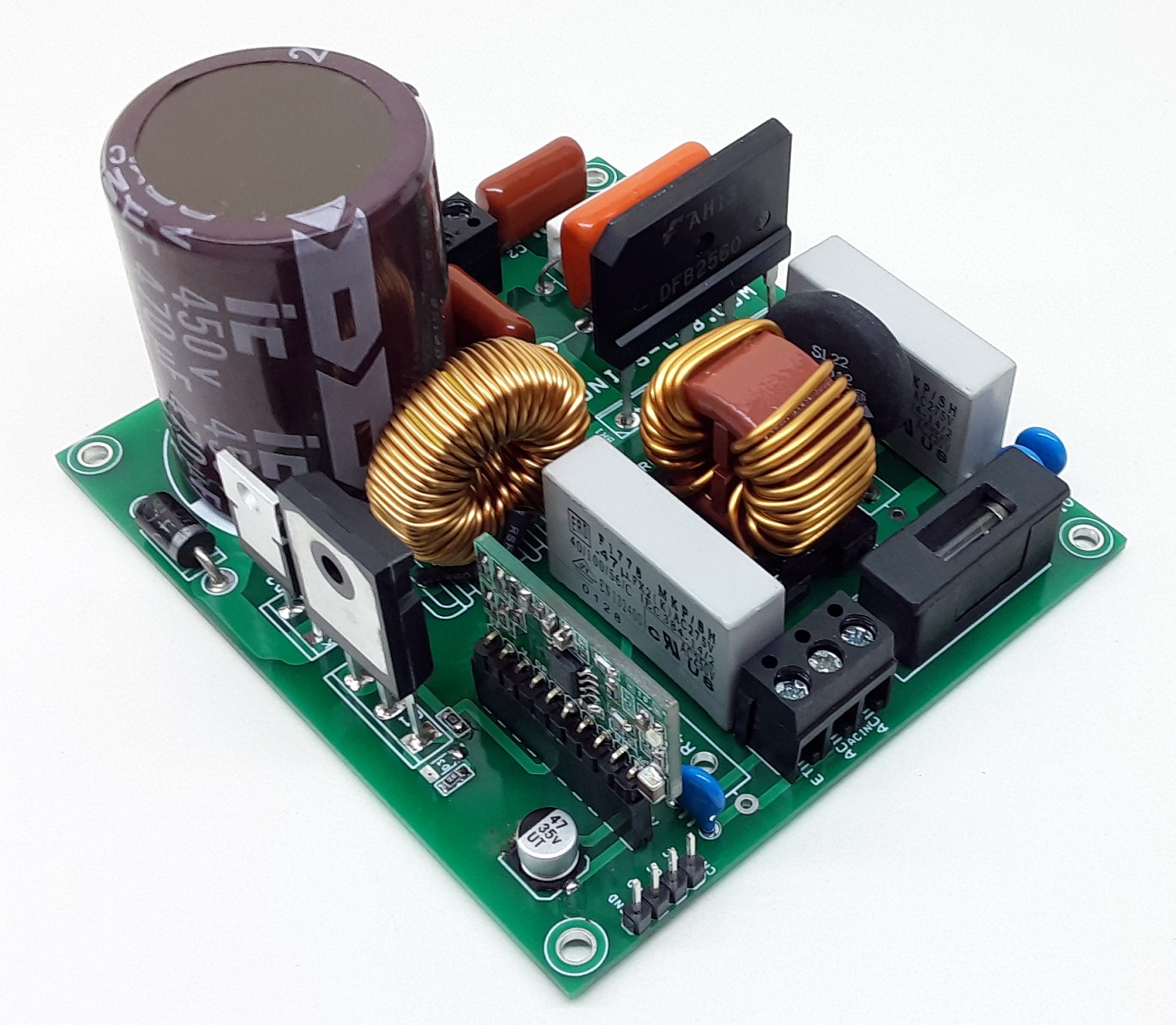
Boost Power Factor Correction (PFC) converters are integral components in modern AC-DC power supplies, tasked with improving the power factor and reducing harmonic distortions in electrical systems. However, the nonlinear nature of these converters and the variability in load and input conditions pose significant challenges to maintaining optimal performance. Adaptive controllers have emerged as a sophisticated solution to these challenges, providing dynamic adjustments to control parameters in real-time, thereby ensuring high efficiency and power quality across diverse operating conditions.
Purpose and Objectives of Adaptive Control
Improving Power Factor and Reducing THD
The primary objective of an adaptive controller in Boost PFC circuits is to synchronize the input current with the input voltage, thereby enhancing the power factor and minimizing total harmonic distortion (THD). By ensuring that the input current waveform closely follows the voltage waveform, adaptive controllers reduce reactive power and improve overall energy efficiency.
Stabilizing Output Voltage
Maintaining a stable DC output voltage despite fluctuations in load and input conditions is crucial for the reliable operation of connected devices. Adaptive controllers dynamically adjust the duty cycle of the boost converter to regulate the DC bus voltage, ensuring consistent performance even under varying load demands.
Enhancing System Efficiency
Adaptive controllers optimize the converter's performance by continuously tuning control parameters to achieve near-ideal operation. This results in reduced energy losses, lower thermal stress on components, and extended system reliability.
Challenges in Boost PFC Design
Nonlinear Dynamics
Boost converters exhibit inherently nonlinear behavior, with their duty cycle dynamics influenced by factors such as input voltage fluctuations, inductor current ripple, and switching losses. Designing controllers that can effectively manage this nonlinearity is essential for maintaining stable operation.
Variations in Operating Conditions
Fluctuations in input AC voltage amplitude, frequency, and load conditions demand controllers that can adapt in real-time. Traditional fixed-parameter controllers often struggle to maintain performance under such variability, highlighting the need for adaptive solutions.
Trade-Offs Between Regulation and Linear PFC Behavior
Achieving a balance between rapid DC voltage regulation and the maintenance of a sinusoidal input current waveform is a critical design consideration. Controllers must be designed to promptly correct voltage deviations while ensuring that the power factor remains high.
Adaptive Control Strategies
Model Reference Adaptive Control (MRAC)
MRAC involves defining a reference model that represents the desired system behavior. The adaptive controller adjusts its parameters in real-time to minimize the error between the actual converter output and the reference model. This approach ensures that the converter maintains optimal performance even in the presence of system uncertainties and disturbances.
Self-Tuning Regulators (STR)
STRs perform online parameter estimation of the converter dynamics and adjust controller gains accordingly. By employing techniques such as pole placement or Linear Quadratic Regulator (LQR) methods, STRs ensure that the system remains stable and responsive to changing conditions.
Gain Scheduling
Gain scheduling divides the operating range into various subintervals, each with its own set of PID controller settings. The controller switches between these gain sets based on real-time operating conditions, allowing for customized responses tailored to specific scenarios.
Passivity-Based Adaptive Control
This nonlinear control strategy focuses on maintaining the system's passivity properties, which helps in stabilizing the output voltage and compensating for load variations. It is particularly effective in universal-line applications where load characteristics may be unknown or rapidly changing.
Design Framework for Adaptive Controllers
1. Modeling the Converter
A comprehensive mathematical model of the Boost PFC converter is essential. Typically, a state-space representation is employed, incorporating variables such as inductor current and capacitor voltage. This model forms the foundation for designing the adaptive control strategy.
2. Control Strategy Development
Developing an effective control strategy involves selecting the appropriate adaptive control methodology. Techniques like MRAC or STR are chosen based on the specific requirements of the application. The strategy must account for the nonlinearities and dynamic behaviors identified in the modeling phase.
3. Implementation and Testing
The adaptive controller is implemented on a suitable platform, such as a microcontroller or digital signal processor (DSP). Extensive testing under various load and input conditions is conducted to validate the controller's performance, ensuring it maintains the desired power factor and minimizes THD.
4. Performance Evaluation
The controller's effectiveness is assessed based on metrics such as power factor, THD, response time to disturbances, and overall system efficiency. Performance evaluations help in fine-tuning the controller parameters for optimal operation.
Implementation Techniques
Digital Signal Processing
Digital controllers leverage advanced signal processing capabilities to execute complex adaptive algorithms in real-time. This enables precise control over the converter's operation, facilitating rapid adjustments to changing conditions.
PI and PID Control Systems
Proportional-Integral (PI) and Proportional-Integral-Derivative (PID) controllers are commonly used in adaptive PFC designs. These controllers provide the necessary feedback mechanisms to regulate voltage and current, with adaptive enhancements allowing for dynamic parameter tuning.
Real-Time Parameter Adjustment
Adaptive controllers continuously monitor system parameters and adjust control gains in real-time. This ensures that the Boost PFC converter maintains high performance even as operating conditions shift.
Microcontroller-Based Implementations
Utilizing microcontrollers allows for the integration of complex control algorithms within compact and cost-effective hardware. These implementations support the execution of real-time adaptive control strategies, enhancing the overall functionality of the PFC converter.
Performance Benefits
Improved Power Factor
Adaptive controllers can achieve power factors approaching 0.99, significantly reducing reactive power and improving the efficiency of the electrical system.
Reduced Harmonic Currents
By ensuring that the input current waveform closely follows the voltage waveform, adaptive controllers minimize harmonic distortions, leading to cleaner power delivery and reduced stress on electrical components.
Enhanced System Efficiency
The optimization of control parameters in real-time leads to reduced energy losses and improved thermal management, resulting in higher overall system efficiency.
Robust Performance Under Variable Loads
Adaptive controllers maintain stable output voltage and power factor even as load conditions change, ensuring reliable operation across a wide range of applications.
Implementation Considerations
Sampling and Discretization
Implementing adaptive controllers on digital platforms requires accurate sampling and discretization of the control laws. Proper handling of these aspects ensures that the controller responds effectively to changes without introducing delays or instabilities.
Filtering Techniques
Measurement noise can adversely affect controller performance. Incorporating filtering mechanisms helps in smoothing sensor inputs, preventing rapid and undesired adjustments in the control parameters.
Saturation and Limit Handling
Controllers must account for hardware limitations by incorporating saturation limits on control outputs and adaptation laws. This prevents the controller from exceeding the operational boundaries of the hardware, enhancing system safety and reliability.
Robustness to Uncertainties
Adaptive controllers should be designed to handle model uncertainties and unmodeled dynamics. Techniques such as robust control modifications or dead-zone adjustments can enhance the controller's ability to maintain performance in unpredictable environments.
Case Studies and Practical Implementations
Texas Instruments' Adaptive Current Control
A notable example involves Texas Instruments' application of adaptive current control in boost PFC circuits. By dynamically adjusting the overcurrent protection levels based on output voltage conditions, the design achieves enhanced efficiency and reduced thermal stress, demonstrating the practical benefits of adaptive control strategies.
Adaptive Boost PFC Converter with Gain Scheduling
Another case study showcases an adaptive controller using gain scheduling techniques in a boost PFC converter. The implementation resulted in minimal voltage overshoot and a near-unity power factor even under significant load variations, highlighting the controller's robustness and effectiveness.
Simulation and Hardware-In-the-Loop Testing
Prior to hardware deployment, simulations using tools like MATLAB/Simulink validate controller designs against various scenarios. Hardware-in-the-loop (HIL) testing further ensures that the controllers perform reliably under real-world conditions, bridging the gap between theoretical design and practical application.
Performance Evaluation
Evaluating the performance of adaptive controllers involves several key metrics:
| Metric | Description | Typical Performance Range |
|---|---|---|
| Power Factor | Measure of how effectively the converter utilizes electrical power. | 0.95 - 0.99 |
| Total Harmonic Distortion (THD) | Level of harmonic content in the input current. | Below 5% |
| Response Time | Time taken to respond to changes in load or input conditions. | Milliseconds Range |
| System Efficiency | Ratio of output power to input power. | 90% and above |
These metrics provide a comprehensive overview of the controller's ability to maintain high performance across various operating conditions. High power factor and low THD indicate effective power quality improvements, while swift response times and high system efficiency reflect the controller's robustness and adaptability.
Conclusion
Adaptive controllers are pivotal in optimizing Boost Power Factor Correction circuits by dynamically adjusting to varying operating conditions. These controllers enhance power quality by maintaining a high power factor and minimizing harmonic distortions, while also ensuring stable and efficient operation across diverse load and input scenarios. By leveraging advanced control strategies such as Model Reference Adaptive Control and Self-Tuning Regulators, adaptive controllers provide robust performance and improved system reliability. The integration of digital signal processing and microcontroller-based implementations further amplifies their effectiveness, making them indispensable in modern power electronic systems.
As electrical systems continue to evolve, the role of adaptive controllers in maintaining optimal performance becomes increasingly significant. Future advancements in control algorithms and digital processing capabilities are expected to further enhance the capabilities of adaptive PFC controllers, paving the way for more efficient and reliable power conversion technologies.
References
Last updated February 12, 2025