

Key Insights into Adaptive Spectral Algorithms
- Addressing Complexity: Adaptive Spectral Algorithms are exceptionally well-suited to tackle the inherent challenges of Nonlinear Volterra Integral Equations (NVIEs) that feature both oscillatory and singular kernels.
- High Accuracy and Efficiency: These methods offer exponential convergence rates, providing highly accurate solutions with significantly fewer computational points compared to traditional numerical techniques.
- Dynamic Adaptability: The adaptive nature allows algorithms to dynamically refine computational parameters, such as polynomial degree or spatial partitioning, focusing computational effort where the solution or kernel exhibits rapid changes.
Nonlinear Volterra Integral Equations (NVIEs) play a crucial role in modeling a vast array of phenomena across physics, engineering, economics, and other scientific disciplines. These equations are particularly important for describing systems that evolve over time, where the solution at any given moment depends on its past values. However, when these equations incorporate integral kernels that are both singular (undefined or approaching infinity at certain points) and oscillatory (exhibiting rapid fluctuations), their numerical solution presents significant challenges.
The complexity introduced by these kernels often makes traditional numerical methods inefficient or inaccurate. This research delves into Adaptive Spectral Algorithms as a powerful and sophisticated approach to overcome these hurdles, transforming complex mathematical problems into manageable computational tasks with high precision.
Understanding the equations that model time-dependent phenomena.
Volterra integral equations are a class of integral equations where one of the integration limits is a variable. Nonlinear Volterra integral equations extend this concept by including nonlinear dependencies on the unknown function. These equations are particularly adept at modeling systems with memory, where the past state influences the current state. Examples include population dynamics (like the Lotka-Volterra predator-prey model), viscoelastic materials, and various processes in signal processing.
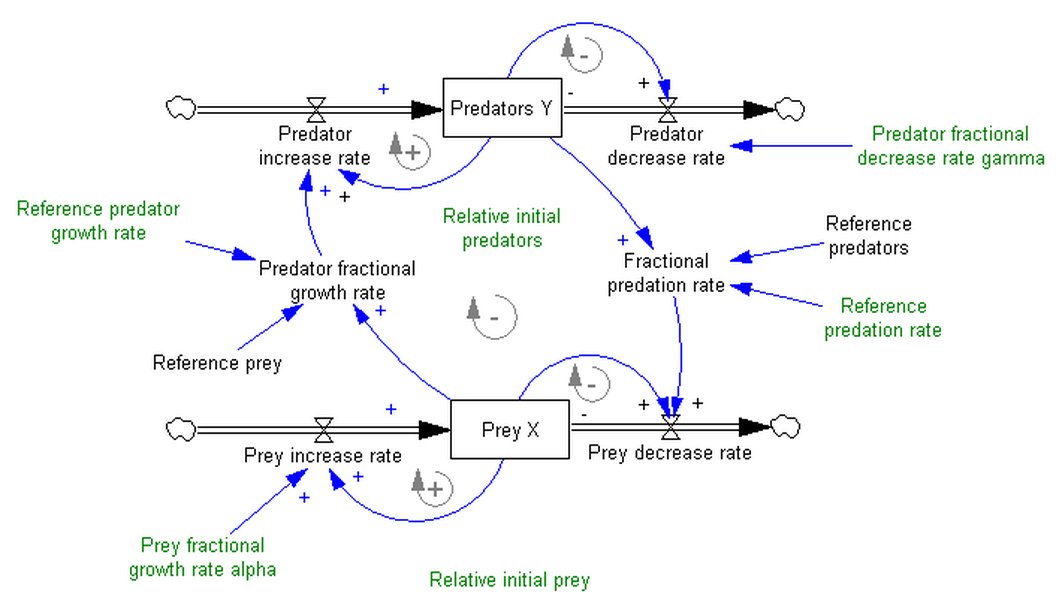
Conceptual diagram illustrating a Lotka-Volterra predator-prey system, a classic example of dynamic systems modeled by integral equations.
Defining Oscillatory Singular Kernels
The kernel \(K(x,t)\) in a Volterra integral equation \(y(x) = f(x) + \int_0^x K(x,t) y(t)^\alpha \, dt\) is the heart of its complexity. When this kernel is singular, it means it becomes infinite at certain points within the integration domain, typically at \(x=t\). This singularity can lead to numerical instability and inaccuracies. Examples include terms like \( (x-t)^{-\beta} \) where \( \beta > 0 \). Furthermore, when the kernel is oscillatory, it contains terms like \( \sin(\omega(x-t)) \) or \( \cos(\omega(x-t)) \), where \( \omega \) can be a large frequency. The combination of singularity and oscillation intensifies the difficulty of numerical integration, demanding specialized techniques for accurate and efficient solutions.
Navigating the complexities of nonlinearity, singularity, and oscillation.
The numerical solution of NVIEs with oscillatory singular kernels presents a trifecta of challenges that push the limits of conventional computational methods:
- Nonlinearity: Unlike linear equations, nonlinear NVIEs do not permit superposition, requiring iterative or specialized techniques for their resolution.
- Singular Kernels: The presence of singularities makes standard numerical integration schemes (like trapezoidal rules or Simpson's rule) highly inaccurate or even divergent. This necessitates the use of specialized quadrature rules or transformations.
- Oscillatory Kernels: Rapidly oscillating kernels demand an excessively large number of integration points to capture their behavior accurately, leading to prohibitive computational costs and memory requirements.
- Combined Effect: The synergistic effect of nonlinearity, singularity, and oscillation magnifies these issues, making the development of robust and efficient numerical algorithms a formidable task.
Leveraging high-order approximations and dynamic refinement.
Spectral methods are a class of numerical techniques that approximate the solution of differential or integral equations using a sum of basis functions, typically global polynomials like Chebyshev or Legendre polynomials. These methods are renowned for their "spectral accuracy" or "exponential convergence," meaning the error decreases very rapidly as the number of basis functions increases, especially for smooth solutions.
Adaptive Spectral Algorithms enhance this power by dynamically adjusting the computational strategy based on the problem's characteristics. This adaptability is crucial when dealing with solutions or kernels that exhibit varying degrees of smoothness or rapid changes.
Core Principles of Adaptive Spectral Algorithms
- Transformation to Algebraic Systems: Spectral methods typically convert the integral equation into a system of algebraic equations. This can be achieved through techniques like Spectral Collocation, where the equation is enforced at specific collocation points, or Spectral Galerkin methods, which project the equation onto a space spanned by basis functions.
- Handling Singularities: This is often achieved through "smoothing transformations" or "change of variables" that regularize the kernel, making it amenable to spectral approximation. Another approach involves using specialized quadrature rules (e.g., Gauss-Jacobi quadrature) designed for functions with singularities.
- Managing Oscillations: For highly oscillatory kernels, techniques such as "oscillatory integral quadrature" or appropriate basis function choices (e.g., those incorporating exponential terms) are employed to efficiently capture the rapid fluctuations.
- Adaptivity: This is the key distinguishing feature. Adaptive algorithms dynamically adjust parameters like the number of basis functions (p-adaptivity) or the mesh partitioning (h-adaptivity) based on error estimates. This ensures that computational resources are focused on regions where the solution or kernel behavior is most challenging.
Exploring collocation, Galerkin, and specialized techniques.
The implementation of adaptive spectral algorithms involves several sophisticated steps, each designed to address specific challenges posed by NVIEs with oscillatory singular kernels.
Spectral Collocation Methods
In spectral collocation, the unknown function is approximated by a global polynomial, and the integral equation is satisfied exactly at a set of carefully chosen points (collocation points). Chebyshev or Legendre polynomials are commonly used as basis functions due to their excellent approximation properties. The adaptivity aspect can involve dynamically selecting these collocation points, concentrating them in regions where the solution exhibits rapid changes or the kernel is singular/oscillatory.
Spectral Galerkin Methods
Spectral Galerkin methods seek a solution as a linear combination of basis functions. The integral equation is then projected onto the space spanned by these basis functions, leading to a system of algebraic equations for the coefficients. Adaptivity here might involve adjusting the choice of basis functions or the refinement of the function space to better capture the solution's behavior.
Techniques for Oscillatory Kernels
When dealing with highly oscillatory kernels, special care is needed. This often involves transformations that simplify the oscillatory nature or the use of basis functions (like generalized Fourier series) that inherently represent oscillations well. Numerical quadrature rules specifically designed for oscillatory integrals are also critical to ensure accuracy without an excessive number of points.
This mindmap visually summarizes the key components, challenges, and solution strategies involved in using Adaptive Spectral Algorithms for Nonlinear Volterra Integral Equations with Oscillatory Singular Kernels. It highlights the interconnectedness of different techniques in addressing the complex nature of these equations.
Specific Techniques for Singularity Treatment
To overcome the issues posed by singularities, several techniques are employed:
- Smoothing Transformations: A common strategy is to apply a change of variables that transforms the singular kernel into a smoother function over a new domain. This allows standard spectral methods to be applied effectively.
- Specialized Quadrature Rules: Instead of regular quadrature, methods like Gauss-Jacobi quadrature are particularly effective for integrands with algebraic singularities. These rules incorporate the weight function associated with the singularity directly into the quadrature points and weights, enhancing accuracy.
From theoretical framework to robust computational tools.
The practical implementation of these algorithms often involves programming in languages like MATLAB or Python, creating modular packages that can handle user-defined kernels and automatically generate performance metrics.
| Characteristic | Description in Adaptive Spectral Algorithms | Impact on Solution |
|---|---|---|
| Nonlinearity Handling | Transforms NVIEs into nonlinear algebraic systems solved via iterative methods (e.g., Newton's method). | Ensures convergence to accurate solutions for complex nonlinear problems. |
| Singularity Resolution | Employs smoothing transformations or specialized Gauss-Jacobi quadrature to regularize singular kernels. | Prevents numerical divergence and maintains high accuracy near singular points. |
| Oscillation Management | Utilizes basis functions suited for oscillations or specialized oscillatory integral quadrature. | Captures rapid fluctuations efficiently, reducing computational cost compared to dense sampling. |
| Adaptivity Mechanism | Dynamic refinement of polynomial degree (p-adaptivity) or mesh partition (h-adaptivity) based on a posteriori error indicators. | Optimizes computational resources, ensuring desired accuracy with minimal effort and exponential convergence. |
| Numerical Stability | Careful selection of basis functions and collocation points, combined with robust iterative solvers. | Maintains solution stability even for near-singular behavior at integration limits. |
This table summarizes the key characteristics of Adaptive Spectral Algorithms and their impact on solving Nonlinear Volterra Integral Equations with oscillatory singular kernels.
Performance and Accuracy
Numerical experiments consistently demonstrate that adaptive spectral algorithms achieve spectral accuracy, often yielding relative \(L^2\) errors as low as \(10^{-12}\) to \(10^{-14}\) with a relatively small number of modes (e.g., 30-50). This performance significantly surpasses traditional fixed-grid methods, which typically struggle to achieve such high precision, especially in the presence of strong oscillations or algebraic singularities.
Bridging theory with real-world phenomena.
The robustness and accuracy of adaptive spectral algorithms make them suitable for a wide range of scientific and engineering applications:
- Wave Propagation: Modeling sound or electromagnetic waves in heterogeneous media or media with singular boundaries.
- Signal Processing: Analyzing signals that contain high-frequency components or abrupt disturbances.
- Nonlinear Dynamic Systems: Providing accurate long-term behavior predictions for complex systems.
How dynamic adjustments improve accuracy and efficiency.
Adaptive integration is a core concept underpinning these algorithms. It refers to numerical integration methods that dynamically adjust the step size or the degree of approximation based on local error estimates. This allows the algorithm to use smaller steps or higher-degree polynomials in regions where the integrand is rapidly changing or problematic (e.g., near singularities or high oscillations) and larger steps or lower-degree polynomials in smoother regions, thus optimizing computational effort.
This video, titled "Adaptive Quadrature | Lecture 41 | Numerical Methods for Engineers," provides a foundational understanding of adaptive integration. It's highly relevant as adaptive quadrature is a key component of adaptive spectral algorithms, enabling dynamic adjustment of computational effort for improved accuracy and efficiency, especially in the presence of singularities and oscillations.
Conclusion: A New Horizon for Complex Equations
Adaptive Spectral Algorithms represent a significant advancement in the numerical solution of Nonlinear Volterra Integral Equations with oscillatory singular kernels. By combining the high accuracy of spectral methods with dynamic adaptability, these algorithms provide robust, efficient, and highly accurate solutions to problems that are otherwise intractable. Continued research in this area focuses on extending these techniques to higher dimensions, more complex kernel structures, and real-time applications, further solidifying their role as indispensable tools in computational science and engineering.
Frequently Asked Questions
What are Nonlinear Volterra Integral Equations?
Why are oscillatory singular kernels challenging?
What is "spectral accuracy"?
How do adaptive spectral algorithms handle singularities?
What is the difference between h-adaptivity and p-adaptivity?
Recommended Further Reading
- Advanced techniques for oscillatory integral quadrature
- Applications of spectral methods in computational fluid dynamics
- Comparison of adaptive numerical methods for integral equations
- Error estimation and control in adaptive spectral methods