
解鎖未來駕駛:深入剖析您不可不知的七大ADAS智慧科技
為您的科技英文報告,提供詳盡的自動駕駛與輔助系統英文解析。
您好!我是 Ithy,很高興能為您的科技英文期末報告提供協助。自動駕駛與輔助系統 (Advanced Driver Assistance Systems, ADAS) 是當前汽車科技發展的熱點,旨在提升駕駛安全與便利性。以下我將針對您提出的七項ADAS功能,提供相關的英文資料說明與解析。
本篇報告重點精華
- 提升安全性 (Enhanced Safety): ADAS 技術透過感測器與智慧演算法,能有效預防碰撞、減少人為失誤,顯著提升行車安全。
- 駕駛便利性 (Driver Convenience): 從自動停車到主動跟車,ADAS 讓駕駛過程更輕鬆,減輕駕駛者負擔。
- 核心感測技術 (Core Sensor Technologies): 毫米波雷達、攝影機、超音波等感測器是實現 ADAS 功能的關鍵,為車輛提供環境感知能力。
什麼是自動駕駛與輔助系統 (ADAS)?
Advanced Driver-Assistance Systems (ADAS) are technologies designed to assist drivers with the safe operation of a vehicle, increasing car and road safety through a human-machine interface. They utilize automated technology, such as sensors (like radar, lidar, and cameras) and cameras, to detect nearby obstacles or driver errors and respond accordingly. As most road crashes are attributed to human error, ADAS are developed to automate, adapt, and enhance vehicle technology to improve safety and driving. These systems can provide warnings to the driver or take temporary control of the vehicle to avoid collisions or mitigate their severity.
接下來,我們將逐一探討您報告中提及的各項 ADAS 技術。
ADAS 功能詳解 (English Explanations for Your Report)
1. 電動駐車系統 (Electronic Parking Brake, EPB)
英文說明 (English Description):
The Electronic Parking Brake (EPB) replaces the traditional mechanical handbrake or foot-pedal parking brake with an electronic system. It offers enhanced convenience and can free up interior space.
- One-touch activation/deactivation: The parking brake can be engaged or disengaged simply by pressing a button.
- Automatic functions: Many EPB systems feature automatic engagement when the vehicle is parked and automatic release when the driver intends to move off (e.g., when the accelerator pedal is pressed and seatbelt is fastened). This is often referred to as "automatic hold" or "drive-away release."
- Safety backup: In some implementations, the EPB can provide an emergency braking function if the primary hydraulic braking system fails, by applying braking force to the wheels.
中文小結:EPB 以電子按鈕取代傳統手煞車,操作更便捷,並具備自動啟閉及潛在的緊急煞車輔助功能。
2. 怠速啟停系統 (Start-Stop System / Idle Stop-Start)
英文說明 (English Description):
A Start-Stop system, also known as an Idle Stop-Start (ISS) system, automatically shuts down the engine when the vehicle is stationary for a certain period (e.g., at traffic lights or in heavy traffic) to reduce fuel consumption and emissions. The engine restarts automatically and quickly when the driver is ready to move again.
- Activation conditions: The system typically activates when the vehicle comes to a complete stop, the brake pedal is applied (in automatic transmissions) or the gear is in neutral with the clutch released (in manual transmissions), and other conditions like sufficient battery charge and engine operating temperature are met.
- Automatic restart: The engine restarts automatically when the driver releases the brake pedal, presses the accelerator pedal, or engages the clutch.
中文小結:怠速啟停系統在車輛短暫停止時自動關閉引擎,並在駕駛準備起步時迅速重啟,以達到節能減碳的效果。此系統雖與行車安全輔助關聯較小,但常見於現代車輛中。
3. 盲點資訊系統 (Blind Spot Information System, BLIS / Blind Spot Monitoring, BSM)
英文說明 (English Description):
The Blind Spot Information System (BLIS), often referred to as Blind Spot Monitoring (BSM) or Blind Spot Detection (BSD), is a safety feature that helps drivers by monitoring areas that are not easily visible in the side mirrors (the vehicle's blind spots).
- Detection of vehicles in adjacent lanes and rear: It typically uses radar sensors (often millimeter-wave radar) mounted on the sides of the rear bumper or integrated into the side mirrors to detect vehicles approaching or present in the adjacent lanes.
- Warning methods: When a vehicle is detected in the blind spot, the system alerts the driver, usually via a visual warning (e.g., an illuminated icon on the side mirror or A-pillar), and sometimes with an audible alert or steering wheel vibration if the turn signal is activated towards the detected vehicle.
- Assistance when reversing: Many BLIS systems are often combined with Rear Cross-Traffic Alert (RCTA), which helps detect vehicles approaching from the sides when reversing out of a parking space, preventing potential collisions.
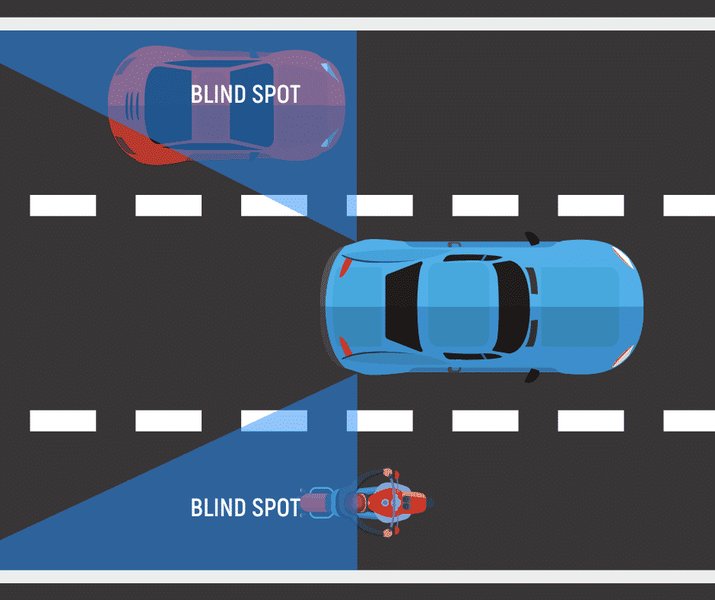
盲點資訊系統透過雷達偵測駕駛視野盲區內的車輛。
中文小結:BLIS 利用雷達偵測駕駛視野盲區的來車,並透過燈號、聲音或震動提醒駕駛,部分系統更整合了倒車時的側向來車警示功能。
4. 自適應巡航控制 (Adaptive Cruise Control, ACC)
英文說明 (English Description):
Adaptive Cruise Control (ACC) is an advanced version of traditional cruise control that enhances driver comfort and safety, especially during long journeys or in flowing traffic. It automatically adjusts the vehicle's speed to maintain a pre-set distance from the vehicle ahead.
- Detection of distance and speed: ACC systems use sensors, typically radar and/or cameras, to detect the distance to the vehicle in front and its relative speed. If the path ahead is clear, the system maintains the driver's set speed. If a slower vehicle is detected, ACC automatically reduces speed to maintain the pre-set following distance. When the path clears, it accelerates back to the set speed.
- Distance adjustment based on speed: The following distance can often be adjusted by the driver (e.g., short, medium, long). Some systems may also dynamically adjust the time gap based on speed; at higher speeds, the actual following distance increases to maintain a safe time gap.
- System pause upon braking: If the driver applies the brakes, the ACC system is typically overridden and temporarily deactivated, ensuring the driver always maintains ultimate control. Many ACC systems also include a "Stop & Go" or "Low-Speed Follow" feature, allowing them to bring the vehicle to a complete stop in traffic and resume driving when traffic moves.
中文小結:ACC 能自動調整車速以保持與前車的安全距離,前方無車時恢復設定速度,有效減輕長途駕駛疲勞。駕駛踩煞車時系統會暫停。
5. 自動緊急煞車系統 (Automatic Emergency Braking, AEB)
英文說明 (English Description):
Automatic Emergency Braking (AEB) is a critical safety system designed to help prevent or mitigate collisions. It monitors the traffic conditions ahead and can automatically apply the brakes if the driver does not respond in time to an impending collision.
- System distinguishes situations and responds accordingly:
- Normal: No intervention is needed. The system continuously monitors.
- Warning: If a potential collision risk is detected, the system typically first provides a warning to the driver (visual, audible, and/or haptic).
- Danger (Emergency Braking): If the driver fails to react to the warning and a collision becomes imminent, the AEB system will autonomously apply partial or full braking force to avoid the collision or reduce its severity.
- Suitable for low-speed use (e.g., in urban areas): AEB systems are particularly effective in preventing or reducing the severity of rear-end collisions at lower speeds, common in city driving. Many systems also detect pedestrians and cyclists.
中文小結:AEB 作為最後一道防線,在偵測到碰撞風險時,會先警告駕駛,若無反應則自動介入煞車,尤其在市區低速行駛時能有效減少事故。
6. 車道維持輔助系統 (Lane Keeping Assist, LKA / Lane Keep Assist System, LKAS)
英文說明 (English Description):
Lane Keeping Assist (LKA), also known as Lane Keep Assist System (LKAS), is designed to prevent unintentional lane departures by helping to keep the vehicle centered within its current lane.
- Sensors: LKA typically uses a forward-facing camera, often mounted behind the windshield (near the rearview mirror), to continuously monitor visible lane markings on the road.
- Automatic steering correction: If the system detects that the vehicle is about to drift out of its lane unintentionally (i.e., without the turn signal being activated), it can provide gentle, corrective steering torque to guide the vehicle back towards the center of the lane.
- Driver cooperation required: The driver must maintain hands on the steering wheel. If the system detects that the driver's hands are off the wheel for an extended period, it will typically issue a warning and may deactivate. LKA is an assistance system, not an autonomous driving feature.
中文小結:LKA 透過攝影機偵測車道線,當車輛無意間偏離車道時,系統會提供轉向輔助將車輛導回車道中央,但駕駛仍需手握方向盤。
7. 自動停車輔助系統 (Automated Parking Assist System, APAS / Active Park Assist)
英文說明 (English Description):
Automated Parking Assist Systems (APAS), also known as Active Park Assist or Park Assist, help drivers with the often-tricky task of parking, especially in tight spaces. These systems can automate parts or all of the parking maneuver.
- Automatic detection of parking spaces: The system uses sensors (typically ultrasonic sensors located on the vehicle's bumpers, and sometimes cameras) to scan for and identify suitable parallel or perpendicular parking spaces.
- Self-steering: Once a suitable space is identified and selected by the driver, the system can automatically control the steering to maneuver the vehicle into the parking spot.
- Driver controls throttle, brakes, and gears: In most semi-automated systems, the driver remains responsible for controlling the accelerator, brakes, and gear selection (Drive/Reverse) as prompted by the system. More advanced systems might automate these aspects as well.
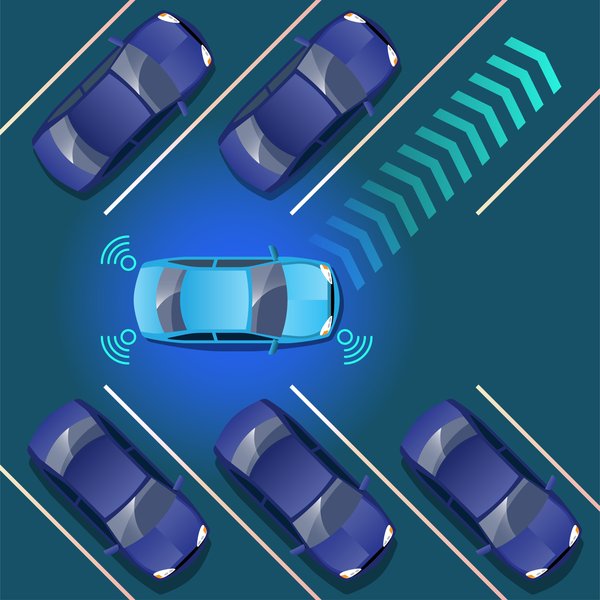
自動停車輔助系統利用感測器偵測車位並輔助轉向。
中文小結:APAS 能協助駕駛尋找合適的停車位,並自動控制方向盤進行停車,駕駛只需依指示操作油門、煞車和檔位。
ADAS 技術關聯性心智圖
為了更清晰地呈現各項 ADAS 技術之間的關聯以及其核心組件,以下提供一個心智圖。這個圖表突顯了 ADAS 作為一個整合系統,依賴多種感測器和控制單元來實現其複雜的功能,旨在提升整體行車安全與便利性。
此心智圖展示了 ADAS 如何透過各種感測器技術實現特定的輔助功能,共同構成一個複雜但協調的系統,以提升駕駛體驗。
ADAS 功能特性比較雷達圖
以下雷達圖比較了您所列出的七項 ADAS 功能在不同面向的特性。這些評估是基於一般認知,實際表現可能因車廠設計與技術水平而異。評分範圍為 1 (較低) 至 5 (較高)。
從圖中可見,AEB 在提升行車安全方面表現突出,ACC 和 LKA 對於降低高速公路駕駛疲勞有顯著幫助,而 APAS 則大幅提升停車便利性。Start-Stop 系統主要貢獻在於節能環保。
ADAS 功能總覽表
為了方便您快速查閱各項 ADAS 功能的核心資訊,以下表格彙整了它們的主要功能、常用感測器類型以及與駕駛者的互動方式 (內容以英文呈現,方便您報告使用)。
| Feature Name (English) | Key Function (English) | Primary Sensors (English) | Driver Interaction / Automation Level (English) |
|---|---|---|---|
| Electronic Parking Brake (EPB) | Electronically engages/disengages parking brake. | Position sensors, ECU. | Button activation; automatic engagement/release options. |
| Start-Stop System | Automatically shuts off/restarts engine when idle. | Vehicle speed sensors, battery sensors, brake pedal sensors. | Automatic, driver can often disable. |
| Blind Spot Information System (BLIS/BSM) | Monitors blind spots and alerts driver to hidden vehicles. | Radar (millimeter-wave), sometimes ultrasonic. | Provides warnings (visual, audible, haptic). Driver maintains control. |
| Adaptive Cruise Control (ACC) | Maintains set speed and distance from vehicle ahead. | Radar, camera. | Driver sets speed/distance; system controls throttle/brakes. Driver supervises. |
| Automatic Emergency Braking (AEB) | Detects imminent collisions and applies brakes automatically. | Radar, camera, lidar (less common in basic AEB). | Provides warnings, then automates braking if driver doesn't react. |
| Lane Keeping Assist (LKA) | Helps keep vehicle centered in its lane. | Camera. | Provides steering assistance. Driver must keep hands on wheel. |
| Automated Parking Assist System (APAS) | Assists with parking maneuvers. | Ultrasonic sensors, camera. | Automates steering; driver often controls speed and gears. |
此表格清晰地展示了每項技術的核心作用、依賴的感測技術,以及它們在駕駛過程中所扮演的角色。
ADAS 科技面面觀 (影片)
為了讓您更直觀地了解 ADAS 的運作方式與多樣性,以下嵌入了一段介紹 ADAS 系統的影片。影片中解釋了 ADAS 的不同級別以及各種功能的實際應用,有助於您全面理解這項科技。
這段影片 "Advanced Driver Assistance System | Every ADAS Levels in Car Explained" 提供了 ADAS 系統如何運作、不同 ADAS 等級以及各項功能的概覽,對於理解 ADAS 的整體概念非常有幫助。
常見問題 (FAQ)
ADAS 技術真的能完全避免交通事故嗎?
ADAS 技術旨在顯著減少交通事故的發生機率並降低事故嚴重性,但並不能保證完全避免所有事故。這些系統是輔助性質,駕駛者仍需保持警覺並對車輛負最終責任。天氣狀況、感測器限制、以及未預期的路況都可能影響 ADAS 的效能。
這些 ADAS 功能會不會讓駕駛過度依賴而降低駕駛技能?
這是一個合理的擔憂。ADAS 系統的設計初衷是輔助駕駛,而非取代駕駛。駕駛者應將這些系統視為提升安全和舒適性的工具,並持續保持專注和主動駕駛的習慣。汽車製造商和交通安全機構也強調正確使用 ADAS 並了解其限制的重要性。
如果 ADAS 系統的感測器(如攝影機或雷達)被遮擋或損壞,會怎麼樣?
大多數 ADAS 系統都設計有自我檢測功能。如果感測器被污垢、冰雪遮擋,或發生故障,系統通常會向駕駛者發出警告,並可能暫時停用相關功能。保持感測器清潔並在損壞時及時維修,對於確保 ADAS 系統正常運作至關重要。
所有車輛的 ADAS 功能都一樣嗎?
不完全一樣。雖然許多 ADAS 功能的名稱相似(如 AEB、ACC),但它們的實際性能、啟動條件和精確度可能因汽車製造商、車型以及所使用的感測器技術和軟體演算法而有所不同。在駕駛配備 ADAS 的車輛前,建議詳細閱讀車主手冊,了解特定系統的功能與限制。
推薦探索方向
若您想進一步深入了解 ADAS 相關領域,以下是一些值得探索的查詢方向:
- ADAS系統中不同感測器技術(雷達、光達、攝影機)的優缺點比較為何?
- 自動駕駛等級(SAE Levels)如何劃分?各等級對應哪些ADAS功能?
- ADAS技術的未來發展趨勢以及面臨的挑戰有哪些?
- 探討ADAS系統在不同天氣和道路條件下的性能表現與限制。
參考資料
以下列出本文撰寫過程中參考的部分資料來源,供您進一步查閱:
Last updated May 8, 2025