
Unlock the Simplicity: How Does Medication Administration Work with a Webster-pak?
Discover the step-by-step process for using this intuitive medication management system safely and effectively.
Highlights
- Simplified Dosing: Webster-paks organize medications into clearly labelled, time-specific compartments, eliminating guesswork.
- Enhanced Safety: Pharmacist-prepared and sealed packs reduce the risk of missed doses, double-dosing, or taking incorrect medication.
- User-Friendly Access: Designed for easy opening, with options and accessories available for those with dexterity challenges.
What Exactly is a Webster-pak?
A Webster-pak, often referred to generically as a Dose Administration Aid (DAA) or blister pack, is a medication management system designed to help individuals take their prescribed medications correctly and consistently. Originating in Australia, it's recognized internationally as a valuable tool, particularly for those managing multiple medications or complex schedules. The system typically consists of a card containing multiple sealed plastic blisters or compartments, usually 28, arranged logically: seven rows representing the days of the week, and four columns for common dosage times like breakfast, lunch, dinner, and bedtime.
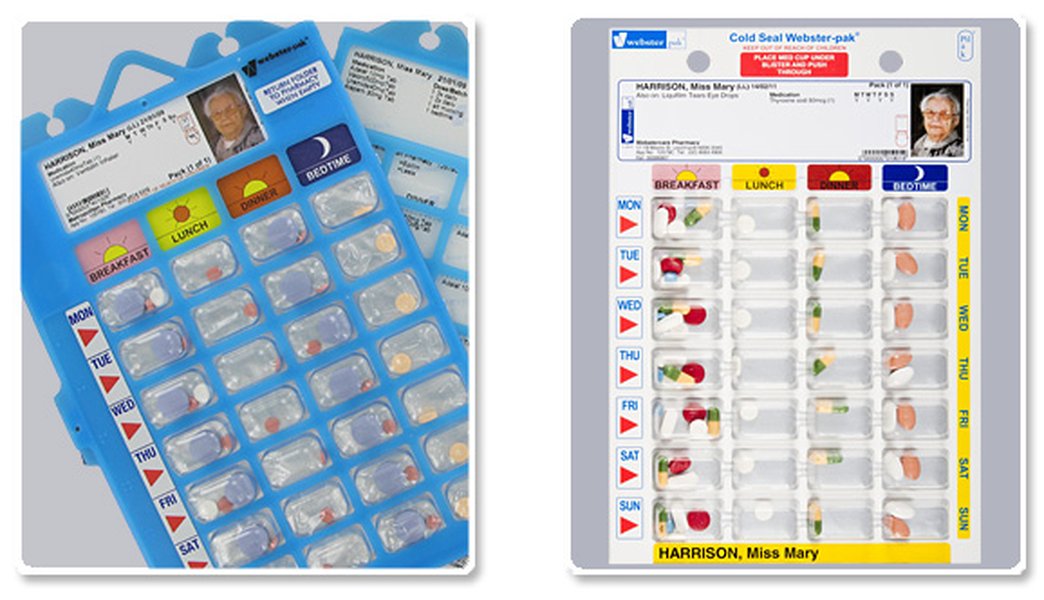
A typical Webster-pak layout, organizing doses by day and time.
The core purpose is to simplify medication routines, enhance safety, and improve adherence, making it easier for patients, caregivers, and healthcare providers to manage medications effectively.
How Your Webster-pak is Prepared
The Pharmacist's Role
The process begins with your pharmacist. Based on your doctor's prescriptions, the pharmacist carefully dispenses the correct medications—tablets and capsules—into the individual compartments of the Webster-pak. Each compartment corresponds to a specific day and time you need to take those particular pills. The pharmacist verifies the contents for accuracy before securely sealing the pack. This sealing ensures medication integrity and acts as a tamper-evident feature. The back of the pack typically includes crucial information printed clearly, such as:
- Patient's Name
- Names and strengths of the medications in each compartment
- Dosage instructions
- Prescribing doctor's name
- Pharmacy details
This detailed labeling is vital for verification and safe administration. If your medication regimen changes, your pharmacist updates the pack accordingly to reflect the new prescriptions.
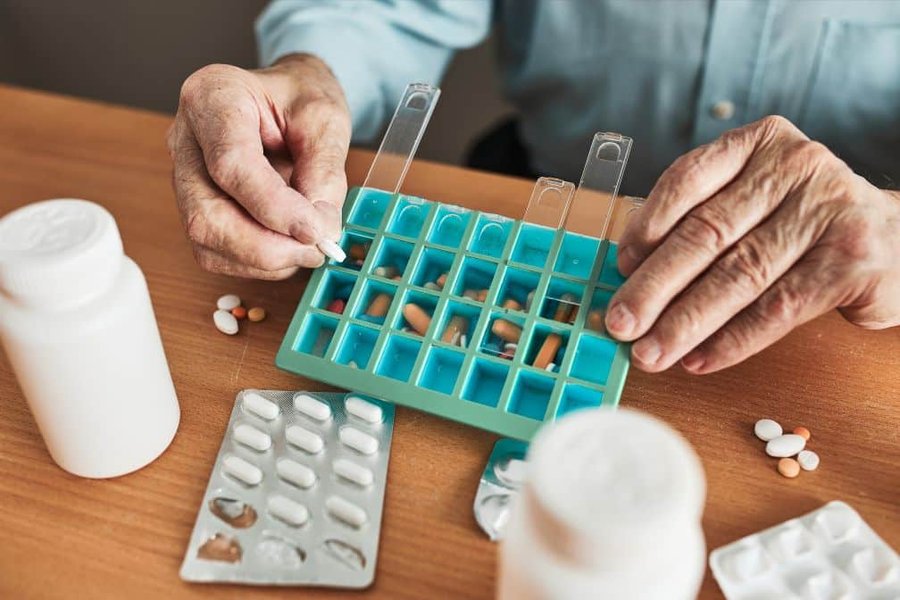
Pharmacists play a crucial role in accurately preparing Webster-paks.
Administering Medication: A Step-by-Step Guide
Using a Webster-pak is designed to be straightforward. Here’s how medication is typically administered:
Step 1: Locate the Correct Dose
Identify the current day of the week on the pack. Then, find the compartment corresponding to the correct time of day (e.g., "Breakfast," "Lunch," "Dinner," "Bedtime"). The clear layout and labeling make this easy. Some packs use color-coding or large print for enhanced visibility.
Step 2: Access the Medication
Once you've located the correct compartment, you need to open it to retrieve the medication. This usually involves peeling back the foil or paper backing covering that specific blister. The packs are designed with user-friendliness in mind, often featuring serrated edges or easy-peel corners. Push the blister from the plastic side to break the seal and push the medication through the backing.
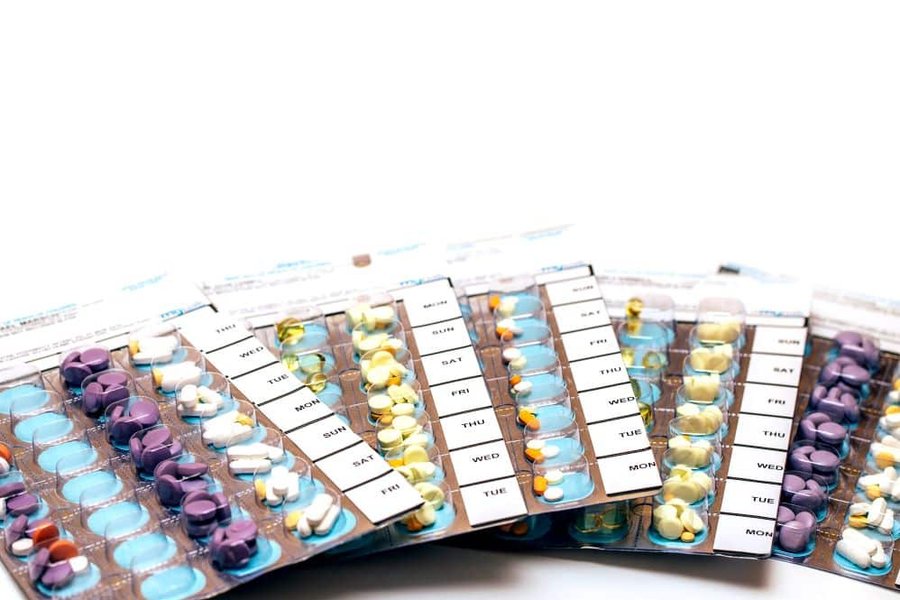
Each blister contains the specific dose for a given time.
Step 3: Take the Medication
Carefully remove all the medication(s) from the opened compartment. Take them as directed, usually with water. Since the pharmacist has pre-sorted the doses, you can be confident you are taking the correct pills at the right time. Discard the small piece of foil/paper backing responsibly.
Assistance Tools for Easier Access
For individuals who find opening the compartments challenging due to conditions like arthritis or limited dexterity, specialized tools are available. The "Pil-Bob®" is a popular accessory mentioned in several sources. It's designed to pierce the backing paper easily, allowing the pills to drop out into a small cup or hand, minimizing effort and preventing spills.
Visual Aids and Enhancing Features
Webster-paks incorporate several features designed to make medication administration as clear and error-free as possible:
- Clear Labeling: Day, time, patient name, and medication details are prominently displayed.
- Color-Coding: Different times of day may be color-coded for quick visual identification.
- Patient Photos: Some packs include a photo of the patient for easy identification, especially in care settings.
- Multilingual Options: Packs can be produced with labels in different languages to cater to diverse populations.
- Low-Vision Features: Options with larger print or tactile markers may be available.
- Informative Backing: Detailed list of contents, strengths, and directions provides a quick reference.
- Accessories: Beyond the Pil-Bob, items like specialized crushing tools (e.g., Rhino Crush) for those with swallowing difficulties, or organizational folders, enhance usability.
Mapping the Webster-pak Administration Process
This mindmap outlines the key aspects involved in using a Webster-pak for medication administration, from preparation to the benefits it offers.
(Days & Times)"] id2b["Clear Labeling"] id2c["Medication Details
(on back)"] id2d["Patient Photo
(Optional)"] id3["Administration Steps"] id3a["1. Locate Correct
Compartment"] id3b["2. Open Seal
(Peel/Push)"] id3c["3. Remove & Take
Medication"] id4["Assistance Tools"] id4a["Pil-Bob
(for opening)"] id4b["Crushing Tools
(if needed)"] id4c["Folders/Holders"] id5["Key Benefits"] id5a["Improved Adherence"] id5b["Reduced Errors"] id5c["Enhanced Safety"] id5d["Convenience"] id5e["Caregiver Support"] id6["User Groups"] id6a["Elderly Patients"] id6b["Complex Regimens"] id6c["Cognitive/Dexterity
Issues"] id6d["Visual Impairment"]
Benefits of Using Webster-paks for Administration
Employing a Webster-pak system provides significant advantages directly related to the administration process:
- Improved Medication Adherence: The clear organization acts as a visual reminder, significantly reducing the chances of forgetting doses. Studies show DAAs like Webster-paks improve adherence.
- Reduced Medication Errors: By pre-sorting medications, the risk of taking the wrong drug, the wrong dose, or taking it at the wrong time (including double-dosing) is minimized.
- Enhanced Safety: Sealed compartments prevent accidental spills or mixing of medications. The detailed labeling allows for quick verification. Child-resistant features may also be incorporated.
- Convenience and Simplicity: Managing multiple pill bottles is replaced by a single, organized pack, simplifying daily routines, especially for those with complex schedules.
- Support for Caregivers: Webster-paks make it easier for family members or caregivers to monitor medication intake. They can quickly see if a dose has been taken. It's important to note, however, that unless they are registered nurses (or supervised by one), caregivers typically only prompt or assist with self-administration (e.g., opening the pack), rather than administering the medication itself. The pack removes the need for clinical decision-making at the point of administration for these assistants.
- Travel Convenience: Portable and pre-organized packs simplify taking medications while away from home.
Visualizing the Impact of Webster-paks
This chart provides an illustrative comparison of key aspects related to medication administration using a Webster-pak versus traditional methods (like multiple pill bottles). The scores (out of 10, with 10 being highest) reflect the general advantages offered by the Webster-pak system based on consensus information, focusing on factors crucial for effective administration.
The chart highlights the significant positive impact Webster-paks generally have on improving medication adherence, reducing errors, enhancing safety, and providing convenience compared to less structured methods.
Practical Considerations for Administration
To ensure smooth administration using Webster-paks, keep these points in mind:
- Communication with Pharmacy: Inform your pharmacy in advance if you need extra packs for travel or holidays. Always notify them immediately of any prescription changes from your doctor so the pack can be updated accurately for the next cycle. Ensure you have enough prescription repeats on file.
- Doctor/Specialist Visits: It's recommended to take your current Webster-pak with you to appointments so healthcare providers can accurately review your current medication regimen.
- Storage: Store the pack according to pharmacy instructions, typically at room temperature away from direct heat or moisture. Some packs come with magnets to attach to a fridge door, keeping them visible as a reminder.
- Understanding the Pack: If you're new to using a Webster-pak, ask your pharmacist for a demonstration on how to open and use it correctly.
Administration Key Points Summary
This table summarizes the essential aspects of administering medication via a Webster-pak:
| Aspect | Description | Relevance to Administration |
|---|---|---|
| Preparation | Pharmacist accurately sorts and seals medications into time/day-specific compartments based on prescriptions. | Ensures the right medications are ready for correct and timely administration. |
| Compartment Access | User/caregiver identifies the correct day/time slot and opens the sealed blister (e.g., peels foil, pushes through). | The core action of accessing the scheduled dose at the appropriate time. |
| Medication Intake | The pre-sorted medications within the opened compartment are removed and consumed as directed. | Completes the administration process for that specific dose time. |
| Clear Labeling | Pack includes day, time, patient name, medication details, and instructions. | Reduces confusion and risk of error during administration by providing vital information. |
| Ease-of-Use Features | Serrated edges, easy-peel foil, optional tools (Pil-Bob) designed for accessibility. | Facilitates easier physical administration, especially for users with dexterity issues. |
| Caregiver Role | Can prompt, remind, and assist with opening, but typically cannot administer unless a qualified nurse. | Clarifies boundaries and support available during administration, promoting safety. |
| Safety Features | Sealed compartments prevent spills, tampering, and accidental ingestion by others (e.g., children). | Enhances the safety profile of the entire medication administration process. |
Video Walkthrough: Using a Webster-pak
For a visual explanation, this video provides a walkthrough of a Webster-pak and associated medication charts, demonstrating how they are used in practice. Watching this can help clarify the physical steps involved in locating and accessing doses.
The video covers important parts of using the pack and understanding accompanying documentation, which reinforces the steps outlined above for safe and effective medication administration.
Frequently Asked Questions (FAQ)
What if I have trouble opening the compartments?
Webster-paks are designed for ease of use, but if you experience difficulty, several options exist. Accessories like the Pil-Bob® tool are specifically designed to help pierce the foil backing easily. You can ask your pharmacist to demonstrate how to use these tools or discuss alternative packaging options if dexterity issues are significant.
What happens if my doctor changes my medication?
It is crucial to inform your pharmacy immediately about any changes to your prescriptions (new medications, dosage changes, or stopped medications). The pharmacist will then ensure your next Webster-pak is updated accurately to reflect the changes. Do not try to alter the contents of the pack yourself.
Can my caregiver administer the medication from the Webster-pak?
Generally, caregivers (like family members or home care assistants) can prompt you to take your medication and assist with opening the pack if needed. However, unless they are a Registered Nurse or working under the direct supervision of one, they are typically not permitted to *administer* the medication (i.e., physically place it in your mouth). The Webster-pak is designed to facilitate self-administration or administration by qualified personnel.
Are Webster-paks suitable for all types of medications?
Webster-paks are primarily designed for solid oral dosage forms like tablets and capsules. They are generally not suitable for liquids, creams, inhalers, injections, or medications that require specific storage conditions (like refrigeration) or have stability issues once removed from original packaging. PRN ('as needed') medications might sometimes be included but require clear instructions. Discuss with your pharmacist which of your medications are appropriate for inclusion.
Is there a cost associated with using Webster-paks?
The cost can vary. Many pharmacies offer Webster-paks as a service, sometimes at no extra charge beyond the standard cost of your medications, especially if you get all your prescriptions filled at their pharmacy. However, some pharmacies may charge a small packing fee. It's best to inquire directly with your local pharmacy about their policy and any potential costs.
Recommended Reading
- What are the main benefits of using dose administration aids like Webster-paks for medication management?
- How do pharmacists ensure the accuracy of medications packed in Webster-paks?
- What accessories are available to help people with dexterity issues use Webster-paks?
- How should medication changes be managed when using a Webster-pak system?
References
Last updated April 29, 2025