
Unlocking True Value: Sophisticated Strategies for Gauging Customer Willingness to Pay
Explore cutting-edge methodologies that move beyond basic surveys to accurately pinpoint what your customers will truly pay.
Key Insights at a Glance
- Precision Beyond Surveys: Advanced Willingness to Pay (WTP) techniques offer far more precise insights than basic surveys by simulating complex, real-world purchasing decisions and accounting for crucial contextual factors.
- Robust Methodologies: Key methodologies like Conjoint Analysis, the Becker-DeGroot-Marschak (BDM) mechanism, and the Comparative Method of Valuation (CMV) provide robust frameworks for understanding feature-specific value, eliciting truthful WTP, and assessing competitive influences.
- Strategic Selection is Crucial: The most effective approach often involves selecting a technique tailored to specific product characteristics and market dynamics, or even integrating multiple methods for a comprehensive understanding of price sensitivity.
Understanding Customer Willingness to Pay (WTP)—the maximum price a consumer is willing to spend on a product or service—is fundamental to successful pricing strategies, profit optimization, and overall market positioning. While simple surveys might ask directly about price, such methods often fall short in capturing the nuanced, context-dependent nature of consumer valuation. As of May 21, 2025, businesses increasingly rely on advanced techniques that delve deeper into consumer psychology and behavior, providing more accurate and actionable insights. These sophisticated approaches account for product features, competitive landscapes, and the very cognitive processes behind purchase decisions.

Advanced WTP measurement is integral to developing effective business models and pricing strategies.
Why Advanced Techniques Are Essential
Traditional methods for assessing WTP, such as direct "how much would you pay?" questions or simple focus groups, can be plagued by hypothetical bias—what people say they will pay often differs from their actual behavior. Advanced techniques aim to mitigate these issues by:
- Simulating realistic choice scenarios.
- Incorporating trade-offs between product features and price.
- Considering the competitive environment.
- Utilizing incentive-compatible mechanisms to encourage truthful responses.
- Employing sophisticated statistical analysis to derive underlying preferences.
By moving beyond surface-level inquiries, businesses can gain a more profound understanding of value perception, enabling them to set prices that maximize revenue and customer satisfaction.
Leading Advanced WTP Measurement Techniques
Several advanced methodologies have emerged, drawing from economics, psychology, and market research. Each offers unique strengths for dissecting the complexities of customer valuation.
Conjoint Analysis (and its variants)
Unpacking Preferences Through Trade-offs
Conjoint analysis is a powerful quantitative method where a product or service is deconstructed into its core attributes (e.g., brand, features, quality, price). Respondents are then presented with various hypothetical product profiles, each a unique combination of these attribute levels, and are asked to make choices or indicate preferences.
How It Works
- Respondents evaluate multiple product configurations, implicitly making trade-offs (e.g., choosing a lower price with fewer features versus a higher price with more features).
- Statistical techniques (often hierarchical Bayesian estimation) are used to determine the relative importance of each attribute and the "part-worth utility" customers assign to each attribute level.
- From these utilities, the marginal WTP for specific features or improvements, as well as the overall WTP for product bundles, can be calculated.
Variants like Adaptive Choice-Based Conjoint (ACBC) dynamically tailor the survey to individual respondent preferences, making the process more engaging and yielding more precise data. Discrete Choice Experiments (DCE), originating from econometrics, are similar in that they present choice sets and model selection probabilities.
Strengths
- Effectively captures how customers trade off price against various product features.
- Simulates realistic market decision-making processes.
- Allows for calculation of WTP for individual attributes and scenario modeling (e.g., market share simulations).
- ACBC can reduce respondent fatigue and improve data quality for complex products.
Considerations
- Requires careful and often complex survey design.
- Typically needs larger sample sizes for robust results.
- Analysis can be sophisticated, requiring specialized software or expertise.
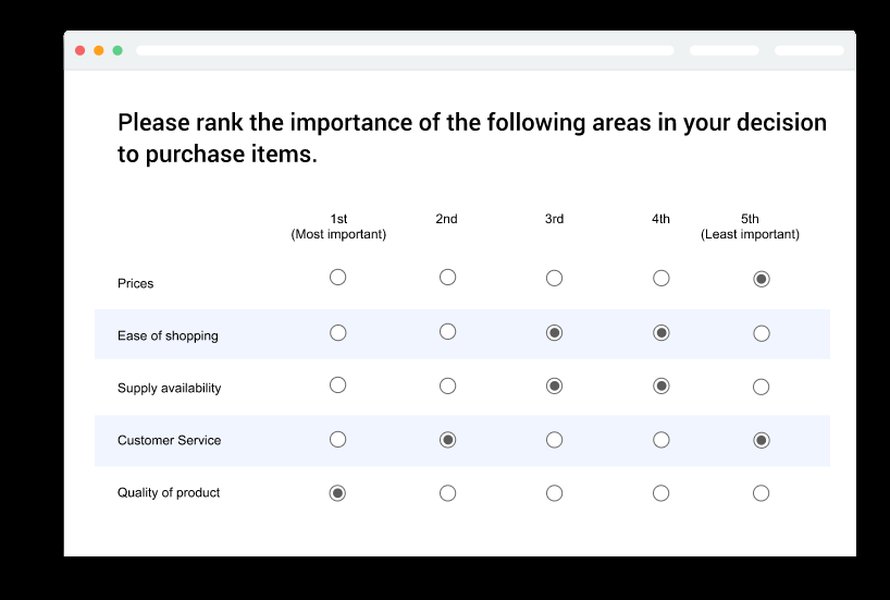
Survey-based methods like Conjoint Analysis require carefully designed questionnaires to elicit valuable WTP insights.
Becker-DeGroot-Marschak (BDM) Mechanism
Eliciting True WTP Through Incentives
The BDM mechanism is an experimental auction method designed to encourage participants to reveal their true maximum WTP. It is considered "incentive-compatible," meaning a participant's best strategy is to state their actual valuation.
How It Works
- Each participant states the maximum price they are willing to pay for a product.
- A random price is then drawn from a pre-determined distribution (unknown to the participant).
- If the participant's stated WTP is greater than or equal to the randomly drawn price, they must purchase the product at the randomly drawn price.
- If their stated WTP is less than the random price, they do not purchase the product.
Strengths
- Effectively mitigates hypothetical bias often found in simple survey responses because decisions have real financial consequences (or simulated ones in some experimental designs).
- Provides a direct measure of an individual's maximum WTP.
Considerations
- Can be complex for some respondents to understand fully.
- Primarily suited for laboratory or controlled online experimental settings.
- Scalability for large, diverse market research can be challenging and costly if real transactions are involved.
Comparative Method of Valuation (CMV)
Contextualizing Value with Competition
CMV is a more recent approach that emphasizes the importance of context and competition in shaping WTP. It posits that customers rarely evaluate products in isolation; instead, their valuation is heavily influenced by available alternatives.
How It Works
- Respondents are presented with a product alongside one or more competing options or clear comparative scenarios.
- They are then asked to state their WTP for the target product within this competitive context.
- This method explicitly acknowledges that WTP is not fixed but can change based on the comparison set and situational factors.
Strengths
- Offers potentially higher precision and behavioral validity by reflecting how consumers make decisions in real markets.
- Addresses the criticism that many WTP methods ignore the "constructed" nature of preferences, which are often formed during the decision process itself.
- Particularly useful when clear brand or feature comparisons are central to the purchase decision.
Considerations
- As a newer method, it is still gaining widespread adoption and standardization.
- Data collection and analysis can be more complex than for isolated WTP measures, requiring careful scenario design.
Van Westendorp Price Sensitivity Meter (PSM)
Identifying Acceptable Price Ranges
The PSM is a survey-based technique that aims to identify a range of psychologically acceptable prices for a product by asking four specific questions:
How It Works
- Respondents are asked:
- At what price would you consider the product to be so inexpensive that you would doubt its quality (Too Cheap)?
- At what price would you consider the product to be a bargain—a great buy for the money (Bargain/Cheap)?
- At what price would you consider the product starting to get expensive, but you would still consider buying it (Expensive)?
- At what price would you consider the product to be too expensive—so high that you would not consider buying it (Too Expensive)?
- The cumulative frequencies of responses are plotted. Intersections of these curves typically identify an "optimal price point" and an "acceptable price range."
Strengths
- Relatively simple and intuitive for both researchers and respondents.
- Helps define a "price corridor" and identify key price thresholds from the consumer's perspective.
- Provides a nuanced sense of demand beyond a single price point.
Considerations
- Does not inherently account for specific product features or attribute trade-offs in detail.
- Largely ignores the competitive landscape unless explicitly framed within the survey introduction.
- Considered more of a high-level gauge for price acceptability rather than a precise WTP estimator for specific configurations.
Gabor-Granger Technique
Directly Testing Price Points
The Gabor-Granger technique is a direct pricing method that assesses purchase likelihood at various predefined price points for a single product.
How It Works
- Respondents are shown a product and asked if they would buy it at a specific price.
- If they agree, they might be asked again at a higher price; if they decline, at a lower price (or a random series of prices is presented). This continues across a range of prices.
- The responses generate a demand curve, showing the percentage of respondents willing to buy at each price level, which can be used to identify revenue-maximizing or volume-maximizing price points.
Strengths
- Straightforward to administer and understand.
- Provides clear WTP thresholds and helps construct a demand curve for the product.
- Useful for quick pricing experiments and identifying optimal price points.
Considerations
- Being a direct method, it can sometimes be subject to biases if respondents try to game the system or anchor on initial prices.
- Typically focuses on a single product in isolation, potentially overlooking competitive dynamics unless explicitly integrated.
Multiple Price List (MPL)
Choice-Based Price Evaluation
The MPL method presents consumers with a series of prices for a product and asks them to indicate for each price whether they would purchase it or not. Sometimes, it's framed as choosing between buying the product at a given price or receiving a certain amount of money instead.
How It Works
- Participants see a list of potential prices for a product.
- For each price, they decide "buy" or "not buy" (or choose between options).
- The point at which a respondent switches from "buy" to "not buy" (or vice-versa) indicates their WTP range.
Strengths
- Can be less cognitively demanding than open-ended WTP questions.
- Helps identify a range of acceptable prices and can be used in experimental settings to infer WTP under conditions of risk or uncertainty.
- Offers good behavioral realism in WTP estimation.
Considerations
- The design of the price list (range, increments) can influence results.
- Often used within broader experimental designs to study choice behavior.
Broader Approaches and Key Considerations
Revealed vs. Stated Preferences
WTP measurement techniques can broadly be categorized into those relying on stated preferences and those on revealed preferences.
- Stated Preferences: These methods (e.g., Conjoint Analysis, Van Westendorp, direct surveys) ask consumers to state what they would do in hypothetical scenarios. While versatile, they can suffer from hypothetical bias. Advanced stated preference methods try to mitigate this through realistic scenarios or incentive alignment.
- Revealed Preferences: These methods infer WTP from actual, observed consumer behavior, such as market purchase data, bidding in real auctions, or scanner data. This approach is based on real actions, offering strong validity, but it can be challenging to isolate the WTP for specific features or control for all influencing variables.
Integrating Multiple Methods & Hybrid Models
Given that WTP is complex and influenced by many factors, a single method may not capture the full picture. Combining insights from different techniques (e.g., using Van Westendorp to set price ranges for a Conjoint study) or developing hybrid models that integrate stated preference data with actual behavioral or transactional data (often using machine learning or advanced econometric models) can lead to more robust and accurate WTP estimates. This helps validate findings and adjust for biases inherent in any single approach.
Other Influencing Factors
When measuring WTP, it's crucial to remember that it's not static. It is influenced by:
- Extrinsic Differences: Observable customer characteristics like age, income, gender, education, and location.
- Intrinsic Differences: Unobservable psychological traits such as risk tolerance, brand loyalty, or desire for social status.
- Context Sensitivity: The purchasing environment (e.g., online vs. in-store, urgency of need) and available information dramatically affect WTP.
- Competitive Landscape: The presence, pricing, and features of alternatives are paramount.
- Marginal WTP: The additional amount a customer is willing to pay for an improvement or an added feature, distinct from the WTP for the base product.
Comparative Overview of WTP Techniques
The following radar chart provides a visual comparison of several advanced WTP measurement techniques across key dimensions. These are generalized assessments, and the suitability of each method can vary based on specific research objectives and market contexts. The scores range from 2 to 10, where higher generally indicates better performance or suitability for that dimension.
This chart illustrates that methods like BDM and CMV score highly on accuracy and realism but can be more complex to implement. Conjoint analysis offers a strong balance, particularly for detailed feature insights. Simpler methods like Van Westendorp PSM and Gabor-Granger are easier to scale and implement but may offer less contextual depth or predictive power for complex products.
Visualizing WTP Methodologies
The landscape of advanced WTP measurement techniques can be visualized as an interconnected system of approaches, each contributing unique perspectives. The mindmap below outlines the primary categories and specific methods discussed, along with key factors that influence WTP analysis.
(incl. ACBC, DCE)"] id1b["Van Westendorp PSM"] id1c["Gabor-Granger Technique"] id1d["Multiple Price List (MPL)"] id2["Experimental Methods"] id2a["Becker-DeGroot-Marschak (BDM)"] id2b["Auctions (Revealed Preference)"] id3["Comparative & Contextual Methods"] id3a["Comparative Method of Valuation (CMV)"] id4["Data Source Approaches"] id4a["Stated Preferences"] id4b["Revealed Preferences"] id4c["Hybrid Models
(Stated + Revealed)"] id5["Key Influencing Factors"] id5a["Context Sensitivity"] id5b["Competitive Landscape"] id5c["Feature-Specific Value"] id5d["Behavioral Biases"] id5e["Customer Heterogeneity"]
This mindmap shows how different families of techniques—survey-based, experimental, and comparative—address the challenge of measuring WTP, supported by broader data approaches and mindful of the various factors that can sway consumer valuation.
Summary Table of Advanced WTP Methods
To further clarify the distinctions and applications, here's a table summarizing the core aspects of these advanced WTP measurement techniques:
| Method | Approach | Strengths | Best Use Case / Considerations |
|---|---|---|---|
| Conjoint Analysis / Discrete Choice Experiments (DCE) | Respondents choose between or rank product profiles with varying attributes and prices. | Detailed feature-level WTP, simulates market choices, handles trade-offs, good for product optimization. | Complex products with multiple features; requires careful design and robust sample sizes. |
| Becker-DeGroot-Marschak (BDM) Method | Incentive-compatible experimental auction where participants state max WTP and may purchase at a random price. | High accuracy in eliciting truthful WTP, mitigates hypothetical bias. | Behavioral economic experiments, situations where truthful revelation is paramount; can be complex for respondents. |
| Comparative Method of Valuation (CMV) | Direct comparison of product options within a realistic competitive context. | High precision, reflects situational factors and competition, behaviorally valid. | Markets with clear brand or feature comparisons; newer method requiring careful scenario design. |
| Van Westendorp Price Sensitivity Meter (PSM) | Survey asking four price perception questions (too cheap, bargain, expensive, too expensive). | Defines an acceptable price range and optimal price points, simple to implement. | Understanding general price acceptability thresholds; less detail on feature value or competition. |
| Gabor-Granger Technique | Direct questioning on purchase likelihood at a series of specific price points. | Identifies demand curve and optimal price points, straightforward. | Easy-to-administer pricing experiments; may not fully capture competitive context without adaptation. |
| Multiple Price List (MPL) | Respondents indicate purchase intent for a product at various listed prices. | Behavioral realism, identifies acceptable price range, less cognitively demanding than open-ended questions. | Experimental and behavioral studies, often part of a more comprehensive choice experiment. |
Understanding WTP in Conjoint Analysis: A Deeper Look
Conjoint analysis is a cornerstone of advanced WTP measurement. The following video provides insights into how Willingness to Pay is estimated within conjoint studies, highlighting the nuances and importance of robust analytical approaches. It discusses how conjoint analysis captures trade-offs between features and price, which is essential for deriving realistic WTP values, while also noting potential pitfalls of simpler estimation methods.
This exploration underscores why sophisticated techniques like conjoint analysis are preferred for understanding the value consumers place on different product attributes and how these translate into overall WTP, ultimately informing more strategic pricing decisions.
Frequently Asked Questions (FAQ)
What exactly is Customer Willingness to Pay (WTP)?
Why are advanced WTP techniques generally preferred over simpler survey questions like "How much would you pay?"
How does the presence of competitors influence WTP measurement?
Is it better to use one specific advanced WTP technique, or can they be combined?
Conclusion: Strategically Measuring Customer Value
Accurately measuring Customer Willingness to Pay is more critical than ever in today's dynamic markets. Advanced techniques offer businesses the tools to move beyond guesswork and simplistic surveys, providing deeper, more reliable insights into how customers perceive value and make purchasing decisions. By understanding and applying methods like Conjoint Analysis, BDM, CMV, Van Westendorp PSM, and Gabor-Granger, companies can develop more effective pricing strategies, optimize product features, and ultimately enhance profitability and market competitiveness. The key lies in selecting the appropriate methodology (or combination of methodologies) that aligns with the specific research goals and the unique characteristics of the product and market in question.
Recommended Further Exploration
- How can businesses implement Conjoint Analysis for new product development?
- What are the common pitfalls to avoid when using the Van Westendorp Price Sensitivity Meter?
- Explore case studies where the Becker-DeGroot-Marschak method revealed surprising consumer insights.
- How does customer segmentation impact the interpretation of Willingness to Pay data?
References
Last updated May 21, 2025