
Beyond Paper: Exploring the Frontiers of Modern Printing Technology
Dive into UV/LED Curing, Wide-Format/Flatbed capabilities, and the convenience of Cloud Printing.
The world of printing has evolved far beyond traditional ink on paper. Today, advanced technologies allow for printing on an incredible array of materials with unprecedented speed, quality, and flexibility. Let's explore three key innovations shaping the future of print: UV and LED Curing, Wide-Format and Flatbed Printing, and Cloud Printing.
Key Insights into Advanced Printing
- Instant Curing Power: UV and LED technologies instantly dry inks using light, enabling vibrant, durable prints on challenging surfaces like plastic, glass, and metal.
- Material Versatility Unleashed: Wide-format and flatbed printers directly print high-precision graphics onto large flexible materials or thick rigid substrates such as wood, acrylic, and ceramics.
- Print Anywhere, Anytime: Cloud printing liberates users from physical connections, allowing secure print job submission from any internet-connected device to compatible printers.
UV and LED Curing: The Science of Instant Ink Drying
Harnessing Light for Speed and Durability
UV (Ultraviolet) and LED (Light-Emitting Diode) curing technologies represent a paradigm shift in how inks, coatings, and adhesives are dried in printing processes. Instead of relying on heat or solvent evaporation, these methods use specific wavelengths of light to trigger a rapid chemical reaction.
The Curing Mechanism
Special inks formulated with photo-initiators are applied to the substrate. When exposed to focused UV light (from traditional mercury vapor lamps) or more commonly now, specific UV wavelengths from LEDs (often around 385nm to 395nm), these photo-initiators absorb the light energy. This energy initiates a process called polymerization, essentially instantly hardening or "curing" the ink, bonding it securely to the surface.
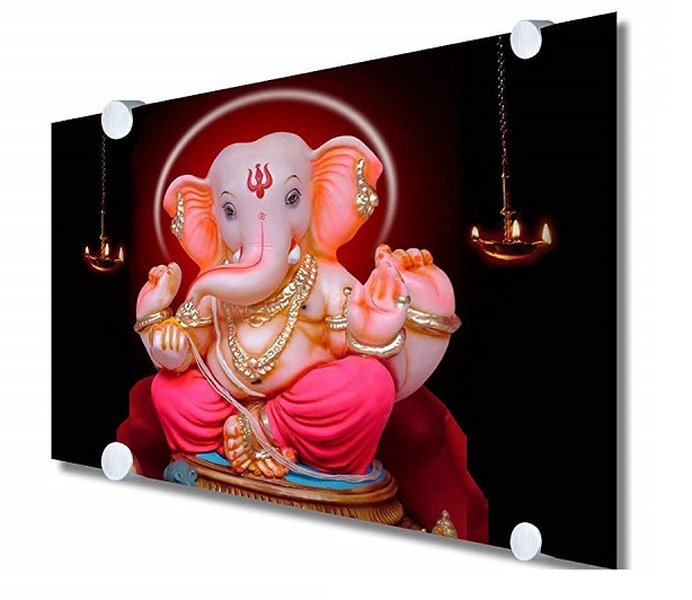
UV printing enables high-definition, durable graphics directly onto glass surfaces.
Advantages of Light-Based Curing
- Instantaneous Drying: Curing happens in fractions of a second, eliminating drying bottlenecks, preventing smudging, and dramatically increasing production speeds.
- Enhanced Print Quality: Inks don't have time to spread or bleed, resulting in sharper details and greater color fidelity. Colors often appear more vibrant and saturated.
- Superior Durability: The polymerized ink layer is highly resistant to abrasion, chemicals, moisture, and fading, making prints suitable for demanding indoor and outdoor applications.
- Unmatched Material Compatibility: Since the ink bonds chemically rather than relying on absorption, UV/LED curing works exceptionally well on non-porous materials like plastics, metals, glass, ceramics, wood, and foils, alongside traditional paper and cardstock.
- Environmental and Efficiency Gains (Especially LED): LED curing systems consume significantly less energy (up to 67% less reported in some cases) compared to traditional UV lamps, generate less heat (allowing printing on heat-sensitive materials), contain no mercury, and have a longer operational lifespan. Recent advances have also boosted curing intensity significantly.
Common Applications
This technology is foundational for many modern printing applications, including:
- Signage and Displays (indoor and outdoor)
- Packaging (labels, cartons, flexible packaging)
- Promotional Products and Personalized Items
- Industrial Marking and Coding
- Direct-to-Object Printing (e.g., phone cases, golf balls)
- High-Quality Graphics on Glass and Acrylic
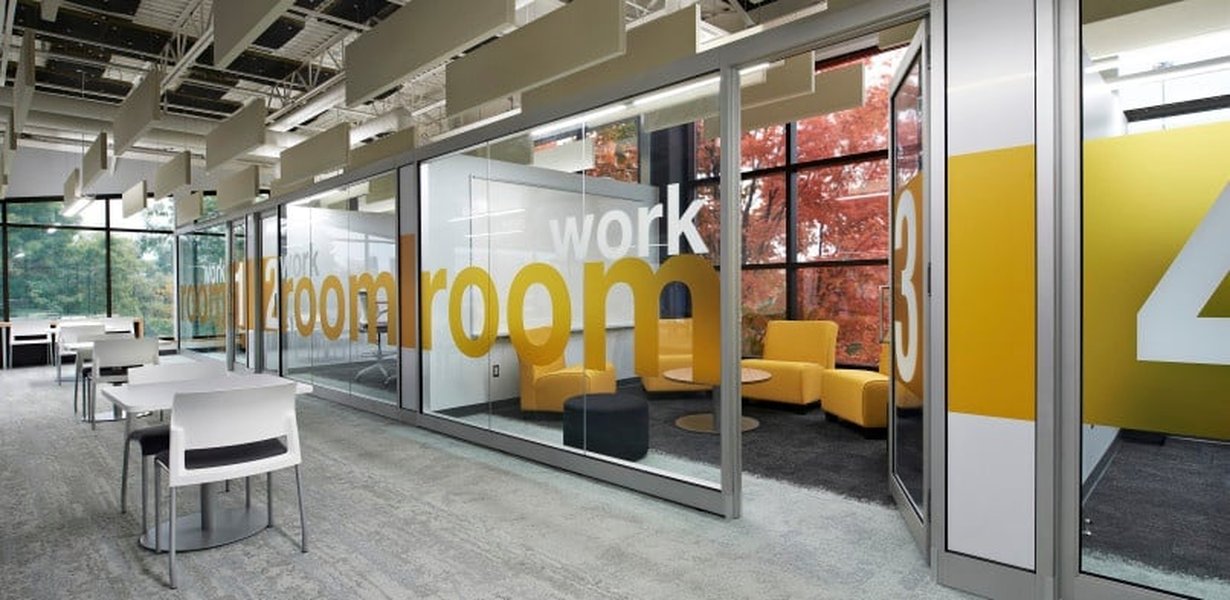
Durability of UV cured inks makes them ideal for applications like window films.
Wide-Format and Flatbed Printing: Going Big and Beyond Paper
Printing Directly onto Diverse and Rigid Materials
Wide-format and flatbed printers overcome the limitations of standard printers by handling significantly larger dimensions and a much broader range of materials, often incorporating UV/LED curing technology for optimal results.
Understanding the Formats
- Wide-Format Printers: Primarily designed to print on rolls of flexible media (like vinyl, banner material, textiles, paper) typically ranging from 18 inches to over 100 inches wide. Ideal for banners, posters, vehicle wraps, wallpaper, and large photographic prints.
- Flatbed Printers: Feature a stationary flat table where rigid or thick materials are placed. The printhead assembly moves across the material (X and Y axes) to apply ink directly. This allows printing on items like wood panels, sheets of acrylic or PVC, glass, metal sheets, ceramic tiles, and thick cardboard (up to several inches thick).
- Hybrid Printers: Combine capabilities, offering both roll-to-roll feeding for flexible media and a flatbed configuration for rigid substrates.
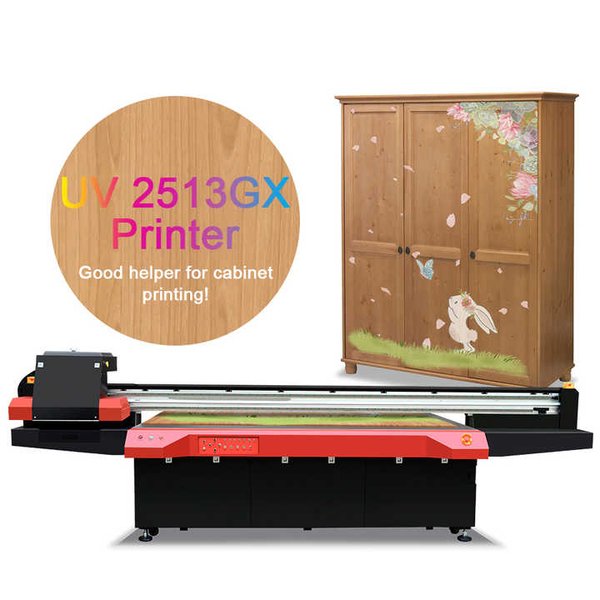
A flatbed UV printer applying graphics directly onto wooden boards.
Key Capabilities and Benefits
- Direct-to-Substrate Printing: Eliminates intermediate steps like mounting printed vinyl onto rigid boards, saving time and labor, and often resulting in a more durable end product.
- Material Versatility: The ability to print directly onto materials like wood, glass, acrylic, metal, foam board, and ceramics opens up vast creative and commercial possibilities in signage, interior design, packaging prototypes, industrial applications, and personalized products.
- High Precision and Quality: Advanced printheads, precise media handling systems (including vacuum zones on flatbeds to hold materials securely), and sophisticated color management software ensure high-resolution output with accurate color reproduction. Features like jettable primers can enhance ink adhesion on challenging surfaces.
- Reduced Waste: Digital printing applies ink only where needed, minimizing overspray compared to analog methods. Direct-to-substrate printing also reduces waste associated with mounting materials and adhesives.
- Efficiency: Modern systems boast high print speeds and automation features (like automatic media thickness detection) to enhance productivity for short to medium runs and custom jobs.
Notable Printer Examples
Several manufacturers offer advanced systems in this space:
- Fujifilm Acuity Prime Series: Known for true flatbed capabilities, offering high quality on rigid and flexible media with features like vacuum zones and jettable primer.
- HP Latex R Series: Utilizes Latex ink technology alongside flatbed capabilities, known for vibrant colors on both rigid and flexible substrates with environmental benefits.
- Epson SureColor V-Series (e.g., V7000): UV flatbed printers often featuring expanded color gamuts (e.g., 10 colors including white and varnish) for high-fidelity prints.
- Vanguard Digital Printing Systems: Specializes in UV-LED flatbed, roll-to-roll, and hybrid printers for industrial and commercial applications.
- Roland DG VersaUV Series: Offers a range of UV printers and printer/cutters, including flatbed models suitable for diverse applications.
Cloud Printing: Untethered Access and Flexibility
Sending Print Jobs Over the Internet
Cloud printing decouples the printing process from direct physical or local network connections. It allows users to send print jobs from virtually any internet-connected device (smartphone, tablet, laptop) to a cloud-aware printer, regardless of location.
How It Works
Instead of installing specific printer drivers on each device, users connect to a cloud printing service. Print jobs are uploaded to secure cloud servers, which then manage the queue and communicate with the designated printer over the internet. The printer, connected to the same cloud service, retrieves and prints the job.
Core Advantages
- Ultimate Convenience: Print from anywhere you have an internet connection, without needing to be on the same network as the printer.
- Device Independence: Easily print from mobile devices (iOS, Android) and various computer operating systems without complex driver installations.
- Enhanced Collaboration: Teams spread across different locations can easily share access to printers.
- Improved Security: Reputable cloud printing platforms often incorporate user authentication, data encryption during transfer, and secure print release options (where the user must authenticate at the printer).
- Centralized Management & Scalability: IT administrators can manage printers, users, and permissions across an organization from a central web interface, simplifying deployment and maintenance.
- Cost Control & Analytics: Many platforms offer features to track usage, allocate costs, and enforce printing policies.
Typical Use Cases
- Supporting remote and hybrid workforces.
- Providing easy printing access in educational institutions (libraries, labs).
- Enabling mobile professionals to print documents while traveling.
- Streamlining printing in large enterprises with multiple locations.
- Powering web-to-print services for print shops.
Comparing Advanced Printing Technologies
Visualizing Strengths Across Key Attributes
While each technology offers unique benefits, they excel in different areas. The radar chart below provides a visual comparison based on common printing requirements. Note that "Wide/Flatbed" often incorporates "UV/LED Curing," so its scores reflect this synergy, particularly in speed and material versatility.
Mapping the Connections
Understanding the Relationships Between Printing Technologies
This mindmap illustrates the core concepts, benefits, and applications of each advanced printing technology and how they relate to each other. Notice how UV/LED Curing often serves as an enabling technology for Wide-Format and Flatbed systems.
Technology Feature Summary
At-a-Glance Comparison
This table summarizes the core aspects of each technology for quick comparison.
| Technology | Key Principle | Primary Benefits | Typical Substrates | Common Applications |
|---|---|---|---|---|
| UV & LED Curing | Instant ink polymerization using UV/LED light. | Speed, Durability, Vibrancy, Wide Material Compatibility, Energy Efficiency (LED). | Plastics, Glass, Metal, Wood, Ceramics, Foil, Paper, Synthetics. | Signage, Packaging, Labels, Industrial Marking, Promotional Items, Direct-to-Object. |
| Wide-Format & Flatbed Printing | Direct digital printing on large flexible rolls or rigid sheets/objects. Often uses UV curing. | Large Size Capability, Extreme Material Versatility, High Precision, Direct Printing Efficiency, Reduced Waste. | Wide-Format: Vinyl, Banner, Textiles, Paper. Flatbed: Wood, Acrylic, Glass, Metal, Ceramics, Foam Board, PVC. |
Banners, Vehicle Wraps, Wallpapers, Signage (Indoor/Outdoor), Point-of-Sale Displays, Interior Decor, Packaging Prototypes, Custom Manufacturing. |
| Cloud Printing | Sending print jobs via the internet to cloud-connected printers. | Convenience, Flexibility, Device Independence, Remote Access, Centralized Management, Scalability, Security Options. | Standard office papers/media (depends on the connected printer). | Remote/Hybrid Work, Education, Mobile Professionals, Enterprise Printer Management, Public Printing Kiosks. |
Frequently Asked Questions
Quick Answers to Common Queries
What's the main difference between UV and LED curing?
Both use ultraviolet light to cure inks instantly. Traditional UV curing uses mercury vapor lamps which produce a broad spectrum of UV light, consume more energy, generate significant heat, and contain mercury. LED curing uses Light-Emitting Diodes to produce specific, narrow wavelengths of UV light. This makes LED systems much more energy-efficient, longer-lasting, cooler operating (safer for heat-sensitive materials), mercury-free, and offer instant on/off capabilities. LED is increasingly becoming the preferred method.
Can wide-format printers print on rigid materials like wood?
Generally, no. Traditional wide-format printers are designed for flexible materials fed from rolls. To print directly onto rigid materials like wood, acrylic, or glass, you need a Flatbed printer, which has a flat table to hold the rigid substrate stationary while the printhead moves over it. Some Hybrid printers offer both capabilities.
Is cloud printing secure for sensitive documents?
Security depends on the specific cloud printing service provider. Reputable enterprise-grade solutions (like Xerox ConnectKey Cloud Printing or PaperCut Hive/Mobility Print) employ security measures such as end-to-end encryption, user authentication (requiring login to submit jobs), secure print release (requiring authentication at the printer itself), and compliance with data privacy regulations. Always review the security features of a specific service before using it for sensitive information.
Does UV/LED printing cost more than traditional printing?
The initial investment in UV/LED printing equipment (especially wide-format flatbeds) can be higher than traditional solvent or aqueous printers. However, operational costs can be lower due to factors like increased productivity (faster turnaround), reduced energy consumption (especially with LED), less material waste, and the ability to print directly on cheaper substrates without pre-treatment or lamination in some cases. The overall cost-effectiveness depends heavily on the application, volume, and specific equipment.
References
- Fujifilm Acuity Prime Series - Wide Format Printers | Fujifilm
- Digital Printers | Vanguard Digital Printing Systems
- HP Latex R printer series - HP Latex large-format flatbed printers
- UV LED printing | Phoenix Contact
- What is LED UV Curing? | Baldwin Technology Company
- SureColor V7000 10-Color 4' x 8' UV Flatbed Printer - Epson
- What Is Cloud Printing? - Tricerat
- Xerox ConnectKey Cloud Printing - Xerox
Recommended Reading

Last updated April 23, 2025