
Advanced Time-Frequency Analysis in Radar
Exploring Techniques, Applications, and Future Trends in Radar Signal Processing
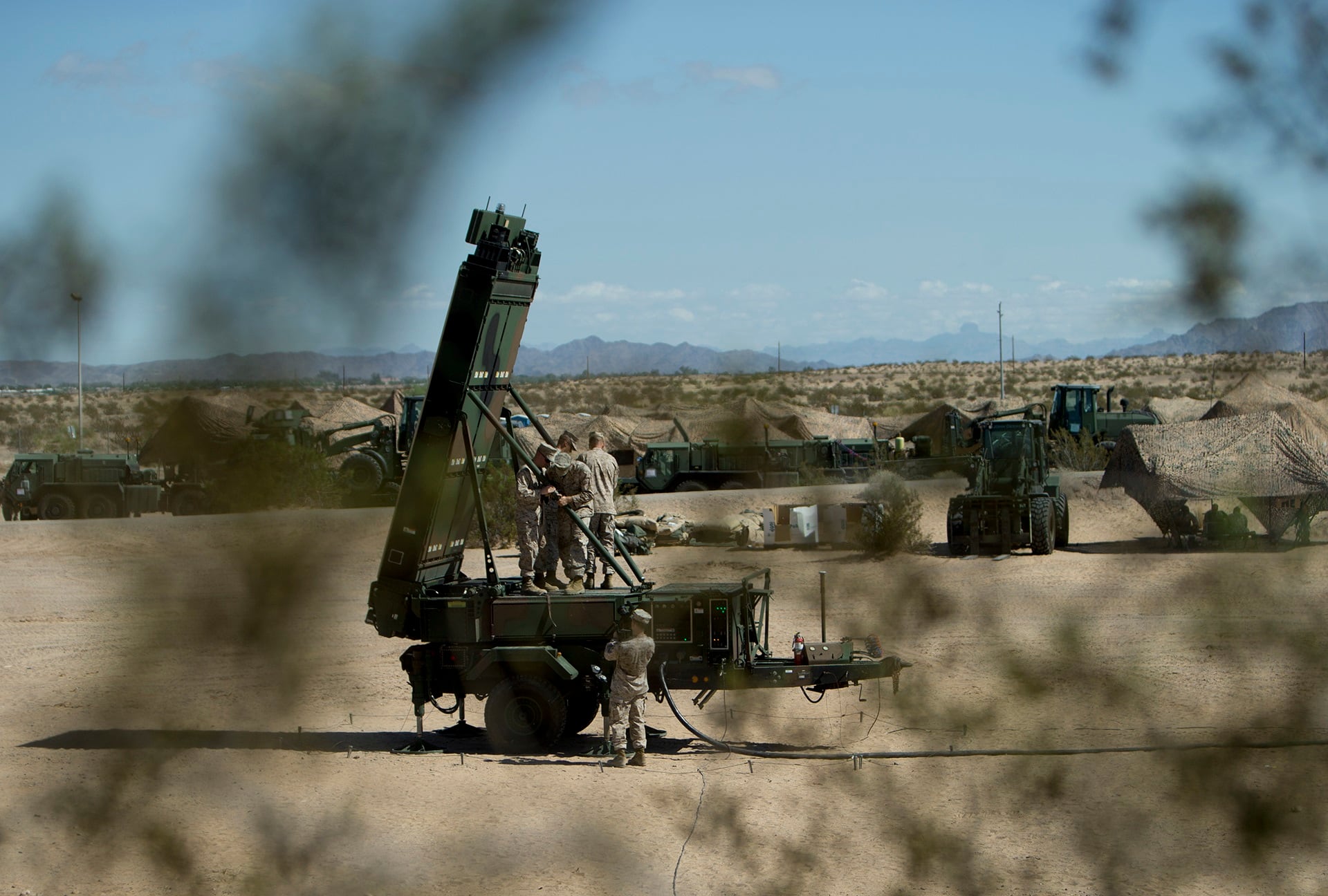
Highlights
- Cutting-edge Techniques: Multi-synchrosqueezing, NSBEMD-TFD, and time-frequency multiplexing yield high-resolution representations.
- Extensive Applications: From target detection and imaging to clutter reduction and weather radar enhancements.
- Emerging Trends: Integration with machine learning, compressive sensing, and adaptive algorithms to tackle computational challenges.
Introduction
Advanced time-frequency analysis has emerged as an indispensable tool in modern radar systems. The technology allows for the exploration and representation of signals that vary over time, providing detailed insights into the spectral content and its evolution. This multifaceted approach transforms the conventional analysis of radar signals, enabling real-time detection, classification, and tracking of various targets. In radar applications, signals are often non-stationary – meaning that their frequency components change with time. Advanced time-frequency techniques exploit this fact to offer more effective methods for extracting signal features, compensating for motion, and combating interference.
Fundamentals of Time-Frequency Analysis in Radar
Understanding Spectral Variability
Radar signals inherently possess dynamic spectral characteristics that fluctuate over time. Traditional Fourier analysis only provides a global frequency summary, losing the time-varying attributes of the signal. To address this limitation, time-frequency representations (TFRs) are employed. TFRs provide a two-dimensional view, showing how the signal’s frequency content evolves over the duration of the observation period. This dual-domain approach is vital for tasks such as motion analysis, target recognition, and clutter suppression in radar systems.
Key Techniques in Time-Frequency Analysis
Multi-Synchrosqueezing Transforms
One of the forefront techniques in advanced radar analysis is the Multi-Synchrosqueezing Transform. This method enhances the resolution of the time-frequency representation by reassigning the spectral energy to locations closer to the true instantaneous frequency of the signal. It is particularly effective in extracting subtle features and improving anti-interference performance, which is critical in radar applications that require precise target tracking and parameter estimation.
Non-Uniformly Sampled Bivariate Empirical Mode Decomposition Time-Frequency Distribution (NSBEMD-TFD)
Another innovative method is the NSBEMD-TFD, designed to handle non-stationary signals in radar. By decomposing signals into intrinsic mode functions through a time-frequency lens, this approach enables the extraction of critical features for target recognition in complex environments. Its adaptability makes it particularly useful in imaging applications such as Inverse Synthetic Aperture Radar (ISAR) where signal dynamics are influenced by target motion and environmental factors.
Time-Frequency Multiplexing (TFM)
Time-Frequency Multiplexing represents an advanced waveform design used predominantly in solid-state polarimetric weather radars. TFM allows multiple signals to share the same channel by modulating them in both time and frequency, thereby increasing the robustness and resolution of radar imaging. This technique not only improves performance in cluttered environments but also aids in blind range mitigation, ensuring that radar systems maintain high accuracy even under challenging conditions.
Short-Time Fourier Transform (STFT) and Continuous Wavelet Transform (CWT)
Traditional methods such as the Short-Time Fourier Transform (STFT) and the Continuous Wavelet Transform (CWT) continue to play vital roles in radar applications. The STFT is widely used to generate spectrograms—a 2D display of the signal's time-frequency content—by applying a sliding window to segment the signal. Despite its limitation in achieving a fixed resolution dictated by the window size, STFT remains popular for its simplicity and effectiveness in providing localized spectral information when degrees of freedom are managed appropriately.
In contrast, the Continuous Wavelet Transform (CWT) excels in situations requiring multi-resolution analysis. By employing scalable wavelet functions, CWT adapts its time-frequency resolution, making it better suited for identifying self-similar patterns and transient events within radar signals. These distinctive features aid in recognizing unique micro-Doppler signatures of different targets.
Applications in Radar Systems
Target Detection and Classification
One of the primary applications of advanced time-frequency analysis in radar is the enhanced detection and classification of targets. Modern radar systems benefit from the ability to isolate weak signals from background noise, which is increasingly important in environments with heavy clutter. By utilizing high-resolution TFRs, radar can extract micro-Doppler signatures—subtle frequency shifts caused by vibration or limb motion—which are critical in distinguishing between different types of targets, such as vehicles, aircraft, and even human motion.
Doppler Processing and Motion Compensation
Doppler processing is a core function in radar signal processing that involves measuring the frequency shift resulting from the relative motion between the target and the radar system. Time-frequency methods provide improved resolution and dynamic range in estimating these Doppler shifts, enabling more accurate velocity determinations. Moreover, these techniques facilitate motion compensation, which is essential in both Synthetic Aperture Radar (SAR) and ISAR imaging applications. By correcting for target and platform motion, radar systems can produce clearer, high-resolution images, thereby enhancing situational awareness.
Clutter Reduction and Interference Suppression
In many radar operations, especially in ground and weather radar scenarios, signal clutter from unwanted echoes can severely degrade performance. Advanced time-frequency analysis techniques help distinguish between clutter and genuine target signals by analyzing the distinct signatures in the time-frequency domain. This precise separation enables radar systems to suppress interference effectively, enhancing the detection of weak or closely spaced signals even in cluttered environments.
Radar Imaging and Synthetic Aperture Radar (SAR)
High-fidelity radar imaging is heavily reliant on sophisticated signal processing. In SAR, where the platform motion plays a dual role of enabling high-resolution imaging while introducing phase errors, time-frequency analysis is indispensable for phase correction and motion compensation. These methods contribute substantially to constructing accurate images by disentangling the signal components that are distorted by the motion of either the target or the radar platform. As a result, the resultant images are sharper and more reliable for both civilian and military applications.
Weather Radar Systems
Weather radars are increasingly employing advanced time-frequency techniques to enhance the detection and interpretation of meteorological phenomena. Techniques like time-frequency multiplexing enable solid-state polarimetric weather radars to process multiple signals concurrently, which is vital for distinguishing precipitation types and tracking storm dynamics. This multi-dimensional analysis not only improves the accuracy of radar returns but also assists in determining precipitation intensity, wind shear, and other critical weather parameters.
Emerging Trends and Future Directions
Integration with Machine Learning and Artificial Intelligence
The ongoing integration of machine learning algorithms with advanced time-frequency analysis is creating opportunities for fully automated target detection and classification. By leveraging artificial intelligence, radar systems can learn to identify complex patterns within the time-frequency domain, thus reducing the need for manual oversight. Algorithms programmed to recognize specific micro-Doppler features enhance the sensor network's ability to adapt to changing conditions and interference patterns, ensuring rapid and accurate target recognition in diverse operational environments.
Compressive Sensing and Data Reduction
With the advent of high-dimensional radar data, compressive sensing techniques have been introduced to reduce the computational burden while preserving vital signal details. Compressive sensing allows the capture of essential information with significantly fewer samples than traditional methods, making it a powerful tool for real-time processing. This method is particularly beneficial in Multi-Input Multi-Output (MIMO) radar systems, where it aids in reducing the data transmission requirements and enhancing overall processing speeds.
Quantum and High-Performance Computing
The evolution of computing technologies points toward a future where quantum computing and enhanced high-performance computing architectures are likely to play a substantial role in radar signal processing. The transition towards these computing paradigms is expected to mitigate the computational challenges currently experienced in high-resolution time-frequency analysis. Enhanced processing power will allow for near-instantaneous computation of complex transforms, further refining the clarity and resolution of radar images and substantially improving detection and tracking precision.
Adaptive Algorithms and Real-Time Processing
Ongoing research is focusing on developing adaptive time-frequency analysis algorithms that can dynamically adjust to variations in the signal environment. These adaptive strategies are essential for real-time applications where the radar must maintain high performance despite changing operational conditions. The ability to modify window sizes, transform parameters, and suppression techniques in real time ensures that radar systems remain versatile and resilient.
Technical Comparison and Performance Metrics
To further elucidate the practical aspects of these techniques, it is useful to compare their performance based on several metrics. The table below provides an overview of key performance characteristics for several common time-frequency analysis methods used in radar signal processing:
| Technique | Time Resolution | Frequency Resolution | Computational Complexity | Primary Application |
|---|---|---|---|---|
| STFT | Moderate (fixed by window) | Moderate (fixed by window) | Low to Moderate | Spectrogram generation, basic motion analysis |
| CWT | Variable (multi-resolution) | Variable (scale-dependent) | Moderate to High | Target recognition, transient detection |
| Multi-synchrosqueezing | High | High | High | Instantaneous frequency extraction, interference mitigation |
| NSBEMD-TFD | High | High | High | Non-stationary signal analysis, ISAR imaging |
| TFM | High | High | High (depending on implementation) | Weather radar, multi-signal processing |
In-Depth Analysis of Techniques
Refinement through Multi-Synchrosqueezing
Multi-synchrosqueezing transforms redefine the way instantaneous frequency is extracted from complex signals. By reorganizing the time-frequency representation of a signal, the technique consolidates energy around the true signal components. This process reduces ambiguity and enhances the radar's ability to resolve closely spaced targets even in environments with significant interference. The method has been particularly effective in applications like ground-penetrating radar, where it contributes to the suppression of false alarms due to clutter.
Enhancement via NSBEMD-TFD
The NSBEMD-TFD method facilitates the analysis of non-stationary signals by decomposing them into a complete set of intrinsic mode functions. This decomposition allows more precise localization of signal features that are not effectively captured using linear transforms. Its efficacy in constructing high-resolution ISAR images makes NSBEMD-TFD a favored approach for automatically recognizing radar targets and tracking their movements under variable motion conditions.
Applying Time-Frequency Multiplexing in Weather Radar
Time-frequency multiplexing stands out due to its capacity to handle multiple signals simultaneously without significant interference. In weather radar systems, this capability translates to improved polarimetric measurements and enhanced detection of meteorological phenomena. The technique’s effectiveness in blind range mitigation ensures that radar returns are reliable even when facing complex environmental reflections, thereby improving overall weather monitoring capabilities.
STFT and CWT: Complementary Roles
While the STFT provides a straightforward approach to generating a two-dimensional spectrogram through a fixed windowing process, the CWT permits a more flexible multi-resolution analysis. These methods are often used in tandem to complement each other. Where STFT offers simplicity and lower computational demands, CWT provides the nuanced insights needed for identifying transient features and modulations in the radar signal. Together, they provide a balanced toolset for radar signal processing.
Conclusion and Final Thoughts
Advanced time-frequency analysis in radar represents a highly sophisticated blend of signal processing techniques designed to harness the full potential of dynamically changing radar returns. With methods ranging from multi-synchrosqueezing transforms to adaptive wavelet analyses, these techniques not only enhance target detection, Doppler processing, and imaging quality but also pave the way for more automated and robust radar systems.
The comprehensive application of these methods in diverse radar scenarios—from weather monitoring to ground-penetrating imaging and synthetic aperture radar—exemplifies their vital role in modern radar technology. The transition towards integrating machine learning and high-performance computing further signifies a promising future where radar systems can adapt in real time, provide superior clutter reduction, and support emerging defense and weather monitoring applications. As research continues to evolve, the ongoing developments in adaptive techniques and computational efficiency will undoubtedly propel radar technology into a new era of accuracy and versatility.
References
-
ScienceDirect Article - ScienceDirect
- IEEE Xplore Document - IEEE
-
EECRadar PDF - EECRadar
- IEEE Xplore Document - IEEE
-
ScienceDirect Book Chapter - ScienceDirect
- Digital Commons Dissertations - NJIT
Recommended

Last updated February 25, 2025