
Advanced Simulation Models for Capacitive Sensors
Exploring state-of-the-art simulation techniques and their applications
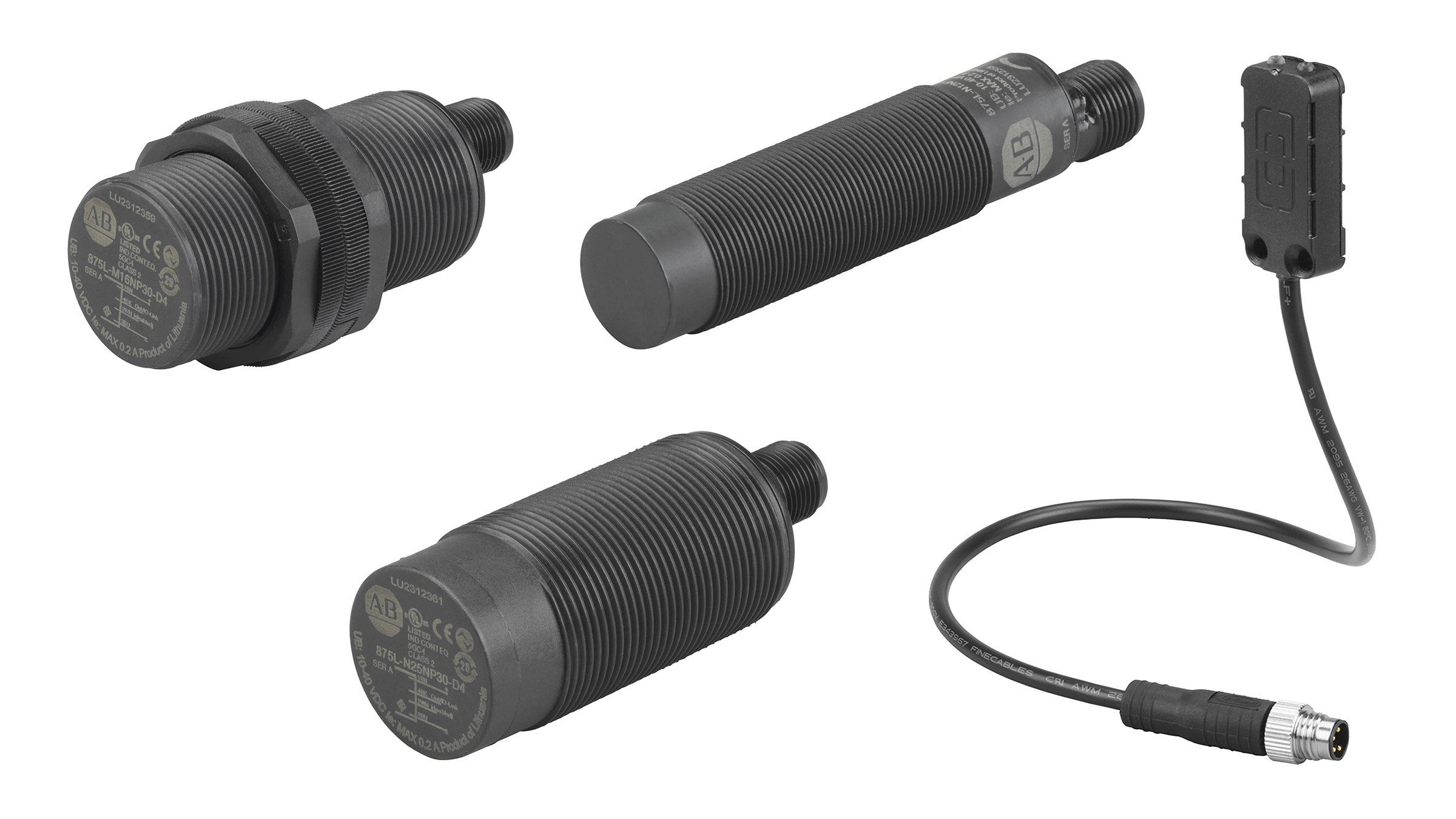
Key Highlights
- Comprehensive Modeling Techniques: Integration of FEM, PINNs, and mathematical models to capture complex sensor behavior.
- Optimized Sensor Performance: Simulation aids in refining sensor design for high sensitivity, accuracy, and efficiency.
- Wide Array of Applications: Deploying simulation in touch, pressure, and bioparticle sensors across various industries.
Overview of Capacitive Sensors and Their Simulation
Capacitive sensors play a pivotal role in modern electronic systems due to their versatility and precision. They function based on the principle of capacitance—the ability of a system to store an electric charge—and are widely deployed in touchscreens, proximity detectors, displacement monitors, pressure sensors, and even in sophisticated biomedical devices. Given the high stakes in design efficiency and performance reliability, simulation models have become indispensable in the development process. Advanced simulations allow engineers to conduct virtual experiments, optimize designs, and forecast sensor behavior under different physical and environmental conditions before moving to hardware prototypes.
The Role of Simulation Techniques
Simulation methods are integral to understanding and optimizing the performance of capacitive sensors. These techniques provide insights into how design parameters interact with physical variables such as material properties, environmental factors, and geometry. This exploration has revolutionized the sensor design process, offering several key advantages:
- Cost and Time Efficiency: Virtual modeling allows rapid prototyping and iterative refinement of sensor designs, reducing development costs and shortening design cycles.
- Performance Optimization: Simulation assists in tuning sensor characteristics—like sensitivity, response time, and accuracy—by evaluating various configurations and operational conditions.
- Enhanced Physical Understanding: By applying physics principles in simulation, designers gain a deeper understanding of underlying phenomena, enabling innovative sensor designs.
Advanced Simulation Approaches
Finite Element Method (FEM)
The Finite Element Method (FEM) is one of the most widely used techniques for simulating capacitive sensors. FEM decomposes complex sensor geometries into smaller, manageable elements and applies numerical methods to solve Maxwell’s equations across these elements. This detailed spatial analysis is crucial for:
- Accurately predicting the spatial distribution of electric fields.
- Modeling the impact of complex geometrical designs and boundary conditions.
- Evaluating sensor performance under various mechanical stresses and environmental conditions.
Despite its high accuracy, FEM simulations can be computationally intensive, particularly for intricate multi-layer designs. Nonetheless, the precision offered by FEM makes it a fundamental tool in capacitive sensor design.
Physics-Informed Neural Networks (PINNs)
Physics-Informed Neural Networks (PINNs) are an emerging approach that incorporates physical laws directly into the neural network training process. This technique integrates Maxwell’s equations within the neural network’s loss function, allowing for:
- Rapid simulations that considerably reduce computational time compared to traditional numerical methods.
- Enhanced predictive capabilities, which are particularly useful in real-time sensor applications.
- Surrogate modeling that facilitates quick design iterations while maintaining high fidelity in simulations.
PINNs are especially valuable in dynamic applications such as touch sensors, where fast inference is critical.
Mathematical and Lumped Element Models
Mathematical models lay the theoretical foundation for capacitive sensor behavior. They are formulated using fundamental physical principles, providing equations that describe the relationship between sensor geometry, material properties, and the expected sensor output. Lumped element models, in particular, simplify the sensor into discrete electrical components—such as capacitors, resistors, and inductors—thus enabling:
- Quick analysis and integration with circuit simulation tools.
- Simplification of complex multi-physics phenomena into manageable electrical circuit simulations.
- Development of real-time simulation frameworks that are beneficial especially for robotic applications.
These models are often used in conjunction with more detailed FEM or multi-physics simulations to validate design assumptions.
3D Electromagnetic Field Simulations and Multi-physics Models
In certain applications, comprehensive 3D electromagnetic simulations are essential to capture the intricate interactions between the electric fields and physical components of the sensor. Tools such as COMSOL Multiphysics facilitate the simulation of these interactions by coupling electromagnetic, mechanical, and thermal effects. Multi-physics simulations are particularly beneficial for:
- Analyzing the sensor’s performance under simultaneous stresses (thermal, mechanical, and electrical).
- Optimizing designs for environments where multiple physical phenomena are at play.
- Enhancing the robustness and reliability of sensors in challenging operational conditions.
Specialized Simulation Frameworks
Certain simulation frameworks have been specifically developed for capacitive sensors. For example, an open-source framework is available that facilitates real-time, dynamic simulation of capacitive touch sensors in robotic applications. These specialized tools enable:
- Seamless integration with sensor hardware prototyping.
- Fine-tuning of electrical parameters such as drain power voltage and electrode resistance.
- Rapid evaluation and iteration of sensor designs, with simulation outputs closely matching experimental measurements.
Key Applications in Capacitive Sensor Design
Touch Sensors
Capacitive touch sensors are ubiquitous in devices such as smartphones, tablets, and modern automotive interfaces. Advanced simulation models are utilized to:
- Optimize electrode patterns and arrangements.
- Minimize parasitic capacitances and improve signal-to-noise ratios.
- Enhance user interface responsiveness by predicting the impact of skin contact.
Pressure Sensors
In applications involving pressure measurement, such as MEMS-based sensors, simulations play a crucial role in:
- Modeling diaphragm deflections and mechanical stresses.
- Establishing relationships between applied pressure and capacitance variations.
- Improving device sensitivity and ensuring rapid response times.
Position and Proximity Sensors
Capacitive sensors are commonly employed in industrial systems for precise position and displacement measurements. Simulation models help by:
- Providing detailed analysis of sensor behavior when subjected to varying displacements.
- Assisting in the identification of metal objects based on their induced capacitance changes.
- Enabling the design of sensors with high spatial resolution and precise detection capability.
Microfluidics and Bioparticle Detection
In the biomedical field, capacitive sensors are applied in microfluidic devices for the detection of bioparticles such as red blood cells. Advanced simulations are used to:
- Model the interaction between the sensor and bioparticles using electrostatic principles.
- Optimize sensor sensitivity for detecting variations in the dielectric constant.
- Develop designs that offer high accuracy even in complex fluid environments.
Comparative Analysis of Simulation Models
Table: Key Simulation Techniques for Capacitive Sensors
| Simulation Model | Key Features | Typical Applications |
|---|---|---|
| Finite Element Method (FEM) | Detailed geometry modeling, accurate electromagnetic field analysis, handles complex boundary conditions. | General sensor design, pressure sensors, precise position detection |
| Physics-Informed Neural Networks (PINNs) | Incorporates Maxwell’s equations, rapid and efficient simulations, real-time inference capabilities. | Capacitive touch sensors, dynamic and adaptive sensor applications |
| Mathematical/Lumped Element Models | Simplified circuit analogies, quick analysis, integrates with circuit simulators. | Preliminary design validations, control systems |
| 3D Electromagnetic & Multi-physics Models | Coupled physical phenomena, robust performance predictions, optimal for complex conditions. | MEMS sensors, sensors under simultaneous physical stresses |
Challenges and Considerations
Accuracy Versus Computational Cost
One of the primary challenges in advanced simulation models is striking the right balance between accuracy and computational resources. Detailed FEM simulations, while highly accurate, can be computationally expensive and time-consuming—especially for designs with intricate geometries. To address this, surrogate models, such as those based on PINNs, have been developed. These models achieve a significant reduction in runtime while maintaining a high level of accuracy, enabling effective real-time applications.
Environmental and Material Considerations
Reliable sensor performance depends critically on environmental and material properties. Simulation models must account for variations in temperature, humidity, and other external factors that can influence sensor behavior. Moreover, the precision in defining material properties, such as the dielectric constants and mechanical properties, is essential for ensuring that simulations accurately represent real-world conditions.
Integration with Hardware Prototyping
A well-calibrated simulation model not only reduces the time and cost associated with physical prototyping but also provides a platform for iterative design improvements. Calibration of simulation results against experimental data is necessary to refine the model. Advanced frameworks are now capable of importing actual sensor geometries and electrical parameters, which further bridges the gap between simulation and real-world performance.
Emerging Trends and Future Directions
Integration of Machine Learning with Simulation
The convergence of machine learning and traditional physics-based simulations represents a significant leap forward in sensor design. By employing approaches like PINNs, engineers can incorporate learning-based adaptations into physical simulations. This allows sensor models to not only predict behavior under typical conditions but also self-optimize in response to unforeseen environmental changes. Such integration is expected to enhance the robustness and versatility of capacitive sensors in the coming years.
Real-time and Adaptive Simulation Frameworks
With the rapid pace of innovation, simulation frameworks are evolving to support real-time analysis and adaptive design modifications. Specialized simulation software that directly interfaces with sensor layouts and hardware prototypes is making it easier to iterate designs quickly. Such developments are particularly relevant in fast-paced industries like consumer electronics and robotics.
Enhanced Multi-physics Coupling
Future simulation models are likely to see even more sophisticated coupling of different physical domains. By improving the interaction modeling between mechanical, thermal, and electromagnetic effects, sensor designers will be able to predict performance with unprecedented accuracy. This, in turn, will lead to the development of sensors that are both highly sensitive and resistant to environmental disturbances.
Practical Impact of Simulation on Sensor Development
Improved Design and Optimization Processes
Integrating advanced simulation models into the design cycle has a transformative impact on the development of capacitive sensors. By accurately predicting sensor behavior, designers can avoid costly design mistakes and reduce the time-to-market for new sensor technologies. This allows for:
- Rapid prototyping and iterative refinement of sensor configurations.
- Early verification of sensor performance under various operational conditions.
- Tailored sensor designs that match specific application requirements, such as high sensitivity for touch interfaces or robust performance in harsh environments.
Bridging the Gap Between Simulation and Implementation
Extensive simulation not only reduces prototyping cost but also enhances the reliability of final products, as simulation outputs help fine-tune the design parameters to closely match practical implementations. By validating simulated behavior against experimental data, engineers ensure that the sensor performs optimally in real-world applications, highlighting the crucial role of advanced simulation tools.
References
- Capacitive Touch Sensor Modeling With a Physics-informed Neural Network - arXiv
- Modeling and simulation analysis of capacitive position sensors - Journal of Applied Science
- Fieldscale SENSE Simulation Software for STM32-based Capacitive Touch Sensors - All About Circuits
- CapSense Real-Time Capacitive Sensor Simulation Framework - ResearchGate
- A Simulation Analysis of MEMS Capacitive Pressure Sensors - IEEE Xplore
- Modeling a Capacitive Position Sensor with FEM - COMSOL
- Electrostatic Field Simulation in Capacitive Sensors - IEEE Xplore
-
Advanced Simulation Tool for Sensors and Actuators - ScienceDirect
- Modeling and Simulation Analysis of Multi-Layer Capacitive Sensors - MDPI
- COMSOL Multiphysics Blog - COMSOL
Recommended Related Queries
Last updated March 1, 2025