
Advanced Watercolour Granulation Techniques
Mastering the textured beauty of watercolour granulation
Highlights
- Granulating Pigments and Media – Carefully choose pigments and add granulation mediums to intensify textures.
- Application Techniques – Utilize wet-on-wet, layering, and textural methods to control and enhance granulation.
- Surface, Water, and Tools – Experiment with different papers, water qualities, and brush or tool techniques for diverse effects.
Understanding Watercolour Granulation
Watercolour granulation is the phenomenon where pigment particles clump together and settle into the paper's textured surface, producing natural variation in tone and texture. Often, this effect is prized for its ability to add depth, interest, and a dynamic quality that can transform an artwork’s flat wash into a vivid portrayal of light and shadow. Granulation is mostly dictated by pigment properties, water ratios, and the underlying paper characteristics.
Choosing the Right Materials
Granulating Pigments and Their Properties
The foundation of successful watercolour granulation starts with the choice of pigments. Inorganic pigments, such as Ultramarine Blue, Burnt Sienna, and Cobalt, tend to exhibit pronounced granulation. Their sedimentary nature allows the pigment particles to aggregate as the paint dries. In contrast, organic pigments might display less natural granulation unless modified with external agents.
Key Points on Pigment Selection
• Inorganic pigments are highly recommended due to their natural tendency to granulate.
• Always test dot cards from various brands; production methods may influence the granulation effect.
• Combining sedimentary and staining colors can yield unique granulating dynamics.
Using Granulation Mediums
For pigments that do not naturally granulate or when a more intense effect is desired, granulation mediums such as Winsor & Newton Granulation Medium can be mixed with your watercolour paints. This medium alters the paint’s flow and drying time, fostering the clustering of pigment particles on the paper.
Application Tips for Mediums
Adjust the ratio of granulation medium to watercolour carefully. Starting with small quantities allows you to control the texture without overwhelming the base paint's hue or transparency. Experimentation is key—document your ratio trials to replicate ideal conditions in future sessions.
Techniques to Enhance Granulation
Wet-on-Wet Technique
One of the most celebrated methods for enhancing granulation is the wet-on-wet technique. By wetting the paper with clean water before applying pigment, you create conditions that allow the pigment particles to move and clump together unpredictably. This results in a naturally variegated texture that can intensify the visual impact of your work.
Implementation Guidelines
• Pre-wet only target areas if a controlled effect is desired.
• Experiment with varying amounts of water to see differences in granulation density.
• Combining wet-on-wet with selective salt applications can offer additional textural interest.
Layering Techniques
Layering is another advanced strategy to achieve complex granulation effects. By applying multiple layers of pigment, allowing each to dry completely before adding the next, you can build depth as each layer contributes its own textural detail. This glazing technique also deepens colors and enhances the luminous quality of your painting.
Layering Tips
• Let each layer dry thoroughly to prevent unwanted mixing that might dull granulation.
• Use a blend of granulating and non-granulating pigments to achieve both texture and smooth transitions.
• Employ a scraping technique with a palette knife on dried layers to selectively remove paint and reveal underlying granulation.
Alternative Texturing Techniques
In addition to the standard techniques, several alternative methods can introduce variety in your granulation approach:
Salt Application
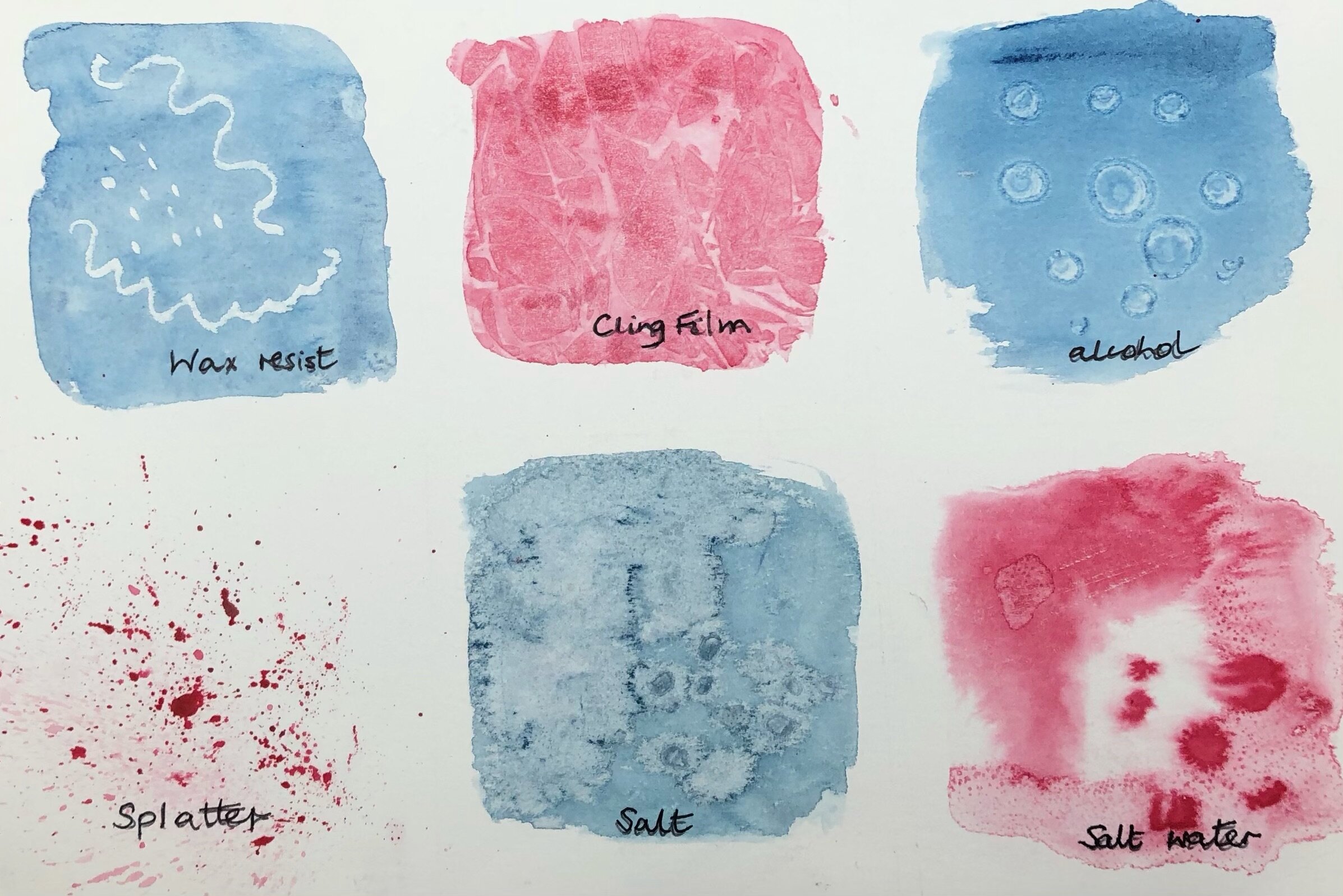
Sprinkling coarse salt onto still-wet paint draws out water and pigment, creating starburst and granular effects ideal for textured skies or intriguing background visuals.
Spraying Techniques
Using a spray bottle to distribute water over wet paint generates soft diffusion effects. This method can soften edges and promote subtle granulation in designated areas.
Combining Dry Brush and Glazing
After an initial granulated wash, a dry brush technique can add further texture by dragging pigment over a slightly roughened layer. Additionally, glazing over granulated areas builds luminous depth and contrast.
Paper and Water Considerations
Paper Selection
The texture of your watercolour paper crucially dictates the extent of granulation:
Types of Paper
• Rough Paper: Maximizes granulation by providing a pronounced textured surface where pigment particles can cluster.
• Cold Press Paper: Offers moderate texture and a balanced granulation effect, suitable for detailed work.
• Hot Press Paper: Delivers smoother finishes that minimize granulation, ideal for controlled application styles.
Water Quality and Quantity
Water quality also plays a role in how pigments perform. Artists have noted that hard water, which contains higher levels of minerals, can encourage more noticeable granulation compared to distilled water. Similarly, the amount of water used in the wash affects the fluidity and settling behavior of pigment particles.
Water Application Techniques
• Adjust water content based on the pigment characteristics—more water helps create a loose, flowing effect that can enhance granulation.
• Experiment with localized wet areas versus full-sheet wetting to understand how water distribution modifies the texture.
Tools and Brushwork to Refine the Effect
Brush Techniques
The variety of brushes and application tools available offers further control over granulation:
Choice of Brushes
• Flat Brushes: Provide broader strokes that may exaggerate granulation in large wash areas.
• Round Brushes: Allow for concentration on detail, producing textured accents where needed.
• Fan Brushes: Especially well-suited for dry brushing techniques to create additional texture.
Palette Arrangements and Testing
Effective colour mixing and palette arrangements play a subtle, yet vital, role in achieving the desired granulation. By organizing your palette with complementary and contrasting hues, you can stimulate creative mixes that enhance textural characteristics.
Testing Before Painting
Always perform small tests on dot cards or sample papers before committing to larger areas. This practice helps you gauge granulation behavior with different mixtures, mediums, and water ratios.
Comprehensive Techniques Comparison
To better understand how each method interacts with the others, consider the following table, which summarizes the techniques, their effects, and key application points:
| Technique | Key Features | Application Tips |
|---|---|---|
| Granulating Pigments | Natural sedimentary properties, especially in inorganic pigments | Testing with dot cards and combining sedimentary with staining colors for varied effects |
| Granulation Medium | Enhances granulation in non-granulating paints | Mix in small amounts; adjust ratios to control texture and drying times |
| Wet-on-Wet Technique | Creates organic blending and textural clustering | Wet targeted areas only; vary water amounts to influence pigment movement |
| Layering & Glazing | Builds depth and contrast through multiple drying cycles | Allow each layer to dry; combine granulating with smooth layers for visual interest |
| Salt & Spraying | Introduces unique diffusion and starburst effects | Sprinkle salt on still-wet paint; spray lightly for controlled soft diffusion |
| Paper Selection | Impacts texture significantly, rough versus smooth | Use rough paper for maximum granulation; cold press for balanced results |
| Water Quality | Mineral content can enhance granular formation | Experiment with hard versus distilled water; adjust water quantity |
| Brush Techniques | Different brushes lead to varying textural effects | Use flat for broad areas, round for details, and fan for dry brush effects |
Combining Techniques for Unique Effects
Integrated Approaches
Advanced watercolour granulation is about experimentation and integration. Combining techniques can result in paintings that are visually complex and richly textured. For instance, starting with a wet-on-wet wash to establish a basic granulated texture, then adding layers of glazing and selectively scraping off areas using a palette knife, can yield fascinating interplay between light and shadow.
Examples of Integrated Workflows
• Begin with a broad wash using granulating pigments on pre-wetted rough paper. Apply a granulation medium here if the pigment lacks natural sedimentation.
• Once the initial wash is dry, add another layer using a different pigment mix or a combination that includes a non-granulating color to create contrast.
• Incorporate dry brush techniques or light scraping to further refine textural differences.
• Finish by applying selective salt or spraying water into specific regions to achieve additional diffusion and soft textural transitions.
Additional Considerations
Environmental and Technical Aspects
Advanced artists also consider ambient factors such as humidity and temperature, which can affect the drying time and behavior of watercolours. For instance, working in a more humid environment can prolong drying and potentially allow for greater movement and granulation. Adjusting techniques to suit the workspace environment can help replicate desired effects consistently.
Documentation and Experimentation
Keeping a detailed record of your experiments – noting pigment brands, mixing ratios, water quality, paper types, and environmental conditions – can be invaluable. This practice not only speeds up the learning process but also helps in replicating successful techniques in future projects.
References
To further explore advanced watercolour granulation techniques, consider reviewing the following resources:
- Watercolour Granulation - Jacksons Art
- Professional Watercolour Techniques - Winsor & Newton
- All About Watercolour Granulation - Watercolour Affair
- What is Granulation? - Emily Wassell
- Granulation in Watercolour Painting - The Fine Art Collective
Recommended
For those interested in diving even deeper into the craft of watercolour granulation, here are some related search queries that could spark further exploration:
Last updated March 19, 2025