
Innovations and Techniques in Cereal Breeding
Advancing Staple Crops for Global Food Security
Cereal breeding, a cornerstone of agricultural science, focuses on developing improved varieties of staple crops such as wheat, rice, maize, barley, sorghum, and others. These crops form the foundation of global food supply, contributing a significant portion of human caloric intake. The discipline of cereal breeding combines traditional methods with cutting-edge molecular and genetic techniques to enhance desirable traits, ensuring higher yields, increased nutritional value, and greater resilience to environmental challenges.
Key Highlights in Cereal Breeding
- Integration of Traditional and Modern Methods: Cereal breeding effectively leverages both classical techniques like hybridization and selection alongside modern approaches such as molecular markers, genomics, and gene editing for accelerated and precise crop improvement.
- Focus on Resilience and Quality: Current breeding programs increasingly prioritize developing cultivars with enhanced tolerance to biotic and abiotic stresses (diseases, pests, drought, heat, salinity) and improved nutritional profiles, addressing the challenges of climate change and global malnutrition.
- Technological Advancements Accelerate Progress: High-throughput phenotyping platforms, genomic selection, and gene editing technologies like CRISPR/Cas9 are revolutionizing the breeding process, significantly reducing the time required to develop and release new, improved varieties.
The Foundation of Cereal Breeding: Traditional Methods
Traditional cereal breeding relies on the principles of selection and hybridization. By carefully selecting parent plants with desirable traits and crossing them, breeders aim to combine beneficial genes in their offspring. Subsequent generations are then evaluated, and individuals exhibiting the desired characteristics are chosen for further breeding. This iterative process of selection and crossing has been instrumental in developing the high-yielding varieties that contributed to the Green Revolution.
Common Traditional Breeding Techniques
- Mass Selection: Selecting individuals based on their phenotype and pooling their seeds for the next generation.
- Pure-Line Selection: Developing genetically uniform lines from a single self-pollinated plant.
- Hybridization: Crossing two genetically distinct parent plants to combine their traits.
- Backcross Breeding: Repeatedly crossing a hybrid back to one of its parents to transfer a specific trait while retaining most of the recurrent parent's genetic makeup.
- Recurrent Selection: Repeated cycles of selection and intermating to improve the frequency of desirable alleles in a population.
Modern Approaches Revolutionizing Cereal Breeding
While traditional methods remain relevant, modern biotechnologies and genomic tools have dramatically accelerated the pace and precision of cereal breeding. These approaches allow breeders to identify and manipulate genes associated with specific traits with greater efficiency.
Molecular Breeding Techniques
Molecular breeding utilizes molecular markers and genomic information to guide selection decisions. Instead of relying solely on observable traits (phenotype), breeders can select plants based on their genetic makeup (genotype).
Marker-Assisted Selection (MAS)
MAS involves using DNA markers linked to desirable genes to identify and select plants carrying those genes at an early stage. This significantly speeds up the breeding process compared to traditional methods that require growing plants to maturity to assess traits.
Genomic Selection (GS)
GS uses genome-wide molecular markers to predict the breeding value of individuals. This allows breeders to select the best candidates for crossing even before phenotypic data is available, further accelerating genetic gain.
Genome Editing Technologies
Genome editing technologies, such as CRISPR/Cas9, enable precise modifications to the plant genome. This allows breeders to introduce, delete, or modify specific genes to create new traits or enhance existing ones with unprecedented accuracy.
For example, CRISPR/Cas9 has been explored for enhancing tolerance against biotic and abiotic stresses in cereal crops and for manipulating genes related to plant height to improve lodging resistance.
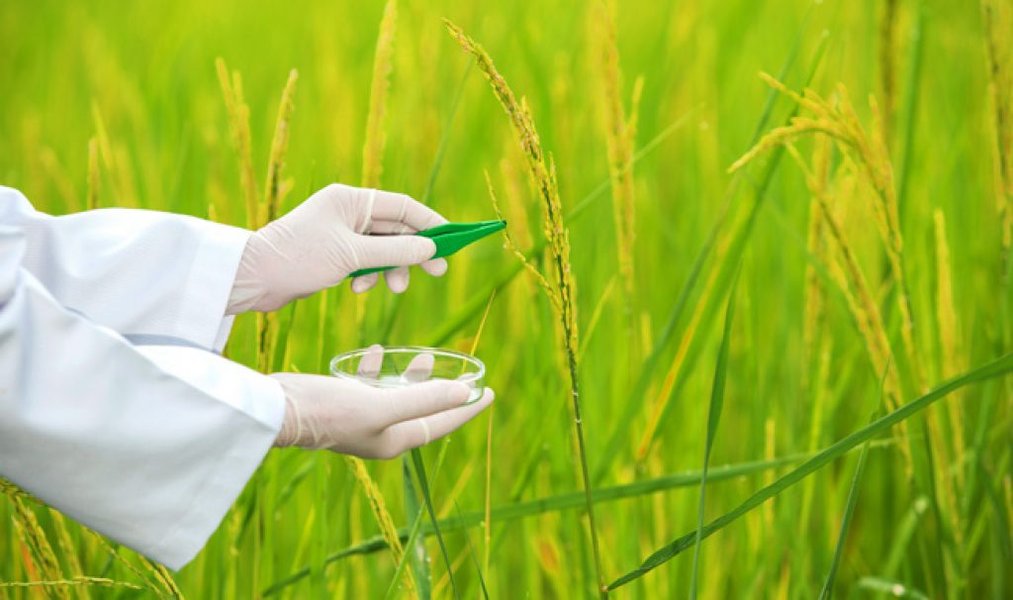
Investigating rice at a molecular level for breeding advancements.
High-Throughput Phenotyping
High-throughput phenotyping involves using automated systems and sensors to rapidly and accurately measure various plant traits under different environmental conditions. This generates large datasets that can be integrated with genomic data to identify genes and quantitative trait loci (QTL) associated with complex traits.
Key Cereal Crops and Breeding Efforts
Breeding programs are actively focused on improving the major cereal crops due to their global importance.
| Cereal Crop | Importance | Key Breeding Goals |
|---|---|---|
| Wheat (Triticum aestivum) | Staple food for a large portion of the world's population. | Increased yield potential, disease and pest resistance (e.g., rusts), drought and heat tolerance, improved grain quality (protein content, milling, baking characteristics). |
| Rice (Oryza sativa) | Primary food source for billions, especially in Asia. | Higher yields, flood and drought tolerance, salinity tolerance, disease resistance, improved nutritional content (e.g., Golden Rice biofortified with Vitamin A). |
| Maize (Zea mays) | Widely used for food, feed, and biofuels. | Increased yield, insect and disease resistance, drought tolerance, nutrient use efficiency. |
| Barley (Hordeum vulgare) | Used for feed, malt, and food. | Yield improvement, disease resistance, malting quality, adaptation to diverse environments. |
| Sorghum (Sorghum bicolor) | Important crop in arid and semi-arid regions. | Drought tolerance, heat tolerance, pest resistance, improved nutritional value. |
| Triticale (× Triticosecale) | Hybrid of wheat and rye, used for feed and some food products. | Yield stability, disease resistance, nutritional quality. |
Challenges and Future Directions
Despite significant advancements, cereal breeding faces several challenges, including the need to feed a growing global population in the face of climate change, limited resources, and evolving pest and disease pressures. Funding for public breeding programs also remains a concern.
Future directions in cereal breeding involve further integrating advanced technologies, such as artificial intelligence and machine learning, for data analysis and prediction. Expanding the use of genetic diversity from wild relatives of cereals is also crucial for identifying novel genes for crop improvement. Biofortification efforts to enhance the micronutrient content of cereals will continue to be important in addressing hidden hunger.
Understanding the potential of gene editing for improving cereal crops.
This video provides insights into how gene editing technologies can be applied to enhance traits in cereal crops like sorghum and barley, demonstrating the potential for precise genetic manipulation to address agricultural challenges.
Frequently Asked Questions About Cereal Breeding
What is the primary goal of cereal breeding?
The primary goal of cereal breeding is to develop improved varieties of cereal crops that are higher yielding, more nutritious, and more resilient to environmental stresses, ultimately contributing to global food security.
How long does it take to develop a new cereal variety?
Traditionally, developing a new cereal variety could take 6-8 years or even longer. However, the integration of modern techniques like speed breeding and molecular markers is significantly reducing this timeline.
What is the role of genetic diversity in cereal breeding?
Genetic diversity provides the raw material for breeding. Access to diverse genetic resources, including landraces and wild relatives, is essential for identifying and incorporating genes that confer desirable traits, such as disease resistance or tolerance to abiotic stresses.
How does climate change impact cereal breeding?
Climate change presents significant challenges for cereal breeding by increasing the frequency and intensity of extreme weather events, such as droughts, heatwaves, and floods. Breeders are working to develop varieties that can maintain yield and quality under these changing conditions.
Recommended Reading
- What are the impacts of climate change on cereal production?
- What are the latest advances in molecular breeding for crop improvement?
- Why are genetic resources important in plant breeding?
- How is biofortification improving the nutritional value of staple crops?
References
Last updated May 19, 2025