
Enhancing Acoustic Intelligence in Anti-Submarine Warfare with Artificial Intelligence
Leveraging Artificial Intelligence to Enhance Underwater Detection and Strategy
Key Takeaways
- AI significantly improves the accuracy and speed of submarine detection through advanced signal processing and machine learning algorithms.
- Integration of multi-sensor data and real-time analytics enhances situational awareness and decision-making capabilities in ASW operations.
- AI-driven automation and simulation tools streamline sonar operations and provide realistic training environments, fostering more effective ASW strategies.
Data Processing and Analysis
Handling Vast Acoustic Data
Artificial Intelligence (AI) algorithms are pivotal in processing the immense volumes of acoustic data generated by sonar systems and other underwater sensors. These algorithms can swiftly analyze data streams to identify patterns, anomalies, and potential submarine signatures, exceeding the capabilities of human operators in both speed and accuracy. By automating the initial stages of data analysis, AI enables naval forces to focus on interpreting critical information and making informed decisions.
Integration of Real-Time and Historical Data
AI facilitates the integration of real-time data with historical acoustic records, creating comprehensive "acoustic data lakes." This amalgamation allows for a more nuanced analysis, as AI systems can reference past events to identify recurring patterns or deviations that may signify the presence of adversarial submarines. The ability to correlate historical data with current observations enhances predictive analytics and strategic planning in Anti-Submarine Warfare (ASW).
Enhanced Detection and Classification
Accurate Submarine Detection
Machine learning and deep learning techniques empower AI systems to discern the subtle acoustic signatures of different submarine types amidst a cacophony of underwater noises. By training on vast datasets of known submarine sounds, AI can accurately identify and classify potential threats, distinguishing them from benign sources such as marine life or natural oceanic phenomena. This precision reduces the likelihood of overlooking stealthy submarines and enhances overall detection capabilities.
Reducing False Positives
One of the significant challenges in ASW is minimizing false alarms caused by non-threatening acoustic noises. AI-driven classifiers excel at differentiating between genuine submarine signatures and environmental sounds, thereby reducing the number of false positives. This enhancement not only improves the efficiency of ASW operations but also prevents the misallocation of resources to non-viable targets.
Automation of Sonar Operations
Adaptive Sonar Systems
AI enables the development of adaptive sonar systems that automatically adjust parameters such as frequency, beam width, and scanning patterns in response to changing environmental conditions. These intelligent adjustments optimize sonar performance, ensuring consistent detection capabilities even in varying underwater terrains and weather conditions. By continuously learning from environmental feedback, AI-driven sonar systems maintain high efficiency and accuracy.
Signal Processing Automation
Automating signal processing tasks through AI reduces the burden on human operators and accelerates the analysis of acoustic data. AI algorithms can perform complex signal processing operations, such as filtering, amplification, and pattern recognition, more efficiently than manual methods. This automation leads to faster identification of potential threats and enables quicker response times during critical ASW missions.
Data Fusion and Integration
Multi-Sensor Data Integration
AI excels at fusing data from multiple sensors, including sonar, magnetic, optical, and radar systems, to create a unified and comprehensive situational awareness framework. By integrating diverse data streams, AI provides a holistic view of the underwater environment, enhancing the ability to track and classify submarine movements accurately. This multi-faceted approach ensures that ASW operations are informed by a rich tapestry of real-time intelligence.
Comprehensive Situational Awareness
The fusion of data from various sensors not only improves the accuracy of submarine detection but also enriches the overall understanding of underwater dynamics. AI-driven data fusion facilitates the creation of 3D maps and models of the seabed, enabling more effective navigation and targeting strategies. This comprehensive situational awareness is crucial for anticipating enemy maneuvers and deploying ASW assets strategically.
Anomaly Detection and Predictive Analytics
Unsupervised Learning for Anomalies
Unsupervised machine learning algorithms are instrumental in monitoring baseline acoustic conditions and identifying anomalous sound patterns that may indicate the presence of stealth submarines or unusual underwater activities. By continuously learning from the acoustic environment, AI systems can detect deviations that might otherwise go unnoticed, providing an additional layer of security and early warning in ASW operations.
Predictive Models for Submarine Behavior
AI-powered predictive models analyze historical and real-time data to forecast the potential movements and tactics of underwater contacts. By identifying patterns and trends, these models enable naval forces to anticipate enemy actions and respond proactively rather than reactively. Predictive analytics enhance strategic planning, allowing for the optimal allocation of ASW resources and more effective countermeasures against submarine threats.
Advanced Tools Development
Specialized AI Tools for ACINT
The development of specialized AI tools is revolutionizing Acoustic Intelligence (ACINT) in ASW. These tools are designed to identify and classify submarines based on their unique acoustic signatures, facilitating more precise targeting and engagement strategies. By leveraging AI's pattern recognition capabilities, these tools can quickly analyze and interpret complex acoustic data, streamlining the detection process and enhancing overall mission effectiveness.
Enhanced Acoustic Signature Identification
AI enables the detailed analysis of acoustic signatures, allowing for the differentiation between various submarine types and classes. This granularity in identification is crucial for tailoring ASW responses to specific threats, ensuring that appropriate tactics and resources are employed against each detected submarine. Enhanced acoustic signature identification contributes to more effective and efficient underwater warfare strategies.
Training and Simulation
AI-Powered Simulation Environments
AI-driven simulation tools create realistic underwater scenarios for training sonar operators and ASW personnel. These simulations incorporate complex interactions between sound waves, underwater terrain, vessel signatures, and environmental factors, providing a comprehensive training environment. By exposing trainees to a wide range of scenarios, AI-powered simulations enhance operational readiness and improve the skillsets required for effective ASW.
Reinforcement Learning for Strategy Optimization
Reinforcement learning algorithms are employed to teach optimal mission strategies by analyzing data from past missions and expert operator decision patterns. This form of machine learning enables AI systems to iteratively improve their decision-making processes, leading to more effective detection and localization strategies. By mimicking and enhancing human expertise, reinforcement learning contributes to the development of highly proficient ASW tactics.
Decision Support Systems
Summarizing Sensor Data
AI-integrated decision support systems are capable of summarizing and visualizing vast amounts of sensor data into actionable intelligence. These systems translate complex acoustic and other sensor inputs into comprehensible formats, enabling commanders and operators to quickly assess threats and make informed decisions. By providing real-time summaries and visualizations, AI enhances situational awareness and facilitates timely responses in dynamic underwater environments.
Real-Time Alerts and Recommendations
AI-driven decision support systems offer real-time alerts and strategic recommendations based on aggregated sensor data. These systems prioritize critical information, ensuring that operators are immediately aware of high-priority threats. By delivering timely and relevant insights, AI enhances the effectiveness of decision-making processes, allowing for swift and accurate responses to emerging ASW challenges.
Ethical and Explainable AI
Transparent AI Systems
Implementing Explainable AI (XAI) is essential for ensuring that AI systems provide transparent and understandable outputs. In the context of ASW, this transparency allows operators to comprehend the reasoning behind AI recommendations, fostering trust and enabling informed decision-making. Transparent AI systems enhance the reliability and accountability of ACINT initiatives, ensuring that autonomous systems are aligned with operational objectives and ethical standards.
Building Trust in AI-Assisted Operations
Building trust in AI-assisted ASW operations is crucial for the effective adoption of AI technologies. By providing clear explanations and justifications for AI-generated insights, operators can develop confidence in the system's capabilities and decisions. This trust is fundamental for integrating AI into critical ASW functions, ensuring that human operators and AI systems work cohesively to achieve mission success.
Advanced Applications and Future Directions
Autonomous and Adaptive Systems
Future advancements in AI promise the development of highly autonomous and adaptive sonar systems capable of learning and evolving their detection algorithms in response to changing underwater environments. These systems will continuously optimize their performance, maintaining high levels of accuracy and efficiency regardless of external conditions. The evolution of autonomous systems will further enhance the strategic capabilities of naval forces in ASW operations.
Integration with Emerging Technologies
AI's integration with emerging technologies such as quantum computing and advanced sensor networks will propel ACINT capabilities to new heights. Quantum-enhanced AI algorithms could offer unprecedented processing speeds and analytical power, enabling the real-time analysis of even more complex acoustic data. Additionally, the convergence of AI with Internet of Things (IoT) devices and autonomous underwater vehicles (AUVs) will create a more interconnected and responsive ASW ecosystem.
Collaborative AI Systems
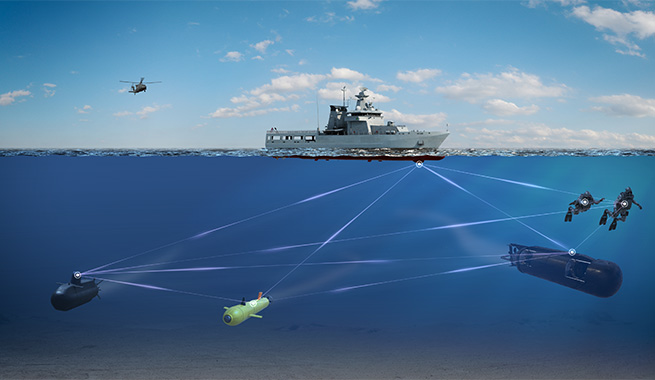
Collaborative AI systems will facilitate seamless coordination between various ASW assets, including ships, submarines, aircraft, and unmanned systems. By enabling real-time data sharing and joint analysis, these collaborative systems will enhance the collective intelligence and operational effectiveness of naval forces. Such integration will support more agile and adaptive ASW strategies, capable of responding to sophisticated and evolving submarine threats.
Conclusion
The integration of Artificial Intelligence into Acoustic Intelligence (ACINT) for Anti-Submarine Warfare (ASW) marks a transformative advancement in naval operations. AI-driven data processing, enhanced detection and classification, automation of sonar operations, and comprehensive data fusion significantly improve the accuracy, efficiency, and responsiveness of ASW capabilities. Furthermore, AI-powered training, decision support systems, and ethical considerations ensure that these technologies are effectively and responsibly integrated into military operations. As AI continues to evolve, its role in enhancing ACINT for ASW will undoubtedly expand, providing naval forces with the tools necessary to maintain strategic superiority in underwater warfare.
References
| AI Application | Purpose | Benefits |
|---|---|---|
| Real-Time Signal Processing | Analyze sonar returns and acoustic data streams | Faster detection and reduced analysis time |
| Machine Learning Classification | Differentiate between submarine signatures and background noise | Increased detection accuracy and fewer false positives |
| Data Fusion | Integrate data from multiple sensor types (sonar, radar, etc.) | Comprehensive situational awareness and improved targeting |
| Anomaly Detection | Identify unusual acoustic patterns indicative of stealth submarines | Early warning and proactive threat assessment |
| Adaptive Sonar Systems | Automatically adjust sonar settings based on environmental conditions | Optimized sonar performance and sustained detection capabilities |
| AI-Powered Simulation | Create realistic training environments for ASW personnel | Enhanced training effectiveness and operational readiness |
Last updated February 15, 2025