
Connecting the Dots: How Agentic AI Systems Integrate with the World and Their Future Evolution
Exploring the present and future of AI agent integration and collaboration.
Agentic AI, also referred to as AI agent systems, represents a significant leap in artificial intelligence. Unlike traditional AI that primarily responds to direct prompts, agentic AI is designed to act autonomously, make decisions, and perform complex tasks with minimal human intervention. This autonomy is largely enabled by their ability to interact with the external world – specifically, by connecting to various websites, data sources, and tools across the internet. Understanding how these systems are currently structured for integration and the future trajectories of their interaction is crucial to grasping their potential impact.
Key Insights into AI Agent Integration
- API Integration is Paramount: The primary method for AI agents to connect with external systems, data sources, and tools is through APIs (Application Programming Interfaces). This allows agents to access data, trigger actions, and interact with a wide range of software and services.
- Tool Use Empowers Action: Agentic frameworks are designed to facilitate "tool use," enabling AI agents to leverage external tools like search engines, databases, and enterprise software to gather information, perform calculations, and execute tasks in the real world.
- Future Points Towards Multi-Agent Systems: While current integration often focuses on individual agents interacting with external resources, the future envisions sophisticated multi-agent systems where AI agents collaborate, communicate, and orchestrate complex workflows to achieve shared goals, potentially reducing the need for human oversight in certain domains.
Current Structure of AI Agent Integration
The ability of agentic AI systems to connect and interact with the external environment is fundamental to their operation. This connectivity is primarily achieved through well-defined integration mechanisms that allow the AI agent to perceive, reason, and act upon information from beyond its internal model. The current structure largely revolves around accessing data and utilizing tools via established digital interfaces.
Leveraging APIs for Data Access and Action
APIs serve as the digital bridges that allow AI agents to communicate with other software applications and systems. By integrating with APIs, AI agents can:
- Access Data Sources: Connect to databases, CRM systems, enterprise resource planning (ERP) systems, and other repositories to retrieve relevant information. This is crucial for tasks requiring up-to-date or historical data for analysis, decision-making, or content generation. API integration allows agents to query past records, identify trends, and personalize experiences.
- Interact with Online Services: Utilize web-based services like search engines to gather real-time information, access external tools for specific functionalities (e.g., calculators, translation services), or even interact with social media platforms or communication tools.
- Execute Actions: Trigger actions within connected systems. This could involve sending emails, updating records in a database, initiating workflows in project management tools, or controlling devices in an IoT environment. The ability to "act" on the world based on their reasoning is a defining characteristic of agentic AI.
Different APIs may employ various methods, but their core function is to enable software to connect and exchange information. Without proper API integration, AI agents would be limited to the data they were trained on and unable to engage with dynamic external environments.
Tool Use: Extending Agent Capabilities
Within agentic frameworks, "tool use" is a critical concept. Tools are essentially components that an AI agent can call upon to perform specific tasks that it cannot do natively. These tools are often connected via APIs or other integration methods.
- Integration with External Software: Agentic AI can integrate with a wide range of external tools and software via APIs. This allows them to execute tasks based on their analysis and planning. Examples include connecting to enterprise software workflows, using specialized analytical tools, or interacting with productivity applications.
- Enhancing Functionality: By using tools, AI agents can overcome the limitations of their core language model or reasoning engine. For instance, an agent needing to perform a complex mathematical calculation can utilize a calculator tool, or one requiring up-to-date stock prices can access a financial data API.
- Facilitating Complex Workflows: Tool use is essential for breaking down complex tasks into smaller, manageable steps that the AI agent can perform. Each step might involve using a different tool or accessing a different data source.
Agentic frameworks make it relatively easy to define and integrate custom tools, allowing developers to tailor agent capabilities to specific use cases. Open-source toolkits also exist to facilitate the connection and optimization of AI agents and their tools.
Integration Methods and Considerations
Integrating AI agents with existing systems typically involves several steps and considerations:
- Identifying Integration Points: Determining which systems, data sources, and tools the AI agent needs to interact with.
- Selecting Appropriate Integration Methods: Choosing the most suitable method, such as APIs, webhooks, or direct database connections. APIs are particularly prevalent due to their flexibility and standardization.
- Data Exchange Requirements: Defining the format and structure of data that will be exchanged between the agent and external systems.
- Authentication and Security: Implementing robust security measures, such as API keys and authentication methods, to ensure secure access and protect data. Security testing is crucial to protect against unauthorized access and data leaks.
Custom development may be required for unique business requirements, involving in-depth knowledge of APIs, data models, and custom logic. Unified API solutions can simplify the process by providing a single endpoint to connect to multiple services.
Retrieval Augmented Generation (RAG)
Another key integration method, particularly for tasks requiring access to a large knowledge base, is Retrieval Augmented Generation (RAG). This process involves:
- Data Retrieval: The AI agent queries a knowledge base or external data sources to retrieve relevant information based on a user query or its internal reasoning.
- Contextualization: The retrieved data is then used to provide context for the AI agent's response or action.
- Generation: The agent generates an output (text, code, etc.) that is informed by the retrieved and contextualized information.
RAG allows AI agents to access and utilize information beyond their initial training data, leading to more accurate and contextually relevant outputs.
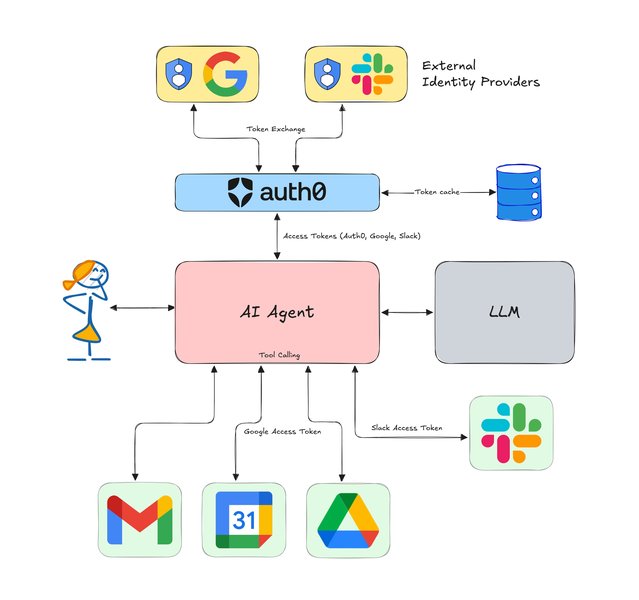
Illustrating the process of tool calling and API integration for AI agents.
Future Plans for AI Agent Integration and Collaboration
The current state of AI agent integration is just the beginning. The future of agentic AI points towards increasingly sophisticated levels of collaboration and autonomy, moving beyond individual agents interacting with external resources to complex systems of agents working together.
Multi-Agent Systems and Orchestration
A significant area of development is the creation of multi-agent systems. In these systems, multiple AI agents collaborate and coordinate their actions to achieve a common goal. This is particularly useful for complex tasks that require different areas of expertise or involve multiple steps that can be distributed among specialized agents.
- Task Distribution: A complex problem can be broken down into smaller, more manageable tasks, with each task assigned to a specific agent optimized for that function.
- Collaboration and Communication: Agents in a multi-agent system can communicate with each other, share information, and coordinate their efforts to ensure a cohesive and efficient workflow.
- Orchestration Frameworks: New frameworks are being developed to facilitate the orchestration of these multi-agent workflows, managing the interactions and dependencies between different agents and tools.
Multi-agent models often outperform single-model systems, especially in complex environments, by leveraging the strengths of specialized agents.
Increased Autonomy and Reduced Human Intervention
As AI agents and multi-agent systems become more sophisticated, the level of human intervention required is expected to decrease. Autonomous agents are designed to operate independently, making decisions and taking actions based on their understanding of the environment and goals.
- Decision-Making in Higher Dimensions: Future autonomous agents may operate in increasingly complex "higher dimensional decision spaces," where they need to consider a vast array of factors and potential outcomes to make optimal decisions.
- Event-Driven Architectures: The future of AI agents is envisioned to be increasingly event-driven, allowing agents to react to real-time changes and events in their environment, enabling more dynamic and responsive systems.
- Autonomous Workflows: Autonomous agents are poised to streamline and automate entire workflows, handling tasks from initiation to completion without constant human oversight.
While concerns about job displacement exist, the goal is often to free up human workers for more creative and higher-level tasks by automating routine and complex processes.
Direct Agent-to-Agent Communication
While current integration heavily relies on agents interacting with external systems through APIs, future developments may involve more direct agent-to-agent communication. This would allow agents to share information, negotiate tasks, and collaborate in a more fluid and real-time manner.
- Real-time Collaboration: Direct communication would enable agents to respond to each other instantly, facilitating dynamic and adaptive team-based problem-solving.
- Formation of "Societies" of Agents: In highly advanced scenarios, interconnected networks of autonomous agents could form complex "societies" that interact and evolve, potentially leading to emergent behaviors and capabilities.
- Standardization Efforts: Initiatives like the Model Context Protocol (MCP) aim to standardize AI agents and their interactions, potentially facilitating more seamless agent-to-agent communication and eliminating the need for custom connectors.
The shift towards direct agent communication and multi-agent systems signifies a move towards a more interconnected and collaborative AI landscape.
Evolving Integration Methods
The methods for integrating AI agents will also continue to evolve:
- Enhanced API Integration: APIs will become more sophisticated, offering richer functionalities and better support for the complex interactions required by autonomous agents.
- Integration Platforms: The use of integration platforms will likely increase, providing tools and frameworks to manage complex integrations between multiple agents and systems.
- AI-Native Integration: Future integration solutions may be more "AI-native," designed specifically to facilitate communication and collaboration between intelligent agents.
Challenges and Considerations
As AI agent integration becomes more advanced, several challenges need to be addressed:
-
Interoperability: Ensuring that agents built using different frameworks and technologies can effectively communicate and collaborate.
-
Security and Trust: Developing robust security measures to protect data and prevent unauthorized access in complex multi-agent systems. Ensuring the trustworthiness of autonomous decisions is paramount.
-
Ethical Implications: Carefully considering the ethical implications of increasingly autonomous systems, including issues of accountability and bias.
-
Change Management: Implementing strategies to manage the organizational and societal changes brought about by widespread AI agent adoption.
The future of AI agent integration is a dynamic and rapidly evolving field, with the potential to transform numerous industries and aspects of daily life.
Comparing Agentic AI and Traditional Generative AI
It is helpful to distinguish between agentic AI and traditional generative AI to understand the unique aspects of agent integration. While generative AI focuses on creating new content (text, images, code, etc.), agentic AI is focused on decision-making and action based on goals and interactions with the environment.
| Feature | Agentic AI | Traditional Generative AI |
|---|---|---|
| Primary Focus | Decision-making and taking action based on goals and environment. | Creating new content (text, images, code, etc.). |
| Interaction with External World | High; designed to connect and interact with external systems and tools (via APIs, etc.). | Low; primarily operates based on internal training data and user prompts. |
| Autonomy | High; can operate independently and make decisions without constant human oversight. | Lower; typically requires human prompts and guidance to generate content. |
| Task Execution | Can perform complex, multi-step tasks by using tools and interacting with external systems. | Primarily focused on generating content based on input. |
| Integration Needs | Essential for connecting to data sources, tools, and other agents. | Less critical for core function, though may integrate with platforms for deployment. |
This table highlights that the integration capabilities of agentic AI are not merely supplementary; they are core to its definition and functionality.
FAQ
What are the primary methods for AI agents to connect to external systems?
The primary methods for AI agents to connect to external systems, data sources, and tools are through APIs (Application Programming Interfaces), webhooks, and direct database connections. APIs are widely used due to their flexibility and standardization.
Why is "tool use" important for agentic AI?
"Tool use" is important because it allows AI agents to extend their capabilities beyond their core language model. By using external tools like search engines, calculators, or enterprise software, agents can gather real-time information, perform specific functions, and execute actions in the real world, enabling them to complete complex tasks.
What is a multi-agent system?
A multi-agent system is a system where multiple AI agents collaborate and coordinate their actions to achieve a common goal. This involves task distribution, communication, and orchestration among the agents.
How will AI agent integration evolve in the future?
Future AI agent integration is expected to involve more sophisticated multi-agent systems, increased autonomy with less human intervention, more direct agent-to-agent communication, and the development of AI-native integration solutions. The goal is to enable seamless collaboration and orchestration of agents for complex tasks.
What are some potential challenges in integrating AI agents?
Potential challenges include ensuring interoperability between different agents and systems, maintaining security and trustworthiness in complex networks, addressing the ethical implications of autonomous decision-making, and managing the organizational changes associated with AI agent adoption.
References
Last updated April 29, 2025