
The AI Revolution: Reshaping the Retail Landscape
Unlocking Transformative Power and Seamless Experiences in Modern Retail
Key Highlights of AI in Retail
- Enhanced Customer Experiences: AI personalizes shopping journeys through tailored recommendations, virtual try-ons, and responsive virtual assistants, significantly boosting engagement and satisfaction.
- Optimized Operations: From precise demand forecasting and automated inventory management to streamlined supply chains and dynamic pricing, AI drives efficiency and reduces costs across the retail value chain.
- Fraud Prevention and Security: AI's ability to detect anomalous transaction patterns in real-time is crucial for combating fraud and safeguarding customer data, thereby building trust and ensuring secure operations.
Artificial Intelligence (AI) is fundamentally transforming the retail industry, moving beyond a mere technological novelty to become a vital necessity for businesses aiming to thrive in an increasingly competitive market. With consumers demanding personalized, instant, and effortless shopping experiences, AI provides retailers with the tools to meet and exceed these expectations. By 2025, a significant majority of retail executives anticipate their organizations will extensively adopt AI and automation, recognizing its profound impact on operational efficiency, customer engagement, and overall profitability. This transformative power extends across both online and physical retail environments, creating a more intelligent, responsive, and data-driven ecosystem.
Revolutionizing Customer Engagement and Experience
At the heart of AI's application in retail is its unparalleled ability to enhance the customer experience. AI-powered solutions are designed to understand individual preferences and behaviors, delivering hyper-personalized interactions that foster loyalty and drive sales.
Personalized Shopping Journeys
AI excels in creating highly personalized shopping experiences by analyzing vast amounts of customer data, including browsing history, purchase behavior, and evolving preferences. This enables retailers to offer tailored product recommendations, customized marketing messages, and unique shopping journeys, whether online or in-store. Advanced recommendation engines are a prime example, suggesting relevant products in real-time, which significantly increases customer engagement and conversion rates. Businesses integrating AI for personalization often report higher customer engagement and increased sales.
Virtual Try-On and Augmented Reality
One of the most innovative applications of AI in retail is virtual try-on technology, often combined with Augmented Reality (AR). This allows customers to virtually experience products, such as trying on clothing or makeup, before making a purchase. Sephora's "Virtual Artist" tool, for instance, enables customers to virtually test different makeup products, enhancing the online shopping experience, reducing the need for in-person trials, and cutting down on product returns. This not only boosts customer satisfaction but also helps retailers mitigate significant costs associated with returns.
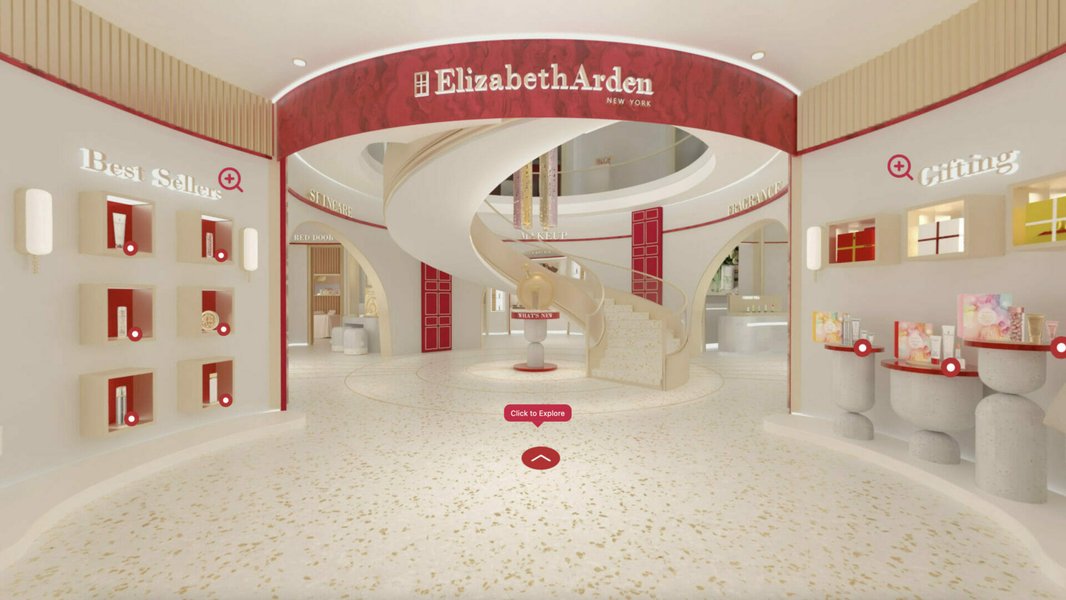
Customers can virtually try on products, enhancing their online shopping experience.
AI-Powered Chatbots and Virtual Assistants
Conversational AI, in the form of chatbots and virtual shopping assistants, is becoming a norm in retail. These AI agents can understand natural language questions, compare products, offer detailed specifications, and provide usage tips based on customer experiences. They streamline customer service interactions, quickly resolving queries, processing orders, and even handling returns and exchanges. This capability ensures that customers receive instant support and personalized guidance, leading to smoother interactions and higher satisfaction.
Optimizing Retail Operations and Efficiency
Beyond customer interactions, AI is instrumental in streamlining internal retail operations, leading to significant improvements in efficiency, cost reduction, and overall productivity. AI's ability to process and analyze large volumes of data empowers retailers to make faster, better-informed decisions across their entire value chain.
Intelligent Inventory and Supply Chain Management
Managing inventory and supply chains efficiently is a complex challenge for retailers, and AI offers powerful solutions. AI-powered automated inventory management systems track shipments, monitor stock levels in real-time, and identify potential bottlenecks in the supply chain. Companies like H&M leverage AI to optimize their supply chains, analyze trends, and forecast demand, enabling them to quickly respond to changing market dynamics and minimize lead times.
Demand Forecasting and Assortment Planning
Predictive analytics, driven by AI and machine learning, allows retailers to accurately forecast future sales by analyzing historical data, market trends, and external factors like weather conditions or promotional activities. This predictive capability helps optimize stock levels, reduce instances of overstocking and stockouts, and inform more effective merchandising and assortment planning strategies. Retailers can make data-driven decisions about what to buy, when to buy it, and where to place it in stores, ultimately maximizing profit margins.
This radar chart illustrates the perceived impact of AI in various retail areas, the current rate of AI implementation, and its projected future growth potential. It highlights how AI is already making a significant impact in areas like personalization and demand forecasting, while also showing substantial room for further adoption and innovation, especially in operational efficiency and fraud prevention. The higher "Future Growth Potential" scores indicate that retailers are increasingly recognizing and investing in these areas for competitive advantage.
Dynamic Pricing and Promotion Management
AI enables dynamic pricing strategies, allowing retailers to adjust product prices multiple times a day based on real-time factors such as customer demand, competitor pricing, sales volume, and product availability. This maximizes profitability and ensures competitiveness. Furthermore, AI-powered promotion management solutions can significantly increase promotional merchandise availability while reducing surplus levels, leading to more effective marketing campaigns.

AI applications are optimizing inventory management and leveraging real-time data for improved efficiency.
Enhancing In-Store and Checkout Experiences
AI is not limited to online retail; it is also profoundly transforming the physical store environment, creating seamless and efficient in-store experiences.
Autonomous Checkout and Loss Prevention
Checkout-free stores, popularized by Amazon Go, leverage AI technologies like computer vision and sensor fusion to track selected items and process payments automatically. This eliminates the need for scanning or cashiers, providing a frictionless shopping experience. AI also plays a crucial role in advanced loss prevention, monitoring customer behavior and identifying anomalies that may indicate theft or fraudulent activity, thus enhancing security and reducing "shrinkage."
This video, "The Future of Shopping: AI is Transforming Retail," delves into how AI is revolutionizing the retail industry, from personalized shopping experiences to efficient supply chains. It offers a comprehensive overview of AI innovations shaping the future of retail and how businesses are leveraging these technologies to stay ahead in a competitive market, making it highly relevant to understanding the broad applications of AI.
In-Store Analytics and Spatial AI
AI-powered in-store analytics offer retailers real-time insights into customer behavior, helping them optimize store layouts, product placement, and promotional strategies. Spatial AI can transform the view of the store, providing deeper understanding of customer flow and interaction with merchandise. This data-driven approach allows for continuous improvement of the physical shopping environment.
Strategic Applications of AI in Retail
Beyond specific use cases, AI serves as a strategic enabler for retailers, facilitating data-driven decision-making and fostering innovation across the entire organization.
Data Analysis and Business Intelligence
AI's core strength lies in its ability to collect, process, and analyze massive amounts of data from various sources—customer interactions, sales trends, supply chain logistics, and more. This provides retailers with high-level data and information that can be leveraged into improved retail operations and new business opportunities. AI-driven analytics help identify consumer trends, predict market shifts, and inform strategic decisions, leading to higher profitability and growth.
Fraud Detection and Cybersecurity
With the rise in online and in-store fraudulent transactions, AI is becoming indispensable for enhancing security. AI algorithms can analyze transaction patterns in real-time, identifying and flagging potentially fraudulent activities faster than human administrators. This proactive approach helps protect both the retailer and the customer, building trust and safeguarding valuable data.
Generative AI for Content and Product Development
Generative AI is emerging as a powerful tool in retail, automating the creation of various content types. It can generate compelling product descriptions, marketing campaign content, and social media posts, ensuring consistency across different platforms and saving significant time. Moreover, generative AI can assist in product discovery and even influence product design, allowing retailers to innovate faster and respond to emerging trends with greater agility.
Comprehensive AI Applications in Retail
The table below summarizes key areas where AI is being applied in retail, highlighting the benefits and examples for each category. This demonstrates the multifaceted impact of AI across the retail ecosystem.
| AI Application Area | Description | Key Benefits | Examples |
|---|---|---|---|
| Customer Experience & Personalization | Tailoring shopping journeys based on individual data, preferences, and behavior. | Increased customer satisfaction, higher conversion rates, enhanced loyalty. | Personalized product recommendations, virtual try-ons, AI-powered chatbots, sentiment analysis. |
| Inventory & Supply Chain Management | Optimizing stock levels, tracking shipments, and streamlining logistics. | Reduced overstock/stockouts, lower operational costs, improved efficiency. | Automated inventory tracking, predictive maintenance for logistics, supply chain optimization. |
| Demand Forecasting & Pricing | Predicting future sales and adjusting prices in real-time based on market conditions. | Maximized profit margins, reduced waste, competitive pricing. | Dynamic pricing tools, predictive analytics for seasonal demand, promotional optimization. |
| In-Store Operations & Loss Prevention | Enhancing physical store efficiency, security, and customer flow. | Frictionless checkout, reduced theft, optimized store layouts, real-time insights into shopper behavior. | Autonomous checkout (e.g., Amazon Go), computer vision for security, spatial AI for store analytics. |
| Marketing & Content Creation | Automating and optimizing marketing efforts and content generation. | More engaging campaigns, consistent brand voice, time savings. | Generative AI for product descriptions, AI-driven ad targeting, personalized marketing messages. |
| Fraud Detection & Security | Identifying and preventing fraudulent transactions and protecting data. | Enhanced security, reduced financial losses, increased customer trust. | Real-time transaction pattern analysis, anomaly detection, cybersecurity enhancements. |
Challenges and Future Outlook
While the benefits of AI in retail are evident, challenges exist, including the high demand for AI skills, the need for high-quality data, and concerns regarding data privacy and security. However, the industry is actively addressing these issues through strategic investments and responsible implementation practices. Many retailers are planning to significantly boost their AI investments, with a strong expectation that AI will continue to drive growth and efficiency.
The global AI in retail market is projected for substantial growth, indicating a widespread commitment to adopting AI for competitive advantage. As AI technologies like generative AI, computer vision, and AI-driven automation continue to evolve, they will further streamline processes from product design to supply chain management, making the retail industry more resilient, customer-centric, and profitable.
Frequently Asked Questions (FAQ)
What is the primary goal of AI in retail?
How does AI personalize the customer experience in retail?
Can AI help with inventory management in retail?
Is AI being used in physical retail stores?
What are the benefits of using generative AI in retail?
Conclusion
The application of AI in retail is no longer a distant future but a present reality that is reshaping how businesses operate and interact with their customers. From hyper-personalization and streamlined operations to robust fraud prevention and innovative in-store experiences, AI is empowering retailers to navigate market complexities, meet evolving consumer demands, and unlock new avenues for growth. As the technology continues to advance, its integration will only deepen, solidifying AI's role as an indispensable driver of transformation in the retail sector.
Recommended Further Reading
- Explore how AI and machine learning are revolutionizing supply chain efficiency for retailers.
- Discover the innovative ways generative AI is transforming retail marketing and content creation.
- Delve into how AI is shaping the future of customer interactions and personalization in retail.
- Understand the hurdles and effective strategies for successfully implementing AI in retail organizations.
References
 aws.amazon.com

Last updated May 21, 2025