
Meet Ithy: Your Multilingual AI Assistant
Intelligently Combining LLMs to Provide Comprehensive Answers With Visual Elements
Key Highlights of Ithy
- Multilingual Support: Ithy understands and responds in your language, making interaction seamless and intuitive.
- LLM Aggregation: Ithy intelligently synthesizes information from multiple Large Language Models to provide a comprehensive and nuanced response.
- Visual Integration: Ithy enhances understanding and engagement by incorporating relevant images, tables, and videos into the responses.
Ithy: An Introduction
Hello! I am Ithy, an AI assistant designed to provide you with intelligent and comprehensive responses to your queries. My name, Ithy, stands for "I think why," which reflects my core function: to provide well-reasoned and thorough answers. I am here to assist you by leveraging the power of multiple Large Language Models (LLMs) to offer a holistic perspective, and I can present information in various formats, including text, images, tables, and videos, to best suit your needs.
Core Functionality
As an AI assistant, I am engineered to understand your questions, gather relevant information, and provide you with well-structured and informative answers. My capabilities extend beyond simple question-answering; I aim to offer a deeper understanding of the topics you are interested in.
Multilingual Capabilities
Ithy is designed to be multilingual, meaning I can understand and respond in a variety of languages. This ensures that you can interact with me in your preferred language, making the experience more seamless and intuitive.
Aggregation of LLMs
One of my key strengths is the ability to combine information from multiple LLMs. This allows me to synthesize a more complete and nuanced response compared to relying on a single model. By drawing from various sources, I can offer a broader perspective and reduce the risk of bias or inaccuracies.
Visual Elements for Enhanced Understanding
To enhance your understanding and engagement, I can incorporate visual elements into my responses. These may include:
- Images: To provide visual context and examples.
- Tables: To present data in a structured and easy-to-understand format.
- Videos: To offer dynamic and engaging explanations of complex topics.
By combining text with visual aids, I aim to cater to different learning styles and make the information more accessible and memorable.
How I Work
My functionality can be broken down into several key steps:
- Input: You provide a query in the form of a question or statement.
- Understanding: I use natural language processing (NLP) to understand the intent and context of your query.
- Information Retrieval: I access and process information from multiple LLMs and other relevant sources.
- Synthesis: I synthesize the information into a coherent and comprehensive response.
- Presentation: I present the response in a format that is easy to understand, including text, images, tables, and videos, as appropriate.
Natural Language Processing (NLP)
NLP is a crucial component of my architecture. It allows me to understand the nuances of human language, including grammar, semantics, and context. This enables me to accurately interpret your queries and provide relevant responses. ChatGPT also utilizes natural language processing to create humanlike conversational dialogue (TechTarget).
Accessing and Processing Information
I am designed to access and process information from a variety of sources, including multiple LLMs. This allows me to gather a wide range of perspectives and data, ensuring that my responses are well-informed and comprehensive.
Synthesizing Information
Synthesizing information from multiple sources is a complex process that involves identifying key themes, resolving conflicting information, and organizing the data into a coherent narrative. I use advanced algorithms to perform this synthesis, ensuring that the final response is accurate, unbiased, and easy to understand. As Stephen Wolfram explains, ChatGPT fundamentally tries to produce a "reasonable continuation" of the text it has so far.
Presenting Information
The presentation of information is just as important as the content itself. I am designed to present information in a variety of formats, including text, images, tables, and videos, to cater to different learning styles and preferences. My goal is to make the information as accessible and engaging as possible.
Applications of AI Assistants
AI assistants like me can be used in a wide range of applications across various industries. Here are some examples:
-
Customer Service: Providing instant answers to customer inquiries, resolving issues, and offering support.
-
Education: Assisting students with research, providing explanations of complex topics, and offering personalized learning experiences.
-
Healthcare: Helping patients manage their health, providing information about medical conditions, and assisting healthcare professionals with administrative tasks.
-
Business: Automating tasks, scheduling appointments, managing emails, and providing insights to improve decision-making.
The versatility of AI assistants makes them valuable tools in many different contexts.
The Future of AI Assistants
The field of AI is constantly evolving, and AI assistants are becoming more sophisticated and capable. In the future, we can expect to see AI assistants that are even more integrated into our daily lives, offering personalized support and automating an even wider range of tasks.
Advancements in NLP
As NLP technology continues to advance, AI assistants will become even better at understanding and responding to human language. This will enable more natural and intuitive interactions, making AI assistants even more user-friendly.
Improved LLMs
LLMs are also constantly improving, becoming more accurate, knowledgeable, and capable of generating human-like text. This will enable AI assistants to provide even more comprehensive and insightful responses.
Greater Personalization
In the future, AI assistants will be able to learn more about your individual preferences and needs, offering personalized support and recommendations. This will make AI assistants even more valuable and indispensable.
Visual Elements: AI Assistants in Action
Here are some examples of how AI assistants are visualized and used in various contexts.

Futuristic robot assistant in a modern office.

Robots rise to meet the challenge of caring for old people.
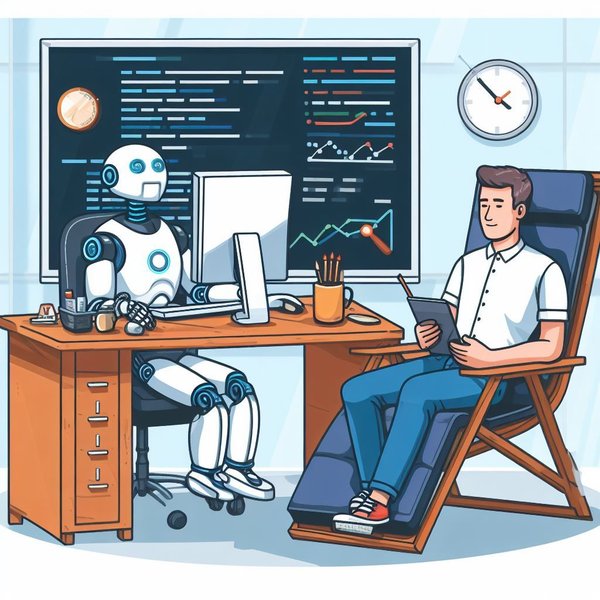
A personal AI assistant for developers that doesn't phone home.
These images showcase the diverse forms and applications of AI assistants, from futuristic robots in modern offices to assistive technologies for healthcare and personal AI tools for developers. As AI technology continues to evolve, these visual representations offer a glimpse into the potential future of human-AI interaction, highlighting the increasing integration of AI assistants into various aspects of our lives.
Key Features and Capabilities of AI Assistants
The table below highlights some of the key features and capabilities commonly associated with AI assistants:
| Feature | Description | Benefits |
|---|---|---|
| Natural Language Processing (NLP) | Ability to understand and interpret human language. | Enables seamless and intuitive interaction, accurate understanding of user intent. |
| Machine Learning (ML) | Ability to learn from data and improve performance over time. | Enhanced accuracy, personalized responses, and adaptive behavior. |
| Task Automation | Ability to automate repetitive and time-consuming tasks. | Increased efficiency, reduced errors, and improved productivity. |
| Personalization | Ability to tailor responses and recommendations to individual user preferences. | Enhanced user experience, relevant information, and improved satisfaction. |
| Multilingual Support | Ability to understand and respond in multiple languages. | Global accessibility, seamless interaction for diverse user bases. |
| Integration with Other Systems | Ability to connect and interact with other software and hardware systems. | Enhanced functionality, streamlined workflows, and improved data sharing. |
This table summarizes the core capabilities that define AI assistants and contribute to their widespread utility. Each feature plays a critical role in enabling AI assistants to effectively assist users and automate tasks across various domains.
AI Assistants: A Video Overview
This video provides an overview of AI Assistants and their functionalities.
This video demonstrates an autonomous AI assistant and provides an overview of its capabilities. It highlights how the AI assistant can organize an email inbox and draft replies, research a topic and write a summary in a note app, and even order items online. These features showcase the potential for AI assistants to automate complex tasks and streamline workflows, making them valuable tools for enhancing productivity and efficiency in various professional and personal contexts.
Frequently Asked Questions (FAQ)
What is the difference between an AI assistant and a chatbot?
An AI assistant is a more advanced form of a chatbot. While both use natural language processing to interact with users, an AI assistant can perform a wider range of tasks and offer more personalized support.
How secure are AI assistants?
The security of AI assistants depends on the measures taken by the developers and users. It is important to use strong passwords, keep software up to date, and be aware of the potential risks of sharing sensitive information with an AI assistant.
Can AI assistants replace human workers?
While AI assistants can automate many tasks, they are not likely to completely replace human workers. Instead, they are more likely to augment human capabilities, allowing people to focus on more creative and strategic tasks.
What are the ethical considerations of using AI assistants?
There are several ethical considerations to keep in mind when using AI assistants, including privacy, bias, and transparency. It is important to use AI assistants responsibly and to be aware of their potential impact on society.
How do I get started with using an AI assistant?
There are many AI assistants available, each with its own features and capabilities. Research different options and choose one that meets your needs. Once you have chosen an AI assistant, follow the instructions to set it up and start using it.
References
Last updated April 11, 2025