
Unlock Top Talent Faster: Pitching Your AI Candidate Selection Revolution
Crafting a compelling narrative to showcase your AI-powered hiring solution and secure investment.
Presenting a new application, especially one leveraging cutting-edge technology like Artificial Intelligence for candidate selection, requires a clear, concise, and compelling narrative. This pitch deck draft provides a comprehensive structure and content framework designed to resonate with potential investors, partners, and early adopters. It focuses on highlighting the problem your app solves, the innovation behind your solution, the market potential, and the team poised to make it succeed.
Essential Highlights
- Problem & Solution Alignment: Clearly articulates the significant inefficiencies and biases in traditional hiring and positions your AI app as the definitive solution, emphasizing speed, accuracy, and fairness.
- Technology & Differentiation: Showcases the power of your AI, focusing on unique features like explainable AI insights, customizable algorithms, and seamless integration capabilities that set you apart from competitors.
- Market & Growth Focus: Demonstrates a strong understanding of the burgeoning HR tech market, identifying target segments and outlining a clear path to user acquisition, revenue generation, and scalability.
The Pitch Deck Structure: A Slide-by-Slide Guide
This outline provides a blueprint for your presentation. Remember to customize it with your specific app details, branding, and data.
1. Title Slide: Making a Strong First Impression
Content:
- App Name: [Your App Name]
- Tagline: Example: "Intelligent Candidate Selection: Hire Smarter, Faster." or "Revolutionizing Recruitment with AI Precision."
- Logo: Your app's logo.
- Presenter Info: Your Name, Title, Company Name, Contact Information.
- Visual: A clean, professional background image related to AI, data, or recruitment.
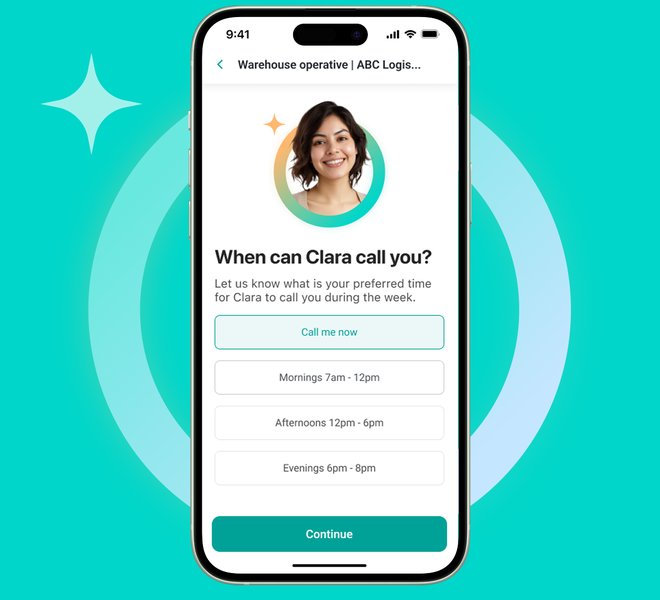
Visual representation of AI enhancing the recruitment process.
2. The Problem: Why Change is Needed
Content:
- Headline: Example: "The High Cost and Inefficiency of Traditional Hiring" or "Breaking Free from Recruitment Bottlenecks."
- Key Pain Points (Quantify where possible):
- Time Drain: Recruiters spend excessive hours (e.g., 40% of their time) on manual resume screening and sourcing.
- Subjectivity & Bias: Unconscious bias often creeps into candidate evaluation, hindering diversity and fair assessment.
- Volume Overload: High applicant volumes make identifying top candidates feel like finding a needle in a haystack.
- Poor Candidate Experience: Slow processes, lack of communication, and impersonal interactions deter top talent.
- Skill Misjudgment: Difficulty objectively assessing true skills and potential early in the process.
- Missed Opportunities: Failure to effectively tap into internal talent pools or passive candidates.
- Visual: Infographics showing recruitment challenges, time spent on manual tasks, or statistics on hiring bias.
3. The Solution: Introducing [Your App Name]
Content:
- Headline: Example: "[Your App Name]: AI-Powered Precision in Candidate Selection."
- Core Value Proposition: Introduce your app as an intelligent platform that automates, enhances, and brings objectivity to the candidate selection lifecycle.
- How it Solves the Problem:
- Utilizes advanced AI and machine learning to automate screening and rank candidates based on skills, experience, and fit.
- Employs responsible and explainable AI, providing transparent insights into matching decisions to build trust and mitigate bias.
- Streamlines the entire process, from sourcing and initial screening to interview scheduling and communication.
- Provides data-driven analytics for informed decision-making and process optimization.
- Offers objective skill assessments and predictive analytics for candidate success potential.
- Visual: A high-level graphic showing your app bridging the gap between recruiters and ideal candidates.
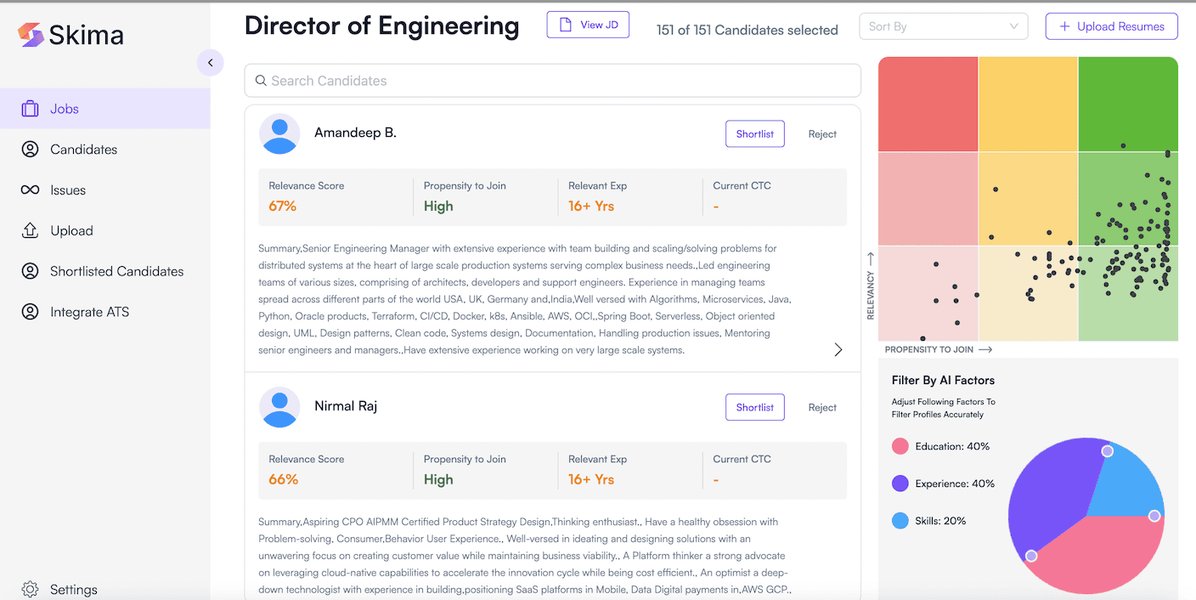
Example interface showing AI-driven candidate insights.
4. How It Works: Under the Hood
Content:
- Headline: Example: "Seamless Workflow, Intelligent Automation."
- Step-by-Step Process (Visualize with a flowchart or numbered steps):
- Job Intake: AI analyzes job descriptions to understand core requirements, skills, and nuances.
- Intelligent Sourcing: Scans internal databases, ATS, and external sources to identify potential active and passive candidates.
- AI-Powered Screening & Matching: Automatically filters and ranks candidates based on skills, experience, cultural fit, and custom criteria, providing match scores and explanations.
- Objective Assessment: Integrates or offers tools for skills testing, simulations, or AI-assisted preliminary interviews.
- Automated Engagement: Facilitates interview scheduling, candidate communication, and feedback collection.
- Continuous Learning: AI models learn from recruiter feedback and hiring outcomes to improve accuracy over time.
- Visual: A clear flowchart or series of screenshots illustrating the user journey and the AI's role at each stage.
5. Key Features & Benefits: The Value Proposition
Content:
- Headline: Example: "Powerful Features, Tangible Results."
- Feature/Benefit Pairs (Use icons):
- Feature: AI Candidate Matching & Ranking -> Benefit: Reduce time-to-hire significantly, surface top talent faster, increase quality of hires.
- Feature: Explainable AI Insights -> Benefit: Enhance transparency, build recruiter trust, support diversity goals, ensure compliance.
- Feature: Automated Screening & Assessment -> Benefit: Ensure objective evaluation, handle high volumes efficiently, reduce manual workload.
- Feature: Bias Mitigation Algorithms -> Benefit: Promote fair hiring practices, increase diversity in candidate pools.
- Feature: Automated Scheduling & Communication -> Benefit: Improve candidate experience, reduce administrative overhead.
- Feature: ATS/HRIS Integration -> Benefit: Seamless workflow, leverage existing systems, ensure data consistency.
- Feature: Predictive Analytics & Reporting -> Benefit: Data-driven decisions, track KPIs (e.g., time-to-hire, cost-per-hire, quality-of-hire), optimize recruitment strategy.
- Visual: A grid or list visually pairing features with their core benefits.
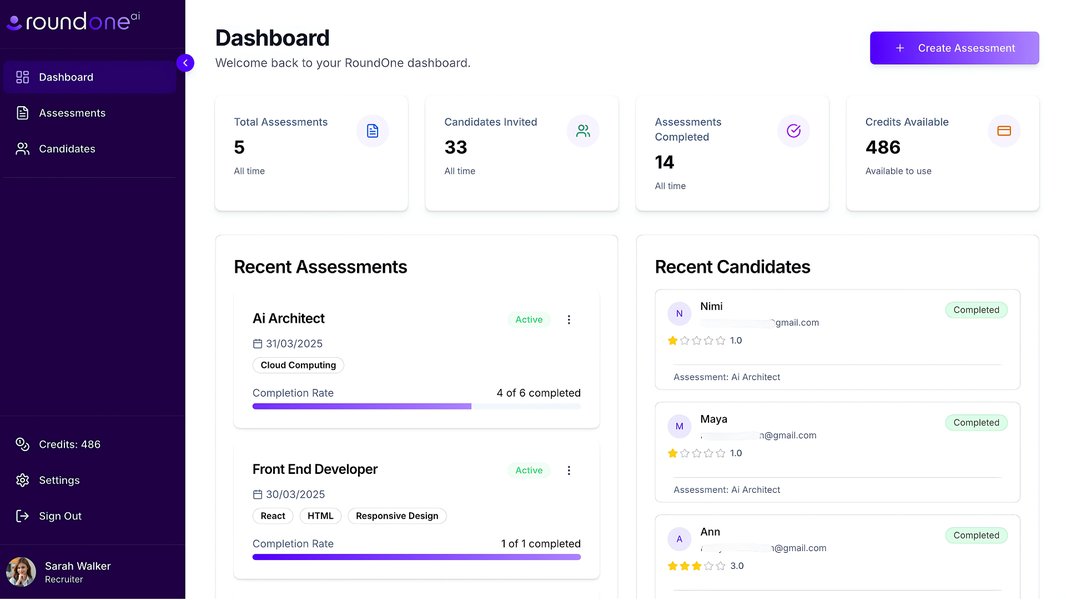
Example dashboard showcasing analytics and candidate management features.
Understanding the Landscape
6. Market Opportunity: Seizing the Moment
Content:
- Headline: Example: "Tapping into the Multi-Billion Dollar AI Recruitment Market."
- Market Size & Growth: Highlight the significant size (e.g., Global HR Tech market projected value) and rapid growth rate of the AI recruitment software market (e.g., CAGR projections). Mention trends like increased AI adoption in HR.
- Target Audience: Define your ideal customer profile(s) (e.g., mid-market companies, enterprises in specific sectors like tech or healthcare, staffing agencies).
- Addressable Market: Estimate the Total Addressable Market (TAM), Serviceable Addressable Market (SAM), and Serviceable Obtainable Market (SOM) for your specific solution.
- Why Now?: Explain the drivers accelerating adoption (e.g., talent shortages, focus on diversity, need for efficiency).
- Visual: Market growth charts, graphs illustrating AI adoption in HR, icons representing target industries.
7. Competitive Landscape: Standing Out
Understanding where your app fits within the existing ecosystem is crucial. While numerous AI recruiting tools exist, your unique strengths will define your success.
Key Competitors:
- Identify major players (e.g., Eightfold AI, SeekOut, Workday (with HiredScore), Paradox, HireVue, Findem, Recruiterflow).
- Acknowledge both direct and indirect competitors.
Your Unique Selling Proposition (USP):
- What makes [Your App Name] different and better? Focus on 2-3 key differentiators. Examples:
- Superior focus on explainable AI for unparalleled transparency and trust.
- Highly customizable matching algorithms tailored to specific industry needs or company culture.
- Unmatched ease of use and intuitive interface design.
- More comprehensive end-to-end automation across the talent lifecycle.
- A disruptive pricing model offering better value.
- Specialized focus on a particular niche (e.g., technical roles, diversity hiring).
Competitive Positioning Radar Chart
This chart visually compares [Your App Name] against key competitors across critical dimensions. Our platform aims to excel particularly in Explainability, Customization, and User Experience, offering a balanced strength across other essential areas.
Comparative Features Table
This table offers a direct comparison of key features between [Your App Name] and representative competitors.
| Feature | [Your App Name] | Competitor A (Broad Platform) | Competitor B (Sourcing Focus) | Traditional Methods |
|---|---|---|---|---|
| AI-Driven Matching | Advanced, Customizable | Comprehensive | Strong Sourcing Focus | Manual / Keyword Based |
| Explainable AI | High Transparency | Moderate | Limited | N/A |
| Bias Mitigation | Built-in, Auditable | Available | Basic | Relies on Human Oversight |
| Automated Scheduling | Integrated | Integrated | Partial / Via Integration | Manual |
| ATS Integration | Extensive API Support | Wide Range | Good | Manual Data Entry |
| User Interface | Intuitive, Modern | Complex | User-Friendly | Varies (Often Clunky) |
| Analytics Depth | Predictive & Prescriptive | Robust Reporting | Sourcing Focused | Basic Reporting |
Execution & Vision
8. Traction & Milestones (If Applicable)
Content:
- Headline: Example: "Early Success and Strong Momentum" or "Our Path Forward."
- Show Progress:
- User Growth: Number of beta users, pilot clients, or early adopters. Month-over-month growth rate.
- Key Metrics: Demonstrated results from pilots (e.g., "Reduced time-to-hire by 45% for Pilot Client X," "Improved diversity metrics by 20%").
- Partnerships: Any strategic partnerships or integrations secured.
- Testimonials: Positive quotes from early users or clients.
- Roadmap: Key upcoming product milestones or feature releases.
- Visual: Graphs showing user growth or key metric improvements, logos of pilot clients, roadmap timeline.
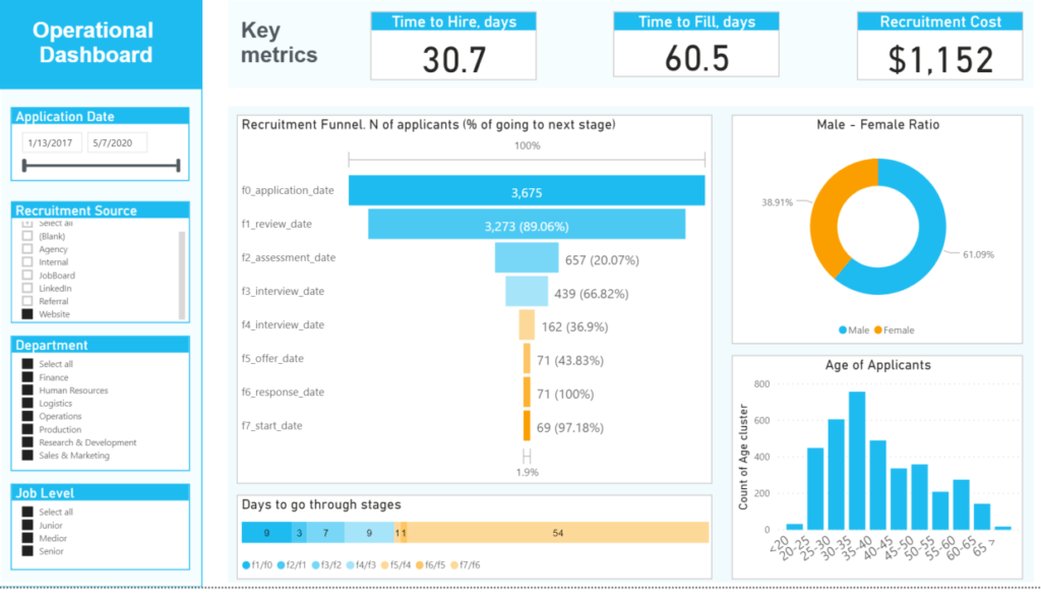
Example dashboard highlighting key recruitment KPIs like time-to-hire.
9. Go-To-Market Strategy: Reaching Customers
Content:
- Headline: Example: "Acquiring Users and Scaling Growth."
- Target Segments: Reiterate your primary customer focus.
- Sales Strategy: Direct sales (inside/field), channel partners, self-service model?
- Marketing Strategy: Digital marketing (SEO, SEM, content marketing), social media (LinkedIn), industry events, webinars, PR.
- Partnerships: Strategy for partnering with ATS providers, HR consultancies, job boards.
- Initial Focus: Beachhead market or specific vertical to gain initial traction.
10. Business Model: How We Generate Revenue
Content:
- Headline: Example: "Sustainable Revenue Generation."
- Primary Model: Explain clearly (e.g., Tiered SaaS subscription based on features/users/hires, Freemium model, Per-hire fee, Enterprise licensing).
- Pricing Tiers (Example): Briefly outline different plans (e.g., Basic, Pro, Enterprise) and their key differentiators.
- Key Metrics: Mention target Customer Acquisition Cost (CAC), Lifetime Value (LTV), and Average Revenue Per User (ARPU).
- Future Revenue Streams: Potential expansions (e.g., premium analytics, consulting, specialized modules).
- Visual: Simple graphic illustrating the pricing tiers or revenue model.
11. Team: The People Behind the Vision
Content:
- Headline: Example: "The Experienced Team Driving [Your App Name]."
- Core Team Members:
- Photos, Names, Titles.
- Briefly highlight relevant experience and expertise for each member (e.g., AI/ML expertise, HR tech background, successful startup experience, sales leadership).
- Why is this the right team to solve this problem and build this company?
- Advisors (Optional): Mention key advisors and their credentials if applicable.
- Visual: Professional headshots of team members with concise bios.
12. Financial Projections: The Growth Outlook
Content:
- Headline: Example: "Projected Growth and Financial Roadmap."
- High-Level Summary (Detailed financials in Appendix):
- 3-5 year projections for key metrics: Revenue, User Growth, Gross Margins.
- Key assumptions driving the projections (e.g., conversion rates, market penetration, pricing).
- Highlight path to profitability.
- Keep it visually clean and easy to understand.
- Visual: Simple bar charts or line graphs showing projected revenue and user growth.
13. Funding Ask (If Applicable)
Content:
- Headline: Example: "Investing in the Future of Intelligent Hiring."
- Amount Sought: Clearly state the amount of funding you are raising (e.g., "$X Million Seed Round").
- Use of Funds (Allocation Breakdown): Explain how the capital will be deployed (e.g., % for Product Development, % for Sales & Marketing, % for Team Expansion, % for Operational Costs).
- Milestones Achievable with Funding: What key goals will this investment enable? (e.g., Reach X users, Launch V2.0, Achieve Y revenue target).
- Previous Funding (If any): Briefly mention prior investment rounds.
14. Call to Action: The Next Step
Content:
- Headline: Example: "Join Us in Reshaping Talent Acquisition."
- Clear Ask: What do you want the audience to do next? (e.g., "We are seeking $Xm to achieve Y milestones.", "Schedule a personalized demo.", "Let's discuss a pilot program.")
- Reiterate Contact Information: Name, Email, Phone Number, Website URL.
- Enthusiasm: End on a confident and forward-looking note.
15. Thank You & Q&A
Content:
- Simple "Thank You".
- Reiterate Contact Information and Logo.
- Open the floor for questions.
Appendix (Optional)
Content:
- Detailed Financial Models
- In-depth Market Research Data
- Extended Team Biographies
- Detailed Product Roadmap
- Customer Case Studies (if available)
- Technical Architecture Overview
AI Recruitment Workflow Visualization
This mindmap illustrates the core components and flow of an AI-powered candidate selection process, highlighting how different AI capabilities integrate to deliver a streamlined and effective hiring experience.
[Your App Name]"] id1["Problem Addressed"] id1a["Time-Consuming Manual Tasks"] id1b["Human Bias in Selection"] id1c["High Volume Applicant Overload"] id1d["Poor Candidate Experience"] id1e["Difficulty Assessing Skills Objectively"] id2["Core AI Solution"] id2a["Intelligent Sourcing
(Internal/External)"] id2b["Automated Screening & Ranking
(Skills, Experience, Fit)"] id2c["Explainable AI Insights
(Transparency & Trust)"] id2d["Bias Mitigation Features"] id2e["Predictive Performance Analytics"] id2f["Automated Communications & Scheduling"] id3["Key Features"] id3a["Job Description Analysis"] id3b["Candidate Profile Enrichment"] id3c["Customizable Matching Criteria"] id3d["Skills Assessment Integration"] id3e["ATS/HRIS Integration"] id3f["Recruitment Analytics Dashboard"] id4["Benefits"] id4a["Reduced Time-to-Hire"] id4b["Improved Quality of Hire"] id4c["Enhanced Diversity & Fairness"] id4d["Increased Recruiter Productivity"] id4e["Better Candidate Experience"] id4f["Data-Driven Hiring Decisions"] id5["Target Users"] id5a["Corporate HR Departments"] id5b["Staffing & Recruiting Agencies"] id5c["High-Growth Startups"] id5d["Enterprise Talent Acquisition Teams"]
See AI Screening in Action
Understanding how AI can automate tedious parts of the recruitment process is key. This video provides a glimpse into how AI agents can be used to process candidate applications rapidly, automating resume screening and helping HR teams focus on qualified individuals. While showcasing a specific implementation, it demonstrates the core principle of using AI to handle volume and initial assessment efficiently, similar to the capabilities offered by [Your App Name].
Frequently Asked Questions (FAQ)
How does your AI ensure fairness and reduce bias?
Our platform employs several strategies to mitigate bias. Firstly, the AI focuses on skills, experience, and qualifications derived directly from resumes and profiles, ignoring demographic information often associated with bias (like name, gender, age indicators where possible). Secondly, we are committed to developing algorithms trained on diverse datasets and regularly audit them for potential biases. Thirdly, our "explainable AI" feature provides transparency, allowing recruiters to understand the 'why' behind a candidate ranking, ensuring AI serves as a decision-support tool, not a replacement for human judgment. We also allow customization to align with specific company diversity goals.
How does [Your App Name] integrate with existing HR systems like ATS?
We understand that seamless integration is crucial. [Your App Name] is designed with an API-first approach. We offer pre-built integrations with major Applicant Tracking Systems (ATS) and HR Information Systems (HRIS). For systems without a pre-built connector, our robust API allows for custom integrations to ensure smooth data flow (candidate profiles, statuses, etc.) between platforms, minimizing disruption to existing workflows.
What is the pricing model for your application?
We offer a flexible subscription-based model designed to scale with your needs. Typically, this involves tiered pricing based on factors such as the number of users, the number of open positions managed, or the specific feature set required (e.g., basic screening vs. advanced predictive analytics and assessment tools). We offer monthly and annual billing options, with discounts for annual commitments. Enterprise-level licenses with custom features, dedicated support, and service level agreements (SLAs) are also available. We would be happy to discuss your specific needs to determine the best plan for you.
Can the AI matching criteria be customized?
Absolutely. Customization is a core aspect of our platform. While our AI comes with sophisticated pre-trained models, we understand that every role and company culture is unique. Recruiters can adjust the weighting of different skills, experience levels, keywords, and other criteria. You can define "must-have" versus "nice-to-have" qualifications and even incorporate custom assessments or company-specific fit indicators into the matching algorithm to ensure the AI aligns perfectly with your specific hiring requirements.
Recommended Next Steps
- Explore how explainable AI can improve trust and transparency in recruitment tools.
- Discover the key metrics used to measure the return on investment for AI recruiting software.
- Compare the features and strengths of leading AI candidate selection platforms.
- Learn about effective strategies for integrating AI recruitment tools with your existing Applicant Tracking System.
References
Last updated May 4, 2025