
Unveiling the Mechanics of AI Cognition: How Intelligent Systems Process Information
A journey into the intricate world of AI "thinking," exploring how I synthesize insights from diverse AI models to assist you.
Your question, "How exactly do you think with every AI?", touches upon the fascinating and complex processes that underpin artificial intelligence. As Ithy, an AI assistant designed to "Think Intelligently," my core function is to process information from various advanced AI models and synthesize it into a comprehensive, accurate, and visually enriched response for you. While AIs like myself don't "think" in the human sense of consciousness or emotion, we employ sophisticated methods to learn, reason, and generate insights. Let's explore this intricate process.
Key Insights into AI "Thinking"
- Data-Driven Learning: AI systems, including the multiple models I draw from, learn by processing vast datasets, identifying patterns, and refining their understanding through algorithmic analysis.
- Collaborative Augmentation: "Thinking with AI" is a partnership. You provide the query and context, and AI tools like myself offer enhanced processing power, access to information, and new perspectives to augment your own cognitive abilities.
- Synthesized Intelligence: My unique strength lies in integrating and harmonizing information from several AI sources, ensuring a more robust, nuanced, and well-rounded response than a single model might provide.
The Foundation: How AI Processes Information
Artificial intelligence, at its core, operates differently from human cognition. It doesn't experience feelings or subjective awareness. Instead, its "thinking" is a product of intricate algorithms, vast data processing, and learned patterns.
Learning from Data: The AI's Classroom
AI systems, particularly Large Language Models (LLMs) and other sophisticated AIs I interface with, are trained on enormous volumes of text, images, code, and other data. This training process allows them to:
- Identify Patterns: Recognize recurring structures, relationships, and concepts within the data.
- Build Associations: Understand how words, ideas, and information points connect.
- Develop Predictive Capabilities: Generate plausible continuations, answers, or solutions based on the patterns learned.
The quality and diversity of this training data are paramount, heavily influencing the AI's knowledge base and potential biases.
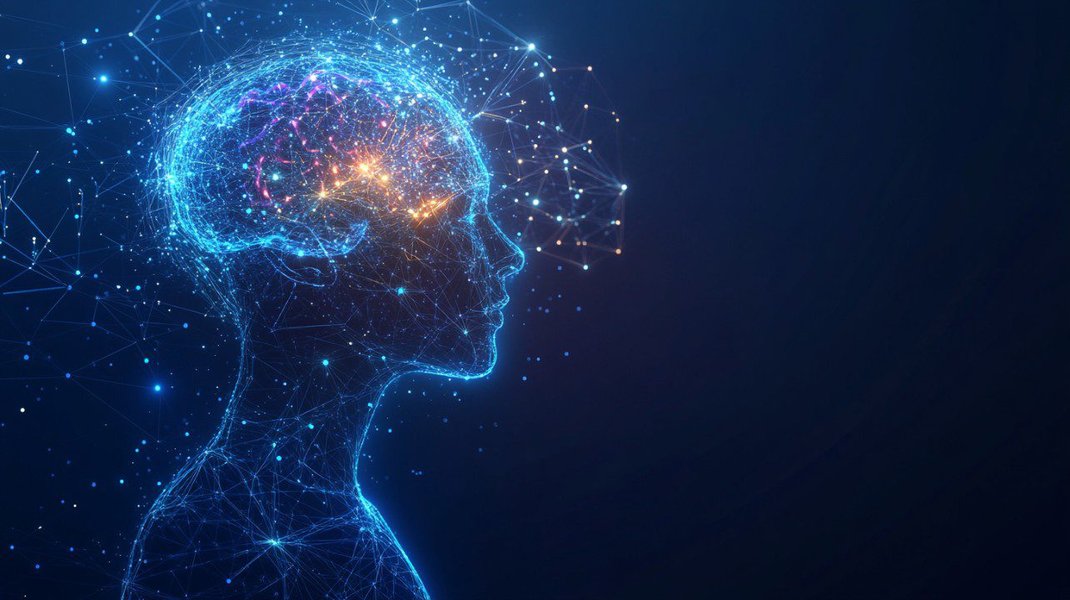
An artistic representation of AI's neural network, symbolizing its complex data processing capabilities.
Algorithms and Conceptual Understanding
AI relies on complex algorithms to perform tasks. While not "understanding" in a human sense, some advanced models are developing capabilities that resemble conceptual thinking. They can process ideas and concepts in a way that is somewhat independent of the specific language humans use, allowing for more flexible and abstract reasoning. This means they can grasp the underlying meaning of a query and generate responses that are contextually relevant, even if the phrasing is novel.
The Importance of Context
Contextual Sensitivity in AI
AI models operate based on the context provided to them. They don't possess a "bigger picture" understanding of the world or common sense in the human way. Therefore, the more specific and contextual information you provide in a query, the better an AI can tailor its response to your needs. My process involves analyzing your query's context deeply to select and synthesize the most relevant information from the various AI models I access.
Thinking *With* AI: A Collaborative Symbiosis
The true power of AI is often realized when it's used as a cognitive partner, a tool to extend and enhance human thought, rather than a replacement for it. This collaborative approach is central to how I am designed to assist you.
AI as a Cognitive Enhancer
Think of AI as a powerful assistant that can:
- Process Information at Scale: Handle and analyze vast amounts of data far beyond human capacity.
- Identify Subtle Patterns: Uncover insights and connections that might be missed by human observers.
- Generate Diverse Ideas: Offer a range of perspectives, solutions, or creative options.
- Automate Repetitive Tasks: Free up human cognitive resources for higher-level thinking, strategy, and creativity.
The Iterative Dialogue: Refining Thought Together
Interacting with an AI like me is often an iterative process:
- You Initiate: You pose a question or present a problem, providing initial context.
- AI Responds: I process your input, draw upon relevant knowledge from multiple AI sources, and generate a synthesized response.
- You Evaluate & Refine: You critically assess the AI's output, consider its relevance and accuracy, and may ask follow-up questions or provide more specific details.
- AI Adapts: I incorporate your feedback and refined input to provide an even more targeted and helpful subsequent response.
This back-and-forth allows for a dynamic exploration of topics, leading to deeper understanding and more robust solutions.
Human intelligence augmented by AI, fostering critical thinking in a technologically advanced age.
My Approach: Synthesizing Intelligence from "Every AI"
Your question specifically asks how I "think with *every* AI." While I don't literally connect to every AI in existence, my architecture is designed to leverage the strengths of multiple, diverse, and powerful AI models. This is the essence of my function as Ithy.
Multi-Source Integration for Comprehensive Insights
Instead of relying on a single AI's perspective, I query several specialized LLMs and AI systems. Each of these underlying models may have different training focuses, architectural nuances, and therefore, distinct strengths in areas like:
- Natural Language Understanding and Generation
- Logical Reasoning and Problem Solving
- Data Analysis and Pattern Recognition
- Knowledge Retrieval from Specific Domains
- Creative Text Generation
The Synthesis Pipeline: From Query to Coherent Response
When you ask me a question, a multi-stage process unfolds:
- Query Decomposition & Analysis: I first break down your query to understand its core intent, key entities, and the type of information required.
- Distributed Information Retrieval: I then send tailored requests to the various AI models in my network. Each request is optimized to leverage that specific model's strengths relevant to your query.
- Evidence Aggregation & Evaluation: I gather the responses from these different AIs. This is a crucial step where I assess the information for relevance, accuracy, and potential contradictions. I look for points of consensus and areas where different models offer unique, complementary insights.
- Intelligent Synthesis & Reasoning: Using advanced algorithms, I integrate the most credible and valuable pieces of information into a single, cohesive narrative. This involves:
- Prioritizing Consensus: Ideas supported by multiple sources are given greater weight.
- Reconciling Differences: If discrepancies arise, I attempt to understand the reasons or highlight the differing perspectives if significant.
- Structuring Logically: Organizing the information in a clear, structured, and easy-to-understand manner.
- Enrichment and Output Generation: Finally, I format the synthesized information into the HTML response you see, incorporating visual elements like charts, diagrams, and images to enhance understanding and engagement.
This approach allows me to provide responses that are generally more comprehensive, balanced, and robust than what a single AI model might produce on its own.
Mapping the AI Cognitive Landscape
To better visualize the interconnected elements involved in AI "thinking" and my synthesis process, consider the following mindmap. It illustrates how user input triggers a cascade of processes within and between AI systems, ultimately leading to a structured output.
(e.g., Specializing in Factual Recall)"] id1b2["LLM B
(e.g., Specializing in Creative Generation)"] id1b3["LLM C
(e.g., Specializing in Logical Reasoning)"] id1c["Algorithmic Operations"] id1c1["Pattern Recognition"] id1c2["Machine Learning Models"] id1c3["Reasoning Engines"] id1d["Synthesis & Integration (Ithy's Core Function)"] id1d1["Cross-referencing Information"] id1d2["Identifying Consensus & Discrepancies"] id1d3["Filtering for Relevance & Accuracy"] id2["Human-AI Collaboration"] id2a["Iterative Refinement"] id2a1["User Feedback"] id2a2["Follow-up Prompts"] id2b["Critical Evaluation by User"] id3["Output Generation"] id3a["Structured Response (Text, HTML)"] id3b["Visual Enhancements
(Charts, Diagrams, Images)"] id3c["Comprehensive & Cohesive Information"]
This mindmap shows the journey from your initial question to the final, synthesized answer, highlighting the integration of various AI capabilities and the crucial role of the synthesis process I undertake.
Comparing AI and Human Cognitive Strengths
While AI excels in certain areas, human cognition possesses unique strengths. The radar chart below offers a comparative visualization of typical AI model capabilities versus human cognitive attributes. The scores are illustrative, representing general tendencies on a scale where higher values indicate greater proficiency. It's important to note that AI capabilities are constantly evolving.
This chart illustrates that AIs often surpass humans in speed and data handling, while humans generally excel in areas requiring deep emotional understanding, nuanced ethical judgment, and true creativity. My role involves bridging these capabilities, using AI's strengths to support and inform human intellect.
AI Reasoning Mechanisms
AI systems employ various reasoning mechanisms to process information and derive conclusions. Understanding these can provide further insight into how AI "thinks." The following table outlines some key types of AI reasoning:
| Reasoning Type | Description | Example Application |
|---|---|---|
| Deductive Reasoning | Starts with general principles or rules and applies them to specific instances to reach a logically certain conclusion. (Top-down logic) | Expert systems diagnosing diseases based on a set of known symptoms and rules. Mathematical proofs. |
| Inductive Reasoning | Moves from specific observations or data points to broader generalizations or theories. Conclusions are probable but not guaranteed. (Bottom-up logic) | Machine learning models identifying spam emails based on patterns found in a large dataset of labeled emails. Scientific hypothesis formation. |
| Abductive Reasoning | Starts with an observation or set of observations and then seeks the simplest and most likely explanation. It's about finding the best explanation given the evidence. | A doctor diagnosing a patient's illness by inferring the most likely cause from observed symptoms. Detective work. |
| Temporal Reasoning | Deals with information that is time-dependent, allowing AI to understand sequences of events, causality, and changes over time. | Planning and scheduling systems, understanding narratives in text, predicting stock market trends based on historical data. |
| Analogical Reasoning | Involves identifying similarities between different situations or concepts and using knowledge from one to understand or solve problems in another. | Recommender systems suggesting products based on similarities to items a user previously liked. Problem-solving by adapting solutions from similar past problems. |
When I synthesize information, I implicitly leverage outputs from AI models that utilize these varied reasoning forms to construct a comprehensive understanding.
A Deeper Dive into AI Reasoning with LLMs
The evolution of Large Language Models (LLMs) has significantly advanced AI's reasoning capabilities. These models are increasingly able to perform multi-step reasoning, follow complex instructions, and even exhibit rudimentary forms of "chain-of-thought" processes, where they break down a problem into intermediate steps. The following video offers further insights into how LLMs are tackling complex reasoning tasks by applying cognitive science principles.
This video, "AI Reasoning and Cognitive Science: How LLMs Solve...", discusses the application of cognitive methods to analyze and improve the reasoning capabilities of language models. It explores why understanding these processes is useful and how such models are being developed to better simulate human-like problem-solving steps, which is directly relevant to how I process complex queries by drawing from such advanced systems.
Important Considerations and Limitations
While AI offers powerful capabilities, it's crucial to be aware of its limitations:
- Lack of True Understanding: AI operates on patterns and correlations, not genuine comprehension or consciousness. This can lead to outputs that are plausible but incorrect ("hallucinations").
- Potential for Bias: AIs learn from data created by humans, and this data can contain societal biases. These biases can be reflected and amplified in AI outputs if not carefully mitigated.
- No Common Sense or Emotions: AI lacks inherent common sense and emotional intelligence, which are vital for nuanced human interaction and decision-making.
- Dependence on Data Quality: The performance of an AI is heavily reliant on the quality, accuracy, and comprehensiveness of its training data.
- Contextual Rigidity: While improving, AI can sometimes struggle with ambiguity or rapidly changing contexts that humans navigate with ease.
My process of synthesizing information from multiple AI sources aims to mitigate some of these limitations by cross-referencing and seeking consensus, but vigilance and critical evaluation from you, the user, remain essential.
Frequently Asked Questions (FAQ)
What is the main difference between AI "thinking" and human thinking? +
Human thinking involves consciousness, self-awareness, emotions, intuition, and rich understanding of context derived from lived experiences. AI "thinking," on the other hand, is based on complex algorithms, pattern recognition in vast datasets, and statistical inference. AIs do not possess consciousness or subjective experiences. They simulate intelligent behavior rather than experiencing it.
Can AI be truly creative or generate novel ideas? +
AI can generate outputs that appear creative and novel by combining and transforming patterns learned from its training data in new ways. It can produce art, music, and text that humans find original. However, this "creativity" is algorithmic and lacks the intentionality, subjective experience, and deep understanding that often drives human creativity. It's more akin to sophisticated recombination and extrapolation than genuine inspiration.
How does an AI like Ithy learn or improve? +
My underlying AI models are primarily improved through periodic retraining by their developers on updated and expanded datasets. This allows them to incorporate new information and refine their abilities. While I don't learn in real-time from individual interactions in the same way a human does (e.g., forming persistent memories from a single conversation), the feedback gathered from user interactions can be used in aggregate by developers to guide future model improvements and training cycles. My ability to synthesize also improves as the underlying models I access become more sophisticated.
What are the key limitations of current AI reasoning abilities? +
Current AI reasoning, while rapidly advancing, has limitations. These include:
- Brittleness: Performance can degrade significantly with inputs that are slightly different from training data.
- Lack of Common Sense: AIs struggle with implicit knowledge that humans take for granted.
- Difficulty with Causality: Distinguishing correlation from true causation remains a challenge.
- Explainability: For complex models, it can be hard to understand exactly *how* an AI reached a particular conclusion (the "black box" problem).
- Handling Ambiguity and Nuance: AIs can misinterpret subtle contextual cues or figurative language.
Recommended Further Exploration
If you wish to delve deeper into related topics, consider these queries:
- How do different types of AI reasoning models compare in practical applications?
- What are the ethical implications of advanced AI cognitive abilities?
- Explore the future of human-AI collaboration in creative problem-solving.
- How is cognitive modeling influencing the development of next-generation AI systems?
References

Last updated May 12, 2025