
The Uncharted Territory: Why AI Grapples with Everyday Logic
Delving into the intricate reasons common sense remains a formidable frontier for Artificial Intelligence.
Common sense reasoning, the seemingly effortless human ability to make sound judgments and navigate everyday situations based on a vast trove of unspoken knowledge and experience, presents one of the most profound and persistent challenges for Artificial Intelligence (AI). While AI has made astounding strides in specialized tasks, replicating the nuanced, flexible, and context-aware reasoning that humans employ instinctively remains a complex hurdle. This exploration delves into the multifaceted difficulties AI encounters in acquiring and demonstrating common sense.
Key Hurdles for AI in Common Sense Reasoning
- The Vastness of Implicit Knowledge: Much of human common sense is built upon an enormous body of unstated assumptions and experiences about the world, which is difficult to explicitly codify or teach to AI systems that primarily learn from structured data.
- Contextual and Causal Understanding Deficits: AI often struggles to grasp the subtle nuances of context, leading to literal interpretations, and has difficulty discerning true cause-and-effect relationships beyond statistical correlations found in data.
- Limited Generalization and Adaptability: Unlike humans, AI systems frequently fail to generalize learned knowledge effectively to novel situations or "corner cases" that fall outside their training parameters, highlighting a lack of true adaptive reasoning.
The Intricate Web of Challenges
Understanding why common sense is so elusive for AI requires examining several interconnected factors, from the nature of common sense itself to the current limitations of AI architectures.
The Enigma of Unspoken, Experiential Knowledge
The "Dark Matter" of Intelligence
Common sense is often described as the "dark matter of artificial intelligence"—pervasive and essential, yet incredibly difficult to observe or quantify directly. It encompasses a broad spectrum of knowledge:
- Physical Intuition: Understanding that objects fall when dropped, that water makes things wet, or that fire is hot.
- Social Dynamics: Recognizing social cues, understanding intentions, predicting emotional responses, and adhering to unspoken social norms (e.g., knowing it's generally rude to interrupt).
- Temporal and Spatial Awareness: Grasping concepts of time, duration, and the spatial relationships between objects.
- Causal Relationships: Inferring that specific actions lead to predictable outcomes (e.g., "dropping matches on logs in a fireplace" typically results in "fire").
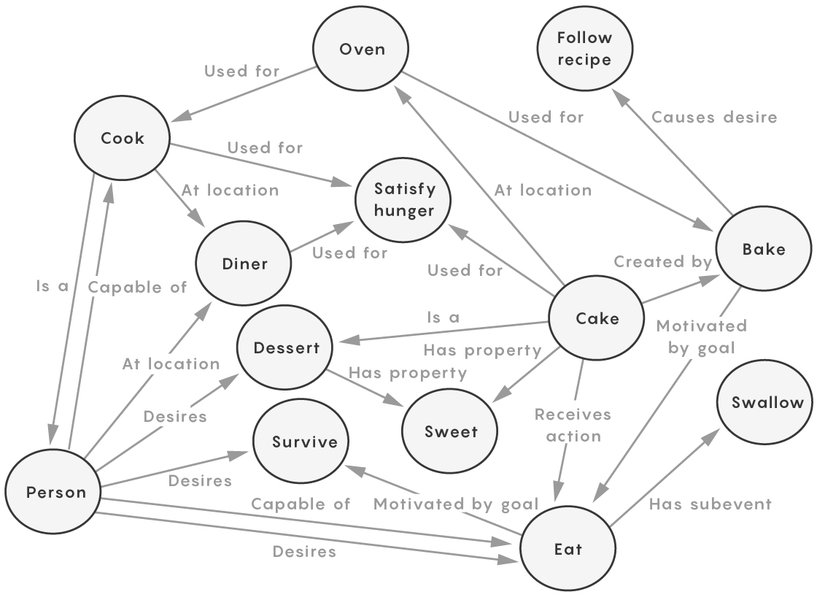
AI's quest involves bridging the gap between computational processing and human-like intuitive understanding.
Lost in Translation: AI's Struggle with Context and Nuance
Beyond Literal Interpretations
Human language and real-world situations are rife with ambiguity, subtlety, and context-dependent meanings. AI systems, particularly older models or those without sufficient contextual training, often falter in these areas:
- Ambiguity Resolution: A phrase like "The trophy would not fit in the brown suitcase because it was too big" requires common sense to determine whether "it" refers to the trophy or the suitcase. Humans resolve this effortlessly; AI can struggle.
- Figurative Language: Metaphors, sarcasm, and idioms pose significant challenges, as AI may interpret them literally.
- Situational Awareness: Understanding that the appropriate action in one context (e.g., shouting at a sports game) is inappropriate in another (e.g., a library) relies on common sense AI often lacks.
Connecting the Dots: The Hurdle of Causal and Abstract Reasoning
Correlation vs. Causation
A fundamental aspect of common sense is the ability to reason about cause and effect. Humans intuitively understand that flipping a light switch causes the light to turn on. AI systems, especially those based on deep learning, excel at identifying statistical correlations in data but often struggle to distinguish these from genuine causal relationships. This means an AI might learn that roosters crowing correlates with the sun rising but wouldn't understand that the rooster doesn't cause the sunrise. This deficiency limits AI's ability to predict the consequences of actions or to reason robustly about changes in a system.
Abstract reasoning—dealing with concepts not directly tied to concrete objects or experiences—is another area where AI falls short of human capabilities. Even young children develop the capacity for cause-and-effect thinking and basic abstract thought, capabilities that remain difficult to instill in AI.
Beyond the Training Data: The Generalization Gap and "Corner Cases"
Adapting to the Unexpected
Humans possess a remarkable ability to generalize from past experiences and apply learned knowledge to entirely new and unforeseen situations. This is a cornerstone of common sense. AI systems, however, are often "brittle." They perform well within the specific domains and data distributions on which they were trained but can fail spectacularly when faced with:
- Novel Scenarios: Situations that differ even slightly from their training data.
- "Corner Cases": Unusual or rare circumstances that weren't well-represented in the training set.
Building the Foundation: Representing and Acquiring Vast Knowledge
The Challenge of Knowledge Engineering
Efforts to explicitly encode common sense knowledge into AI systems have been ongoing for decades. Projects like Cyc aimed to build vast knowledge bases of common sense facts and rules. While these efforts have yielded valuable insights, the sheer scale, interconnectedness, and often unstated nature of common sense make comprehensive manual encoding an immense, perhaps insurmountable, task. Modern approaches try to extract common sense from large text corpora or use techniques like knowledge graphs (e.g., ConceptNet, Wikidata), but these still struggle with the flexibility and depth of human common sense. LLMs can generate text that appears to demonstrate common sense, but they can also "hallucinate" or generate plausible-sounding misinformation because their knowledge isn't grounded in real-world experience or a consistent internal model of the world.
The Human Element: Missing Emotions, Intentions, and Empathy
The Socially Unaware Machine
A significant component of human common sense involves understanding social and emotional contexts. This includes:
- Theory of Mind: Attributing mental states—beliefs, desires, intentions, emotions—to oneself and others.
- Empathy: Understanding and sharing the feelings of others.
- Social Norms: Grasping unwritten rules of social interaction.
Data Dependency and Technical Fragility
The Limitations of Learning from Data Alone
AI's heavy reliance on vast quantities of high-quality, structured data is a double-edged sword. While data fuels learning, common sense often involves reasoning with incomplete, ambiguous, or sparse information—something humans do routinely. Furthermore:
- Overconfidence: AI models can assign high confidence scores to incorrect predictions, especially in unfamiliar scenarios.
- Adversarial Vulnerability: AI can be tricked by subtle, often imperceptible (to humans) changes in input data, leading to bizarre or incorrect outputs.
- Lack of a "Reality Check": AI systems don't possess an innate grounding in the physical world that allows them to sanity-check their conclusions against basic physical or logical laws unless explicitly programmed or trained to do so for specific contexts.
Visualizing AI's Common Sense Gap
The following chart offers a comparative visualization of estimated common sense reasoning capabilities across different dimensions for an advanced AI, an average human adult, and a human child. The scores (on a scale where the axis begins at 1, up to 10) are illustrative, reflecting general trends discussed by experts rather than precise empirical measurements.
This visualization underscores that while AI is advancing, significant gaps persist in emulating the comprehensive and flexible common sense characteristic of human cognition, even when compared to a developing child in certain aspects like handling implicit, experience-based knowledge.
Mapping the Challenges: A Mindmap Overview
The multifaceted nature of the common sense problem in AI can be illustrated with a mindmap, showing how various core difficulties interconnect.
Reasoning Challenges"] id1["Nature of Knowledge"] id1a["Implicit & Unstated"] id1b["Vast & Diverse Domains"] id1c["Experiential Acquisition (Not Data Alone)"] id1d["Reporting Bias in Text"] id2["Cognitive Gaps in AI"] id2a["Contextual Understanding & Nuance"] id2b["True Causal Reasoning (vs. Correlation)"] id2c["Abstract Conceptualization"] id2d["Generalization & Transfer Learning"] id2e["Handling Ambiguity & Incompleteness"] id2f["Plausible Reasoning"] id3["Data & Learning Limitations"] id3a["Dependence on Massive Datasets"] id3b["Data Quality & Bias Issues"] id3c["Struggle with Unstructured/Noisy Real-World Data"] id3d["Symbol Grounding Problem"] id4["Lack of Human-like Attributes"] id4a["Empathy & Social Intelligence"] id4b["Intentionality, Beliefs, Desires"] id4c["Intuition & Gut Feelings"] id4d["Self-Awareness"] id5["Technical & Architectural Hurdles"] id5a["Brittleness & Narrowness of Models"] id5b["Overconfidence in Predictions"] id5c["Vulnerability to Adversarial Attacks"] id5d["Scalability of Knowledge Representation"]
This mindmap illustrates that solving the common sense problem is not about tackling a single issue, but addressing a complex web of intertwined challenges that span knowledge representation, reasoning mechanisms, learning paradigms, and the very nature of intelligence.
Common Sense Aspects and AI's Difficulties: A Tabular View
The following table breaks down specific aspects of common sense and highlights why they are particularly challenging for AI systems, along with illustrative examples.
| Aspect of Common Sense | Why It's Hard for AI | Example Scenario & AI Difficulty |
|---|---|---|
| Naive Physics | Lack of embodied experience; difficulty grounding symbols in physical reality. | "If you put a book on a table, it will stay there." AI might not inherently understand stability or gravity without specific training on these physical laws and object interactions. |
| Implicit Knowledge | This knowledge is rarely stated explicitly in data AI learns from. | "Rain makes roads slippery." An AI might know it rains and roads exist, but linking these to the implied danger of slipperiness requires a deeper, often unstated, understanding. |
| Contextual Language Use | Polysemy, idioms, sarcasm, and indirect speech require understanding beyond literal word meanings. | "My computer is a dinosaur." AI might interpret this literally or miss the intended meaning of "old and slow" without sophisticated contextual processing. |
| Causal Reasoning | Distinguishing correlation from causation; understanding underlying mechanisms. | "Flicking a switch turns on a light." AI might learn the correlation but not the underlying electrical circuit, making it unable to reason about why it might not work (e.g., burnt bulb, power outage). |
| Social Norms & Etiquette | Lack of social experience, empathy, and understanding of complex human motivations. | "It's generally considered rude to ask someone their salary upon first meeting." AI wouldn't inherently grasp the social discomfort this causes without being explicitly programmed or learning from vast examples of social interactions and their outcomes. |
| Goal-Oriented Planning (Real World) | Handling unforeseen obstacles and adapting plans flexibly in dynamic environments. | "Making a cup of tea if the kettle is broken." AI might struggle to find alternative methods (e.g., boiling water on a stove) if its primary plan is disrupted, unlike a human who would use common sense to adapt. |
| Understanding Intentions | Inferring goals and motivations from actions and language. | Someone says, "It's cold in here," while looking at an open window. A human infers a request to close it; AI might just acknowledge the statement of temperature. |
Expert Perspectives on AI's Common Sense Deficit
Many leading AI researchers emphasize the common sense challenge. The video below features insights into why this remains a significant hurdle, even for today's most advanced AI systems. It explores the gap between AI's pattern-matching prowess and genuine, human-like understanding of the everyday world.
This video from Big Think discusses why common sense is a major unsolved problem in artificial intelligence.
The journey toward AI with robust common sense involves exploring new architectures, integrating symbolic reasoning with deep learning, developing better methods for knowledge acquisition and representation from diverse sources (including interaction and simulation), and creating more comprehensive benchmarks to evaluate true understanding rather than pattern recognition.
Frequently Asked Questions (FAQ)
What exactly is common sense reasoning in the context of AI?
Why can't AI learn common sense from all the text and data it processes?
Are there any AI models or approaches that show particular promise in common sense reasoning?
- Hybrid Models: Combining neural networks (for pattern recognition) with symbolic reasoning systems (for explicit knowledge and logic).
- Knowledge Graphs: Using structured databases of facts and relationships (like ConceptNet or Wikidata) to provide AI with a base of common sense knowledge.
- Multimodal Learning: Training AI on diverse data types (text, images, videos, sensor data) to help ground concepts in a richer context.
- Interactive Learning & Reinforcement Learning: Allowing AI to learn from interaction with environments or humans, gaining a form of "experience."
How does the lack of common sense affect practical AI applications?
- Brittle Performance: AI systems can fail unexpectedly when encountering situations slightly different from their training data (e.g., a self-driving car confused by unusual road signs).
- Nonsensical Outputs: Generative AI might produce plausible-sounding but factually incorrect or illogical statements.
- Poor User Experience: Chatbots or virtual assistants may misunderstand user intent or provide irrelevant responses due to a lack of contextual or social understanding.
- Safety Concerns: In critical applications like healthcare or robotics, a lack of common sense can lead to unsafe or harmful decisions.
- Ethical Biases: Without common sense to filter or question data, AI can perpetuate and amplify biases present in its training information.
Conclusion: The Ongoing Quest for Artificially Sensible Machines
The difficulty AI faces with common sense reasoning is not a single problem but a constellation of deep challenges rooted in the nature of knowledge, context, causality, generalization, and the uniquely human aspects of cognition. While AI has achieved remarkable feats in specialized domains, the intuitive, flexible, and robust understanding of the everyday world that constitutes common sense remains a "holy grail" for the field. Overcoming this hurdle is crucial for developing AI systems that are not only intelligent in narrow tasks but also reliable, adaptable, and truly beneficial partners in complex, real-world scenarios. The pursuit continues, driven by innovative research and a deeper appreciation for the profound complexity of what humans often take for granted.
Recommended Further Exploration
- Explore the different AI paradigms for tackling common sense reasoning.
- Investigate the link between common sense and the pursuit of Artificial General Intelligence.
- Learn about the methods and tests researchers use to evaluate AI's common sense capabilities.
- Delve into the challenges and possibilities of AI acquiring social and emotional intelligence.