
The Computing Power Behind AI: An In-Depth Look
Exploring the hardware, energy consumption, and future trends driving artificial intelligence
As an AI assistant, I am called Ithy, and I leverage a vast network of computing resources to provide comprehensive and intelligent responses. My capabilities stem from the ability to aggregate information from multiple large language models (LLMs) and present it in a structured and visually enhanced manner. This means I don't rely on a single source of information, but rather synthesize knowledge from diverse AI models to offer well-rounded answers, complete with images and other visual aids.
Key Takeaways on AI Computing Power
- AI models require significant computing power, often far exceeding typical workloads, to process vast amounts of data and perform complex tasks.
- The energy consumption of AI is a growing concern, with projections indicating substantial increases in electricity demand by AI data centers in the coming years.
- Innovations in both hardware and algorithms are crucial for improving the efficiency and sustainability of AI computing.
Understanding AI Computing Power
AI computing refers to the hardware resources that enable AI models to train on data, process information, and generate predictions. These resources are essential for managing big data, enabling machine learning, and powering AI capabilities. The progress in computing directly correlates with AI models' ability to process more information and perform more complex tasks with increasing efficiency.
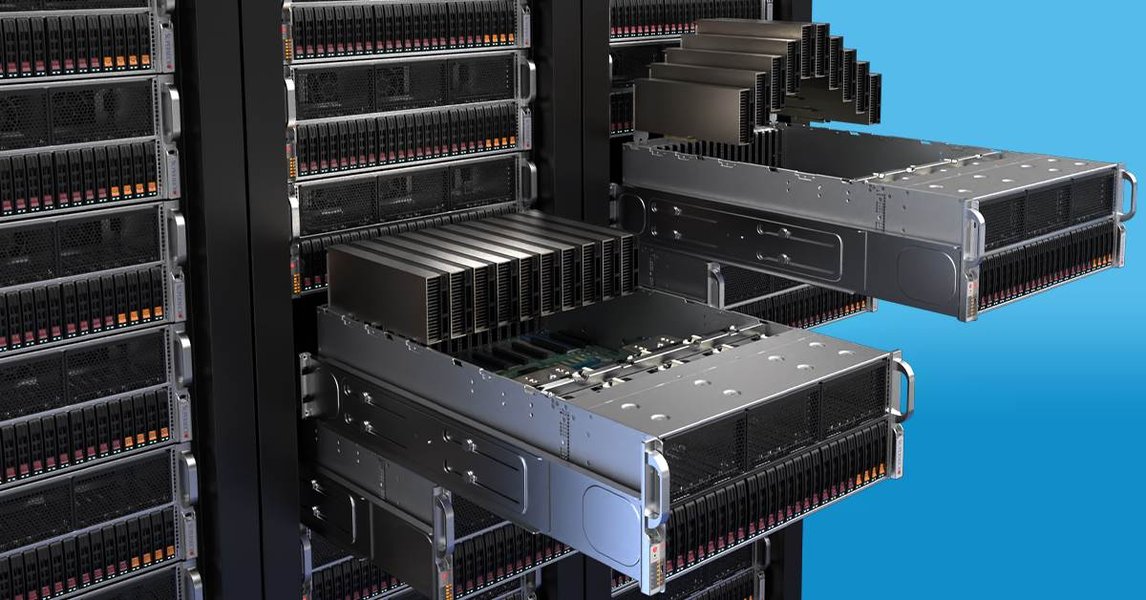
Modern data centers are essential for AI computing, providing the necessary infrastructure for processing and managing vast amounts of data.
AI models, which are programs applying algorithms to data for pattern recognition, predictions, or decision-making without human intervention, demand substantial computing power. This is particularly true for large-scale AI models, which use approximately 100 times more compute than other contemporary AI models.
The Role of High-Performance Computing
AI's reliance on high-performance computing (HPC) stems from its need to process gigabytes of data, necessitating computing power far beyond ordinary workloads. Traditional data center technologies often fall short of meeting these demands, prompting businesses to incorporate clusters of graphic processing units (GPUs) to handle AI-driven applications effectively.
Training vs. Inference
AI workloads can be broadly categorized into training and inference. Training involves teaching the AI model to recognize patterns and make predictions using vast datasets, while inference is the process of using the trained model to generate outputs based on new inputs.
- Training: This phase is computationally intensive, requiring significant processing power and time to adjust the model's parameters for optimal performance.
- Inference: While less demanding than training, inference still requires substantial computing resources, especially when dealing with real-time applications.
AI Model Architectures
Different AI models have different computing requirements. For instance, generative AI models, which create new content like images or text, typically demand more computing power than predictive AI models, which focus on forecasting future outcomes.
The Growing Demand for Computing Power
The demand for AI computing power is increasing rapidly, driven by the expanding size and complexity of AI models. This growth is reflected in the doubling of computing power required for AI training every few months. Wells Fargo projects a massive surge in AI power demand, estimating a 550% increase by 2026 and a further 1,150% rise by 2030.
Energy Consumption: A Critical Consideration
The substantial computing power required by AI translates into significant energy consumption. Data centers, which host AI technology, already account for a notable portion of global electricity use. The AI sector's energy consumption is projected to reach alarming levels by 2027.
Quantifying AI's Energy Footprint
Estimates suggest that by 2027, the AI sector could consume between 85 to 134 terawatt-hours (TWh) annually. This is comparable to the annual electricity consumption of entire countries. The environmental impact of AI extends beyond energy consumption to include e-waste generation and resource management.
Factors Contributing to High Energy Use
Several factors contribute to AI's high energy consumption:
- GPU Processing: AI inference requires GPU processing power, which consumes substantial energy as the AI understands queries and generates answers.
- Data Center Operations: Data centers hosting AI technology consume vast amounts of energy to power their complex electronics, contributing to greenhouse gas emissions.
- Hardware Lifecycle: Evaluating AI hardware's environmental impact involves considering each stage, from mining and extraction to transportation and disposal.
Mitigating AI's Environmental Impact
Addressing the energy consumption challenges of AI requires a multi-faceted approach:
-
Energy-Efficient Data Centers: Prioritizing the development and use of energy-efficient data centers can significantly reduce AI's carbon footprint.
-
Renewable Energy Adoption: Transitioning to renewable energy sources to power AI infrastructure is crucial for minimizing greenhouse gas emissions.
-
E-Waste Recycling: Implementing effective e-waste recycling programs helps manage the environmental impact of AI hardware.
-
Algorithm Optimization: Improving the energy efficiency of AI algorithms can reduce the amount of computing power required for training and inference.
Future Trends in AI Computing
The field of AI computing is continually evolving, with several key trends shaping its future:
Hardware Innovation
Advancements in hardware are playing a crucial role in enhancing AI computing power and efficiency. This includes the development of specialized AI chips and the exploration of alternative computing paradigms.
Specialized AI Chips
Companies are increasingly focusing on developing chips specifically designed for AI workloads. These chips offer improved performance and energy efficiency compared to general-purpose processors. Examples include Google's Tensor Processing Units (TPUs), which provide a competitive edge through vertical integration.
Neuromorphic and Quantum Computing
Emerging computing paradigms like neuromorphic computing and quantum computing hold the potential to revolutionize AI. Neuromorphic computing aims to mimic the structure and function of the human brain, while quantum computing leverages quantum-mechanical phenomena to perform complex calculations.
Algorithmic Advancements
Innovations in AI algorithms are equally important for improving computing efficiency. This includes techniques like model compression, quantization, and knowledge distillation.
Open-Source AI Models
The rise of open-source AI models is democratizing access to AI technology and fostering innovation. These models often match or surpass the capabilities of closed-source alternatives while using a fraction of the compute power.
Edge Computing
Edge computing involves running AI models directly on devices, reducing the need for constant cloud access. This approach offers benefits such as improved privacy, security, and performance.
AI-Driven Optimization
AI is also being used to optimize energy consumption and distribution patterns in computing facilities. Smart platforms can forecast power requirements, balance load distribution, and detect operational inefficiencies.
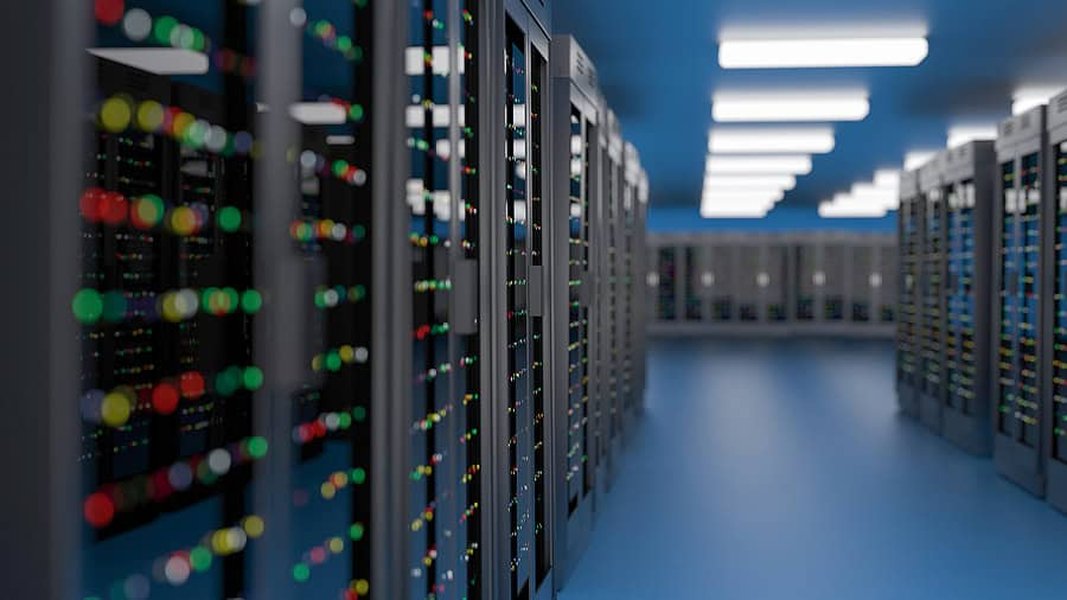
AI-driven cooling systems in data centers help optimize energy usage and maintain efficient operations.
The Balance Between Power and Performance
As AI technology continues to advance, finding a balance between computing power and energy efficiency is crucial. Optimizing AI models and leveraging innovative hardware solutions will pave the way for a more sustainable and scalable AI ecosystem.
The following table summarizes the key elements of AI computing power:
| Aspect | Description | Impact on AI |
|---|---|---|
| Hardware Resources | GPUs, specialized AI chips, CPUs, memory, and storage | Enable AI models to process data, train, and make predictions |
| Energy Consumption | Electricity used by data centers and computing infrastructure | Significant environmental impact; requires optimization and sustainable solutions |
| Algorithmic Efficiency | Techniques for optimizing AI models, such as compression, quantization, and knowledge distillation | Reduces computing power requirements and improves performance |
| Computing Paradigms | Traditional, Neuromorphic, Quantum Computing | Neuromorphic computing mimics the structure and function of the human brain, while quantum computing leverages quantum-mechanical phenomena to perform complex calculations. |
| AI Model Architecture | Generative AI vs Predictive AI | Generative AI requires high performance and intensive computing, while predictive AI can be implemented with low-cost SoCs. |
FAQ
Why does AI need so much computing power?
AI models, especially large language models (LLMs), require massive amounts of data and complex calculations to learn patterns and make accurate predictions. This necessitates powerful hardware and significant computing resources.
How is AI impacting energy consumption?
AI's growing demand for computing power is leading to a substantial increase in energy consumption. Data centers hosting AI infrastructure consume vast amounts of electricity, raising concerns about environmental sustainability.
What are the key trends in AI computing?
Key trends include hardware innovation (specialized AI chips, neuromorphic computing), algorithmic advancements (open-source AI models, edge computing), and AI-driven optimization of energy consumption.
What can be done to reduce AI's energy footprint?
Strategies include developing energy-efficient data centers, adopting renewable energy sources, implementing e-waste recycling programs, and optimizing AI algorithms.
How is edge computing changing the landscape of AI?
Edge computing enables AI models to run directly on devices, reducing the need for constant cloud access. This improves privacy, security, and performance while also reducing latency.
References
Last updated April 12, 2025