
Unlocking Silent Histories: How AI is Now Deciphering Long-Lost Languages
Artificial intelligence is achieving remarkable breakthroughs, translating ancient scripts previously beyond our reach.
The quest to understand ancient civilizations often hinges on deciphering their written records. For centuries, many scripts remained enigmatic, locking away invaluable knowledge about human history. However, recent advancements in Artificial Intelligence (AI), particularly in machine learning and neural networks, are providing powerful new tools to crack these ancient codes. AI's ability to process vast datasets and recognize complex patterns is accelerating decipherment efforts dramatically, sometimes achieving in seconds what previously took experts years.
Key Insights into AI Language Decipherment
- Accelerated Discovery: AI significantly speeds up the analysis and translation of ancient texts, processing large volumes of inscriptions far faster than traditional methods.
- Notable Successes: AI has been instrumental in translating languages like Akkadian cuneiform and enhancing the understanding of Egyptian hieroglyphs and Ugaritic.
- Collaborative Power: While powerful, AI typically works alongside human linguists and historians, combining computational pattern recognition with expert contextual interpretation.
Languages Yielding Their Secrets to AI
While the complete, unaided decipherment of an entirely unknown language by AI alone is still evolving, AI has made significant breakthroughs in translating or substantially aiding the translation of several ancient languages and scripts.
Akkadian Cuneiform: Voices from Mesopotamia
Translating Millennia-Old Tablets Instantly
One of the most significant achievements is the application of AI to Akkadian cuneiform, the script used across ancient Mesopotamia for languages like Akkadian and Sumerian, dating back around 5,000 years. Vast libraries of cuneiform tablets exist, but translating them has been slow work, limited by the small number of experts.
Researchers have developed AI models, particularly neural machine translation (NMT) systems, trained on existing transcribed and translated tablets. These AI tools can now provide rapid, often instant, draft translations of Akkadian cuneiform inscriptions directly from transliterations or even images. This dramatically accelerates research, allowing historians to analyze administrative records, legal texts, letters, and epic literature much more efficiently, uncovering details about daily life, politics, and culture in ancient Mesopotamia.
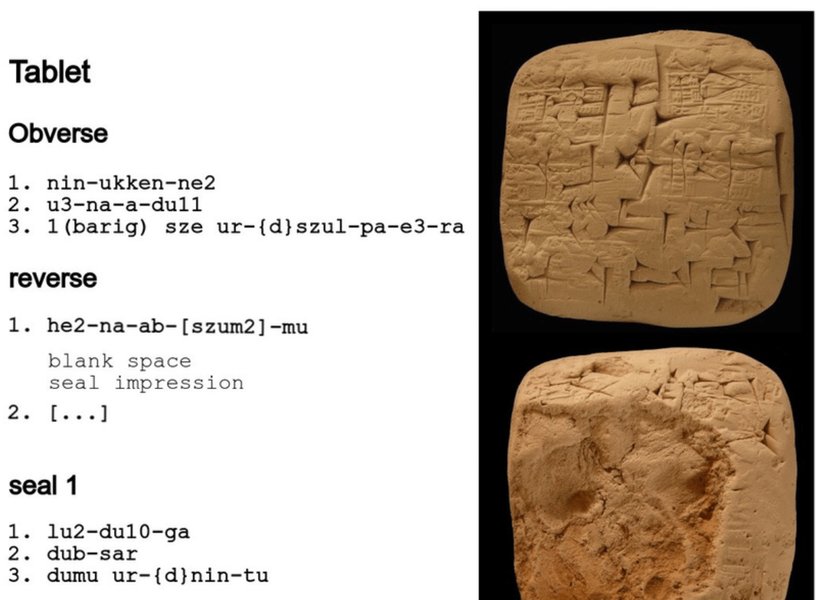
AI models process complex cuneiform scripts like this Akkadian tablet.
Ancient Egyptian Hieroglyphs: Enhanced Access
AI Tools Assisting Egyptologists
While Egyptian hieroglyphs were famously deciphered following the discovery of the Rosetta Stone, understanding the nuances and translating the vast corpus of texts remains a complex task. AI is making this ancient script more accessible.
Tools like Google's Fabricius utilize machine learning to help researchers and enthusiasts decode hieroglyphs. These systems are trained on large datasets of known hieroglyphic texts and their translations. They can assist in identifying symbols, suggesting possible translations, and even restoring damaged inscriptions. AI helps segment the continuous script, recognize variations in symbols, and interpret logographic, syllabic, and alphabetic elements within their context, speeding up the translation process and aiding in the study of less-understood texts found on papyri, tomb walls, and monuments.
Ancient Chinese Oracle Bone Script: Peering into the Shang Dynasty
Analyzing Early Chinese Writing
The Oracle Bone Script, used around 1200 BCE during the Shang Dynasty for divination, represents one of the earliest forms of Chinese writing. While related to modern Chinese, many characters and usages remained unclear. AI, specifically neural networks, has been applied to analyze these inscriptions found on turtle shells and animal bones.
By comparing the Oracle Bone characters with later forms of Chinese script and analyzing patterns of usage across thousands of inscriptions, AI models help identify characters, understand grammatical structures, and propose translations. This work is shedding light on the religion, society, and early history of the Shang Dynasty, with some AI systems achieving promising accuracy in preliminary character recognition and translation tasks.
Ugaritic: Refining Understanding of an Ancient Semitic Language
Improving Decipherment Accuracy
Ugaritic, an alphabetic cuneiform script used in the ancient city of Ugarit (modern Syria) around the 14th to 12th centuries BCE, was deciphered in the early 20th century. However, AI is refining our understanding and translation capabilities. Researchers have applied advanced AI algorithms, sometimes combined with techniques like minimum-cost flow, to existing Ugaritic texts.
These models have shown improvements in decipherment accuracy and the prediction of cognates (related words) compared to earlier computational methods. This allows for a more nuanced understanding of Ugaritic literature, which includes important mythological texts that provide insights into early Canaanite religion and its connections to later Semitic traditions, including the Hebrew Bible.

AI helps refine the translation of ancient scripts like Ugaritic.
AI-Enhanced Analysis and Text Recovery
Beyond deciphering unknown languages, AI is also revolutionizing the study of known ancient languages by analyzing texts in new ways and recovering damaged or inaccessible inscriptions.
Linear B: Automating Analysis of Mycenaean Greek
Restoring Fragmented Tablets
Linear B, the script used for Mycenaean Greek in the Late Bronze Age Aegean, was deciphered in the 1950s. However, many Linear B tablets are fragmented and incomplete. AI, particularly recurrent neural networks, has been employed to analyze the existing corpus of over 1,100 tablets.
These AI systems excel at predicting missing characters or words in damaged texts by learning the patterns, vocabulary, and administrative formulas common in Linear B inscriptions. AI models have achieved notable accuracy in restoring these texts, providing fuller insights into the economic and administrative workings of Mycenaean palace centers.
Herculaneum Papyri: Reading the Unreadable
Virtually Unrolling Carbonized Scrolls
The eruption of Mount Vesuvius in 79 CE carbonized hundreds of papyrus scrolls in Herculaneum, rendering them physically unreadable. While the language (mostly Greek) was known, the texts themselves were lost. Recently, AI played a crucial role in the "Vesuvius Challenge," where contestants used machine learning algorithms combined with high-resolution CT scans to virtually "unroll" these scrolls and detect the faint traces of ink left on the charred papyrus.
This breakthrough allowed researchers to read passages from these ancient scrolls for the first time in nearly 2,000 years, revealing philosophical texts previously thought lost. This demonstrates AI's power not just in linguistic decipherment but also in recovering text from severely damaged artifacts.
This video discusses the use of AI in virtually unrolling and decoding the ancient Herculaneum scrolls.
The AI Toolkit for Ancient Languages
The breakthroughs in deciphering and analyzing ancient languages are driven by specific AI techniques capable of handling the complexities and ambiguities inherent in historical texts.
Core Technologies Powering Decipherment
Neural Networks and Machine Learning
At the heart of these efforts are machine learning models, especially deep neural networks. Techniques like Neural Machine Translation (NMT), Convolutional Neural Networks (CNNs) for image-based symbol recognition, and Recurrent Neural Networks (RNNs) for sequence analysis are commonly used. These models learn statistical patterns, grammatical rules, and semantic relationships from data.
Pattern Recognition and Statistical Analysis
AI excels at identifying subtle patterns that might elude human researchers, such as character frequencies, co-occurrences, and potential grammatical structures. This is crucial when dealing with scripts where the underlying language rules are unknown.
Large-Scale Data Processing
Ancient language research often involves vast numbers of inscriptions, fragments, or potential linguistic comparisons. AI can process these massive datasets efficiently, testing hypotheses and identifying correlations at a scale impossible through manual effort alone.
Methodologies Employed
Supervised Learning (Using Known Data)
When some bilingual texts (like the Rosetta Stone) or related known languages exist, AI models can be trained in a supervised manner. They learn mappings between the unknown script/language and the known one (e.g., training Akkadian translation models on existing expert translations).
Unsupervised Learning (Discovering Structure)
For truly "lost" languages with no known relatives or bilingual keys, researchers are exploring unsupervised methods. These AI systems attempt to deduce linguistic properties like word boundaries or grammar based solely on the statistical patterns within the unknown texts, often leveraging constraints known to be universal across human languages. MIT researchers have demonstrated systems that can automatically decipher languages based on these principles.
Visualizing the AI Decipherment Landscape
The following mindmap illustrates the key components involved in using AI to decode ancient languages, from the techniques employed to the specific applications and ongoing challenges.
Assessing AI's Strengths in Language Decipherment
Artificial intelligence brings unique capabilities to the challenge of understanding ancient texts. This radar chart provides an opinionated assessment of AI's relative strengths across key aspects of language decipherment, based on current breakthroughs. The scale reflects AI's effectiveness, where a higher score indicates greater strength. Note that these are qualitative assessments reflecting AI's impact relative to traditional methods.
This chart highlights that while AI dramatically boosts speed and pattern recognition capabilities, it is currently less adept at handling extreme data scarcity or fully grasping the deep contextual and cultural nuances required for final, authoritative translations. Its role is powerful but primarily complementary to human expertise.
Summary of AI Involvement in Ancient Languages
The table below summarizes the status of AI's application to various ancient languages and scripts discussed, highlighting the nature of its contribution and current challenges.
| Language / Script | Status | Primary AI Contribution | Key Challenges / Notes |
|---|---|---|---|
| Akkadian Cuneiform | Significant Translation Progress | Rapid translation of large text volumes using NMT. | Requires expert verification; variations in script over time. |
| Egyptian Hieroglyphs | Assisted Translation & Access | Tools (e.g., Fabricius) aid decoding, segmentation, analysis. | Complex script (logograms, phonetic signs); requires large training datasets. |
| Oracle Bone Script (Ancient Chinese) | Partial Decipherment / Analysis | Character recognition, pattern analysis compared to later Chinese. | Pictographic complexity; incomplete understanding of grammar. |
| Ugaritic | Accuracy Improvement | Refined translation accuracy, cognate prediction. | Language already largely deciphered; AI enhances existing work. |
| Linear B (Mycenaean Greek) | Analysis & Text Restoration | Automated reconstruction of fragmented tablets. | Language already known; focus is on analysis, not initial decipherment. |
| Linear A (Minoan) | Ongoing Research | Applying techniques from Linear B; pattern analysis. | Undeciphered; language unknown; limited data. |
| Indus Valley Script | Ongoing Research | Statistical pattern analysis; hypothesis testing. | Undeciphered; lack of bilingual text; language family uncertain. |
| Herculaneum Papyri (Greek) | Text Recovery | Virtual unrolling of carbonized scrolls via CT scans and AI image analysis. | Language was known (Greek); challenge was physical access to text. |
Frequently Asked Questions (FAQ)
Has AI fully decoded any completely unknown language on its own?
As of early 2025, while AI has made tremendous strides in translating languages like Akkadian where some prior knowledge existed and in analyzing undeciphered scripts, there isn't a confirmed case of AI *fully* deciphering a *completely* unknown language from scratch without significant human guidance or prior linguistic context (like a related known language). Research, like MIT's work on unsupervised decipherment, shows potential, but practical breakthroughs often involve AI assisting human experts or working with some baseline information.
What are the main AI techniques used for language decipherment?
The primary techniques include:
- Neural Machine Translation (NMT): For translating between languages when training data is available.
- Pattern Recognition Algorithms: To identify recurring symbols, sequences, and potential grammatical structures.
- Machine Learning (Supervised & Unsupervised): Supervised learning uses known translations; unsupervised learning seeks inherent structures in the text without prior translations.
- Natural Language Processing (NLP): Techniques adapted to handle the ambiguities and structures of ancient languages.
- Computer Vision: Used for recognizing characters from images of inscriptions (e.g., hieroglyphs, cuneiform tablets, Herculaneum scrolls).
Is human expertise still necessary in the age of AI decipherment?
Absolutely. AI tools are incredibly powerful for processing data, identifying patterns, and generating draft translations, but they often lack the deep contextual understanding, cultural knowledge, and linguistic intuition of human experts. Linguists, historians, and archaeologists are crucial for guiding the AI, validating its findings, interpreting the results within their proper historical context, and handling the nuances and ambiguities that AI might miss. The current most successful approaches involve a synergy between AI capabilities and human expertise.
What are the biggest challenges AI faces in decoding ancient languages?
Key challenges include:
- Data Scarcity: Many ancient scripts have very limited surviving texts, making it difficult to train robust AI models.
- Lack of Bilingual Texts: Without parallel texts (like the Rosetta Stone), decipherment is significantly harder.
- Unknown Linguistic Features: The underlying grammar, vocabulary, and phonetic system might be entirely unknown or unrelated to known languages.
- Damage and Fragmentation: Inscriptions are often incomplete or damaged, requiring sophisticated restoration techniques.
- Contextual Understanding: AI struggles to grasp the cultural, historical, and situational context crucial for accurate interpretation.
Recommended Reading
- How does unsupervised machine learning help decipher lost languages?
- What are the ethical considerations of using AI in archaeology and historical research?
- Compare AI translation accuracy for ancient vs modern languages.
- What is the current status of efforts to decipher the Indus Valley script?
References
Last updated May 4, 2025