
Exploring the Dehumanizing Impact of AI on Learning
How technology may be reducing genuine human connection in education
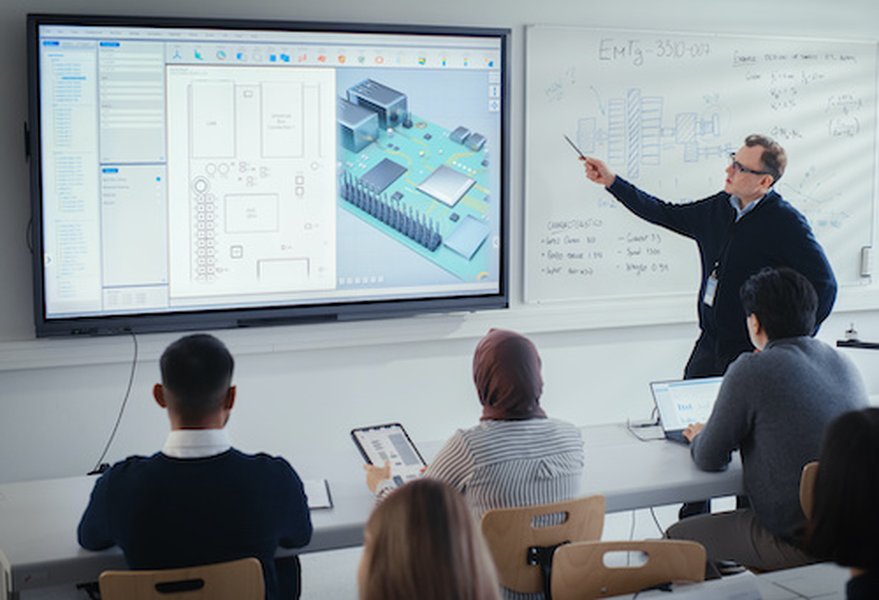
Key Highlights
- Reduced Human Interaction: AI-driven education limits meaningful teacher-student connections.
- Data-Driven Standardization: Over-reliance on algorithms risks transforming students into mere data points.
- Diminished Critical Thinking: Students may become overly dependent on technology solutions, curtailing independent thought.
Introduction
The exponential growth of artificial intelligence (AI) has revolutionized numerous fields including education. AI promises personalized learning, efficiency, and accessibility. Yet, amid these optimistic projections lie serious concerns regarding the potential dehumanization of the learning experience. The phrase “Artificial Intelligence (AI) dehumanizes the learning experiences” captures the anxiety that as digital transformation deepens, the intrinsic human elements of education—personal connection, empathy, and critical dialogue—may be lost. This essay examines the multifaceted impact of AI on education by presenting an introduction, a detailed discussion structured around three key arguments, and a conclusion that reflects on the profound implications of integrating AI into educational settings.
Body
Argument 1: Reduction of Human Interaction
The Role of Personal Connection in Education
One of the most frequently cited concerns is the diminishing of genuine human interaction. Before the advent of AI, classroom dynamics were built on a foundation of interpersonal relationships. Teachers not only conveyed content but also provided mentorship, emotional support, and moral guidance. In traditional educational settings, human interaction fosters trust, empathy, and collaboration. However, when education moves into the digital realm through AI platforms, students often interact with algorithms instead of humans. This shift can generate a sense of isolation and disconnection, as automated systems lack the emotional intelligence, cultural nuance, and adaptive support that human educators possess.
The impact of reduced personal interaction is far-reaching. For instance, crucial moments that demand nurturing dialogue—class discussions, group projects, and one-on-one mentorships—can be compromised. AI systems are optimized for efficiency and data processing, but they are inherently incapable of understanding complex emotional or situational contexts. As a consequence, these systems may inadvertently suppress the development of social skills and hinder the establishment of meaningful classroom communities.
In fields such as the arts, humanities, and even some STEM subjects, the empathic connection between a teacher and student plays a pivotal role in guiding intellectual curiosity and critical inquiry. Without this interaction, the learning environment turns mechanistic, leaving students feeling like they are engaging with cold, unresponsive technology rather than with a caring mentor.
Argument 2: Over-Reliance on Data-Driven Metrics
The Ethics and Limitations of Algorithmic Standardization
The second major argument concerns the over-reliance on data-driven metrics in AI-powered educational tools. AI systems excel in the aggregation and analysis of massive quantities of data, leading to highly personalized learning experiences. However, this customization is achieved by reducing a complex human being into quantifiable data points—a process that risks treating students as “raw material” rather than individuals with unique perspectives.
When learning becomes predominantly about measurable outcomes such as standardized test scores and algorithmically determined performance metrics, qualitative aspects of education are often sidelined. Nuanced human qualities like creativity, emotional resilience, and moral reasoning are not easily measured or codified. Instead, the emphasis rests solely on efficiency and data optimization. As a result, educational practices may inadvertently standardize learning experiences, stifling natural talents and unique intellectual approaches.
Moreover, reliance on algorithms intensifies concerns related to bias. AI is inherently limited by the quality and diversity of the data fed into it. If datasets harbor implicit biases—stemming from historical inequities or sociocultural prejudices—then the outputs generated by the AI will replicate and even amplify these biases. Consequently, rather than offering an equitable learning environment, such systems could systematically disadvantage students from marginalized communities, further entrenching social inequities.
Argument 3: Diminished Critical Thinking Skills
The Need for Cognitive Engagement and Independent Reasoning
The third critical argument revolves around the risk of eroding critical thinking skills due to an overdependence on AI in educational settings. One of the cornerstones of education is the development of independent reasoning, problem-solving abilities, and cognitive resilience. When students are provided with ready-made answers by AI systems, they miss the opportunity to engage deeply with the material through trial and error, reflective thinking, and exploratory learning.
The process of grappling with problems, experimenting with different solutions, and learning from mistakes is fundamental to the growth of critical thinking skills. AI’s efficiency in providing instant answers can therefore short-circuit this essential process. This risk is particularly significant in subjects that require analytic reasoning and creative problem-solving. Without the challenge of working through problems independently, students may gradually lose the capacity for innovative thought and intricate analysis.
Furthermore, the ready availability of technological shortcuts may lead to a dependency that undercuts the development of self-reliance and intellectual perseverance. This phenomenon could compromise not only academic performance but also the long-term capacity for adaptive learning and lifelong problem-solving, leaving students less prepared for complex real-world challenges.
Supporting Visual Elements
Radar Chart: AI Impact Analysis
The following radar chart represents an opinionated analysis of various dimensions of AI's impact on education. Each axis of the chart represents a different facet: Human Interaction, Algorithmic Bias, Personalized Learning, Critical Thinking, Equity, and Technology Dependence. The datasets illustrate that while certain areas such as personalized learning may show positive trends, crucial aspects like human interaction and development of critical thinking exhibit concerning declines.
Mermaid Mindmap: Exploring AI and Dehumanization
Below is a visual mindmap diagram that outlines the interconnectivity of various factors contributing to the dehumanization of learning by AI. This diagram helps underscore the systemic nature of these interrelated concerns.
Comparison Table: Traditional vs. AI-Driven Learning
The following table succinctly contrasts the essential characteristics of traditional learning environments versus those influenced by AI. This comparative analysis highlights the core differences that underline the dehumanization debate.
| Characteristic | Traditional Learning | AI-Driven Learning |
|---|---|---|
| Human Interaction | High: Emphasis on teacher-student relationships and mentorship | Low: Reduced personal touch, automated feedback systems |
| Personalization | Based on holistic understanding and empathy | Algorithm-driven, focusing on data points |
| Critical Thinking | Encouraged through interactive discussions and challenges | Risk of dependency on pre-determined solutions |
| Bias & Fairness | Subject to human oversight and contextual judgment | Prone to replicating biases in training data |
| Social Interaction | Rich interpersonal connections fostering collaboration | Isolation due to individualized, technology-mediated interfaces |
Conclusion
While AI undoubtedly offers remarkable tools for innovation and efficiency in education, an exclusive reliance on technology may inadvertently dehumanize the learning experience. The reduction of organic human interaction, the shift towards overly standardized, data-driven measures, and the potential decline in the cultivation of critical thinking skills are central concerns that cannot be ignored. It is important for education stakeholders—policymakers, educators, technologists—to work collaboratively in designing systems that harmonize the advancements brought by AI with the irreplaceable human elements of teaching.
A balanced educational model will preserve the personal, relational, and cognitive strengths of traditional learning while embracing the benefits of technological progress. By ensuring that AI serves as a supportive tool rather than the sole driver of educational processes, we can safeguard the human spirit of inquiry, learning, and critical discourse. The challenge for modern education is to integrate technology in a way that enriches rather than diminishes the genuineness of the learning journey.
Frequently Asked Questions
What does it mean that AI dehumanizes learning?
How can AI bias affect students?
What measures can balance AI with human teaching?
References
- Negative Effects of AI in Education - Mobile Guardian
- Artificial Intelligence and the Loss of Humanity - Berkeley
- Is AI Too Dehumanizing to Succeed? - Common Dreams
- Ghost in the Machine: AI in Education - Psychological Science
- AI Does Not Have to be Dehumanizing - LinkedIn
Recommended Queries
Last updated April 1, 2025