
Recent Advancements in AI-Driven Educational Interventions
Exploring transformative innovations that reshape learning and teaching
Key Takeaways
- Personalized and adaptive learning experiences are at the forefront – AI tailors educational content, pacing, and supports to individual student needs.
- Intelligent tutoring and real-time feedback systems empower both students and educators – advanced virtual assistants and analytics offer dynamic support in teaching and assessment.
- Efficient automated administrative processes and content creation are revolutionizing resource management – enabling educators to focus on interactive and inclusive learning environments.
Introduction
Over the past few years, the fusion of artificial intelligence (AI) with educational interventions has led to profound transformations within academic environments. These advancements have reshaped not only the instructional landscape but also the methodologies by which educators deliver content, assess learning, and manage administrative tasks. AI-driven interventions now offer personalized learning paths, predictive analytics, intelligent tutoring systems, and inclusive support that collectively drive improved learning outcomes. This comprehensive review outlines the recent developments in AI-driven educational interventions, synthesizing emerging trends, technological innovations, and the challenges faced as these systems become increasingly integrated into education.
Personalized and Adaptive Learning
One of the most significant breakthroughs in AI and education is the development of personalized and adaptive learning systems. These systems leverage robust data analytics and machine learning algorithms to identify each student’s unique learning style, pace, and areas of strength or difficulty. Consequently, curriculum content can be dynamically adjusted in real time, thus ensuring that students receive tailored educational experiences that reinforce conceptual understanding and facilitate practical application.
Adaptive Learning Systems
Adaptive learning systems are designed to analyze an individual’s performance continuously. They determine which topics require reinforcement and then automatically generate study materials or exercises precisely calibrated to the student's current proficiency level. Several AI platforms now combine natural language processing with data-driven strategies to provide targeted interventions. For instance, online courses are beginning to offer AI-generated videos, quizzes, and interactive problem sets that adapt dynamically to a student’s responses.
Customized Curriculum and Assessment Tools
The advent of AI has allowed for the creation of curricula that are not static but evolve continuously based on learning outcomes. Customized assessment tools now extend beyond traditional testing methods. They utilize computational intelligence to provide immediate and detailed feedback, guiding both educators and students toward a precise understanding of the learner’s progress. Rather than offering a one-size-fits-all solution, these tools adjust the difficulty level of subsequent materials based on the student’s demonstrated knowledge, promising a more engaging and successful learning journey.
Intelligent Tutoring Systems and Virtual Assistance
Complementing personalized learning is the rise of intelligent tutoring systems (ITS) and virtual assistants, both of which mimic one-on-one human tutoring experiences. These systems leverage natural language processing (NLP) to maintain responsive, interactive dialogues with students, addressing questions, offering hints, and providing supportive feedback in real time.
Real-Time Feedback and Personalized Guidance
Intelligent tutoring systems have evolved to become more than just repositories of information; they actively interact with learners to diagnose misunderstandings and offer step-by-step assistance. By simulating a personal tutor, these systems help clarify complex subjects and enable students to revisit specific topics until mastery is achieved. The responsiveness inherent in these systems is crucial for both reinforcing learning and encouraging continuous engagement even outside of traditional classroom hours.
Virtual Chatbots and Conversational AI
With the integration of conversational AI, virtual assistants can now provide assistance 24/7, ensuring support is always available. These chatbots are particularly effective in asynchronous learning environments where students might have questions during off-hours. The immediacy of assistance, combined with contextual feedback, empowers learners to tackle challenging concepts without constant face-to-face intervention, thereby fostering a culture of self-directed learning and improved problem-solving skills.
Generative AI for Dynamic Content Creation
Generative AI has become indispensable in the rapid creation and updating of educational materials. Instead of manually assembling content, teachers and educational institutions can now generate personalized learning modules, quizzes, simulations, and even entire lesson plans using advanced generative models.
Custom Educational Materials
AI-generated content adapts to specific learning objectives and student needs. For example, rather than relying on static textbooks or pre-recorded lectures, educators are now able to utilize AI to produce interactive content that can change with educational trends and emerging topics. Such innovations include generating video tutorials, practice exercises, and supplementary reading materials that are easily modifiable, ensuring that course content remains current and engaging.
Video-Based Learning Solutions
The quality of video-based learning has seen remarkable improvements through AI integration. Studies have indicated that video content, enhanced with AI, significantly boosts retention rates compared to traditional text-based methods. AI tools are now able to translate scripts into professional-grade video modules using synthetic avatars with customizable language and accent options. These innovations have allowed institutions to produce extensive volumes of learning videos quickly and efficiently, making interactive media an essential component of remote and hybrid education.
Comparison of Content Creation Methods
| Intervention | Description | Key Benefits |
|---|---|---|
| AI-Generated Videos | Convert written material into engaging audiovisual content using customizable avatars. | Enhanced engagement; multi-language support; efficient content updates. |
| Automated Lesson Plans | Create detailed, structured lesson plans in minutes, complete with differentiation strategies. | Time saving; tailored curriculum; consistency in quality. |
| Interactive Quizzes and Exercises | Generate adaptive assessments that provide instant feedback. | Personalized learning; real-time analytics; enhanced comprehension. |
Data Analysis, Predictive Analytics, and Administrative Support
Beyond content and tutoring, AI is now increasingly deployed in analyzing vast amounts of educational data. This capability drives sophisticated predictive analytics designed to forecast learning trajectories and identify students at risk. The insights gathered not only optimize personalized learning experiences but also empower administrators to streamline operations.
Predictive Analytics
Predictive analytic tools collect and analyze statistical data from classroom interactions, test scores, and engagement levels. They provide early alerts to educators about potential learning gaps and attendance or performance issues. Armed with these insights, educators can intervene promptly, ensuring that no student falls through the cracks. Moreover, these tools support the identification of trends, enabling educators to refine curriculum and teaching strategies based on concrete evidence.
Automated Administrative Tasks
AI-driven automation is significantly enhancing the efficiency of educational administration. Tasks such as grading assessments, generating progress reports, scheduling classes, and managing communications with parents have been streamlined. This automation reduces the administrative load on educators, allowing them to allocate more time to direct student engagement and instructional improvement.
Enhanced Teacher Support
Educators today are increasingly using AI-powered assistants to help plan lessons, develop rubrics, and even manage classroom dynamics. By automating routine administrative processes such as email communications and syllabus generation, teachers can focus on the creative and pedagogical aspects of their roles. This shift not only enhances the quality of teaching but also contributes to a healthier, less stressful work environment for educators.
Enhanced Assessment and Feedback Mechanisms
AI is transforming the way assessments are conducted in classrooms. Modern assessment tools go well beyond traditional paper-based tests, employing dynamic, computer-adaptive testing methods that optimize questioning based on a student’s performance during the exam.
Real-Time and Adaptive Testing
AI platforms have been designed to adjust the difficulty of questions in real time, ensuring that assessments are perfectly aligned with each student’s learning pace. This approach facilitates a deeper understanding of individual strengths and weaknesses and allows educators to tailor follow-up lessons accordingly. Immediate and detailed feedback through AI assessment systems has also enhanced the ability of students to self-correct and further refine their understanding.
Interactive Performance Analytics
A significant advancement in educational assessments is the integration of interactive performance analytics. After each evaluation, educators receive detailed reports that not only indicate scores but also analyze problem areas. These insights, drawn from machine learning predictive models, allow for targeted remediation and curriculum adjustments that optimize learning outcomes for each student.
Inclusive and Accessible Education
One of the most promising aspects of AI is its potential to create a more inclusive and accessible learning environment. Recent advancements ensure that educational content and methodologies cater to diverse student needs, including those with disabilities and learning differences.
Support for Disabilities and Language Barriers
AI-driven assistive technologies include real-time audio descriptions, text-to-speech functionalities, and sign language interpretation via AI-powered avatars. These tools make complex educational materials accessible to students with visual or hearing impairments. Moreover, the ability of these systems to localize content into multiple languages not only supports students from non-English speaking backgrounds but also democratizes access to quality education across diverse linguistic communities.
Promoting Equity in Education
Addressing equity gaps has been a key focus of recent AI interventions. By providing scalable tutoring solutions and adaptive learning resources, AI offers support to students who might otherwise lack access to quality educational tools. This capability is particularly transformative in under-resourced environments, where AI ensures that personalized learning interventions are available at scale.
Ethical Considerations and Challenges
Despite the tremendous benefits offered by AI in education, its integration also raises important ethical and operational challenges. As AI systems continue to evolve, it becomes necessary to navigate concerns surrounding data privacy, bias in algorithmic decision-making, overreliance on machines for academic processes, and the risk of undermining critical thinking.
Data Privacy and Security
With vast amounts of sensitive student data being processed daily, maintaining robust data protection measures is critical. Data privacy concerns remain a significant barrier to broader adoption, particularly in light of regional and international legal frameworks such as FERPA. Educators and institutions must constantly balance the benefits of data-driven personalization with stringent adherence to privacy safeguards, ensuring that student information is securely stored and handled.
Algorithmic Bias and Transparency
One challenge in the implementation of AI in education is avoiding the propagation of biases unintentionally embedded within algorithms. Continuous efforts are necessary to develop transparent AI models that can be audited and refined to ensure fairness for all students irrespective of background. This includes ensuring diversity in training datasets and integrating ethical reviews into the development process of these software solutions.
Maintaining the Human Touch
An overreliance on AI solutions may inadvertently diminish the critical role of human insight in education. While automation can streamline administrative functions and provide personalized tutoring, educators remain indispensable in fostering creativity, critical thinking, and emotional intelligence among students. Balancing technological integration with human mentorship is essential to ensure that AI serves as an assistive tool rather than a complete replacement for traditional teaching.
Future Trends and Innovations
As we look to the future, several promising trends are emerging that may further revolutionize the educational landscape through AI. These trends include the integration of augmented reality (AR) and virtual reality (VR) with AI, deeper incorporation of experiential learning models, and interdisciplinary research collaborations to develop hybrid pedagogical frameworks.
Augmented and Virtual Reality Integration
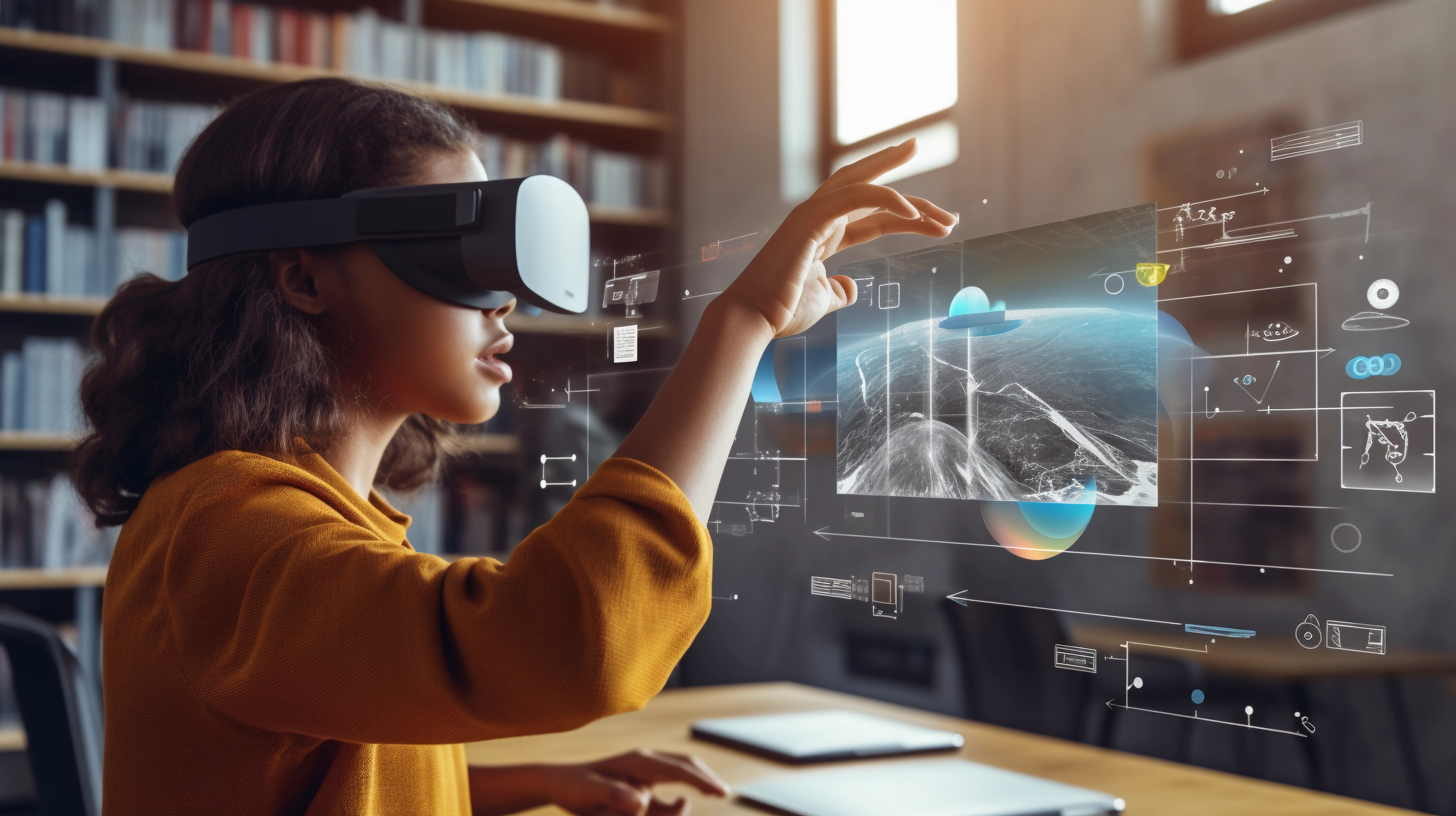
AR and VR technologies, when combined with AI, can create immersive learning environments where students interact with three-dimensional virtual objects and simulations. This is especially significant in domains such as science, engineering, and medicine, where experiential learning through simulated experiments and interactive modules can cement theoretical knowledge through practical experience.
AI Literacy and Collaborative Problem Solving
As educational systems become increasingly dependent on AI, there is a growing emphasis on AI literacy. Future curriculums may integrate AI problem-solving as an essential skill, preparing students to collaborate effectively with both human and machine counterparts in professional settings. Teaching students how to formulate effective prompts and critically assess AI-generated content will empower them to use these tools responsibly and effectively.
Interdisciplinary Collaborations in Education
Cutting-edge research is exploring the intersection of cognitive psychology, data science, and pedagogy to innovate hybrid instructional models that blend the precision of AI with the nuanced empathy of human educators. These interdisciplinary projects are expected to produce systems that dynamically evolve alongside advancements in technology, tailoring methodologies to diverse learning contexts and future workforce demands.
Conclusion
In summary, the recent advancements in AI-driven educational interventions represent a paradigm shift in how educational content is created, delivered, and assessed. Key innovations include highly personalized and adaptive learning experiences, intelligent tutoring systems with real-time feedback, automated administrative processes, and dynamic content creation through generative AI. As these technologies continue to develop, they also bring forth essential challenges related to data privacy, ethical AI deployment, and the maintenance of the human element in education. The future of AI in education is promising, characterized by its potential to democratize access, enhance engagement, and prepare learners for a complex digital economy. It is crucial for educators, policymakers, and technologists to work collaboratively to harness AI’s capabilities, ensuring that its integration enriches the learning environment while upholding principles of fairness, accessibility, and human-centered teaching.
References
- 2025 Predictions: AI’s Impact on Education - The Journal
- AI Trends for 2025 - EdTech Magazine
- Innovators See AI in Education Unlocking the Digital Promise in 2025 - Forbes
- AI Predictions for 2025 - eSchool News
- Top 5 Trends in Educational Technology to Watch in 2025 - EdTech Digest
- AI Applications in Education - Synthesia
- New in 2025 and What EdLeaders Should Do About It - Getting Smart
More
Last updated February 18, 2025