
Artificial Intelligence: Shaping the Future
Exploring AI trends, applications, and the road ahead
Key Highlights
- Revolutionary Integration - AI is transforming every sector with innovative automation and decision-making capabilities.
- Ethical and Transparent Development - Emphasis on fairness, bias reduction, and responsible guidelines to guide AI evolution.
- Emerging Trends - Agentic AI, generative AI, and multimodal applications continue to drive progress and innovation.
Introduction to Artificial Intelligence
Artificial Intelligence (AI) has evolved from mere conceptual experiments in the 1950s to being one of the most influential technological drivers in modern society. Today, AI is not only embedded in everyday technology but also plays a transformative role across industries ranging from healthcare to finance, education, and beyond. As we step deeper into the era of AI, it is essential to understand its mechanisms, applications, ethical constraints, and promising trajectories that shape our future.
The Evolution of AI
Historical Background and Modern Advancements
AI originated as a field of inquiry with early research focused on rule-based systems and symbolic reasoning. Over the decades, the breakthrough of machine learning, particularly deep learning and neural networks in the 2010s, expanded its horizons significantly. These advancements enabled AI to handle dynamic tasks such as speech recognition, image analysis, natural language processing, and complex decision-making.
A Timeline of Transformation
Early AI systems were limited by the available computational power and data, focusing primarily on symbolic AI. As the computational architecture improved and large datasets became accessible, neural networks took center stage, transforming everyday applications and laying the foundation for high-performance AI that can now analyze big data in real time.
Central to these advancements is the concept of "agentic AI," systems capable of taking independent actions based on deeply integrated insights. This agentic behavior signifies a shift from assistance-based AI to truly autonomous systems, profoundly impacting industrial productivity and innovation.
Core Applications of AI
Industry-Specific Breakthroughs
Healthcare
In healthcare, AI revolutionizes patient care and clinical operations. AI-driven diagnostic tools analyze medical images, flag potential anomalies, and support faster diagnosis, which can be crucial in early disease detection and management. Personalized medicine, backed by predictive analytics and genomic analysis, is becoming more accessible, tailoring treatments to individual needs with increased accuracy.
Finance
Financial institutions harness AI to bolster security and efficiency. Fraud detection systems, enabled by AI, continuously analyze transaction patterns to detect irregular activities. In addition, algorithmic trading systems leverage machine learning to evaluate market trends in real time, facilitating faster and smarter investment decisions. Risk assessment models have also grown in sophistication, ensuring financial products are offered with informed caution.
Education
AI is transforming educational paradigms through the development of personalized learning environments. Adaptive learning platforms analyze student performance and adjust curricula they deliver. This customization helps educators identify and address individual student challenges while enhancing overall educational outcomes.
Manufacturing and Transportation
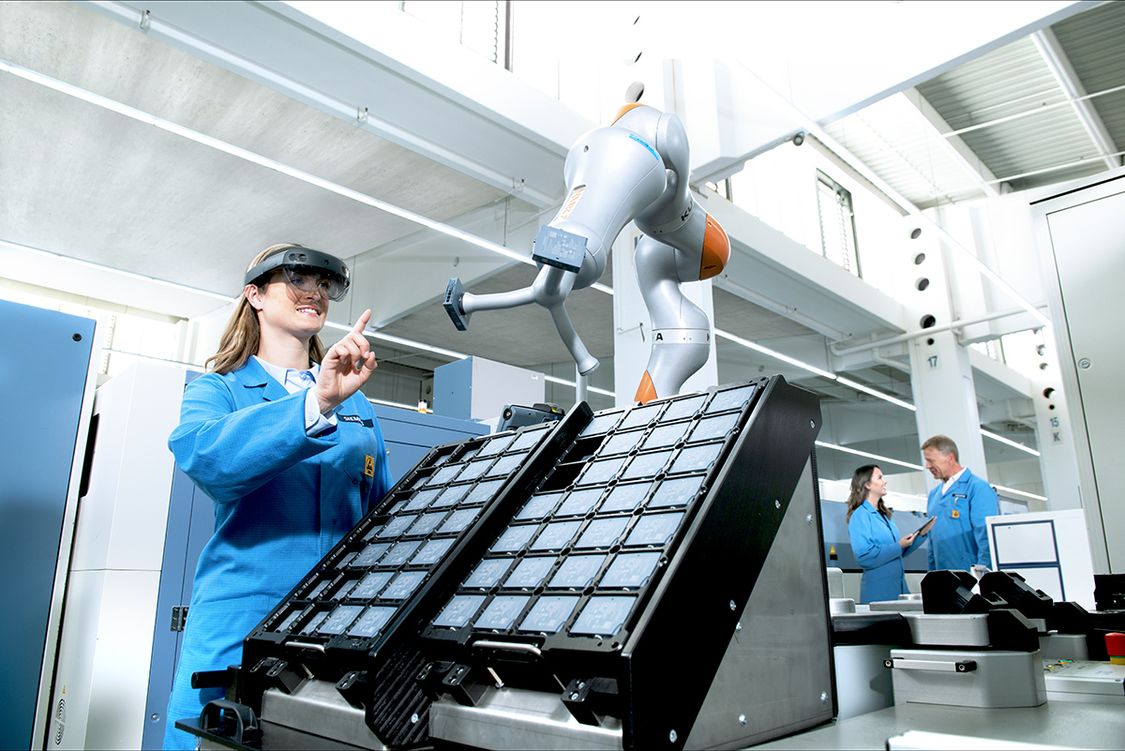
In manufacturing, automation driven by AI revolutionizes production lines. Autonomous robots not only increase operational efficiency but also support predictive maintenance, thereby reducing downtime and ensuring smoother supply chain management. Similarly, the transportation sector is experiencing rapid innovations with self-driving vehicles and AI-optimized travel planning, promising safer travel and enhanced traffic management systems.
Entertainment
AI transforms the entertainment industry by providing personalized content recommendations. Streaming platforms employ AI algorithms to analyze viewer behavior, ensuring that content discovery is not only efficient but also engaging and tailored to user preferences.
Emerging Trends in AI
Agentic and Generative AI
One of the key trends in AI today is the development of agentic AI, where systems are designed to operate independently. These systems take proactive actions—going beyond mere data processing—allowing them to perform complex tasks autonomously. In parallel, generative AI is redefining creative processes by producing new content across various mediums including text, art, and even complex software code.
Integration in Application Design
AI is moving toward becoming a core component of application design. The trend of AI-first application development integrates AI capabilities into the native development workflow, boosting both functionality and user engagement. For example, CRM platforms that incorporate AI agents to assist with customer interactions exemplify the seamless integration of AI into everyday business tools.
Multimodal and Ethical Considerations
With the rise of multimodal AI—systems capable of processing different types of data such as text, images, and video simultaneously—the potential for innovation has skyrocketed. Still, these advancements come with critical ethical challenges. Developers and policymakers are increasingly aware that to fully harness the benefits of AI, it must be developed with strict adherence to ethical guidelines, ensuring fairness, transparency, and accountability in all applications.
Ethical and Societal Implications
Balancing Innovation with Responsibility
As AI systems become more autonomous, concerns about ethics, privacy, and job displacement become more pronounced. Ensuring that AI is ethically developed and deployed is not merely an option but a necessity. Numerous organizations worldwide are prioritizing:
Bias Reduction and Fairness
AI models are frequently scrutinized for potential biases that may arise from the data used during their training. Advanced methodologies now focus on detecting, evaluating, and mitigating these biases to prevent discrimination and ensure equitable outcomes for all communities.
Transparency and Accountability
Transparent AI systems are critical for building trust among users. This involves clear documentation of the data used, the decision-making process within the algorithms, and mechanisms for accountability in cases where the system's actions lead to adverse outcomes. Regulatory bodies and industry leaders are working to establish frameworks that support an ethical approach to AI.
Mitigating Job Displacement
With the continual push towards automation, job displacement among various sectors is a pressing reality. Consequently, there is a growing focus on upskilling the workforce to adapt to new technologies. Industries are actively investing in training programs and education to help affected workers transition into emerging roles that complement AI capabilities.
Quantifying the Impact of AI
A Data-Driven Perspective
To better understand the transformative impact of AI, it is useful to analyze various metrics that showcase its integration across different industries. The following table summarizes essential areas where AI is making a significant breakthrough:
| Sector | Key Application | Impact Metric |
|---|---|---|
| Healthcare | Medical Diagnostics & Personalized Treatment | Reduction in diagnostic error by up to 30% |
| Finance | Fraud Detection & Trading Algorithms | 30-40% improvement in risk prediction |
| Education | Adaptive Learning Systems | Enhancement of learning outcomes by 20% |
| Manufacturing | Automation & Predictive Maintenance | Operational efficiency gains of 25% |
| Entertainment | Personalized Content Recommendations | Increase in engagement metrics by 35% |
Mathematical Representation of AI Growth
The evolution of AI's capacity in handling data can be approximated by growth models. For instance, the performance increase of deep learning models can be expressed as:
\( \text{\( P(t) = P_0 \times e^{\lambda t} \)} \)
Here, \( \text{\( P_0 \)} \) represents the initial performance level, and \( \text{\( \lambda \)} \) is the growth constant over time \( \text{\( t \)} \). This formula emphasizes how exponential improvements in computational power and algorithm sophistication continue to drive AI capabilities forward.
Future Prospects and Ongoing Challenges
The Dual-Edged Sword of Innovation
As with any revolutionary technology, AI presents both promising opportunities and intricate challenges. Its potential to drive global innovations in various sectors underscores the importance of balanced progress. However, key challenges remain:
Technological Dependence
With the increasing deployment of AI systems, there is a growing risk of overdependence on automated solutions. This calls for continuous human oversight to ensure that AI remains an augmentative tool rather than a replacement for human decision-making.
Global Regulatory Framework
Establishing an effective global regulatory framework that harmonizes various ethical guidelines and operational standards is imperative. Such regulations must adapt to the pace of technological change and address concerns related to privacy, intellectual property, and liability.
Embedding Trust in AI Systems
Building and maintaining trust in AI is paramount. This necessitates not just technological improvements but also a transparent communication strategy regarding how these AI systems operate. Integrating comprehensive audit trails and explainable AI methods are vital steps to foster public confidence.
References
- 6 AI trends you’ll see more of in 2025 - Microsoft News
-
2025 and the Next Chapter(s) of AI - Google Cloud Blog
- 5 Predictions for AI in 2025 - TIME
- Future of AI: 7 Key AI Trends For 2025 & 2026 - Exploding Topics
- 5 Artificial Intelligence Trends to Watch in 2025
Recommended Queries
Last updated March 11, 2025