
Building an AI-Powered Immersive Escape Room Experience
Create dynamic, customizable escape rooms with cutting-edge AI technology
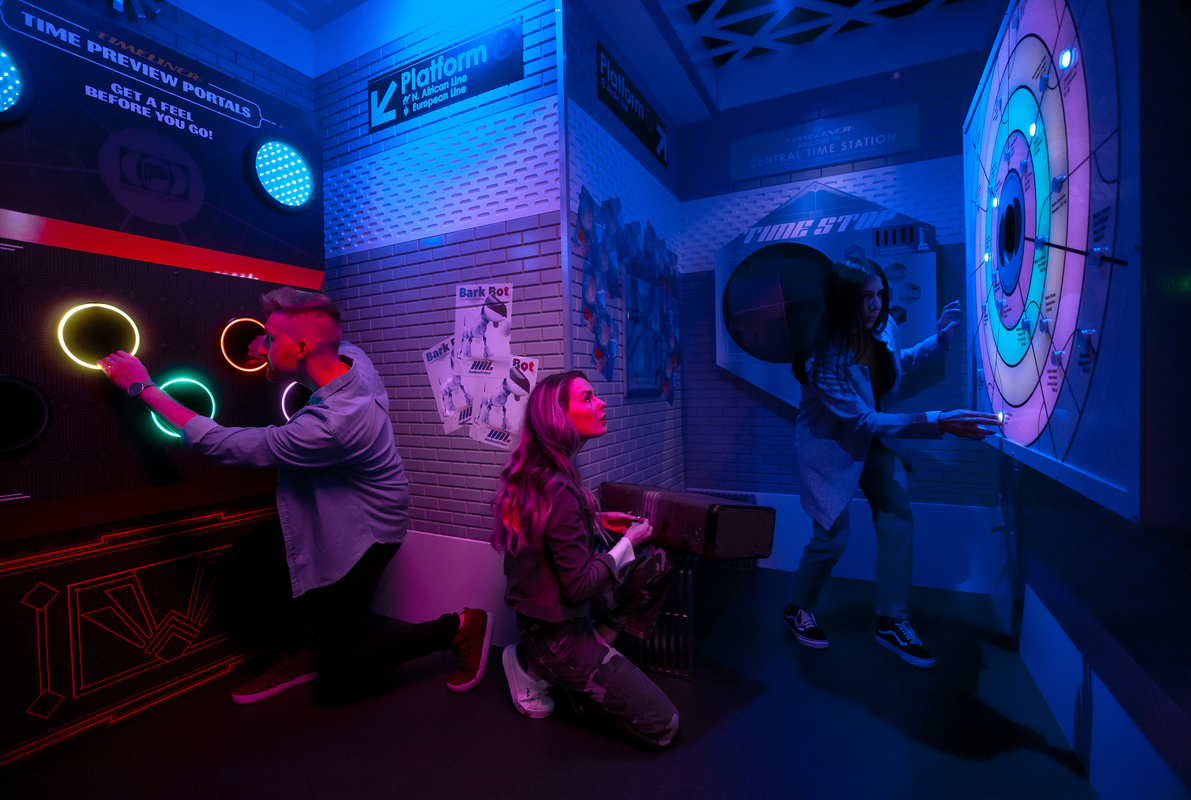
Key Takeaways
- Dynamic Narrative Generation: Utilize advanced AI models to craft unique storylines and adaptable puzzles that respond to player actions.
- Real-Time Interaction: Implement AI-driven characters and feedback systems that engage players and maintain immersion throughout the experience.
- Customization and Scalability: Design a modular system that allows for easy customization of themes and puzzles, ensuring scalability and personalized experiences for diverse player groups.
1. Defining the Core Framework
Establishing the foundation for your AI-powered escape room
Creating an immersive escape room experience hinges on a robust core framework that seamlessly integrates narrative elements, puzzles, and player interactions. This framework should be modular, allowing for adaptability and scalability as your system evolves.
1.1 Plot Representation
Structure each escape room plot as a series of interconnected steps or stages. Each step should encompass:
- Information: Clues, story elements, or contextual data necessary for progression.
- Player Actions: Specific actions or decisions players must undertake to unlock new information.
- Triggers: Conditions such as solving a puzzle or finding a hidden object that advance the storyline.
1.2 Dynamic Adaptation
Leverage AI to dynamically adjust the difficulty, pacing, and narrative based on player behavior and skill levels. This ensures that the experience remains challenging yet enjoyable for all participants.
2. Leveraging AI for Narrative and Puzzle Generation
Harnessing AI to create engaging and adaptable storylines and challenges
AI plays a pivotal role in generating immersive narratives and dynamically adapting puzzles to enhance the escape room experience.
2.1 AI Models for Storytelling
Employ advanced AI models like GPT-4 or similar to generate immersive storylines and dialogues for AI characters. These models can craft unique, context-aware narratives in real-time, ensuring that each escape room experience is distinct.
2.2 Dynamic Puzzle Creation
Integrate AI algorithms to design puzzles that adapt to the players’ progress and preferences:
- Visual Puzzles: Use tools like Stable Diffusion XL to generate visual clues or puzzles tailored to the current narrative context.
- Text-Based Challenges: Utilize natural language processing (NLP) to create riddles, cryptic messages, or logic problems that fit seamlessly into the storyline.
2.3 Personalization
Allow the AI to analyze player behavior, including time taken to solve puzzles and preferred puzzle types, to tailor future challenges accordingly. This personalization enhances engagement and ensures that the experience remains captivating.
3. Developing Immersive AI Characters
Creating AI-driven characters that enhance player engagement and immersion
AI characters serve as guides, narrators, or antagonists within the escape room, providing a dynamic and interactive element to the experience.
3.1 AI-Driven Interaction
Design characters that interact with players in real-time, offering hints, delivering story elements, and responding dynamically to player decisions. This interaction creates a sense of agency and immersion.
3.2 Voice and Animation Integration
Enhance character realism by integrating text-to-speech (TTS) technologies and animation tools. For instance, tools like ElevenLabs can be used for realistic voice synthesis, while animation software can bring characters to life visually.
4. Building a Real-Time Interaction System
Ensuring seamless and responsive player interactions within the escape room
A robust real-time interaction system is crucial for maintaining immersion and providing immediate feedback based on player actions.
4.1 Player Input Handling
Develop a system capable of capturing and interpreting various player actions, such as clicking objects, typing answers, or speaking to AI characters. This system should accurately map inputs to in-game events.
4.2 Real-Time Feedback
Ensure the system provides immediate feedback to player actions. This includes unlocking new areas, revealing clues, or advancing the story as soon as players meet the required conditions.
4.3 Multiplayer Support
If the system supports multiple players, implement synchronization mechanisms to ensure that all participants experience the same narrative progression simultaneously, fostering collaborative problem-solving.
5. Creating a Customizable Interface
Designing user-friendly and adaptable interfaces for diverse player preferences
Provide a customizable interface that allows users to tailor the escape room experience to their preferences, enhancing accessibility and engagement.
5.1 Themes and Settings
Allow users to select and customize the escape room’s theme, such as horror, sci-fi, mystery, or fantasy. Additionally, offer adjustable difficulty levels to cater to varying skill sets.
5.2 Puzzle Customization
Provide tools that enable users to tweak or add their own puzzles. This ensures that each escape room session is unique and can be tailored to specific group preferences or objectives.
5.3 User-Friendly Design
Implement intuitive design elements like drag-and-drop interfaces or pre-designed templates. This approach simplifies the creation process, making it accessible to non-technical users.
6. Story Management and State Tracking
Maintaining coherence and progression throughout the escape room experience
A state management system is essential to track player progress, manage story coherence, and ensure a seamless progression through the escape room.
6.1 Dynamic Story Graph
Create a dynamic story graph that monitors player progress through various nodes. This graph should track:
-
Player progression through different story nodes.
-
Unlocked information and completed actions.
-
Failed attempts and time spent on each puzzle.
6.2 State Management
Implement state management protocols to maintain story coherence. This ensures that the narrative remains consistent, and player actions lead to logical and meaningful outcomes.
7. Technical Implementation
Integrating various technologies to build a scalable and efficient AI-powered escape room system
Successful implementation requires a well-designed technical infrastructure encompassing backend systems, AI integration, frontend interfaces, and robust APIs.
7.1 Backend Infrastructure
Develop a backend system that manages the escape room’s state machine, handles player actions, and facilitates real-time updates. Utilize microservices architecture for scalability and efficiency.
7.2 AI Integration
Incorporate AI models such as GPT-4 for content generation and NLP tasks. Use Retrieval-Augmented Generation (RAG) architectures to provide richer, context-aware interactions by combining AI with external databases.
7.3 Frontend Implementation
Design immersive and responsive interfaces for players. Utilize web technologies or 3D applications to deliver narrated text, AI-driven interactions, and interactive puzzle-solving interfaces. Consider integrating AR/VR components for enhanced immersion.
7.4 APIs and Game Logic
Develop APIs that manage both AI services and game actions, such as unlocking mechanisms, timer controls, and tracking player progress. Frameworks like FastAPI can be instrumental in building these APIs.
7.5 Multimodal Integration
Combine inputs and outputs from various formats to enhance the user experience. This includes visual inputs (using computer vision for object recognition), auditory inputs (voice-controlled AI interactions), and digital inputs (touchscreens, mobile apps, VR/AR interfaces).
8. Testing and Iteration
Ensuring quality and optimizing the escape room experience through continuous testing
Rigorous testing and iterative development are crucial to refine the escape room experience, balance puzzle difficulty, and ensure narrative coherence.
8.1 Player Testing
Conduct extensive playtesting with small groups to identify and fix bugs, balance puzzle difficulty, and refine narrative flow. Gather qualitative and quantitative feedback to inform improvements.
8.2 AI Training and Refinement
Continuously train your AI models using player data to enhance their ability to generate engaging and coherent experiences. Fine-tune models based on observed player interactions and feedback.
8.3 Feedback Loop
Implement a feedback system to collect player insights on what works and what doesn’t. Use this data to iterate on your design, making adjustments to puzzles, narrative elements, and AI interactions as needed.
9. Deployment and Scalability
Launching your AI-powered escape room and ensuring it can handle growth
Deploy your escape room platform on scalable infrastructure to accommodate multiple concurrent users and ensure a seamless experience.
9.1 Platform Selection
Determine whether your system will be web-based, mobile, or VR/AR-enabled based on the desired level of immersion and target audience preferences.
9.2 Cloud Infrastructure
Utilize cloud services to manage the computational load of AI models and ensure scalability. Cloud platforms like AWS, Azure, or Google Cloud can provide the necessary infrastructure to support dynamic and high-demand environments.
9.3 Monetization Strategies
Consider various monetization models such as subscription plans, pay-per-play options, or licensing your platform to escape room businesses. Offering customizable themes and add-ons can also generate additional revenue streams.
10. Enhancing Player Engagement
Implementing features that keep players immersed and engaged throughout the escape room experience
Focus on features that enhance immersion and player engagement to ensure a memorable and enjoyable escape room experience.
10.1 Feedback Mechanisms
Incorporate systems that provide real-time feedback for player actions. This includes success/failure notifications, progress indicators, and dynamic hint systems that assist players without breaking immersion.
10.2 Time Management
Implement time management features such as countdown timers that add urgency to the escape room experience. AI can adjust pacing based on player performance to maintain the desired challenge level.
10.3 Multisensory Integration
Enhance the sensory experience by integrating visual, auditory, and tactile elements. Utilize ambient soundtracks, dynamic lighting, and interactive props to create a fully immersive environment.
Conclusion
Bringing Your AI-Powered Escape Room to Life
Building an AI-powered immersive escape room involves a harmonious blend of advanced AI technologies, thoughtful narrative design, and robust technical infrastructure. By leveraging AI for dynamic storytelling and puzzle generation, creating interactive and responsive AI characters, and ensuring real-time, seamless interactions, you can offer players a uniquely engaging and personalized escape room experience. Continuous testing, feedback incorporation, and scalable deployment further ensure that your platform remains adaptable and enjoyable for diverse player groups. Emphasizing customization and immersion will set your AI-driven escape room apart, providing endless possibilities for creativity and player engagement.
References
Last updated January 22, 2025