
Unlock the Secrets: How AI Powers the Cars of Tomorrow, Today
Explore the intricate role of Artificial Intelligence in enabling self-driving vehicles and shaping the future of transportation.
Artificial intelligence (AI) isn't just a futuristic concept for vehicles; it's the core technology enabling the automatic, or autonomous, vehicles rapidly becoming a reality on our roads. AI acts as the "brain" of these vehicles, processing vast amounts of information to perceive the world, make critical driving decisions, and navigate complex environments safely without human input. This technology is fundamentally reshaping mobility, promising enhanced safety, efficiency, and accessibility.
Key Insights into AI in Autonomous Driving
- Perception & Decision-Making: AI algorithms interpret data from sensors like cameras, LiDAR, and radar to "see" the environment, identify objects, predict movements, and make real-time driving decisions (e.g., steering, braking, accelerating).
- Levels of Autonomy Advancing: While fully driverless cars (Level 4/5) are still evolving, AI powers the increasingly common Level 2 (driver assistance like adaptive cruise control) and emerging Level 3 (conditional automation) systems found in many 2025 models.
- Safety & Efficiency Focus: A primary goal of AI in vehicles is to drastically reduce accidents caused by human error, optimize traffic flow, improve fuel efficiency, and provide mobility solutions for underserved populations.
The Brain Behind the Wheel: AI's Core Functions
Autonomous vehicles rely on a sophisticated interplay of AI technologies to replicate and often surpass human driving capabilities. Here’s a breakdown of AI's essential roles:
Sensing and Perception: The Eyes and Ears of the Vehicle
Interpreting the World in Real-Time
AI is the engine that processes the deluge of data streaming from the vehicle's sensor suite, which typically includes cameras (visual spectrum), LiDAR (Light Detection and Ranging, using lasers), radar (using radio waves), and ultrasonic sensors. These sensors provide complementary information about the car's surroundings.
- Object Detection & Classification: Using machine learning, particularly deep learning and computer vision, AI identifies and categorizes objects like other vehicles, pedestrians, cyclists, road signs, traffic lights, lane markings, and potential hazards.
- Environmental Mapping: AI algorithms create high-definition, 3D maps of the immediate environment, constantly updating this model to reflect changing conditions.
- Sensor Fusion: AI intelligently combines data from different sensor types to build a robust and accurate understanding of the surroundings, overcoming the limitations of any single sensor (e.g., cameras struggle in bad weather, LiDAR can be affected by fog).
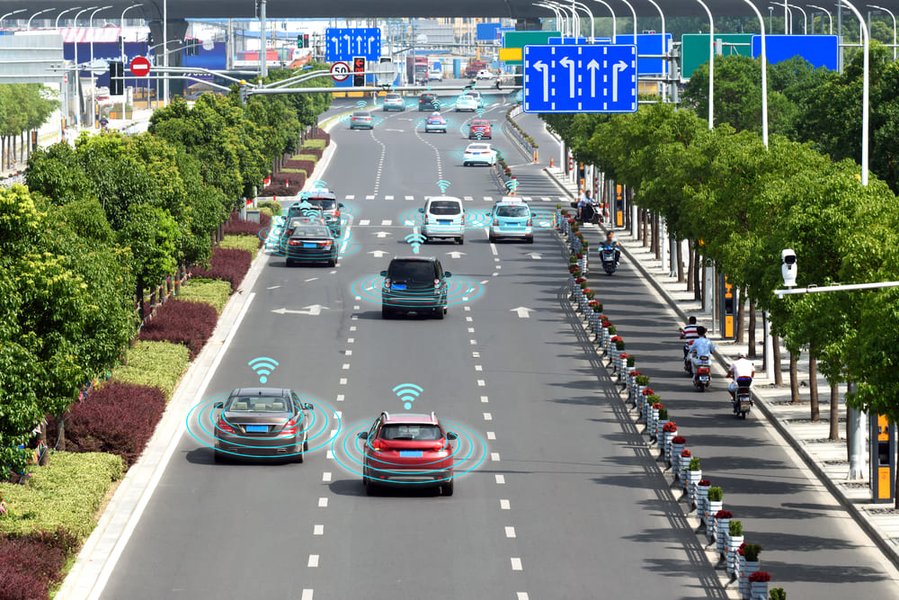
AI integrates data from multiple sensors to build a comprehensive view of the vehicle's environment.
Localization and Mapping: Knowing Where You Are
Pinpointing Position with Precision
For safe navigation, an autonomous vehicle must know its exact location. AI uses sensor data combined with pre-loaded high-definition (HD) maps and GPS information to achieve precise localization, often down to the centimeter level. Techniques like Simultaneous Localization and Mapping (SLAM) allow the vehicle to build a map of an unknown environment while simultaneously keeping track of its location within it.
Decision Making and Path Planning: Charting the Course
From Perception to Action
Once the AI understands the environment and the vehicle's place within it, it must decide what to do next. This involves:
- Predictive Modeling: AI algorithms analyze the behavior of other road users (vehicles, pedestrians) to anticipate their likely actions.
- Risk Assessment: The system evaluates potential risks and chooses the safest course of action.
- Path Planning: AI calculates the optimal trajectory for the vehicle, considering factors like traffic laws, road conditions, destination, passenger comfort, and fuel efficiency. This includes decisions like changing lanes, merging, turning, stopping, or accelerating.
- Handling Edge Cases: A significant challenge is programming AI to handle rare and unpredictable events ("edge cases"), such as unexpected obstacles, unusual pedestrian behavior, or severe weather conditions. AI simulations play a crucial role in training for these scenarios.
Control Systems: Executing the Plan
Translating Decisions into Physical Actions
Finally, the AI sends precise commands to the vehicle's actuators – the systems controlling steering, braking, and acceleration. These control systems execute the planned maneuvers smoothly and safely, constantly adjusting based on real-time feedback from the sensors.
Mapping the AI Ecosystem in Autonomous Vehicles
Several key AI technologies underpin the capabilities of self-driving cars. The mindmap below illustrates the interconnectedness of these essential components:
(Object/Lane Detection)"] id1_1_2["Unsupervised Learning
(Anomaly Detection)"] id1_1_3["Reinforcement Learning
(Driving Strategy Optimization)"] id1_2["Deep Learning (DL)"] id1_2_1["Neural Networks
(Perception & Decision Making)"] id1_2_2["Computer Vision
(Image/Video Analysis)"] id1_3["Sensor Fusion"] id1_3_1["Combining Data (LiDAR, Radar, Camera)"] id1_3_2["Creating Robust Environmental Model"] id1_4["Natural Language Processing (NLP)"] id1_4_1["Voice Commands"] id1_4_2["Passenger Interaction"] id2["Key Applications"] id2_1["Perception & Sensing"] id2_2["Localization & Mapping (SLAM)"] id2_3["Decision Making & Path Planning"] id2_4["Vehicle Control"] id2_5["Simulation & Testing"] id2_6["Advanced Driver-Assistance Systems (ADAS)"] id3["Impact Areas"] id3_1["Safety Enhancement"] id3_2["Traffic Optimization"] id3_3["Increased Accessibility"] id3_4["Efficiency (Fuel, Logistics)"] id4["Challenges"] id4_1["Handling Edge Cases"] id4_2["Cybersecurity"] id4_3["Ethical Dilemmas"] id4_4["Regulation & Standards"] id4_5["Public Trust & Acceptance"] id4_6["Data Requirements"]
This mindmap highlights how various AI disciplines converge to create autonomous driving systems. Machine Learning allows vehicles to learn from experience, Deep Learning powers perception, Sensor Fusion provides a complete environmental picture, and NLP enhances interaction.
Analyzing AI's Influence on Autonomous Driving Aspects
AI significantly impacts various facets of autonomous vehicle development and operation. The radar chart below provides an opinionated analysis of AI's current (as of 2025) influence level across key domains, scaled from 1 (Low Influence) to 10 (High Influence).
This chart illustrates that while AI profoundly impacts core functionalities like perception, safety, and decision-making, areas like regulation, public trust, and cybersecurity still require significant development and AI integration maturity. The long-term potential for cost reduction and traffic efficiency is high, though current influence is moderate as widespread deployment hasn't been achieved.
The State of AI in Automatic Vehicles: 2025 Snapshot
As of April 2025, the integration of AI in vehicles is rapidly progressing, moving beyond research labs and into commercial applications and consumer vehicles.
Levels of Autonomy and Market Penetration
The industry categorizes autonomous capabilities into levels (0-5). While fully autonomous Level 5 vehicles remain aspirational for widespread use, significant progress is evident:
- Level 2 (Partial Driving Automation): Features like adaptive cruise control, lane-keeping assist, and automated emergency braking, powered by AI, are becoming standard in many new vehicles. It's estimated that nearly 60% of cars sold globally by the end of 2025 will feature some Level 2 capabilities.
- Level 3 (Conditional Driving Automation): Vehicles with Level 3 autonomy, like Volvo's 2025 EX90 SUV, can handle most driving tasks under specific conditions (e.g., highways), but require the driver to be ready to intervene. These systems rely heavily on sophisticated AI.
- Level 4 (High Driving Automation): Vehicles operate fully autonomously within specific operational design domains (ODDs), like geofenced urban areas or dedicated highway routes. Robotaxi services (Waymo, Cruise, Baidu) and autonomous trucking pilots are key examples of Level 4 deployment in 2025.
Experts anticipate 2025 to be a significant year, particularly for autonomous trucking commercial operations in the US and large-scale commercialization efforts in China, aiming to improve urban transport efficiency.
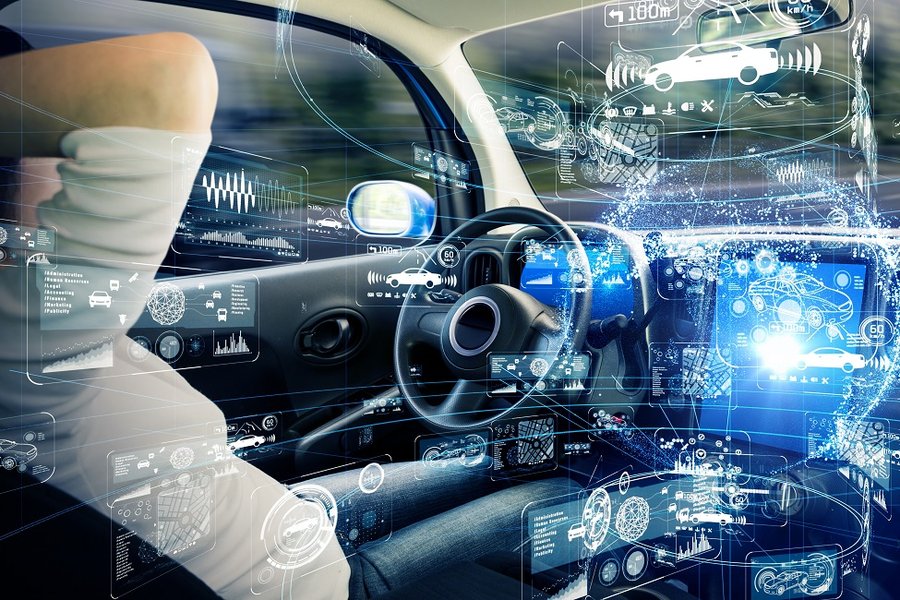
AI enables vehicles to navigate complex urban environments, paving the way for robotaxi services.
Key Players and Technological Advancements
Major automotive manufacturers (GM, Ford, Toyota, Tesla, Volvo) and technology giants (Waymo/Google, NVIDIA, Baidu) are investing heavily. Collaborations are common, such as GM's expanded partnership with NVIDIA (March 2025) to leverage AI platforms. Startups like Wayve (expanding to Asia in April 2025) and Kodiak (focused on trucking and public sector) are also pushing innovation. Generative AI is emerging as a tool to create synthetic data for training AI models more efficiently, helping tackle the challenge of acquiring vast real-world driving data.
Market Growth and Regional Trends
The global AI in self-driving cars market is experiencing robust growth. North America currently leads, driven by significant investment and testing. However, the Asia Pacific region is projected to see the fastest growth between 2025 and 2034, fueled by government initiatives and tech advancements, particularly in China. Projections suggest millions of autonomous vehicles could be operational on US roads within the next few years.
Transformative Benefits Driven by AI
The integration of AI promises numerous advantages:
- Enhanced Safety: AI systems can react faster than humans, don't get distracted or fatigued, and can process more information simultaneously, potentially reducing the vast majority of accidents caused by human error.
- Improved Traffic Flow and Efficiency: AI can optimize routes, reduce congestion through vehicle-to-vehicle (V2V) and vehicle-to-infrastructure (V2I) communication, and drive more smoothly, leading to better fuel economy and reduced emissions.
- Increased Accessibility and Mobility: Autonomous vehicles offer independent mobility for the elderly, people with disabilities, and others unable to drive.
- Greater Convenience and Productivity: Passengers can use travel time for work, rest, or entertainment instead of focusing on driving.
- New Business Models: AI enables services like robotaxis and autonomous delivery, transforming logistics and personal transport.
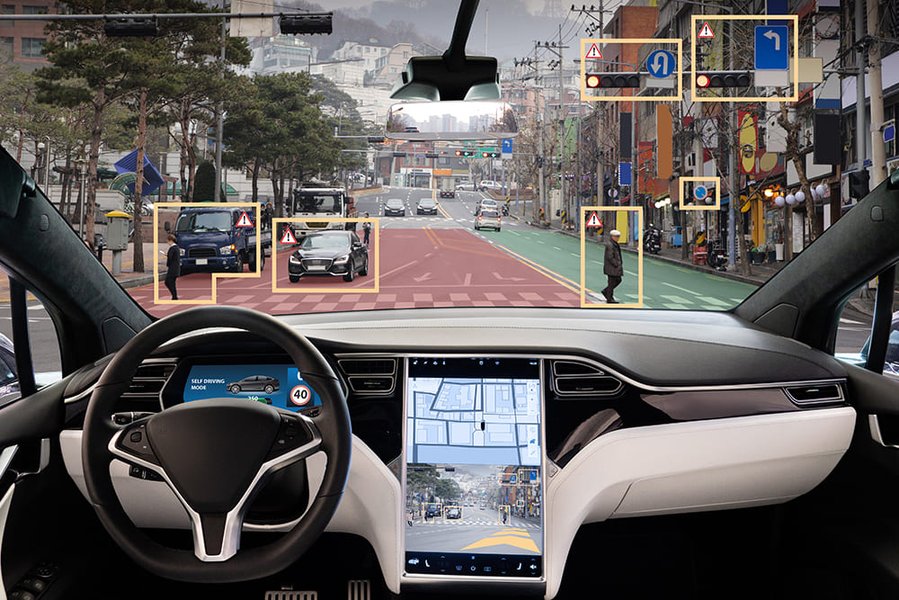
Companies like Tesla utilize AI for advanced driver-assistance systems and progress towards full self-driving capabilities.
Navigating the Roadblocks: Challenges and Ethics
Despite rapid progress, significant hurdles remain:
- Technological Complexity: Ensuring AI can reliably handle all possible driving scenarios, including rare "edge cases" and extreme weather, is a major technical challenge.
- Data Requirements: Training robust AI models requires massive amounts of diverse, high-quality data, which is costly and time-consuming to collect and label. Generative AI helps but doesn't fully replace real-world data.
- Safety Validation and Regulation: Establishing universally accepted standards for testing, validating, and certifying the safety of autonomous systems is crucial but complex. Regulations vary significantly by region.
- Cybersecurity Threats: Protecting connected autonomous vehicles from hacking and malicious attacks is paramount.
- Ethical Dilemmas: Programming AI to make decisions in unavoidable accident scenarios (the "trolley problem") poses significant ethical challenges.
- Public Trust and Acceptance: Building public confidence in the safety and reliability of autonomous vehicles is essential for widespread adoption. High-profile accidents can erode trust.
- Infrastructure Adaptation: Realizing the full benefits may require upgrades to road infrastructure and digital connectivity (e.g., 5G).
Key AI Technologies in Autonomous Driving
The table below summarizes the core AI technologies and their specific applications within automatic vehicles:
| AI Technology | Description | Application in Autonomous Vehicles |
|---|---|---|
| Machine Learning (ML) | Algorithms that learn patterns from data without explicit programming. | Object detection, lane recognition, behavior prediction, adapting driving style, learning from driving data. |
| Deep Learning (DL) | A subset of ML using neural networks with many layers to model complex patterns. | Powering computer vision for perception, complex decision-making, processing large sensor datasets. |
| Computer Vision | Enables computers to "see" and interpret visual information from cameras. | Identifying pedestrians, vehicles, signs, traffic lights; understanding road scenes; reading lane markings. |
| Sensor Fusion | Combining data from multiple sensors (camera, LiDAR, radar, etc.). | Creating a comprehensive, accurate, and robust real-time model of the vehicle's surroundings. |
| Reinforcement Learning (RL) | AI agents learn optimal behaviors by trial and error, receiving rewards or penalties. | Developing complex driving strategies, optimizing path planning, learning maneuvers in simulation. |
| Natural Language Processing (NLP) | Enabling computers to understand and process human language. | Voice command systems for infotainment and control, passenger interaction features. |
| Generative AI | AI capable of generating new content, including data. | Creating realistic synthetic driving scenarios and sensor data for training and testing AI models, especially for edge cases. |
Inside Look: AI and Machine Learning at Waymo
Understanding how leading companies leverage AI provides valuable insight. Waymo, a pioneer in autonomous driving technology, heavily relies on sophisticated AI and machine learning algorithms. This video delves into the specific ways Waymo utilizes these technologies to enable its self-driving cars to navigate complex real-world environments safely.
The video highlights the importance of vast datasets collected over millions of miles driven (both real and simulated) to train Waymo's AI. It likely touches upon their approach to perception using sensor fusion, prediction modeling for anticipating the actions of others on the road, and the rigorous testing protocols employed to ensure safety and reliability – core themes in the application of AI to autonomous driving.
Frequently Asked Questions (FAQ)
What level of AI is needed for a fully self-driving car?
Fully self-driving cars, typically classified as Level 4 or Level 5 autonomy, require highly advanced AI. This includes sophisticated deep learning models for perception and decision-making, robust sensor fusion capabilities, predictive modeling for complex interactions, and the ability to handle nearly all driving scenarios, including rare edge cases, without human intervention (Level 5) or within a defined operational design domain (Level 4).
How does AI make autonomous vehicles safer than human drivers?
AI aims to improve safety primarily by mitigating human error, which is a factor in the vast majority of accidents. AI systems don't get distracted, tired, or impaired. They can monitor the environment 360 degrees simultaneously, react faster than humans, and process data from sensors that perceive things humans cannot (like LiDAR in darkness). AI systems are constantly learning and improving based on data from millions of driven miles.
What are the main challenges preventing widespread adoption of AI-driven cars?
Key challenges include ensuring the AI can handle all possible "edge cases" and unpredictable events reliably, the high cost of sensors and computing hardware, establishing clear regulations and safety standards, cybersecurity concerns, ethical dilemmas in accident scenarios, and building public trust and acceptance. Additionally, the need for massive datasets for training remains a significant hurdle.
Can AI in cars learn and adapt over time?
Yes, a key strength of AI, particularly machine learning, is its ability to learn and adapt. Autonomous vehicle AI systems are continuously trained on new data gathered from real-world driving and simulations. This allows them to improve their performance, adapt to new road conditions or traffic patterns, and refine their driving strategies over time. Some systems can also adapt to individual driver preferences in lower levels of autonomy.
References
- AI in Self-Driving Cars: Revolutionizing Transportation - Quytech
- How AI Is Making Autonomous Vehicles Safer - Stanford HAI
- Artificial Intelligence in Autonomous Vehicles - Imagination Technologies
- How GenAI is helping drive vehicle autonomy - World Economic Forum
- Artificial Intelligence (AI) in Self driving Cars Market Report - Precedence Research
- AI Car Features You Need To Know About in 2025 - Kelley Blue Book
- How AI is Steering the Future of Self-Driving Cars? - Appventurez
Recommended
Last updated April 23, 2025