
Unmasking Hidden Threats: How AI Revolutionizes Defense Against Last-Mile Aggregation Attacks
Exploring intelligent strategies to secure the final, most vulnerable link in your data's journey.
Key Insights: Securing the Digital Frontier
- Last-Mile Vulnerability: Last-mile aggregation attacks exploit the final stage of data delivery, often within the user's browser, bypassing traditional network defenses by assembling malicious payloads or fragmented data client-side.
- AI as a Game Changer: Artificial Intelligence offers advanced capabilities like behavioral analysis, anomaly detection, and real-time threat intelligence to identify and neutralize these sophisticated attacks where conventional tools fall short.
- Evolving Defense Landscape: Innovative solutions, including AI-enhanced enterprise browsers and endpoint detection systems, are crucial for providing granular visibility and control over the last mile, adapting to the dynamic nature of cyber threats.
Understanding Last-Mile Aggregation Attacks
The "last mile" in cybersecurity is a critical battleground. It represents the final segment of data transmission, where information reaches the end-user's device, typically interacting within a web browser. This phase is increasingly targeted by sophisticated cyber threats known as last-mile aggregation attacks.
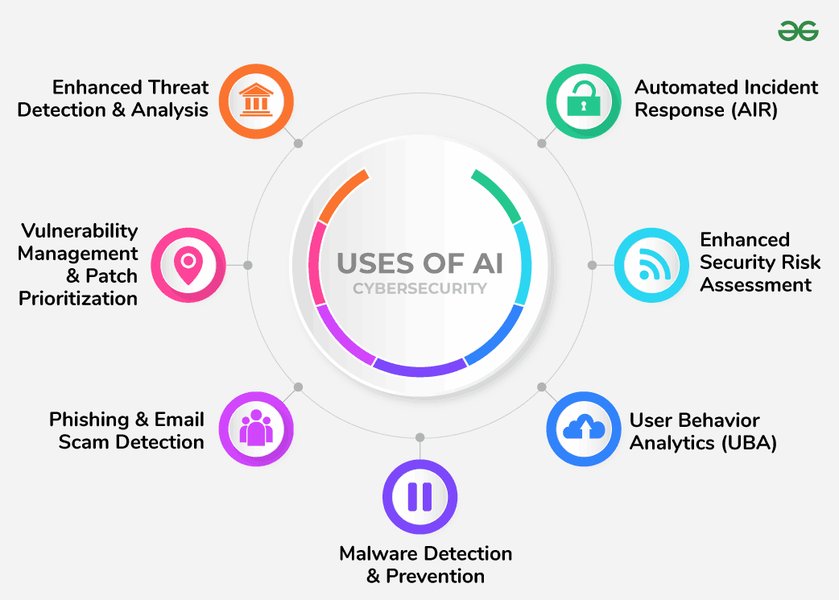
AI playing a crucial role in modern cybersecurity defenses.
What is the "Last Mile" in Cybersecurity?
In the context of cybersecurity, the "last mile" refers to the network segment connecting end-users to the broader internet infrastructure. This includes the physical and logical pathways that data traverses to arrive at a user's computer, smartphone, or other connected devices. It's where data is rendered, interacted with, and potentially manipulated, making it a prime target for attackers seeking to compromise end-user systems or exfiltrate sensitive information.
Defining Last-Mile Aggregation and Reassembly Attacks
Last-mile aggregation attacks are a category of cyber threats where attackers exploit the final stage of data delivery. These attacks can manifest in two primary ways:
- Payload Reassembly: Malicious payloads are broken into multiple, seemingly innocuous fragments. These fragments are transmitted separately, often through protocols like WebRTC, WebSockets, WebTransport, or embedded within file types such as WebAssembly modules, SVGs, CSS, or JavaScript. Once these fragments reach the client-side (e.g., the user's browser), they are reassembled to form the complete malicious payload, such as malware or ransomware. This is also known as a Last-Mile Reassembly (LMR) attack.
- Data Aggregation for Exploitation: Attackers collect and combine small pieces of seemingly harmless data from various sources (e.g., public databases, social media, application interactions) at the endpoint. This aggregated data profile can then be used for highly targeted social engineering, phishing campaigns, or to gain unauthorized access.
The core characteristic of these attacks is that the malicious activity—the aggregation or reassembly—occurs directly on the victim's device or within their browser environment, effectively bypassing many traditional network-based security measures.
Why Traditional Defenses Fall Short
Conventional cybersecurity solutions, such as Secure Web Gateways (SWGs), firewalls, and network intrusion detection systems, primarily focus on inspecting data packets as they traverse the network. However, they often face significant limitations in combating last-mile aggregation attacks:
- Lack of Client-Side Visibility: SWGs and similar tools typically analyze data at the network level and lack deep visibility into what happens once data reaches the endpoint and is processed by applications like web browsers. They cannot effectively monitor the dynamic assembly of code or data within the client environment.
- Protocol Blindness: Many modern web applications rely on protocols like WebSockets or WebRTC for real-time communication. These protocols are sometimes not fully inspected by traditional security tools to avoid breaking legitimate application functionality, creating blind spots for attackers.
- Encrypted Traffic: While essential for privacy, widespread encryption can also shield malicious fragments from inspection by network security tools if not decrypted and analyzed appropriately at the right point.
- Dynamic Content: Modern web pages are highly dynamic, with content and scripts often loaded and executed client-side. Traditional defenses struggle to distinguish malicious scripts from benign ones when payloads are assembled dynamically.
This gap in traditional defenses highlights the urgent need for innovative strategies, particularly those leveraging Artificial Intelligence, to effectively mitigate threats at the last mile.
The Transformative Role of AI in Last-Mile Defense
Artificial Intelligence (AI) is emerging as a crucial technology in fortifying the last mile against sophisticated aggregation and reassembly attacks. By moving beyond signature-based detection, AI introduces adaptive and intelligent capabilities to identify and neutralize threats that operate stealthily within the client environment.
AI-Powered Detection and Real-Time Monitoring
AI's strength lies in its ability to analyze vast amounts of data and identify subtle patterns indicative of malicious activity, often in real-time.
Contextual Analysis and Anomaly Detection
AI models can be trained to understand the normal behavior of applications, network traffic, and user interactions at the endpoint. By establishing a baseline, these systems can detect deviations and anomalies that may signal an attack. For instance, AI can identify unusual patterns in how file parts are downloaded or how different web protocols are being used, flagging suspicious client-side assembly of code or data that might otherwise appear as legitimate traffic to traditional tools.
Behavioral Analytics for User and Device Profiling
AI-driven behavioral analytics continuously monitor user sessions and device interactions. By learning typical user behavior (e.g., common applications used, data access patterns, typing cadence), AI can identify anomalies that suggest an account compromise or an insider threat attempting to aggregate sensitive information. If a user's browser suddenly starts communicating with unknown domains using specific protocols after downloading fragmented files, AI can flag this as high-risk behavior.
Intelligent Inspection and Filtering
Instead of broadly blocking protocols or file types, which can disrupt legitimate activities, AI enables more nuanced and intelligent inspection.
Protocol and Content Inspection
AI algorithms can perform deep analysis of traffic carried over protocols like WebRTC and WebSockets, or within complex file types such as WebAssembly modules, JavaScript, and CSS. Machine learning models can be trained to differentiate between benign multi-part downloads and the malicious assembly of payload fragments, even if those fragments individually seem harmless. Deep learning techniques can analyze embedded scripts and code structures to flag malicious elements hidden within seemingly innocuous files.
Endpoint and Browser-Level Scrutiny
AI-powered endpoint security solutions and specialized enterprise browsers can conduct intelligent, context-aware analysis directly on the user's device or within the browser. This includes monitoring file activity, process spawning, script execution, and API calls. Anomaly detection models can flag unauthorized script executions or modifications to client-side code that are characteristic of last-mile payload assembly.
Advanced AI-Driven Mitigation Techniques
AI facilitates proactive and adaptive defense mechanisms beyond simple detection.
Threat Intelligence Fusion and Predictive Defense
AI systems can ingest and correlate vast amounts of threat intelligence from diverse feeds with observed activity at the last mile. This fusion of information helps in identifying emerging attack vectors and predicting potential future attacks. By recognizing patterns associated with known attack campaigns or malware families, AI can proactively block or isolate threats before they fully execute.
Privacy-Preserving Data Aggregation
In scenarios like federated learning or secure multi-party computation, AI can be used to develop privacy-preserving data aggregation techniques. These methods allow for the collection and analysis of data from multiple sources while protecting individual privacy and detecting malicious contributions or attempts to poison the aggregated dataset.
Real-Time Payload Reconstruction and Neutralization
Some advanced AI solutions attempt to virtually reconstruct payloads from observed fragments at the endpoint. By simulating the reassembly process in a sandboxed environment or analyzing code execution behavior, these systems can identify and neutralize threats before they are written to disk or fully impact the user's system. Solutions like SquareX are pioneering this approach to stop attacks that evade traditional SWGs.
Visualizing AI Strategies for Last-Mile Security
To better understand the interconnectedness of AI strategies in combating last-mile aggregation attacks, the following mindmap illustrates key concepts and approaches. It highlights how various AI capabilities contribute to a more robust defense posture, from understanding the threat landscape to implementing specific technological solutions and considering future developments.
(Payload Reassembly, Malicious Data Compilation)"] TraditionalGaps["Limitations of Traditional Defenses
(e.g., SWGs, Firewalls)"] AIStrategies["Core AI Strategies & Capabilities"] DetectionMonitoring["AI-Powered Detection & Monitoring"] Anomaly["Real-time Anomaly Detection"] Behavioral["User & Entity Behavioral Analytics (UEBA)"] IntelligentInspection["Intelligent Inspection & Filtering"] ProtocolContent["Deep Protocol & Content Analysis (WebRTC, WebSockets)"] EndpointBrowser["Enhanced Endpoint & Browser-Level Scrutiny"] AdvancedMitigation["Advanced AI-Driven Mitigation"] ThreatIntel["Threat Intelligence Fusion & Correlation"] PayloadReconstruction["Client-Side Payload Reconstruction Analysis"] PrivacyPreserving["Privacy-Preserving Aggregation Techniques"] AISolutions["Emerging AI-Driven Solutions"] EnterpriseBrowsers["Secure Enterprise Browsers with Embedded AI"] SASE_ZTA["Augmentation of SASE & Zero Trust Architectures"] HybridModels["Hybrid AI Models (Edge Computing & Cloud Analytics)"] EndpointAI["AI-Enhanced Endpoint Detection & Response (EDR)"] ChallengesFuture["Challenges & Future Outlook"] ImplementationHurdles["Implementation Hurdles (Cost, Complexity, False Positives)"] RND_Needs["Research & Development Needs
(AI Explainability, Multi-Vector Threat Detection, Adversarial AI Defense)"]
Comparative Effectiveness of AI Strategies
Different AI-driven strategies offer varying strengths in mitigating last-mile aggregation attacks. The radar chart below provides an illustrative comparison of key AI approaches based on several critical factors. These evaluations are qualitative, reflecting general capabilities rather than precise metrics, and aim to show how each strategy contributes to a comprehensive defense. "Implementation Complexity (Lower is Better)" is inverted in scoring, meaning a higher score indicates lower complexity.
This chart illustrates that while strategies like Endpoint AI Agents and Intelligent Protocol/Content Inspection may offer high detection accuracy and real-time response, they might also present greater implementation complexity. Conversely, Threat Intelligence Fusion scores high on adaptability and has relatively lower implementation complexity. A balanced approach, often combining multiple AI strategies, is typically most effective.
AI-Driven Solutions and Emerging Approaches
The practical application of AI in mitigating last-mile aggregation attacks is taking shape through various innovative solutions and cybersecurity frameworks.
Visual representation of AI analyzing network data for anomalies.
Enterprise Browsers with Embedded AI
A new category of security solutions, known as enterprise browsers, is gaining traction. These are specialized web browsers designed with enhanced security and manageability features for organizational use. Many enterprise browsers integrate AI engines directly within the browser environment. This allows for real-time monitoring of user activity, script execution, and data handling at the "last inch" of the last mile. AI capabilities within these browsers can detect and prevent malicious client-side behaviors, such as unauthorized data aggregation or the execution of reassembled malware, offering granular control that traditional network security tools cannot provide.
Augmenting SASE and Zero Trust Frameworks
Secure Access Service Edge (SASE) and Zero Trust Architecture (ZTA) are modern cybersecurity frameworks that shift away from perimeter-based security. AI plays a vital role in enhancing these frameworks, particularly for last-mile security. AI can enforce Zero Trust principles by dynamically assessing risk based on user behavior, device posture, and contextual information at the endpoint. It complements SASE solutions by providing the necessary endpoint visibility and AI-driven threat detection capabilities that might be lacking in cloud-delivered SWGs, especially for client-side threats.
Hybrid Models: Edge AI and Cloud Analytics
An effective approach involves a hybrid AI model where lightweight AI agents operate at the edge (on endpoint devices or within enterprise browsers) for immediate threat detection and response. These edge AI components can perform initial analysis and handle common threats locally. They then feed telemetry and more complex or suspicious events to powerful cloud-based AI analytics platforms. These cloud platforms can perform deeper analysis, correlate data from across the organization, train more sophisticated models, and provide insights for threat hunting and continuous model improvement. This combination balances real-time responsiveness with advanced analytical power.
Deep Dive into Last-Mile Reassembly Attacks
The video below from SquareX provides a detailed explanation of Last-Mile Reassembly (LMR) attacks, a specific type of aggregation attack. It explores how these attacks leverage browser functionalities to bypass traditional security, and how new approaches, potentially involving AI-driven client-side detection, are necessary to counter them. Understanding the mechanics of LMR attacks is crucial for appreciating the innovative AI strategies being developed for mitigation.
Explaining the mechanics of Last-Mile Reassembly attacks and defensive considerations.
Comparing Traditional vs. AI-Driven Last-Mile Security
The shift towards AI-driven strategies represents a significant evolution in how last-mile threats are addressed. The following table compares key aspects of traditional security approaches with modern AI-enhanced methods for securing the last mile.
| Feature | Traditional Security (e.g., SWGs) | AI-Driven Last-Mile Security |
|---|---|---|
| Primary Focus | Network Perimeter, In-transit Data | Endpoint, Browser, Client-Side Execution & Data Handling |
| Visibility | Limited visibility into client-side processes and encrypted channels | Deep insight into client-side events, script execution, and data manipulation |
| Detection Method | Primarily signature-based, rule-based, known threat patterns | Behavioral analysis, anomaly detection, machine learning models, predictive analytics |
| Adaptability | Slower to adapt to new, zero-day, or evasive threats | Continuously learning and adapting to evolving threat landscapes |
| Protocol Handling | Often bypasses or has limited inspection for certain protocols (e.g., WebSockets, WebRTC) to preserve functionality | Intelligent inspection of a broader range of protocols and dynamic content |
| Payload Assembly Detection | Generally blind to client-side reassembly of fragmented payloads | Capable of detecting suspicious assembly of fragmented code or data |
| Response Time | Can be delayed, especially if analysis requires correlation across multiple network points | Real-time or near real-time detection and response capabilities, often automated |
| Contextual Awareness | Low to moderate, based primarily on network data | High, incorporating user behavior, device posture, application context, and threat intelligence |
| False Positives | Can be high with overly broad rules, or miss threats with too-narrow signatures | Aims to reduce false positives through more nuanced understanding, though model tuning is critical |
Challenges and Future Directions
While AI offers powerful new tools for combating last-mile aggregation attacks, its implementation is not without challenges. Furthermore, the field is continuously evolving, with ongoing research and development poised to address current limitations and future threats.
Overcoming Implementation Hurdles
- Complexity and Cost: Deploying and managing sophisticated AI security solutions can be complex and may require significant investment in technology and skilled personnel.
- Data Requirements: Effective AI models often require large volumes of high-quality data for training. Ensuring data privacy and integrity during this process is crucial.
- False Positives/Negatives: AI systems, while powerful, are not infallible. They can generate false positives (flagging benign activity as malicious) or false negatives (missing actual threats). Continuous tuning and human oversight are often necessary.
- Adversarial AI: Attackers are also exploring AI to develop more sophisticated attacks or to evade AI-based defenses (adversarial attacks). Security AI must evolve to counter these advanced tactics.
- Integration with Existing Infrastructure: Integrating new AI-driven solutions with legacy security systems and IT infrastructure can be challenging.
The Path Ahead: Research and Development Needs
- Explainable AI (XAI): A significant area of research is making AI decision-making processes more transparent and understandable. For security analysts, knowing *why* an AI flagged certain activity is crucial for trust and effective response.
- Enhanced Detection of Multi-Vector Aggregation: Attackers increasingly use multiple channels and techniques simultaneously. Future AI systems will need to become better at detecting these complex, coordinated attacks.
- Balancing Security and User Experience: AI-driven security measures must be carefully designed to minimize disruption to legitimate user activities and maintain a positive user experience.
- Automated Response and Orchestration: Further development in AI-powered security orchestration, automation, and response (SOAR) will enable faster and more consistent reactions to last-mile threats.
- Proactive Threat Hunting: AI can empower security teams by highlighting subtle indicators of compromise that might be missed by human analysts, enabling proactive threat hunting before major incidents occur.
Frequently Asked Questions (FAQ)
What exactly is a "last-mile aggregation attack"?
A last-mile aggregation attack is a cyberattack where malicious actors either reassemble fragmented malicious payloads (like malware) directly on the end-user's device or browser, or they collect and combine small, seemingly harmless pieces of data from various sources at the endpoint to build a profile for targeted attacks (e.g., phishing, social engineering). These attacks bypass traditional network security because the harmful action occurs in the final stage of data delivery, often client-side.
How does AI help detect threats that traditional security tools miss?
AI helps by moving beyond signature-based detection. It uses machine learning and behavioral analytics to establish baselines of normal user and system activity at the endpoint. When deviations or anomalous patterns occur (e.g., unusual file downloads followed by specific script executions, unexpected protocol usage), AI can flag these as potentially malicious, even if the individual components of the attack are unknown or appear benign in isolation. This allows detection of novel or evasive threats that traditional tools, focused on known malware signatures at the network level, might miss.
Are there any specific AI technologies used for this?
Yes, several AI technologies are employed, including:
- Machine Learning (ML): For pattern recognition, anomaly detection, and classifying behaviors as benign or malicious.
- Deep Learning: A subset of ML, used for analyzing complex data like scripts or network traffic patterns within protocols like WebSockets.
- Natural Language Processing (NLP): Can be used in analyzing content for phishing attempts or social engineering cues.
- User and Entity Behavior Analytics (UEBA): To model typical behavior and detect risky deviations.
- AI-driven Threat Intelligence Platforms: To correlate global threat data with local endpoint activity.
What are the main challenges in using AI for last-mile security?
Main challenges include:
- Complexity and Cost: AI solutions can be complex to implement and manage, requiring specialized expertise.
- Data Requirements: AI models need large, high-quality datasets for training, which can be difficult to acquire and manage securely.
- False Positives and Negatives: Balancing sensitivity to detect real threats without generating too many false alarms that overwhelm security teams.
- Adversarial Attacks: Attackers are actively trying to devise methods to deceive or bypass AI security models.
- Explainability: Understanding why an AI model makes a particular decision can be challenging, hindering trust and effective response.
- Resource Intensity: Some AI processes, especially deep learning, can be resource-intensive for endpoint devices.
Can AI completely eliminate last-mile aggregation attacks?
While AI significantly enhances our ability to detect and mitigate last-mile aggregation attacks, it's unlikely to completely eliminate them. The cybersecurity landscape is a constant cat-and-mouse game, with attackers continuously developing new techniques. AI provides a powerful adaptive defense, but it's one component of a comprehensive security strategy that should also include strong security hygiene, user education, regular patching, and defense-in-depth principles. AI greatly reduces the risk and impact of these attacks but is not a silver bullet.
Recommended
- How do enterprise browsers use AI to enhance last-mile security?
- What are the differences between last-mile reassembly attacks and traditional malware delivery methods?
- Explore case studies of AI successfully mitigating data aggregation threats on endpoints.
- What role does Zero Trust architecture play in preventing last-mile attacks when combined with AI?
References
Last updated May 20, 2025