
Unlocking the AI Universe: Demystifying AI, ML, and Deep Learning
Navigate the intricate landscape of Artificial Intelligence, Machine Learning, and Deep Learning, from foundational concepts to advanced practical applications.
Key Insights into AI, ML, and DL
- AI is the broad field: Artificial Intelligence encompasses any machine intelligence mimicking human cognitive functions like problem-solving and learning.
- ML is a subset of AI: Machine Learning enables systems to learn from data without explicit programming, identifying patterns and making predictions.
- DL is a subset of ML: Deep Learning utilizes multi-layered neural networks to process unstructured data, excelling in complex tasks like image and speech recognition.
The Concentric Circles of Intelligence: AI, Machine Learning, and Deep Learning
The terms Artificial Intelligence (AI), Machine Learning (ML), and Deep Learning (DL) are often used interchangeably, but they represent distinct, yet interconnected, concepts. Imagine them as concentric circles, where AI is the largest, ML is a significant subset within AI, and DL is an advanced subset nestled within ML. This hierarchical understanding is fundamental to grasping the scope and capabilities of each field.
Defining Artificial Intelligence (AI): The Grand Vision
AI is the overarching discipline of computer science dedicated to creating intelligent systems that can perform tasks traditionally requiring human cognitive abilities. This includes reasoning, problem-solving, learning from experience, perceiving and understanding environments, recognizing speech, and processing natural language. The ultimate goal of AI is to empower machines to mimic human-like intelligence, ranging from simple reactive systems to the ambitious pursuit of super-intelligent AI that could potentially surpass human intellect across all domains. Most current AI applications fall under what is known as Narrow AI, which is specifically designed to excel at particular tasks.
Unpacking Machine Learning (ML): Learning from Data
Machine Learning is a fundamental subset of AI that focuses on developing algorithms and statistical models, enabling computers to learn and improve autonomously from data without being explicitly programmed for every possible scenario. Instead of developers writing explicit rules for every input, ML systems are trained on vast datasets to identify underlying patterns, which then allows them to make predictions or informed decisions. This field employs a diverse array of algorithms, including decision trees, inductive logic programming, clustering techniques, reinforcement learning, and Bayesian networks. For instance, the facial recognition features in modern applications leverage ML algorithms to accurately identify individuals in images.
Exploring Deep Learning (DL): The Power of Neural Networks
Deep Learning stands as a specialized branch within Machine Learning. Its distinguishing characteristic is the use of artificial neural networks composed of multiple layers, drawing inspiration from the intricate structure and functionality of the human brain. These "deep" neural networks, typically comprising more than three layers, possess an exceptional ability to learn and adapt from massive amounts of unstructured data, such as raw images, audio files, or textual documents. Unlike traditional ML algorithms that often require human intervention to identify relevant features in data, DL can automatically discover and learn hierarchical and complex features on its own. This makes DL particularly potent for sophisticated tasks such as image recognition, speech processing, object detection, and natural language understanding. For example, deep learning has been instrumental in training machines to detect indicators of certain medical conditions in diagnostic scans, sometimes achieving higher accuracy than human experts.
In essence, while AI represents the ambitious aspiration to create intelligent machines, Machine Learning provides the methodology for these machines to learn from data. Deep Learning, in turn, offers an advanced, biologically inspired approach within ML that leverages multi-layered neural networks for autonomous and powerful pattern recognition in complex, unstructured data.
A comparative radar chart illustrating the capabilities and characteristics of AI, Machine Learning, and Deep Learning.
This radar chart visually represents the comparative strengths of AI, Machine Learning, and Deep Learning across several key attributes. As shown, Artificial Intelligence (AI) has the broadest scope, encompassing diverse applications and exhibiting the highest level of conceptual intelligence. Machine Learning (ML), as a subset, demonstrates strong capabilities in data-driven learning and pattern recognition, while Deep Learning (DL) excels particularly in handling unstructured data and achieving high accuracy through its intricate neural network architectures. The chart highlights how each field builds upon the last, offering increasingly specialized capabilities.
A Structured Learning Path for AI: From Beginner to Advanced
Embarking on a journey to master Artificial Intelligence, Machine Learning, and Deep Learning requires a structured and progressive learning approach. The field is vast and rapidly evolving, so a methodical path ensures a solid foundation and continuous advancement. Here's a recommended learning trajectory, incorporating practical skills and real-world applications.
Stage 1: Beginner - Laying the Conceptual Foundations
Begin your AI journey with introductory resources that provide a non-technical overview of AI concepts, its history, and its broad applications. The goal here is to establish a strong conceptual understanding before diving into technical details.
Recommended Resources:
- Andrew Ng's "AI For Everyone" on Coursera: This course is highly recommended for complete beginners. It offers a straightforward, non-technical overview of AI, explaining the core differences between AI, ML, and DL, and discussing AI's role in business, ethics, and society without requiring prior coding experience.
- Google's "AI Essentials" course: Another excellent starting point for understanding basic AI concepts and how AI tools can enhance efficiency.
These initial courses typically last 1-4 weeks and focus on developing skills such as understanding data ethics, AI governance, and recognizing simple AI applications in daily life. This foundational knowledge is crucial for building a comprehensive understanding of the field.
Stage 2: Intermediate - Diving into Practical Machine Learning
Once you have a firm grasp of the basics, the next stage involves hands-on learning with coding, algorithms, and practical Machine Learning techniques. This is where theoretical knowledge begins to translate into tangible skills.
Recommended Resources:
- Andrew Ng's "Machine Learning Specialization" on Coursera: Consistently cited as a top choice, this specialization involves building programs in Python, working with data structures, and applying fundamental ML algorithms like linear regression, logistic regression, and classification. It provides a solid foundation for aspiring data scientists and ML engineers.
- Google Cloud's "Introduction to AI and Machine Learning on Google Cloud": This resource offers interactive labs, allowing you to gain practical experience with essential tools like TensorFlow and BigQuery. It helps bridge the gap between theoretical understanding and practical deployment.
At this stage, you will develop skills in data handling, risk management associated with ML models, and basic model deployment. Expect to engage with quizzes, coding assignments, and practical projects to solidify your learning.
Stage 3: Advanced - Mastering Deep Learning and Specialized AI
For those seeking professional and high-level depth, the advanced stage focuses on specialized topics in Deep Learning, advanced neural network architectures, and real-world AI applications, including generative AI and MLOps.
Recommended Resources:
- Andrew Ng's "Deep Learning Specialization" on Coursera: This is considered the gold standard for advanced AI learning. It builds upon the ML specialization, covering deep neural networks, convolutional neural networks (CNNs) for computer vision, recurrent neural networks (RNNs) for sequence models, and generative AI. It also delves into practical aspects like hyperparameter tuning, regularization, and optimization.
- Google Cloud's "Machine Learning Operations (MLOps) for Generative AI" and "Build and Deploy Machine Learning Solutions on Vertex AI": These courses provide hands-on experience with deploying AI models in production environments, managing the lifecycle of ML systems, and working with advanced generative AI tools like Google's Gemini.
This stage emphasizes practical implementation, with a focus on ethical considerations and business applications of advanced AI systems. It is designed to equip learners with the skills to design, build, and deploy sophisticated AI solutions.
A mindmap illustrating a comprehensive roadmap for learning AI, Machine Learning, and Deep Learning, from foundational concepts to advanced practical applications.
This mindmap outlines a holistic learning journey through AI, Machine Learning, and Deep Learning. It starts with foundational AI concepts, progresses to practical Machine Learning skills including coding and algorithms, and then delves into advanced Deep Learning architectures and specialized applications. The map also emphasizes the crucial role of practical application and continuous engagement with the AI community.
The Best Single Video for Comprehensive AI Learning
You asked for a single, world-class video that covers everything from beginner to advanced levels, with professional depth and practical insights into AI, Machine Learning, and Deep Learning. While no single video can truly encapsulate the entirety of these vast and rapidly evolving fields, a series of introductory lectures from a highly acclaimed expert comes closest to meeting this demanding requirement.
Recommendation: Andrew Ng's "AI For Everyone" Course Lectures
Based on extensive recommendations, the introductory video lectures from Andrew Ng's "AI For Everyone" course on Coursera stand out as the best starting point. While it's a course rather than a single standalone video, its initial modules provide a cohesive, high-level overview that brilliantly sets the stage for deeper learning. Andrew Ng is a globally recognized leader and educator in AI, known for his clear, concise, and highly practical teaching style.
The "PyTorch for Deep Learning & Machine Learning – Full Course" video, a comprehensive resource for practical deep learning.
This video, while focused on PyTorch, provides a deep dive into practical deep learning, covering foundational concepts, neural networks, and various learning paradigms. It's an excellent resource for those ready to move beyond theoretical understanding into hands-on implementation and building real-world deep learning applications. Its structured approach and practical focus align well with the need for professional, high-level learning.
Why this recommendation?
- Comprehensive Overview: The initial lectures of "AI For Everyone" provide a straightforward, non-technical overview of what AI is, how it differs from Machine Learning and Deep Learning, and its real-world implications across various industries. This lays a solid intellectual foundation.
- Expert Instruction: Taught by Andrew Ng, a co-founder of Coursera and a leading figure in AI, the content is delivered with unparalleled clarity and authority.
- Professional Relevance: The course emphasizes the practical applications of AI in business and daily life, making it highly relevant for professionals seeking to understand how AI impacts various sectors.
- Path to Advanced Learning: Although introductory, it effectively builds a conceptual framework that prepares learners for more technical and advanced courses, such as Ng's Machine Learning and Deep Learning Specializations.
- Accessibility: As part of a Coursera course, these lectures are generally accessible and serve as an excellent entry point for those seeking world-class AI education.
While a single video cannot cover "everything" in detail for a field as vast as AI, the foundational lectures of "AI For Everyone" offer the most cohesive, high-level, professional, and practical introduction to the entire landscape of AI, ML, and DL. For those seeking deeper dives into coding and specific implementations, following up with Ng's Machine Learning and Deep Learning Specializations is the natural and highly recommended progression.

Visual representation of Artificial Intelligence encompassing Machine Learning, which in turn encompasses Deep Learning.
This image clearly illustrates the hierarchical relationship among Artificial Intelligence, Machine Learning, and Deep Learning. AI is the broadest concept, representing the overall endeavor to create intelligent machines. Machine Learning is a specific method within AI that enables systems to learn from data. Deep Learning is a specialized sub-field of Machine Learning that uses multi-layered neural networks for complex pattern recognition.
Understanding AI Applications in the Real World
Artificial Intelligence, Machine Learning, and Deep Learning are not just theoretical concepts; they are actively shaping various industries and aspects of our daily lives. Their applications span from enhancing efficiency to enabling groundbreaking discoveries.
AI in Healthcare
AI is revolutionizing healthcare by assisting with diagnosis, drug discovery, personalized treatment plans, and predictive analytics. For instance, deep learning models can analyze medical images like X-rays and MRIs to detect abnormalities with remarkable accuracy, sometimes even surpassing human capabilities. Machine learning algorithms are used to predict patient outcomes and identify individuals at risk for certain diseases, enabling proactive interventions.
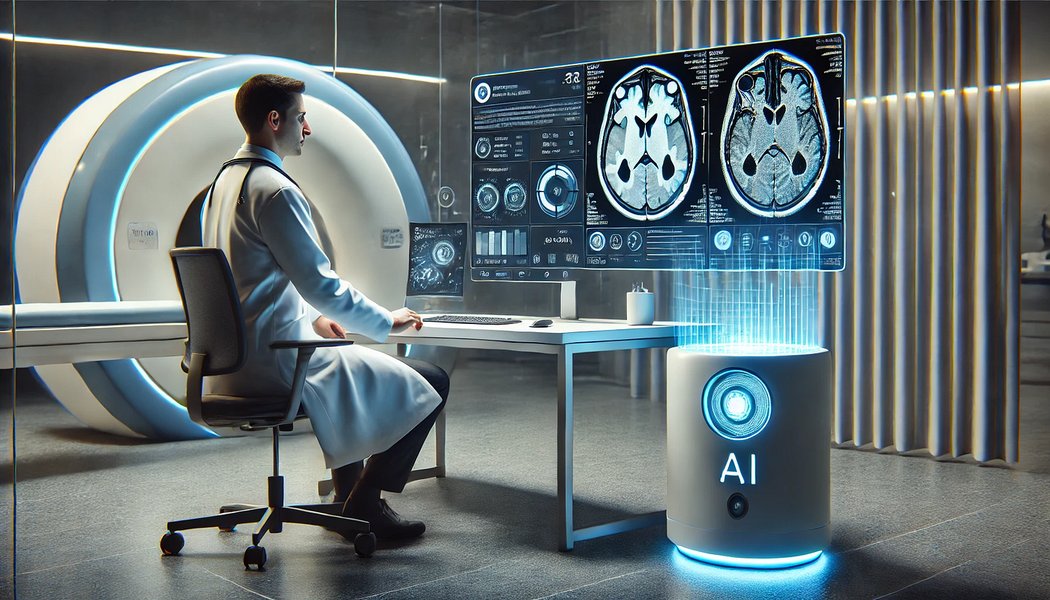
AI applications in healthcare, such as diagnostic imaging and personalized treatment plans.
AI in Finance
In the financial sector, AI and ML are used for fraud detection, algorithmic trading, risk assessment, and personalized financial advice. Machine learning models can quickly identify anomalous transactions that might indicate fraud, while deep learning can analyze market trends to inform trading strategies.
AI in Autonomous Systems
Autonomous vehicles, drones, and robotics heavily rely on AI, ML, and DL. Deep learning powers the perception systems that allow self-driving cars to recognize objects, pedestrians, and traffic signs. Reinforcement learning, a type of ML, is used to train robots to navigate complex environments and perform intricate tasks.

AI seamlessly integrated into daily life, from smart devices to recommendation systems.
AI in Natural Language Processing (NLP)
NLP, driven by deep learning, is behind technologies like virtual assistants (e.g., Siri, Alexa), language translation services, and sentiment analysis tools. These systems can understand, interpret, and generate human language, facilitating more natural human-computer interaction.
AI in Content Creation (Generative AI)
Generative AI, a cutting-edge area of deep learning, can create new content such as images, text, music, and even video. Models like DALL-E and ChatGPT are examples of generative AI producing highly realistic and diverse outputs from simple text prompts, transforming creative industries.

Generative AI in action, illustrating its capability to produce various forms of content.
Comparative Overview of AI, ML, and DL
To further clarify the distinctions and interrelations between AI, Machine Learning, and Deep Learning, the following table provides a concise comparative overview of their key characteristics, methodologies, and typical applications.
| Feature | Artificial Intelligence (AI) | Machine Learning (ML) | Deep Learning (DL) |
|---|---|---|---|
| Definition | Simulation of human intelligence in machines to perform cognitive tasks. | Subset of AI; systems learn from data to make predictions or decisions without explicit programming. | Subset of ML; uses multi-layered neural networks to learn from vast amounts of unstructured data. |
| Scope | Broadest concept; goal is to create intelligent machines. | Method to achieve AI; focuses on learning from data. | Advanced technique within ML; inspired by the human brain. |
| Learning Approach | Can be rule-based or data-driven (including ML/DL). | Learns from data through algorithms (e.g., regression, clustering, decision trees). | Learns through deep neural networks (e.g., CNNs, RNNs) and automatic feature extraction. |
| Data Dependence | Can function with less data (rule-based) or with data (ML/DL). | Requires structured data; performance improves with more data. | Requires vast amounts of data (especially unstructured); performance scales with data size. |
| Feature Engineering | Varies; depends on the specific AI approach. | Often requires manual feature engineering (human-defined features). | Automates feature extraction; learns features hierarchically. |
| Computational Power | Varies depending on complexity. | Moderate computational power required. | High computational power (GPUs) required for training. |
| Examples | Expert systems, chess-playing AI, self-driving cars, virtual assistants. | Email spam filtering, recommendation systems, fraud detection, predictive analytics. | Image recognition, speech recognition, natural language translation, generative AI. |
This table summarizes the core attributes, showing how AI is the encompassing field, with Machine Learning providing data-driven methods, and Deep Learning offering a powerful, neural-network-based approach for complex data and autonomous feature learning.
Frequently Asked Questions (FAQ)
What is the main difference between AI, ML, and DL?
Do I need to be a programmer to understand AI?
What are some real-world applications of Deep Learning?
How long does it take to learn AI from a beginner to an advanced level?
Is Andrew Ng's Deep Learning Specialization suitable for beginners?
Conclusion
Understanding the hierarchical relationship between Artificial Intelligence, Machine Learning, and Deep Learning is crucial for navigating the modern technological landscape. AI sets the grand ambition of intelligent machines, ML provides the data-driven methods to achieve this, and DL offers the powerful, biologically inspired approach through neural networks that underpins many of today's most advanced AI capabilities. For anyone seeking to learn and master these fields, a structured learning path, starting with conceptual understanding and progressively moving into practical, hands-on application with world-class resources like Andrew Ng's courses, offers the most effective route to professional depth and expertise. The journey is continuous, but the rewards of understanding and contributing to this transformative technology are immense.
Recommended Further Exploration
- How to build a machine learning model from scratch?
- Explore cutting-edge generative AI techniques and their practical applications.
- Dive into the critical ethical considerations in artificial intelligence development.
- What are the emerging future trends in artificial intelligence and deep learning?