
Unraveling the AI Universe: From Learning Machines to Autonomous Agents
Your guide to understanding AI, ML, DL, Neural Networks, NLP, Generative AI, and the rise of Agentic AI in 2025.
The world of Artificial Intelligence is vast and rapidly evolving. Terms like Machine Learning, Deep Learning, and Generative AI are frequently used, but understanding their specific meanings and relationships is crucial. Let's dive into these core concepts, explore how they interconnect, and see what trends are shaping the future of AI, particularly as we navigate 2025.
Key Insights into the AI Landscape
- AI is the broad field encompassing technologies that enable machines to simulate human intelligence, with Machine Learning (ML) as a major subset focused on learning from data.
- Deep Learning (DL), a specialized type of ML, uses multi-layered Neural Networks (NN) to tackle complex tasks like image recognition and natural language understanding, powering many modern AI breakthroughs.
- Emerging concepts like Generative AI (GenAI) focus on content creation, while Agentic AI represents the move towards autonomous systems capable of independent decision-making and action.
Defining the Building Blocks of Modern AI
Understanding the terminology is the first step to grasping the capabilities and potential of artificial intelligence. Here's a breakdown of the key concepts:
Artificial Intelligence (AI)
AI is the overarching discipline concerned with creating computer systems that can perform tasks typically requiring human intelligence. This includes activities like reasoning, problem-solving, learning, perception, decision-making, and understanding language. It's a broad field that incorporates many different approaches and subfields.
Machine Learning (ML)
Machine Learning is a fundamental subset of AI. Instead of being explicitly programmed for every possible scenario, ML algorithms enable computers to learn patterns and make predictions or decisions based on data they are exposed to. Key approaches within ML include:
- Supervised Learning: Training models on labeled data (input-output pairs).
- Unsupervised Learning: Finding hidden patterns or structures in unlabeled data.
- Reinforcement Learning: Learning through trial-and-error, receiving rewards or penalties for actions.
ML powers many applications we use daily, from spam filters to recommendation engines.
Deep Learning (DL)
Deep Learning is a specialized subfield within Machine Learning. It utilizes artificial neural networks with multiple layers (hence "deep") to analyze data and learn intricate patterns. These deep architectures allow models to process data in increasingly abstract ways, making DL particularly effective for complex tasks involving large datasets, such as:
- Image and video recognition
- Speech recognition and synthesis
- Natural Language Processing
DL models often require substantial amounts of data and significant computational power for training but can achieve state-of-the-art performance in many domains.
Neural Networks (NN)
The Engine of Deep Learning
Artificial Neural Networks (ANNs), often simply called Neural Networks, are the computational models that form the backbone of Deep Learning. Inspired by the structure and function of the human brain, NNs consist of interconnected nodes or "neurons" organized in layers. Each connection has a weight, and neurons apply transformations to the input data they receive before passing it on. Through training, the network adjusts these weights to learn complex relationships within the data.
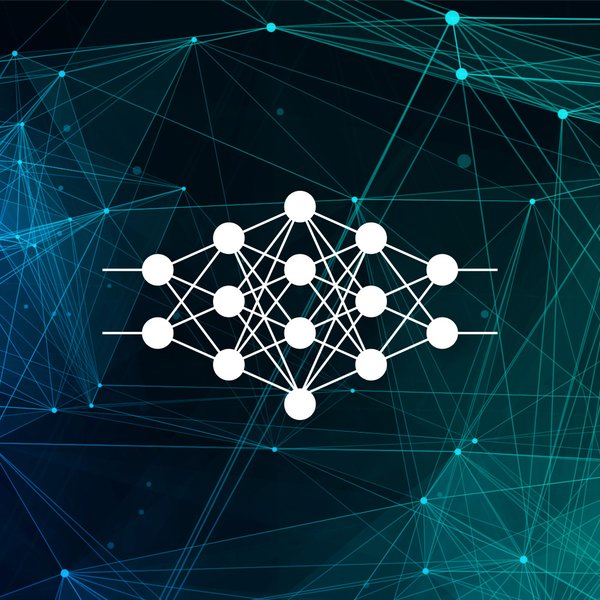
A visual representation of a multi-layered neural network.
While all DL models use NNs, not all NNs are considered "deep." Simpler NNs might only have one or a few layers.
Natural Language Processing (NLP)
NLP is a branch of AI (often heavily utilizing ML and DL) focused on enabling computers to understand, interpret, generate, and interact with human language (text and speech). Key applications include:
- Language translation
- Sentiment analysis
- Chatbots and virtual assistants
- Text summarization
- Speech recognition
Recent advancements, particularly with large-scale DL models known as transformers (like BERT and GPT models), have dramatically improved NLP capabilities.
Generative AI (GenAI)
Generative AI refers to AI systems, typically built using deep learning techniques, that can create entirely new content rather than just analyzing or classifying existing data. This content can include text, images, music, code, or video that mimics the patterns and styles learned from vast training datasets. Popular examples include:
- Text generation models (e.g., ChatGPT)
- Image generation models (e.g., DALL-E, Midjourney)
- Code generation assistants
GenAI represents a significant leap in AI's creative potential and is rapidly finding applications across various industries.
Agentic AI
Agentic AI represents a shift towards more autonomous AI systems. These are conceived as "agents" capable of perceiving their environment, setting goals, making independent decisions, planning actions, and executing them proactively to achieve those goals with minimal human intervention. Key characteristics include:
- Autonomy and proactivity
- Goal-oriented behavior
- Ability to learn and adapt from interactions
- Potential for collaboration with other agents (machine-to-machine interaction)
Agentic AI often combines ML, DL, reinforcement learning, and planning algorithms. As of 2025, this is a rapidly developing area with significant potential in fields like robotics, logistics, and complex system management, though it also brings new ethical and safety considerations.
Visualizing the Interconnections: An AI Mindmap
Understanding how these concepts relate to each other is key. AI is the broadest category, containing ML, which in turn contains DL. NNs are the technology powering DL. NLP and GenAI are major application areas often leveraging DL, while Agentic AI represents a move towards greater autonomy, building upon many of these underlying technologies.
Simulating Human Intelligence"] id1["Machine Learning (ML)
Learning from Data"] id2["Deep Learning (DL)
Using Deep Neural Networks"] id3["Neural Networks (NN)
Brain-Inspired Models"] id4["Generative AI (GenAI)
Creating New Content
(Often uses DL)"] id5["Natural Language Processing (NLP)
Understanding Human Language
(Often uses DL)"] id6["Other ML Methods
(Decision Trees, SVMs, etc.)"] id7["Agentic AI
Autonomous Goal-Driven Systems
(Builds on ML/DL/Planning)"] id8["Other AI Fields
(Robotics, Expert Systems, Vision)"]
This mindmap illustrates the hierarchical and interconnected nature of these AI fields.
Comparing Key AI Domains
Different AI domains vary in their characteristics, such as their reliance on data, computational needs, and level of autonomy. The radar chart below provides a comparative overview based on common attributes. Note that these are generalized assessments, and specific implementations can vary widely.
This chart highlights, for example, the generally higher data dependency and computational cost associated with Deep Learning and Generative AI compared to traditional ML, and the higher level of autonomy aimed for in Agentic AI.
AI Concepts Summarized
Here's a table summarizing the core definitions and relationships discussed:
| Term | Description | Relation to Others |
|---|---|---|
| Artificial Intelligence (AI) | Broad field focused on creating machines capable of tasks requiring human intelligence (reasoning, learning, perception). | The overarching umbrella concept; encompasses all other terms listed here. |
| Machine Learning (ML) | Subset of AI focused on algorithms that allow systems to learn from data without explicit programming. | A primary approach within AI; provides the learning capability for many AI systems. |
| Deep Learning (DL) | A specialized subset of ML utilizing multi-layered neural networks to model complex patterns in large datasets. | A type of ML; relies heavily on Neural Network architectures. Powers many advances in NLP and GenAI. |
| Neural Networks (NN) | Computational models inspired by the brain's structure, consisting of interconnected nodes (neurons) in layers. | The foundational technology/architecture used in Deep Learning. |
| Natural Language Processing (NLP) | A branch of AI focused on enabling computers to understand, interpret, and generate human language. | An application area of AI; often utilizes ML and especially DL techniques (e.g., transformers). |
| Generative AI (GenAI) | AI systems designed to create new content (text, images, code, etc.) based on learned patterns. | A type of AI application, often built using DL models (like GANs, transformers, diffusion models). |
| Agentic AI | AI systems designed as autonomous agents capable of perception, goal-setting, planning, and proactive action. | An advanced AI paradigm aiming for autonomy; builds upon ML, DL, planning, and reasoning techniques. |
AI Explained: Video Overview
For a visual and auditory explanation of some of these core concepts, this video from IBM Technology provides a helpful overview distinguishing between AI, Machine Learning, Deep Learning, and Generative AI.
The video covers the foundational definitions and provides context on how these technologies, particularly Generative AI powered by models like Large Language Models (LLMs), are evolving and impacting various fields.
Trends and the Future (2025 and Beyond)
The fields of AI and ML are constantly evolving. As of 2025, several key trends are shaping the landscape:
- Continued Dominance of Large Models: Large Language Models (LLMs) and other foundation models continue to drive progress in NLP and GenAI, though focus is shifting towards efficiency and specialization.
- Rise of Agentic AI: Increased research and development into autonomous AI agents capable of complex tasks and machine-to-machine collaboration, particularly in robotics, logistics, and scientific discovery.
- Multimodal AI: Systems capable of understanding and generating content across multiple modalities (text, image, audio, video) are becoming more sophisticated.
- Ethical AI and Responsible Development: Growing emphasis on addressing bias, ensuring fairness, transparency (Explainable AI - XAI), and developing robust safety protocols, especially for powerful GenAI and Agentic systems.
- AI in Cybersecurity: Increased use of ML and AI for threat detection, anomaly analysis, and automated response to cyberattacks.
- Breaking Down Data Silos: Greater focus on unifying disparate data sources to fuel more powerful AI/ML initiatives and enable comprehensive analytics.
- Edge AI: Performing AI computations closer to the data source (on devices) for reduced latency and improved privacy.

Advancements in AI are enabling more capable and potentially autonomous robotic systems.
These trends indicate a move towards more powerful, integrated, autonomous, and hopefully, more responsible AI systems impacting nearly every industry.
Frequently Asked Questions (FAQ)
What's the main difference between AI and ML?
Artificial Intelligence (AI) is the broad concept of creating machines that can simulate human intelligence. Machine Learning (ML) is a *subset* of AI that specifically focuses on developing algorithms that allow computers to learn from data without being explicitly programmed for every task. Think of AI as the overall goal, and ML as one of the primary methods (currently the most successful one) to achieve that goal.
Is Deep Learning always better than traditional Machine Learning?
Not necessarily. Deep Learning excels at tasks involving very large datasets and complex patterns (like image or speech recognition). However, it requires significant data and computational resources, and can be harder to interpret ('black box' problem). For simpler tasks, smaller datasets, or when interpretability is crucial, traditional ML algorithms (like decision trees, logistic regression, or SVMs) can be more efficient, faster to train, and easier to understand, often providing comparable or even better performance.
How does Generative AI actually create something new?
Generative AI models, often based on deep neural networks like Transformers or GANs (Generative Adversarial Networks), learn the underlying patterns, structures, and statistical distributions within massive datasets they are trained on (e.g., all the text on the internet, millions of images). When asked to generate something new (like writing a story or creating an image from a prompt), they use this learned knowledge to produce novel outputs that are statistically similar to the data they were trained on, essentially predicting the most probable sequence of words or arrangement of pixels based on the input and learned patterns.
What are the potential challenges or risks associated with Agentic AI?
Agentic AI, aiming for autonomous decision-making, brings unique challenges. Key concerns include: Safety and Control: Ensuring agents act reliably and predictably, especially in complex or unforeseen situations, and preventing unintended harmful actions. Alignment: Making sure the agent's goals truly align with human intentions and values, which can be difficult to specify perfectly. Accountability: Determining responsibility when an autonomous agent makes a mistake or causes harm. Explainability: Understanding why an agent made a particular decision can be difficult, hindering trust and debugging. Ethical Use: Potential misuse in areas like autonomous weapons or manipulation. Addressing these requires careful design, rigorous testing, and ongoing ethical oversight.
Recommended Reading
- Explore real-world applications of Generative AI across different industries.
- Understand the ethical considerations and challenges in developing advanced AI systems.
- Learn about the latest breakthroughs and models in Natural Language Processing.
- Compare different types of Neural Network architectures like CNNs, RNNs, and Transformers.
References

Last updated May 4, 2025