
AI & Machine Learning: Revolutionizing How the Printing Industry Operates
Discover how intelligent automation is enhancing efficiency, quality, personalization, and predictive capabilities in modern printing.
Key Transformations Driven by AI
- Enhanced Operational Efficiency: AI streamlines complex printing workflows, automating tasks from job scheduling and inventory management to prepress processes, significantly reducing manual effort and operational costs.
- Superior Print Quality & Accuracy: Machine learning models analyze data to optimize printing parameters and use computer vision for pre-production error detection, ensuring higher consistency, reduced waste, and improved final product quality.
- Advanced Personalization & Customer Engagement: AI leverages customer data and generative capabilities to enable highly personalized print runs, bespoke product designs, and tailored marketing materials, meeting the demand for unique customer experiences.
Streamlining the Entire Print Lifecycle with Intelligent Automation
The integration of Artificial Intelligence (AI) and Machine Learning (ML) is fundamentally reshaping the printing industry as of 2025. No longer a futuristic concept, AI is actively embedded in workflows, driving unprecedented gains in efficiency, precision, and adaptability. From traditional offset and digital printing to advanced additive manufacturing, intelligent systems are optimizing operations at every stage.
Automating Core Workflow Processes
AI excels at automating routine and complex tasks that traditionally consume significant time and resources. This automation spans the entire print lifecycle:
Intelligent Workflow Management
AI-powered print management systems orchestrate the entire production process. They can automatically handle customer inquiries, calculate job costs, schedule print runs based on machine availability and job priority, manage inventory levels, and optimize the use of resources like ink and substrates. This holistic approach streamlines operations, reduces bottlenecks, and improves overall throughput.
Prepress Automation
Prepress tasks, often prone to manual errors, are significantly simplified. AI tools automate file preparation, proofing, color management, and layout optimization. They can analyze incoming files, flag potential issues, suggest corrections, and determine the most efficient arrangement of jobs on a print sheet, minimizing material waste and setup time. Technologies like Optical Character Recognition (OCR) integrated with workflow automation extract and structure data from various documents, further simplifying processing.

AI-driven automation enhances control and efficiency in modern print production lines.
Layout Optimization
AI algorithms analyze design requirements, material constraints, and aesthetic considerations to generate optimized print layouts automatically. This ensures maximum material utilization, reducing waste and cost, while also guaranteeing that intricate designs are accurately placed for the best possible output.
Elevating Print Quality and Precision
AI and ML are pivotal in pushing the boundaries of print quality and consistency across diverse applications.
Pre-emptive Error Detection and Quality Assurance
One of the most impactful applications of AI is its ability to identify potential problems before they lead to costly errors and waste. Using techniques like computer vision and predictive analytics, AI systems scan digital print files and even monitor ongoing print jobs.
Automated Inspection
AI-powered inspection tools analyze designs for defects, color inconsistencies, misalignments, and other potential quality issues before printing even begins. These systems can simulate potential output flaws, allowing for corrective actions early in the workflow. During production, real-time monitoring systems can detect anomalies like smudges or fading, sometimes even making on-the-fly adjustments.
Predictive Quality Models
Machine learning models, trained on vast datasets of past print jobs and their outcomes, learn to predict how specific settings or conditions might affect final print quality. This allows for proactive adjustments and ensures a higher degree of repeatability and consistency, reducing reliance on manual quality checks.
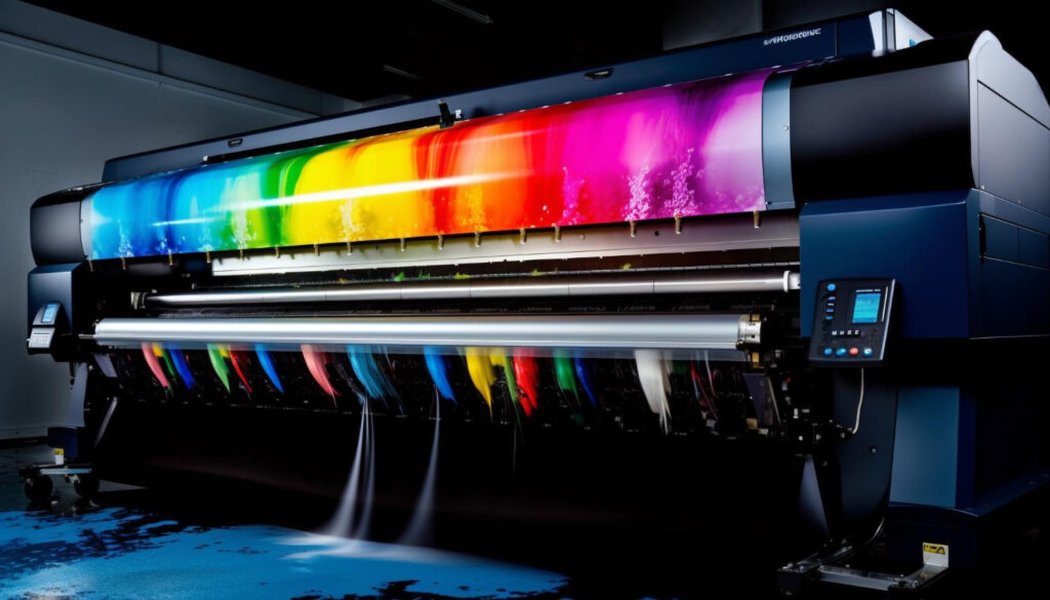
AI enhances quality control within futuristic, automated manufacturing environments.
Enhancing Additive Manufacturing (3D/4D Printing)
In the complex realm of 3D and 4D printing, AI and ML offer significant advantages:
Process Parameter Optimization
Additive manufacturing involves numerous variables (e.g., temperature, speed, material flow, layer height). AI models analyze real-time sensor data and simulation results to determine the optimal combination of parameters for specific materials and desired outcomes. This drastically reduces the trial-and-error typically involved, speeding up development and improving part quality.
In-Situ Monitoring and Control
Advanced systems use AI with both open-loop (predictive) and closed-loop (feedback-based) control. Machine learning algorithms monitor the printing process via sensors and cameras, detecting deviations or defects as they occur and adjusting parameters in real-time to compensate, ensuring higher quality and functional integrity of the printed parts.
Path Planning for Robotics
For multi-axis or robotic arm-based printing platforms, ML algorithms optimize the toolpath planning, enhancing movement efficiency, accuracy, and the speed of the printing process, especially for complex geometries.
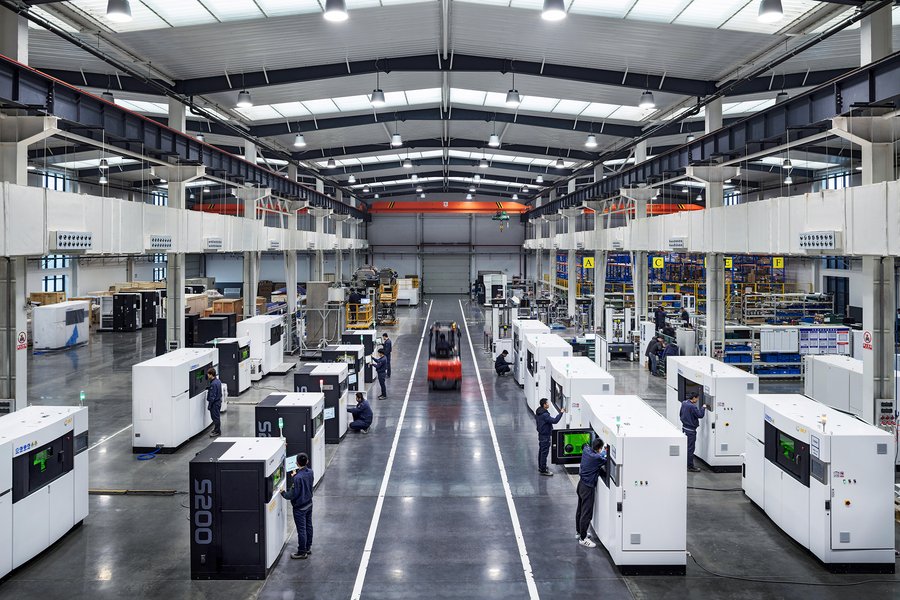
AI plays a crucial role in optimizing complex 3D printing production processes.
AI-Powered Predictive Maintenance
Minimizing Downtime, Maximizing Uptime
Unplanned equipment downtime is a major bottleneck in any production environment. AI-driven predictive maintenance addresses this challenge proactively. By continuously analyzing sensor data (vibration, temperature, acoustics, etc.) and operational logs from printing presses and other equipment, ML models can identify subtle patterns that indicate impending wear or potential failure. This allows maintenance teams to schedule interventions before a breakdown occurs, minimizing costly interruptions, reducing repair expenses, and extending the operational lifespan of valuable machinery.
Revolutionizing Personalization and Customer Experience
AI is enabling unprecedented levels of personalization in the printing industry, meeting the growing consumer demand for unique and tailored products.
Data-Driven Customization
AI algorithms analyze customer data, purchase history, and behavioral patterns to understand individual preferences. This insight allows printing businesses to offer:
- Personalized Marketing Materials: Creating direct mail or promotional items specifically tailored to the recipient's interests.
- Customized Print Runs: Efficiently producing short runs or even single items with unique designs or content.
- Bespoke Product Offerings: Developing entirely new products based on predicted customer needs or trends.
Generative AI in Design
Generative AI tools are streamlining the design process for custom products. They can assist users in creating unique graphics, patterns, or even product mockups with minimal effort, democratizing design and speeding up the creation of personalized items, particularly in the print-on-demand (POD) sector. AI tools specifically designed for POD simplify design creation, mockup generation, and overall workflow integration.
Enhanced Customer Interaction
AI can also enhance the customer experience through integrations like Augmented Reality (AR). Users could scan a printed item (like a brochure or packaging) with their smartphone to unlock interactive digital content, such as videos, 3D models, or purchasing options, creating a more engaging and informative experience.
Impact Assessment: AI/ML Across Printing Domains
The following chart provides an illustrative comparison of the estimated impact level of AI and Machine Learning across key areas within printing workflows, contrasting traditional methods with AI-enhanced approaches. The scale represents the relative level of improvement or capability offered by AI/ML integration.
As illustrated, AI/ML integration offers substantial enhancements across the board, particularly in areas like predictive maintenance, personalization, error reduction, and overall efficiency, marking a significant leap forward from traditional printing methodologies.
Mapping the AI Integration Landscape
This mindmap outlines the primary ways AI and Machine Learning are interwoven into modern printing workflows, highlighting the key areas of transformation:
This visual overview demonstrates the breadth and depth of AI's influence, touching nearly every facet of the printing process to drive innovation and efficiency.
Specific AI Applications and Benefits Summarized
The following table details specific applications of AI and ML within printing workflows and the primary benefits they deliver:
| Application Area | AI/ML Technique Utilized | Key Benefit(s) |
|---|---|---|
| Workflow Management | Optimization Algorithms, Scheduling AI | Increased throughput, reduced bottlenecks, streamlined operations |
| Prepress Automation | Computer Vision, OCR, Rule-Based Systems | Reduced manual errors, faster file preparation, improved consistency |
| Layout Optimization | Optimization Algorithms, Spatial Analysis | Minimized material waste, reduced printing costs, efficient use of space |
| Error Detection | Image Recognition, Anomaly Detection | Reduced reprints and waste, improved final product quality, early issue identification |
| Quality Control | Machine Learning Models, Computer Vision | Higher consistency, real-time adjustments, adherence to quality standards |
| Predictive Maintenance | Sensor Data Analysis, Predictive Modeling | Minimized downtime, extended equipment life, reduced maintenance costs |
| Personalization | Customer Data Analysis, Generative AI | Enhanced customer engagement, higher value products, ability to meet niche demands |
| 3D/4D Printing Optimization | ML Parameter Tuning, Real-Time Control Systems | Improved part quality and functionality, reduced trial-and-error, faster production |
| Resource Management | Predictive Analytics, Optimization AI | Optimized inventory, reduced energy consumption, lower operational costs |
Insights on AI in Print Workflows
For a deeper dive into how software companies are thinking about integrating AI into print workflows, consider this presentation from FuturePrint TECH 2023. David Stevenson from Global Graphics Software discusses the practicalities and potential of introducing AI technologies into the printing environment.
This presentation provides valuable context on the software side of AI integration, complementing the hardware and process perspectives. It highlights the considerations involved in developing and implementing AI solutions specifically tailored for the complexities of print production.
Frequently Asked Questions (FAQ)
What are the main benefits of integrating AI into printing?
The primary benefits include significantly enhanced operational efficiency (through automation), improved print quality and consistency (via error detection and process optimization), reduced costs (less waste, lower energy consumption, optimized maintenance), faster turnaround times, and the ability to offer highly personalized products and services, which boosts customer engagement and market competitiveness.
How does AI improve print quality control?
AI improves quality control through several mechanisms:
- Pre-production analysis: Scanning digital files for potential defects, color issues, or layout errors before printing starts.
- Real-time monitoring: Using computer vision during the printing process to detect anomalies like smudges, streaks, or color deviations.
- Predictive quality: Using ML models to predict how settings will impact the final output and adjusting parameters proactively.
- Automated adjustments: In some advanced systems, AI can make minor adjustments during the print run to maintain consistent quality.
Is AI technology only beneficial for large printing corporations?
No, while large corporations might have more resources for extensive AI implementation, small to medium-sized enterprises (SMEs) can also benefit significantly. Many AI tools, especially cloud-based solutions and those integrated into existing software (like workflow automation or design tools), are becoming more accessible. SMEs can focus on specific high-impact areas like automated prepress checks, basic predictive maintenance alerts, or using AI-powered design tools for personalization, gaining competitive advantages without massive initial investment.
What are the challenges in implementing AI in printing workflows?
Key challenges include:
- Data Requirements: AI models require large amounts of high-quality data for training, which may not always be readily available or well-organized.
- Implementation Costs: Initial investment in AI software, hardware (sensors), and integration can be significant.
- Complexity: Developing, implementing, and maintaining AI systems requires specialized expertise.
- Integration: Ensuring AI tools integrate seamlessly with existing legacy systems (MIS, ERP, presses) can be complex.
- Change Management: Training staff and adapting existing workflows to incorporate AI requires careful planning and management.
References
-
Optimization of 4D/3D printing via machine learning: A systematic review on state-of-the-art methods and prospects - ScienceDirect
- Implementation of AI-supported workflow optimisation in the printing industry - drupa
- Top Industry Predictions for AI Printing by 2026 - Tricerat
- The Impact of Artificial Intelligence in the Printing Industry - Exile Technologies
- How AI Will Revolutionize Custom Printing by 2025 - SetuBridge
- Automation and AI Set to Transform the Printing Industry by 2025 - AutomationXAI
- Top Real-World AI Applications in the Printing Industry - Biz4Group
Recommended Reading
Last updated April 23, 2025