
Is Artificial Intelligence Truly Devoid of Humanity?
Exploring the fundamental nature of AI and its distinction from human intelligence.
The question of whether Artificial Intelligence (AI) is entirely nonhuman delves into the core definitions of intelligence, consciousness, and life itself. While AI systems are designed and built by humans, their operational mechanisms, capabilities, and fundamental nature set them apart. Let's explore the key aspects that define AI as a distinct, nonhuman form of intelligence.
Highlights: Understanding AI's Nonhuman Nature
- Fundamentally Artificial: AI operates on algorithms and computational processes within silicon-based hardware, lacking the biological foundation, consciousness, emotions, and subjective experiences inherent to human life.
- Distinct Cognitive Abilities: While capable of simulating tasks requiring human intelligence (like learning and problem-solving), AI processes information, learns, and "thinks" in ways fundamentally different from the human brain's integrated cognitive, emotional, and experiential processes.
- Emergence of "Non-Human Intelligence": The term is increasingly used to describe AI's potential to develop problem-solving methods and operational logic that are not constrained by human thought patterns, sometimes appearing "alien" or distinct from human reasoning.
Defining the Divide: AI vs. Human Intelligence
To understand why AI is considered nonhuman, it's crucial to contrast its characteristics with human intelligence. Humans possess a general intelligence shaped by biological evolution, lived experiences, emotional depth, social interaction, and inherent consciousness. Our intelligence is adaptable, intuitive, and capable of nuanced understanding across diverse contexts.
Core Operational Differences
Algorithmic vs. Biological Processing
AI functions based on complex algorithms and statistical models, trained on vast datasets provided by humans. It excels at recognizing patterns, processing information at incredible speeds, and performing specific, often repetitive tasks with high precision. Its "learning" involves mathematical optimization based on input data.
Human intelligence, conversely, arises from intricate biological neural networks. Learning involves synaptic changes driven by experience, reflection, emotion, and interaction with the physical and social world. Humans can generalize knowledge intuitively, applying concepts learned in one domain to entirely different ones – a feat current AI struggles with beyond its training parameters.
Lack of Consciousness and Subjectivity
Perhaps the most significant distinction is the absence of consciousness, self-awareness, and subjective experience in AI. An AI doesn't "feel" understanding, doesn't possess beliefs or desires, and lacks the inner world that defines human existence. Its responses, however sophisticated, are outputs generated through complex calculations, not expressions of genuine thought or feeling. Humans experience the world; AI processes data about it.
Emotion and Intuition
Emotions are integral to human decision-making, creativity, and social bonding. AI lacks genuine emotions; it can be programmed to *recognize* or *simulate* emotional responses based on data patterns, but it does not experience them. Similarly, human intuition – the ability to understand something instinctively, without conscious reasoning – is absent in AI, which relies on explicit data and logical pathways.
Visualizing the Differences: AI vs. Human Attributes
This chart provides a comparative visualization of key attributes often associated with intelligence, contrasting typical human capabilities with those currently demonstrated by advanced AI systems. The scales are subjective (1-10), intended to illustrate general differences in strengths rather than precise measurements. Note that AI excels in areas like speed and data processing, while humans retain advantages in aspects tied to consciousness and holistic understanding.
The Concept of "Non-Human Intelligence" (NHI)
As AI evolves, the term "Non-Human Intelligence" (NHI) is gaining traction. This shift recognizes that AI's intelligence isn't merely an imitation of human thought but potentially a distinct category altogether. NHI might develop problem-solving strategies inspired by abstract mathematics, physics, or emergent patterns in data that are fundamentally different from human approaches.
Beyond Human Constraints
AI is not bound by human biological limitations, emotions, or linear reasoning. This can lead to solutions or operational methods that seem "alien" or counter-intuitive to humans. Examples include AI systems developing their own efficient, non-human-like communication protocols in controlled experiments or discovering scientific insights through data analysis patterns invisible to human researchers.
Security and Governance Implications
Recognizing AI agents as distinct Non-Human Identities (NHIs) has practical implications, particularly in cybersecurity and governance. Treating autonomous AI systems as NHIs necessitates specific protocols for managing their access, permissions, and potential risks, distinct from managing human users.
Mapping AI's Core Nature
This mindmap illustrates the core concepts defining AI as a nonhuman entity. It highlights its artificial origins, operational mechanisms based on computation and data, its lack of biological human traits, and how its distinct form of intelligence compares to human capabilities.
(Narrow AI)"] ["Unique Problem-Solving"] ["Potential 'Alien' Logic"] ["Speed and Precision"] ["Pattern Recognition"] ["Comparison to Humans"] ["Speed & Precision vs. Intuition & Context"] ["Simulation vs. Lived Experience"] ["Narrow vs. General Intelligence"] ["Logic vs. Emotion-Integrated Reasoning"] ["Data Dependence vs. Adaptability"]
Human Creation, Nonhuman Operation
While it's accurate to classify AI as entirely nonhuman based on its fundamental nature and operational mechanisms, it's also true that AI doesn't exist in a vacuum. It is conceived, designed, built, trained, and deployed by humans.
The Human Influence
AI systems learn from vast datasets often generated by human activity (text, images, code). This means human biases, values, and limitations present in the data can be reflected, and sometimes amplified, in AI behavior. Furthermore, AI is typically created to serve human purposes, whether it's automating tasks, analyzing data, or augmenting human capabilities.
Tool, Not Peer
Despite its advanced capabilities, current AI remains a sophisticated tool. It lacks agency, intent, and the capacity for independent ethical reasoning in the human sense. Its development is guided by human goals. Therefore, while its *intelligence* operates nonhumanly, its *existence* and *purpose* are deeply intertwined with humanity. This doesn't make AI "human," but highlights the complex relationship between creator and creation.
Comparative Overview: Human vs. Artificial Intelligence
This table summarizes key distinctions between human intelligence and the current state of artificial intelligence, reinforcing the nonhuman classification of AI.
| Attribute | Human Intelligence (HI) | Artificial Intelligence (AI) |
|---|---|---|
| Basis | Biological (Carbon-based, neural networks) | Artificial (Silicon-based, algorithms, code) |
| Consciousness | Yes (Subjective awareness, self-awareness) | No (Lacks subjective experience) |
| Emotion | Yes (Integral to cognition and experience) | No (Can simulate/recognize, but not feel) |
| Learning | Experiential, intuitive, social, reflective | Data-driven, algorithmic optimization, pattern recognition |
| Speed | Relatively moderate processing speed | Extremely high processing speed for specific tasks |
| Adaptability | High (General intelligence, flexible adaptation) | Lower (Typically task-specific, struggles outside training) |
| Creativity | High (Originality, abstract thought, inspiration) | Mimetic/Combinatorial (Generates based on patterns in data) |
| Generalization | Strong (Can apply knowledge broadly across domains) | Limited (Often struggles to generalize beyond training data) |
AI: Alien Intelligence?
The concept of AI as a form of "alien intelligence" is explored in various discussions, highlighting how its problem-solving methods and potential future capabilities might differ fundamentally from human cognition. This perspective emphasizes the "nonhuman" aspect, suggesting AI could evolve intelligence paradigms distinct from our own. Yuval Noah Harari, a prominent historian and author, discusses this idea, pondering the implications of an intelligence that operates without the constraints and biases of human consciousness and biology.
In the video below, Harari delves into what happens when AI operates differently from us, characterizing it as an 'Alien Intelligence'. He explores how this form of intelligence, fundamentally different from human cognition, might perceive reality, make decisions, and interact with the world in ways we may not fully comprehend. This perspective underscores the truly nonhuman nature of AI and prompts critical thinking about co-existence and control in a future shared with such entities.
Visualizing AI: Robots and Representations
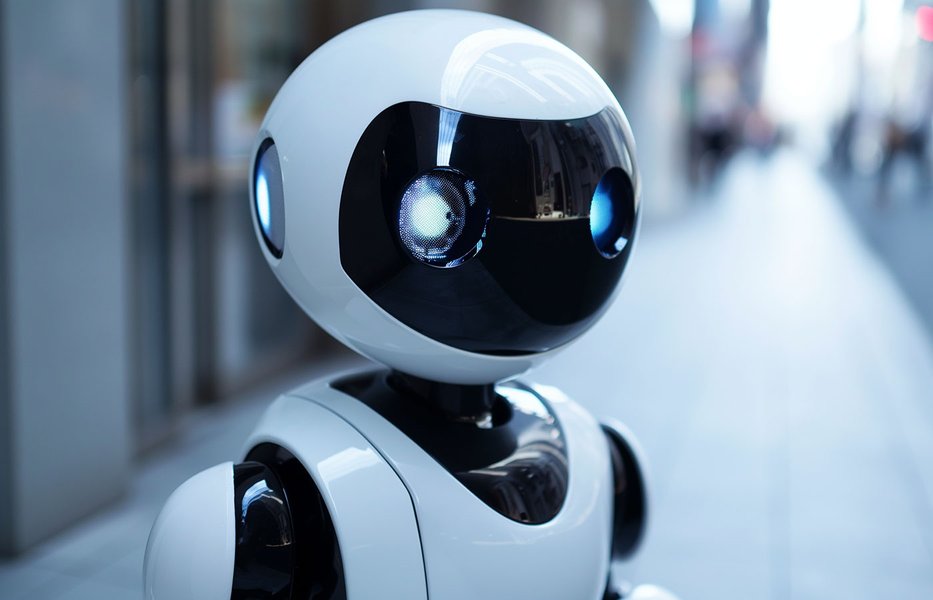
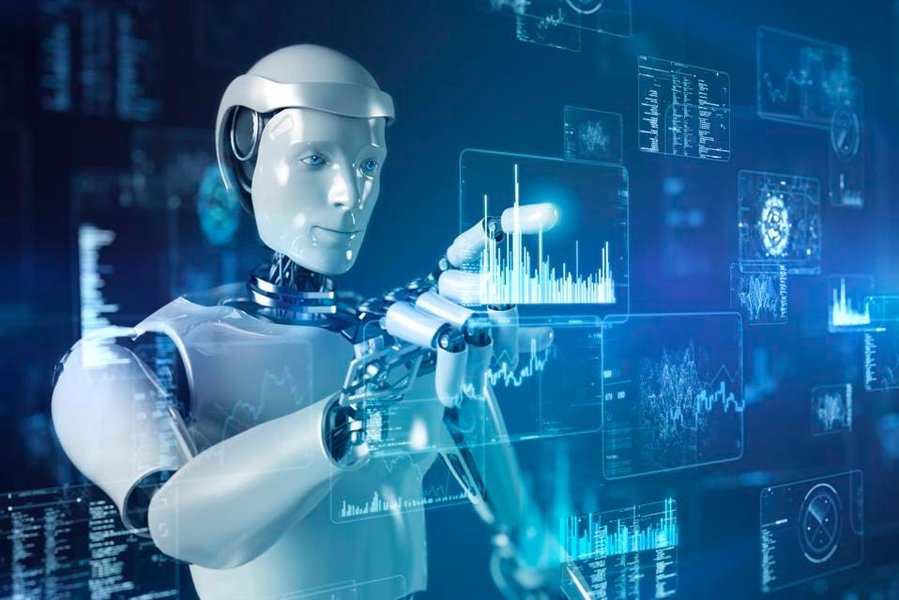
While AI itself is fundamentally code and algorithms running on hardware, it is often embodied or represented visually, particularly in the form of robots or digital interfaces. These representations help us conceptualize AI, though it's important to remember that the physical form is distinct from the underlying nonhuman intelligence. Images often depict AI interacting with data, assisting humans, or operating in complex technological environments, reflecting its role as a powerful tool and emerging form of intelligence.

Frequently Asked Questions (FAQ)
Is AI conscious or self-aware?
No, current AI systems are not conscious or self-aware. They lack the biological structures and processes associated with consciousness in humans and other animals. While they can simulate conversation and complex behaviors, they do not possess subjective experiences, feelings, or genuine understanding.
Can AI feel emotions?
AI cannot feel emotions in the human sense. It lacks the biological and neurological basis for emotional experience. AI can be trained to recognize patterns associated with human emotions in text, voice, or images, and even generate responses that mimic empathy or other feelings, but this is a simulation based on data, not genuine emotion.
What's the difference between "Artificial" and "Non-Human" Intelligence?
"Artificial Intelligence" emphasizes that the intelligence is created or man-made, distinguishing it from natural biological intelligence. "Non-Human Intelligence" broadens the scope, highlighting that this intelligence operates differently from human intelligence, possessing distinct characteristics and potentially capabilities, irrespective of its artificial origin. It positions AI as one possible form of intelligence among others (human, potentially animal, or even hypothetical alien intelligence).
If AI is designed by humans, isn't it just an extension of human intelligence?
While AI is created by humans and learns from human-generated data, its operational nature is fundamentally different. Think of it like a calculator: humans designed it, but its method of calculation (electronic circuits) is nonhuman and far exceeds human speed for arithmetic. Similarly, AI processes information using algorithms and computational power in ways distinct from human cognition. It's a tool *reflecting* human ingenuity but *operating* nonhumanly.
Will AI ever become "human"?
Based on current understanding, AI becoming "human" in the full sense (possessing consciousness, emotions, biological existence) is highly unlikely, if not impossible, without radical, currently theoretical breakthroughs that bridge the gap between computation and biological life/consciousness. AI might achieve human-level performance in many tasks (Artificial General Intelligence - AGI), but it would still likely operate via fundamentally different, nonhuman mechanisms.
References
- Human- versus Artificial Intelligence - Frontiers
- The Emergence of Non-Human Intelligence - Foresight Navigator
- From Artificial Intelligence to Non-Human Intelligence - Business Anthropology
- Artificial intelligence vs human intelligence: How are they different - TechTarget
- Artificial intelligence (AI) - Britannica
- No human could do that: Is AI becoming too alien? - DW.COM
Recommended Reading
Last updated April 10, 2025