
Exploring the Landscape of AI Platforms and Tools in 2025
A Comprehensive Look at Leading AI Solutions and Their Applications
Artificial intelligence continues to evolve rapidly, offering a diverse range of tools and platforms designed to enhance productivity, automate tasks, and drive innovation across various sectors. From large language models powering conversational agents to specialized tools for coding, design, and research, the AI landscape in 2025 is rich with options. This response delves into some of the prominent AI platforms and tools currently making an impact, highlighting their key features and use cases.
Key Highlights in the AI Landscape
- Diverse Applications: AI tools and platforms are available for a wide array of tasks, including content creation, coding, data analysis, research, and customer service, catering to both individuals and businesses.
- Leading Models and Platforms: Prominent names like ChatGPT, Claude, Gemini, and platforms from tech giants such as Google Cloud, Microsoft Azure, and AWS continue to lead the charge, offering powerful capabilities for various AI-driven initiatives.
- Specialized Tools Emerge: Beyond general-purpose AI, a growing number of specialized tools are gaining traction for specific needs, such as AI coding assistants, video generators, and research tools.
Understanding AI Platforms and Tools
AI platforms and tools encompass a broad spectrum of technologies designed to leverage artificial intelligence for a multitude of purposes. AI platforms typically provide the underlying infrastructure and services for developing, training, and deploying AI models and applications. AI tools, on the other hand, are often more focused applications designed for specific tasks or use cases, frequently built upon or integrating with these larger platforms.
The Role of AI Platforms
AI platforms serve as the foundation for building and scaling AI solutions. They offer essential capabilities such as data processing, model training, and deployment tools. Major cloud providers are key players in this space, offering robust AI platforms with a wide range of services.
Leading AI Platforms and Models
Several AI platforms and models stand out in the current landscape due to their capabilities, versatility, and widespread adoption. These range from powerful language models that can generate human-like text to comprehensive cloud-based platforms offering a suite of AI services.
Generative AI Models
Generative AI models have gained significant attention for their ability to create new content, whether it's text, images, music, or code. Some of the most prominent include:
- ChatGPT: Developed by OpenAI, ChatGPT is a highly popular chatbot and language model known for its conversational abilities and wide range of applications, from writing assistance to brainstorming.
- Claude: Created by Anthropic, Claude is another powerful language model recognized for its detailed responses and strong performance in various text-based tasks.
- Gemini: Google's family of multimodal models, Gemini, is designed to understand and operate across different types of information, including text, images, audio, video, and code.
- Grok: Developed by xAI, Grok is an AI designed to answer questions with a bit of wit and a rebellious streak.
Cloud-Based AI Platforms
Major technology companies offer comprehensive cloud platforms that provide extensive AI services and infrastructure for developers and businesses.
- Google Cloud AI Platform / Vertex AI: Google Cloud offers a powerful suite of AI tools and services through its AI Platform and Vertex AI, catering to various machine learning needs, from data preparation to model deployment.
- Microsoft Azure AI: Microsoft Azure provides a broad range of AI services for building, deploying, and managing AI applications, including tools for machine learning, cognitive services, and conversational AI.
- Amazon AWS AI Services: Amazon Web Services (AWS) offers a comprehensive portfolio of AI and machine learning services, enabling developers to easily add intelligence to their applications.
Specialized AI Platforms
Beyond the general-purpose platforms, several specialized AI platforms cater to specific industries or use cases.
- Conversational AI Platforms: These platforms are designed to build and deploy chatbots and virtual assistants for customer service, internal support, and other conversational applications.
- AI-Powered Learning Platforms: These platforms utilize AI to personalize learning experiences, automate administrative tasks, and provide insights into learner progress.
- AI Platforms for Business Intelligence and Analytics: These platforms leverage AI to analyze large datasets, identify trends, and provide actionable insights for business decision-making.
Notable AI Tools Across Different Categories
The AI ecosystem is populated with numerous tools designed for specific tasks, making AI capabilities accessible to a wider audience.
AI for Content Creation
AI tools are transforming content creation workflows, assisting with writing, design, and multimedia production.
- Writing Assistants: Tools like Grammarly and Notion AI utilize AI to help users with writing, grammar checking, and content generation.
- Image Generators: Platforms like DALL-E 2 and Stable Diffusion can create images from textual descriptions. Leonardo is noted as a feature-rich image generator.
- Video Generators: Tools such as Lumen5 and Runway enable users to create videos with the help of AI, automating various aspects of video production. VEED is also a popular choice for video and audio editing with AI features.
- Music Generators: AI tools like Soundraw and Udio can generate music based on user preferences or inputs.
Visualizing AI Content Creation Tools
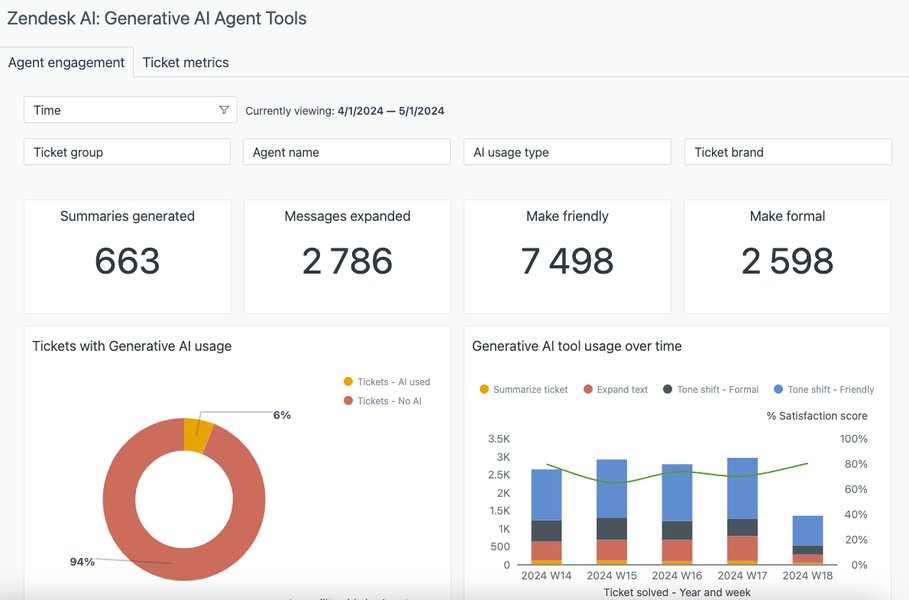
The following image provides a visual overview of how AI tools can assist in various content creation processes.
Overview of the Generative AI Agent Tools dashboard
AI for Coding
AI coding assistants are becoming increasingly popular, helping developers write code more efficiently and accurately.
- GitHub Copilot: An AI pair programmer that suggests code and functions as you type.
- Tabnine: Provides AI code completion for various programming languages.
- Amazon CodeWhisperer: An AI coding companion that generates code suggestions based on comments and existing code.
AI for Productivity and Automation
Many AI tools are designed to streamline workflows and automate repetitive tasks.
- Zapier: While not strictly an AI tool itself, Zapier integrates with numerous AI applications to automate workflows between different apps.
- Clockwise: An AI scheduling assistant that optimizes meeting times and creates focus periods.
AI for Research and Analysis
AI tools can assist researchers in discovering new sources, analyzing data, and summarizing information.
-
AI Tools for Literature Review: These tools help researchers find relevant articles and authors.
-
AI Comparison Tools: Platforms exist that help users compare different AI models and tools based on their features and capabilities.
Comparing AI Capabilities with a Table
Here's a simplified table illustrating the capabilities of a few prominent AI models:
| AI Model/Platform | Primary Use Case | Key Strengths |
|---|---|---|
| ChatGPT | Conversational AI, Text Generation | Versatile, strong conversational abilities, broad knowledge |
| Claude | Text Generation and Analysis | Detailed responses, strong focus on helpful and harmless output |
| Gemini | Multimodal Understanding | Processes and understands various data types (text, image, audio, video) |
| Google Cloud AI Platform/Vertex AI | Building and Deploying ML Models | Comprehensive suite of tools, scalability, integration with Google Cloud services |
| Microsoft Azure AI | Developing AI Applications | Wide range of services, integration with Azure ecosystem, focus on enterprise solutions |
The Impact of AI on Various Fields
The widespread adoption of AI tools and platforms is having a transformative effect across numerous industries and daily tasks.
Transforming Business Operations
Businesses are leveraging AI for everything from automating customer service with conversational AI to optimizing marketing campaigns and analyzing market trends.
Enhancing Productivity for Individuals
Individuals are using AI tools to improve their productivity in tasks like writing emails, generating presentations, and organizing information.
Driving Innovation in Development
AI coding assistants are accelerating the software development process, while AI platforms provide the infrastructure for building cutting-edge applications.
Video Overview of AI Tools for Productivity
For a visual guide to some of the best AI tools for boosting productivity, consider watching the following video:
This video, titled "7 Best AI Tools You NEED to Try in 2025 (Free & Powerful!)", provides a practical look at several AI tools that can significantly enhance efficiency.
Frequently Asked Questions (FAQ)
What are the most popular AI tools available?
Some of the most popular AI tools include ChatGPT for conversational AI and writing, tools like DALL-E 2 and Midjourney for image generation, and platforms like Google Cloud AI and Microsoft Azure AI for building and deploying AI models.
Are there free AI tools I can use?
Yes, many AI tools offer free plans or have open-source options. Examples include free versions of ChatGPT, Canva AI, and Google AI Studio.
How can AI tools help with productivity?
AI tools can boost productivity by automating repetitive tasks, assisting with content creation, providing quick access to information, and helping with organization and planning.
What are AI platforms primarily used for?
AI platforms are primarily used by developers and businesses to build, train, and deploy AI models and applications. They provide the necessary infrastructure and services for developing AI-powered solutions.
References
Last updated May 6, 2025