
Unlocking the Future of Web Browsing: Your Guide to AI Private Browsers
Discover how artificial intelligence is revolutionizing online privacy and enhancing your digital experience.
Key Insights into AI Private Browsers
- Enhanced Privacy: AI private browsers are meticulously engineered to provide superior privacy protection by actively blocking trackers, ads, and sophisticated fingerprinting techniques, going beyond standard incognito modes.
- Integrated AI Tools: These browsers seamlessly integrate AI assistants and capabilities for tasks like content summarization, real-time threat detection, and content generation, significantly boosting productivity and safety.
- Leading Options: Prominent choices like Brave Browser with Leo AI, Opera One, Microsoft Edge with Copilot, and Sigma AI Browser lead the pack, each offering a unique blend of privacy, speed, and intelligent features tailored to user needs.
In the rapidly evolving digital landscape of 2025, the concept of a "private browser" has undergone a profound transformation. Traditional private browsing modes offered limited protection, often merely preventing local history storage. Today, AI private browsers represent a sophisticated evolution, combining the power of artificial intelligence with robust privacy safeguards to deliver a browsing experience that is both intelligent and secure. These advanced browsers leverage AI to proactively counter tracking, personalize content suggestions while maintaining anonymity, and streamline various online tasks, thereby redefining the balance between functionality and user confidentiality.
The Essence of AI Private Browsers
An AI private browser is a web browser that integrates artificial intelligence functionalities—such as natural language processing, machine learning, and predictive analytics—directly into a platform designed with user privacy and security as its paramount concern. Unlike conventional browsers that primarily focus on rendering content and basic navigation, AI private browsers actively assist users through a suite of intelligent features:
- Summarizing and interpreting web content on the fly.
- Offering AI-driven search and navigation assistance.
- Proactively detecting and blocking intrusive trackers, advertisements, and malicious content.
- Learning user preferences to customize content delivery and optimize the browsing experience without compromising data.
- Enhancing private browsing by processing data locally and minimizing data sharing with external servers.
This powerful combination ensures that users can navigate the internet efficiently and safely, confident that their online activities remain confidential and protected from unsolicited monitoring.
Core Features Driving the Next Generation of Browsing
The innovation within AI private browsers is driven by a set of distinct features that set them apart:
AI Assistants and Content Tools
Many AI browsers incorporate built-in AI assistants, such as Brave's Leo AI, Microsoft Edge's Copilot, and Opera One's native AI chatbots. These intelligent companions can perform a range of tasks, including summarizing lengthy articles, generating new content, answering complex questions, and providing context-sensitive help. Crucially, these operations are designed to uphold data privacy, often by processing information locally on the user's device rather than sending it to remote servers.
This radar chart illustrates the perceived strengths of leading AI Private Browsers across various key performance indicators.
The chart above provides an analytical overview of how leading AI Private Browsers like Brave, Opera, Microsoft Edge, and DuckDuckGo stack up against critical attributes. Each axis represents a crucial aspect: "Privacy & Tracker Blocking" measures their effectiveness in preventing unwanted data collection; "AI Assistant Capabilities" reflects the sophistication and utility of their integrated AI tools; "Speed & Performance" assesses their responsiveness and efficiency; "User Experience & Interface" evaluates ease of use and aesthetic design; and "Threat Detection & Security" indicates their ability to protect against malware and phishing. The data points, derived from a synthesis of expert evaluations and user feedback, highlight each browser's distinct strengths and areas of focus, offering a holistic perspective for users to consider their ideal browsing solution. For instance, Brave often scores highly in privacy, while Microsoft Edge excels in AI capabilities due to its deep integration with Copilot.
Privacy by Design Principles
A fundamental principle of AI private browsers is "privacy by design." This translates to features such as default ad and tracker blocking, prevention of third-party cookie tracking, and robust defenses against browser fingerprinting attempts. Many also integrate advanced anonymity tools like VPNs or Tor (onion routing) to further obscure user identity and location, ensuring a truly anonymous browsing experience.
Local AI Processing for Enhanced Privacy
To bolster privacy, some AI private browsers prioritize local AI model processing. This means that AI computations and data analysis occur directly on the user's device, significantly reducing or eliminating the need to transmit personal data to external cloud servers. This approach ensures that sensitive information remains within the user's control.
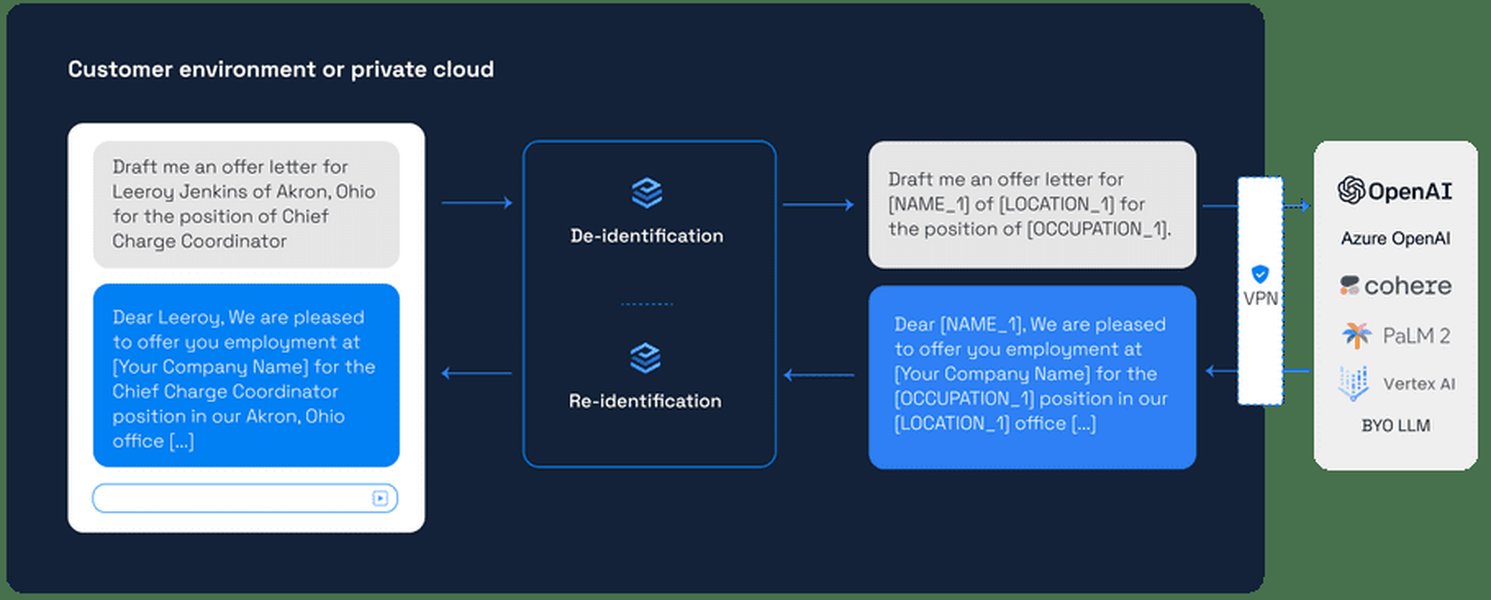
A visual representation of how local AI processing enhances data privacy within a browser.
Integrated Private Search Engines
Many AI private browsers come equipped with their own privacy-focused AI search engines, such as Brave Search and DuckDuckGo. These search engines are built to not track or profile users, offering AI-enhanced contextual answers and summaries directly within the search results, providing relevant information without compromising anonymity.
Leading AI Private Browsers in 2025
As of 2025, several browsers have emerged as frontrunners in integrating AI with strong privacy features. Here’s a detailed look at the most prominent options:
This mindmap illustrates the relationships and key features of prominent AI private browsers.
The mindmap above provides a comprehensive overview of the leading AI private browsers, categorizing them by their primary features and benefits. It highlights how each browser, from the widely acclaimed Brave Browser to the anonymity-focused Tor Browser, integrates artificial intelligence and privacy measures to offer a distinct browsing experience. This visual guide helps in understanding the diverse landscape of AI-enhanced private browsing, showcasing options for various user priorities, whether it's content generation, advanced threat detection, or ultimate anonymity.
Comparative Overview of AI Private Browsers
To help you make an informed decision, here’s a comparative table summarizing the key aspects of these leading browsers:
| Browser | Primary AI Feature | Privacy Emphasis | Unique Selling Proposition |
|---|---|---|---|
| Brave Browser | Leo AI (Summarization, Content Creation) | Strong ad/tracker blocking, fingerprinting defense, private search | Seamless blend of privacy, speed, and integrated AI. |
| Opera One | Native AI Chatbots (ChatGPT, ChatSonic) | Built-in VPN, ad blocker, tracking prevention | Modern UI, modular features, strong AI for productivity. |
| Microsoft Edge | Copilot (Summarization, Writing Assistance, AI Translation) | Improved tracking prevention, scareware blocker | Deep integration with Microsoft ecosystem, productivity-focused AI. |
| DuckDuckGo | AI Chat (Anonymous Queries) | No data collection, strong tracking protection | Privacy purist's choice with light AI integration. |
| Sigma AI Browser | Built-in AI Chat, Content Generation | Privacy-first design, fingerprint masking | Smart context-based AI with strong privacy. |
This table provides a concise comparison, highlighting the distinct offerings of each browser in terms of AI capabilities and privacy features. It helps users quickly identify which browser aligns best with their specific needs and priorities, whether they prioritize comprehensive AI assistance, stringent privacy protection, or a balance of both.
Why Embrace an AI Private Browser?
Opting for an AI private browser in 2025 offers compelling advantages beyond traditional browsing:
- Unparalleled Privacy Protection: These browsers actively block invasive trackers and shield your digital identity online, addressing critical vulnerabilities often overlooked by standard browsers.
- Boosted Efficiency & Productivity: AI capabilities enable you to consume, summarize, and generate content faster and more intuitively, streamlining workflows without needing to switch between multiple applications.
- Proactive Security Measures: Leveraging intelligent threat detection powered by AI, these browsers can identify and alert you to phishing attempts, malware, or suspicious content in real-time, providing a proactive layer of defense.
- Personalized & Adaptive Experience: Through machine learning, AI private browsers learn your behavior and preferences, tailoring your browsing experience from preferred news sources to research workflows, all while respecting your privacy.
- Future-Proof Browsing: As concerns about AI and data privacy continue to grow, these browsers stand at the forefront, balancing cutting-edge AI innovation with robust privacy protections, making them a future-ready choice for navigating the internet.
Exploring AI Agents in Your Browser
Beyond integrated AI assistants, the frontier of AI in browsers extends to autonomous AI agents. These sophisticated tools can automate complex tasks, interact with websites on your behalf, and provide highly personalized assistance. The following video offers a deeper dive into how these AI agents are transforming the browsing experience, enabling unprecedented levels of automation and efficiency directly within your browser environment.
This video, titled "New Browser Use AI Agent That Can Do ANYTHING," explores how AI agents can automate complex tasks directly within your browser, showcasing a significant leap in digital interaction and personal productivity. It delves into the capabilities of these agents, which can seamlessly navigate websites, extract information, and perform actions that traditionally required manual intervention, highlighting the potential for a more efficient and automated online experience.
Privacy and Security Considerations
While AI private browsers significantly enhance security and privacy compared to traditional offerings, it's crucial for users to understand that no browser can guarantee absolute anonymity or protection. Online anonymity is a complex challenge, and factors like your Internet Service Provider (ISP), specific website behaviors, and even government surveillance can still pose risks.
Leading AI private browsers like Brave emphasize local AI processing to mitigate privacy concerns, meaning that computations happen on your device rather than being sent to external servers. However, some AI functionalities may still require internet access to remote servers for more complex tasks. Therefore, it's highly recommended to use these browsers in conjunction with additional privacy tools, such as Virtual Private Networks (VPNs) for encrypting your internet traffic, and to adhere to best internet security practices.
Regularly updating your browser and its privacy settings is also essential, as the digital threat landscape constantly evolves. By combining advanced AI private browsers with a proactive approach to online security, users can achieve a significantly safer and more private digital experience.
Frequently Asked Questions (FAQ)
What is the main difference between an AI private browser and a regular private browsing mode?
Do AI private browsers compromise performance for privacy?
Are AI private browsers suitable for all users?
Can AI private browsers guarantee complete anonymity online?
Conclusion
The emergence of AI private browsers marks a pivotal shift in how we interact with the internet. By seamlessly blending cutting-edge artificial intelligence with robust privacy and security features, these browsers offer a more intelligent, efficient, and protected online experience. Whether you prioritize advanced AI assistance, stringent privacy measures, or a balance of both, options like Brave Browser with Leo AI, Opera One, and Microsoft Edge with Copilot provide compelling solutions for navigating the complexities of the digital world in 2025. Embracing an AI private browser is not just about adopting new technology; it's about reclaiming control over your digital life and ensuring a safer, smarter journey through the web.
Recommended Further Exploration
- How does AI enhance web browser security?
- Comparison of privacy features in modern web browsers
- The future of AI agents in web browsing
- Impact of local AI processing on data privacy