
Unlocking Hyper-Growth: The AI-Powered SaaS Idea Poised to Revolutionize Product Management
Discover a targeted SaaS solution leveraging LLMs to give product teams a 10x edge in transforming user feedback into actionable insights.
Key Highlights: Your Quick Insight into the Future of Feedback
- Solve a Critical Bottleneck: Addresses the pervasive challenge SaaS product teams face in efficiently synthesizing vast amounts of user feedback from diverse channels.
- Leverage an LLM Superpower: Utilizes advanced Large Language Models to provide deep, nuanced analysis, automated summarization, and intelligent prioritization of feedback, offering a 10x improvement over manual methods.
- Rapid & Lean Launch: Designed for a two-person team to develop an MVP within 90 days using off-the-shelf APIs, with a clear path to achieving $1M ARR in 18 months.
The Challenge: Drowning in Data, Starving for Wisdom
The Core Problem and Its Impact
Product managers and teams at mid-sized SaaS companies are inundated with user feedback from a multitude of sources: support tickets (Zendesk, Intercom), CRM notes (Salesforce), in-app feedback forms, surveys (Typeform, SurveyMonkey), social media mentions, app store reviews, sales call transcripts (Gong, Chorus), and community forums. Manually sifting through, categorizing, and synthesizing this deluge of qualitative data to identify genuine pain points, emergent trends, and high-impact feature requests is an incredibly time-consuming, error-prone, and often biased process. This inefficiency leads to delayed product decisions, missed opportunities, resources wasted on low-impact features, and ultimately, a slower path to product-market fit and customer satisfaction.
The Target Audience: Empowering Product Visionaries
Our solution specifically targets Product Managers, UX Researchers, Heads of Product, and their respective teams within B2B and B2C SaaS companies that have achieved a degree of scale (e.g., post-Series A) and are grappling with a significant volume of user interactions. These professionals are driven to be customer-centric but lack the tools to efficiently convert raw feedback into a coherent, prioritized product strategy.
The Solution: Introducing "FeedbackFlow AI"
Transforming Feedback into Your Competitive Edge
FeedbackFlow AI is a sophisticated, AI-powered SaaS platform designed to automate and supercharge the entire user feedback analysis lifecycle. It seamlessly integrates with existing tools where feedback resides, ingesting data from diverse channels. At its core, FeedbackFlow AI utilizes state-of-the-art Large Language Models (LLMs) accessed via APIs (e.g., OpenAI, Anthropic, Cohere) to perform deep textual analysis. The LLM doesn't just count keywords; it understands context, sentiment, intent, and even sarcasm.
Key LLM-driven functionalities include:
- Automated Transcription & Ingestion: Converts audio/video feedback (e.g., sales calls, user interviews) into text and pulls data from connected sources.
- Intelligent Clustering: Groups similar feedback items into themes, identifying recurring pain points, feature requests, bugs, and positive affirmations, even if phrased differently.
- Nuanced Sentiment Analysis: Goes beyond positive/negative to detect emotions like frustration, delight, or confusion, and gauges the intensity of sentiment.
- Root Cause Identification: Helps uncover the underlying reasons behind reported issues or requests.
- Actionable Summaries: Generates concise, human-readable summaries for each theme, complete with illustrative quotes and contextual data.
- Smart Prioritization Engine: Calculates a "Priority Score" for each identified issue or opportunity. This score is a weighted composite considering factors like frequency of mention, sentiment intensity, number of affected users, potential impact on key metrics (e.g., churn, conversion, expansion ARR), and customizable strategic alignment flags.
- Human-in-the-Loop Validation: While the AI does the heavy lifting, product teams can easily review, tag, merge, or refine AI-generated insights, ensuring accuracy and control.
The 10x advantage comes from the dramatic reduction in manual effort (from weeks to hours or minutes), the depth of insights previously unattainable at scale, the ability to correlate feedback across disparate sources to see the bigger picture, and the data-driven confidence it instills in prioritization decisions.
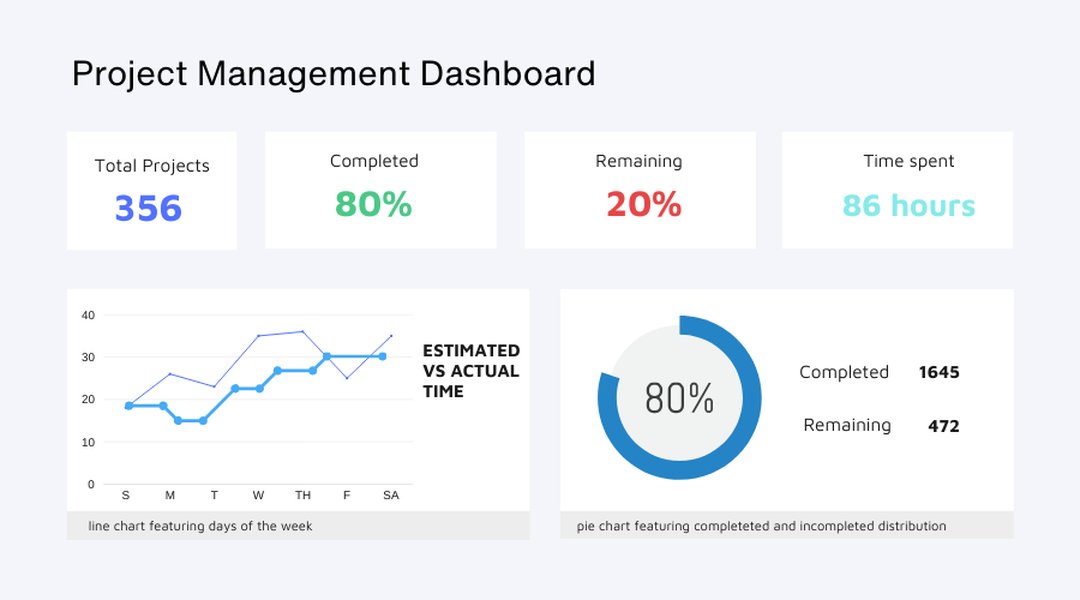
An example of a SaaS dashboard, similar to how FeedbackFlow AI might present synthesized insights.
Visualizing the FeedbackFlow AI Ecosystem
This mindmap illustrates the core components of FeedbackFlow AI, from data ingestion and LLM-powered analysis to the actionable outputs and benefits it delivers to product teams. It showcases how various elements interconnect to create a comprehensive feedback intelligence platform.
Intelligent User Feedback Synthesis"] id1["Core Problem Solved"] id1a["Overwhelming feedback volume & variety"] id1b["Slow, manual & biased analysis"] id1c["Difficulty in prioritizing product changes"] id1d["Missed critical insights & opportunities"] id2["Key Features & LLM Magic"] id2a["Automated Multi-Channel Data Ingestion
(Zendesk, Intercom, Surveys, Social, Gong, etc.)"] id2b["LLM-Powered Analysis Engine"] id2b1["Advanced Sentiment & Emotion Detection"] id2b2["Pain Point, Feature Request & Bug Clustering"] id2b3["Root Cause Identification Suggestions"] id2b4["Automated, Contextual Summaries"] id2c["Intelligent Prioritization Score & Frameworks"] id2d["Actionable Dashboards, Trend Reports & Alerts"] id2e["Seamless Integrations
(Jira, Slack, Productboard, etc.)"] id3["Target Audience"] id3a["SaaS Product Managers"] id3b["UX Researchers & Designers"] id3c["Product Leadership (VPs, CPOs)"] id3d["Mid-Sized to Enterprise SaaS Companies"] id4["Value Proposition (10x Advantage)"] id4a["Drastic Time & Cost Savings in Analysis"] id4b["Deeper, Unbiased & Actionable Insights"] id4c["Confident, Data-Driven Prioritization"] id4d["Accelerated Product-Market Fit & Innovation"] id4e["Reduced Churn & Increased Customer Satisfaction"]
Monetization Strategy: Scaling Value
Pricing Tiers
- Starter Tier (Freemium or Low-Cost Trial): Limited to 2 data source integrations, analysis of up to 500 feedback items per month, basic clustering and summarization. Designed for individual PMs or very small teams to experience the core value.
- Pro Tier ($149 per user/month, billed annually): Up to 10 data source integrations, analysis of up to 5,000 feedback items per month per user, advanced sentiment analysis, detailed pain point clustering, automated summaries, the Prioritization Score feature, standard integrations (e.g., Slack, Jira), and enhanced reporting.
- Enterprise Tier (Custom Pricing): Unlimited data sources, unlimited feedback volume, dedicated onboarding and support, Service Level Agreements (SLAs), advanced security and compliance features (e.g., SSO, audit logs), custom integrations, API access, configurable prioritization frameworks, and team-wide analytics.
Go-to-Market Hypothesis
The initial GTM strategy will focus on:
- Content Marketing: Creating high-value blog posts, whitepapers, webinars, and case studies focusing on best practices in user feedback management, AI in product development, and the pain points FeedbackFlow AI solves. SEO optimization will be key.
- Community Engagement: Actively participating in online communities where product managers congregate (e.g., Product Hunt, relevant subreddits like r/productmanagement, LinkedIn groups, Indie Hackers). Offering genuine value and subtly introducing the solution.
- Partnerships: Exploring integrations and co-marketing opportunities with complementary SaaS tools (e.g., helpdesks, CRMs, survey tools, product roadmapping software).
- Direct Outreach & Pilot Programs: Targeting VPs of Product and Heads of Product at mid-sized SaaS companies for early adopter programs and gathering testimonials.
- Product-Led Growth (PLG): Leveraging the Starter/Freemium tier to drive organic sign-ups and conversions, with clear upgrade paths as users experience the value and hit usage limits.
A believable path to ≥ $1M ARR within 18 months involves acquiring approximately 560 Pro users (560 users * $149/month * 12 months ≈ $1M ARR), or a mix of Pro and smaller Enterprise clients. This assumes a strong conversion rate from a well-executed GTM strategy targeting a clear need.
Feature Comparison Across Tiers
This table provides a clearer view of how features and capabilities scale with each pricing tier of FeedbackFlow AI, ensuring value is delivered at every level while encouraging upgrades for more advanced needs.
| Feature | Starter (Free/Trial) | Pro ($149/user/month) | Enterprise (Custom) |
|---|---|---|---|
| Max Feedback Items/Month | 500 | 5,000 per user | Unlimited |
| Connected Data Sources | 2 | Up to 10 | Unlimited + Custom Sources |
| Basic Feedback Analysis (Keywords, Mentions) | Yes | Yes | Yes |
| LLM-Powered Sentiment Analysis | Basic | Advanced (Nuance, Emotion) | Advanced + Customizable Models |
| LLM-Powered Pain Point & Feature Clustering | Basic Theming | Advanced Theming & Root Cause Hints | Advanced + Customizable Taxonomies |
| Automated Summaries | Yes (Short) | Yes (Detailed) | Yes (Executive & Detailed) |
| Intelligent Prioritization Score | No | Yes (Standard Logic) | Yes (Configurable Logic & Frameworks) |
| Standard Integrations (Slack, CSV Upload/Export) | Limited | Full | Full |
| Premium Integrations (Jira, Zendesk, Intercom, Salesforce) | No | Yes (Select) | Full + Custom API Access |
| User Seats | 1 | 1 (add-ons available) | Team-based, Custom |
| Reporting & Dashboards | Basic Overview | Standard Analytical Dashboards | Advanced, Customizable & BI Tool Integration |
| Support | Community Forum | Email & Chat Support | Dedicated Account Manager & Priority Support |
| Service Level Agreement (SLA) | No | No | Yes |
The Strategic Imperative: Why Now is the Time
Key Differentiators and Market Timing
- LLM Maturation & Accessibility: The capabilities of off-the-shelf LLM APIs (from providers like OpenAI, Anthropic, Google AI, Cohere) have reached a point where they can perform sophisticated natural language understanding tasks with high accuracy and are readily integrable. This significantly lowers the barrier to entry for building powerful AI-driven applications.
- The Escalating Data Deluge in SaaS: As SaaS businesses scale, the volume and velocity of user feedback grow exponentially. Existing manual methods or basic analytics tools are no longer adequate, creating a strong market pull for intelligent automation.
- Intensified Focus on Customer-Centricity: In a competitive SaaS landscape, deeply understanding and rapidly responding to user needs is paramount for retention, growth, and fending off competitors. Tools that enable this offer a distinct competitive advantage.
- Vertical Specialization vs. Generic Tools: While generic text analytics or survey platforms exist, FeedbackFlow AI differentiates by being purpose-built for the product feedback lifecycle within SaaS companies. This means tailored workflows, SaaS-relevant metrics (like impact on churn or ARR), and integrations specific to the product team's stack. It's not just about analyzing text; it's about driving product decisions.
Competitive Landscape & FeedbackFlow AI's Edge
The following radar chart visualizes how FeedbackFlow AI aims to outperform existing alternatives across key dimensions critical for effective user feedback analysis. Our focus on deep LLM-driven insights, scalability, and actionability provides a clear advantage.
The Blueprint: 90-Day MVP Launch Plan
From Idea to Initial Value in One Quarter
-
Weeks 1-2: Discovery, Validation & Core Planning
- Conduct 15-20 in-depth interviews with target Product Managers to rigorously validate the problem's urgency and the proposed solution's appeal.
- Define core MVP user stories focusing on: connecting 2 initial data sources (e.g., Intercom via API, CSV upload for flexibility), LLM-powered sentiment analysis, basic thematic clustering of feedback, and a simple dashboard to display summarized insights.
- Select the primary LLM API provider (e.g., OpenAI, Anthropic) based on capabilities, pricing, and ease of integration. Outline basic system architecture.
-
Weeks 3-5: Foundational Development & LLM Integration
- Develop secure data ingestion pipelines for the two chosen initial sources. Focus on robust error handling and data mapping.
- Integrate the selected LLM API for core analytical tasks: sentiment scoring and initial thematic clustering (e.g., using prompt engineering for topic extraction and summarization).
- Build a minimal, functional web UI (e.g., using a lean frontend framework or low-code tools for speed) for user authentication, data source connection, and displaying the AI-generated insights in a clear, understandable format.
-
Weeks 6-8: MVP Feature Refinement & Internal Testing
- Implement basic user account management (sign-up, login, simple project/workspace concept).
- Develop a first-pass version of the "Prioritization Score" logic, even if simplified for the MVP (e.g., based on frequency and average sentiment).
- Conduct thorough internal testing with sample datasets. Iterate on the LLM prompts, UI/UX, and data presentation based on this internal feedback. Focus on reliability and the quality of insights.
-
Weeks 9-10: Beta Preparation & Recruitment
- Prepare concise onboarding documentation and a simple feedback collection mechanism (e.g., in-app form, dedicated Slack channel).
- Recruit 10-15 beta users, primarily from the pool of validated interviewees who expressed strong interest. Set clear expectations for beta participation.
- Deploy the MVP to a staging/beta environment. Finalize basic analytics tracking for user engagement within the MVP.
-
Weeks 11-12: Private Beta Launch & Iterative Learning
- Launch the private beta with the recruited users. Provide hands-on support during their initial experience.
- Actively collect qualitative and quantitative feedback. Focus on usability, the perceived value of the insights, and any critical bugs or missing pieces.
- Implement rapid iteration cycles to address the most critical feedback. Analyze usage data to understand how users interact with the MVP.
- Based on beta outcomes, refine the product roadmap for public launch and establish key performance indicators (KPIs) for post-launch monitoring.
Inspiration & Context: The Rise of AI in SaaS
The landscape of Software as a Service is rapidly evolving, with Artificial Intelligence, particularly Large Language Models, acting as a significant catalyst for innovation. Understanding how AI can be leveraged to create valuable, niche SaaS products is crucial. The following video discusses several AI SaaS ideas, providing context on the current opportunities in the market, similar to the one proposed for FeedbackFlow AI.
This video explores various AI SaaS business ideas, highlighting the current entrepreneurial opportunities in the AI space.
Frequently Asked Questions (FAQ)
How does FeedbackFlow AI ensure data privacy and security with sensitive user feedback? +
Data privacy and security are paramount. FeedbackFlow AI will employ several measures:
- API-based LLM Interaction: User data is processed via secure API calls to reputable LLM providers (e.g., OpenAI, Anthropic) who have their own robust data handling policies. We will ensure our agreements with these providers stipulate that submitted data is not used for training their general models.
- Data Encryption: All data, both in transit (using TLS/SSL) and at rest (using AES-256 or similar), will be encrypted.
- Anonymization/Pseudonymization Options: For particularly sensitive feedback, we plan to offer features to help users anonymize or pseudonymize PII before it's processed by the LLM, where feasible.
- Access Controls & Permissions: Robust role-based access control will be implemented within the platform to ensure only authorized personnel can access specific datasets.
- Compliance: We will design the platform with GDPR, CCPA, and other relevant data protection regulations in mind from the outset and pursue relevant certifications as we scale.
- No Proprietary Data Storage for LLM Training: The platform uses off-the-shelf LLM APIs; we do not train our own foundational models on customer data, nor is customer data used to train the third-party APIs we consume.
What kind of LLM APIs are used, and can the platform be self-hosted? +
FeedbackFlow AI is designed to leverage leading commercial LLM APIs such as those provided by OpenAI (e.g., GPT-4, GPT-3.5-turbo), Anthropic (e.g., Claude series), Cohere, or Google (e.g., Gemini). The choice may evolve based on performance, cost, and specific task suitability.
Initially, FeedbackFlow AI will be a cloud-hosted SaaS solution. This allows for rapid deployment, scalability, and easier maintenance by our team. While a self-hosted or VPC deployment option might be considered for large enterprise clients with specific security and compliance needs in the future (as part of a high-tier Enterprise plan), it is not part of the initial offering or MVP due to the increased complexity for a small founding team.
How does the "Prioritization Score" actually work? +
The "Prioritization Score" is a composite metric designed to provide a data-informed suggestion of importance. In its initial version, it would likely combine factors such as:
- Frequency: How often is this pain point, request, or theme mentioned across all feedback sources?
- Sentiment Intensity: What is the average sentiment score associated with this theme, and are there strong negative or positive outliers?
- User Impact (Volume): How many unique users or accounts have mentioned this issue? (Requires some level of user identification across sources).
- Recency: How recently has this feedback been coming in? Is it a growing trend?
For Enterprise tiers, this could be made configurable, allowing teams to adjust weightings or add custom factors like:
- Strategic Alignment: How well does addressing this align with current company OKRs or product strategy (potentially flagged manually or via integration)?
- Potential Revenue Impact: Can this be linked to churn risk, expansion opportunities, or new customer acquisition (e.g., if integrated with CRM data)?
- Effort/Complexity: A placeholder for teams to later combine with development effort estimates.
The LLM itself can assist in extracting and normalizing some of these factors from the text. The goal is to move beyond simple frequency counts to a more nuanced, multi-dimensional view of priority, while still allowing human oversight.
What makes FeedbackFlow AI different from existing CRM or helpdesk analytics features? +
While many CRMs (like Salesforce) and helpdesks (like Zendesk or Intercom) offer some built-in analytics or reporting, FeedbackFlow AI offers several key differentiators:
- Cross-Platform Synthesis: Most built-in tools analyze data only within their own platform. FeedbackFlow AI is designed to ingest and synthesize feedback from multiple disparate sources, providing a holistic view of the customer voice that individual tools cannot offer.
- Depth of LLM-Powered Analysis: Standard analytics often rely on keyword tagging, basic sentiment, or predefined categories. FeedbackFlow AI leverages sophisticated LLMs for deeper understanding of nuance, intent, root causes, and emergent themes that are not explicitly tagged. This provides richer, more actionable insights.
- Focus on Product Teams & Actionability: FeedbackFlow AI is specifically built for product managers and UX teams. Its features, metrics (like the Prioritization Score), and planned integrations (e.g., with Jira, Productboard) are tailored to the product development lifecycle, aiming to directly inform roadmap decisions rather than just customer service metrics.
- Automated Summarization & Insight Generation: The platform doesn't just present raw data or charts; it aims to provide AI-generated summaries and identify key takeaways, significantly reducing the manual cognitive load on product teams.
- Independence and Objectivity: As a dedicated feedback analysis platform, it can offer a more objective and specialized lens compared to features that are secondary within a larger CRM or helpdesk suite.
In essence, FeedbackFlow AI aims to be the central nervous system for all qualitative user feedback, transforming it into a strategic asset for product development in a way that siloed, generic analytics features typically cannot.
Recommended Further Exploration
To delve deeper into related concepts and opportunities, consider exploring these queries:
- How can small SaaS teams effectively leverage LLM APIs for product innovation?
- What are the best practices for designing a go-to-market strategy for a vertical SaaS product?
- Explore successful case studies of AI-driven automation in product management workflows.
- What are the key metrics for measuring the success of an MVP for an AI-powered SaaS tool?
References
Last updated May 7, 2025