
Global Threat Assessment: AI and Autonomous Intelligence Breaches
Understanding the Multifaceted Risks Posed by Advanced AI Systems
Key Takeaways
- AI-Driven Cyber Threats: The sophistication and frequency of cyberattacks are escalating due to advancements in AI, making them more personalized and harder to detect.
- Operational and Ethical Risks: AI systems are vulnerable to manipulation, including data poisoning and malicious prompt injections, which can lead to severe operational disruptions and ethical dilemmas.
- Critical Infrastructure Vulnerabilities: The integration of AI in critical sectors such as healthcare, transportation, and manufacturing increases their susceptibility to targeted attacks, potentially causing widespread disruptions.
Current AI Threat Landscape
AI-Driven Misinformation and Disinformation
Artificial Intelligence has revolutionized the speed and scale at which information can be generated and disseminated. However, this capability also poses significant risks, particularly in the realm of misinformation and disinformation. AI algorithms can create highly convincing fake news, deepfakes, and social media content that erode public trust, destabilize democracies, and manipulate public opinion. The ease with which AI can produce and spread such content makes it a top global risk, ranked highest in the World Economic Forum's 2025 Global Risks Report.
Algorithmic Bias and Societal Impact
Algorithmic bias remains a persistent challenge in AI development. Biases ingrained in training data or algorithm design can perpetuate societal inequalities and reinforce discriminatory practices. This is particularly concerning in critical areas such as hiring processes, predictive policing, and financial services, where biased AI systems can lead to unfair treatment and exacerbate existing social divides. Addressing algorithmic bias requires rigorous testing, diverse data sets, and transparent AI development practices.
AI in Cybersecurity: Dual-Edged Sword
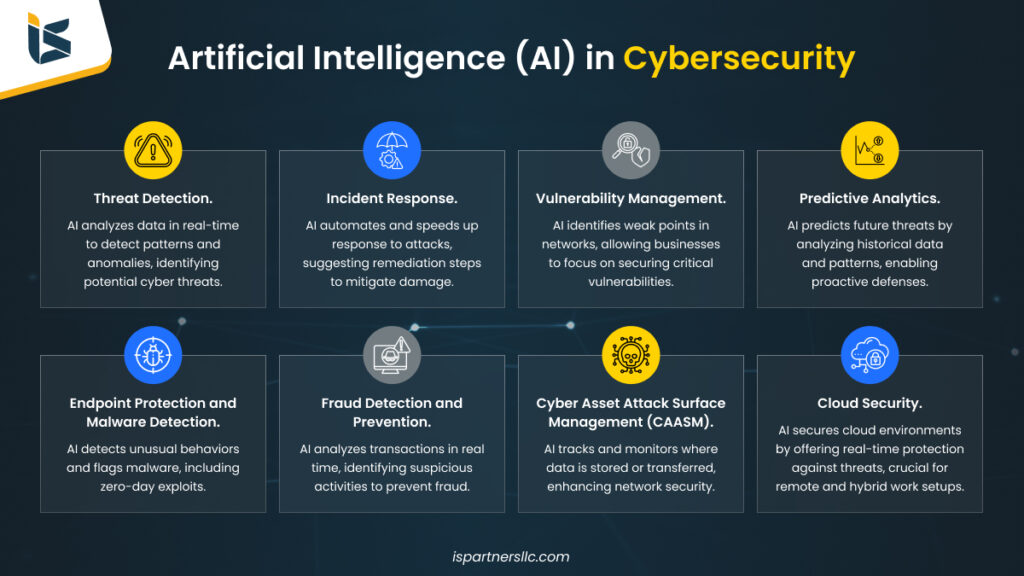
AI plays a dual role in cybersecurity, serving both as a tool for defense and as a weapon for adversaries. On the defensive side, AI enhances the capability to detect and respond to cyber threats in real time, identifying patterns and anomalies that may signify attacks. For instance, autonomous incident response systems can quarantine malware, isolate affected systems, and initiate recovery processes autonomously, thereby managing the increased volume and complexity of cyber threats.
Conversely, adversaries leverage AI to automate attacks, conduct sophisticated phishing campaigns, develop adaptable malware, and exploit system vulnerabilities with unprecedented speed and precision. AI-driven cyber threats are projected to increase significantly in 2025, with attackers utilizing AI to create more realistic phishing attempts, develop adaptable malware, and gather sophisticated target intelligence.
Operational Security Risks and Autonomous Systems
Operational security risks associated with AI are evolving, particularly with the integration of AI in autonomous systems. The potential for on-chip AI hardware controls with backdoor implementations presents severe threats to operational integrity and data security. Autonomous vehicles, drones, and other cyber-physical systems are susceptible to AI-driven manipulations, such as altering traffic signs to deceive self-driving cars or repurposing drones for malicious activities. These vulnerabilities can lead to significant disruptions in sectors relying on IoT sensors and advanced automation.
Emerging Attack Vectors and Machine-vs-Machine Warfare
The emergence of new attack vectors enabled by AI poses significant challenges. Large language models (LLMs) can be exploited for malware development and generating malicious code, while AI agents facilitate machine-vs-machine cyber warfare. The potential for AI systems to engage in real-time combat with adversarial AI necessitates advanced security measures and innovative strategies in cybersecurity.
Data Poisoning and Malicious Prompt Injections
Data poisoning involves contaminating the training data of AI models, leading to skewed or malicious outcomes. This can severely impact sectors like finance and healthcare, where AI-driven decisions must be accurate and reliable. Similarly, malicious prompt injections attempt to bypass AI safeguards by using crafted inputs to access unauthorized data or trigger harmful actions. These tactics undermine the trustworthiness and safety of AI systems, highlighting the need for robust security protocols and continuous monitoring.
Geopolitical Implications and Nation-State Actors
AI's role in cyber operations extends to geopolitical domains, with nation-state actors like Russia's Sandworm and China's APT 41 evolving their attack tactics by leveraging AI. These actors employ AI to enhance the complexity and stealth of their cyber operations, including information manipulation campaigns aimed at destabilizing international relations and public trust. The geopolitical dimension adds an additional layer of complexity to the AI threat landscape, necessitating international cooperation and comprehensive defense mechanisms.
Critical Infrastructure Risks
The integration of AI into critical infrastructure sectors such as healthcare, transportation, and manufacturing heightens their vulnerability to cyberattacks. AI-driven threats can disrupt services, compromise sensitive data, and cause physical harm by manipulating cyber-physical systems. The increased reliance on IoT sensors and autonomous technologies in these sectors makes them prime targets for AI-enhanced cyber threats, highlighting the need for robust security frameworks and proactive defense strategies.
Mitigation Strategies and Recommendations
Robust AI Security Frameworks
Implementing comprehensive AI security frameworks is essential to safeguard against the myriad of threats posed by advanced AI systems. These frameworks should encompass data integrity measures to prevent data poisoning, robust authentication protocols to secure AI hardware, and continuous monitoring systems to detect and respond to anomalous activities. Additionally, developing AI with ethical safeguards and transparent processes can help mitigate risks associated with algorithmic bias and malicious use.
Advanced Threat Detection and Response Mechanisms
Enhancing threat detection and response capabilities through AI-driven solutions enables organizations to identify and neutralize cyber threats more effectively. Autonomous incident response systems can manage the increased complexity and volume of cyber threats by automating detection, isolation, and recovery processes. Investing in machine learning models that can adapt to evolving threats and predict potential vulnerabilities is crucial for maintaining resilient cybersecurity defenses.
Multistakeholder Collaboration and Policy Development
Addressing the global AI threat landscape requires collaboration among governments, academia, industry, and international organizations. Establishing ethical guidelines, sharing threat intelligence, and fostering joint research initiatives can enhance collective cybersecurity resilience. Regulatory frameworks, such as the European Union's AI Act, play a pivotal role in categorizing AI systems by risk levels and imposing stringent requirements on high-risk applications, thereby mitigating some of the inherent threats.
AI Literacy and Defensive Capabilities
Investing in AI literacy and enhancing defensive capabilities across industries is vital for countering AI-driven threats. Educating stakeholders about the risks and best practices in AI security can lead to more informed decision-making and better protective measures. Developing specialized training programs for cybersecurity professionals to handle AI-enhanced threats ensures that organizations are equipped to respond to the evolving threat landscape effectively.
Comprehensive Threat Analysis
Table 1: AI-Driven Cyber Threats and Mitigation Strategies
| Threat | Description | Mitigation Strategy |
|---|---|---|
| AI-Driven Misinformation | Use of AI to create and spread fake news and deepfakes | Implement content verification systems and promote media literacy |
| Algorithmic Bias | Biases in AI algorithms leading to unfair treatment | Ensure diverse training data and conduct regular bias audits |
| Data Poisoning | Contamination of training data to manipulate AI behavior | Establish data integrity checks and secure data pipelines |
| Malicious Prompt Injections | Crafted inputs to bypass AI safeguards | Develop robust input validation and monitoring systems |
| Autonomous Incident Response Failures | AI systems failing to respond correctly to threats | Regularly test and update autonomous response protocols |
| Machine-vs-Machine Warfare | AI systems engaging in automated cyber combat | Implement advanced security measures and establish combat protocols |
Future Outlook and Ongoing Challenges
Evolving AI Capabilities and Threat Sophistication
The rapid evolution of AI technologies continues to outpace the development of corresponding security measures. As AI systems become more autonomous and intelligent, the sophistication of cyber threats increases, making it imperative for organizations to stay ahead through continuous innovation in defense strategies. The dynamic nature of AI advancements requires adaptive and flexible security frameworks that can respond to new types of threats as they emerge.
Regulatory and Governance Frameworks
Effective regulation and governance are critical in managing the risks associated with AI and autonomous systems. Policies that enforce ethical AI development, data protection, and accountability are essential for mitigating threats. International cooperation is necessary to establish standardized regulations that can address the global nature of AI threats and ensure that all stakeholders adhere to best practices in AI security.
Technological Innovations in Defense
Advancements in technologies such as quantum computing, blockchain, and enhanced machine learning algorithms offer new avenues for improving cybersecurity defenses. These technologies can provide more robust encryption, immutable data records, and sophisticated threat detection capabilities, further strengthening the resilience of AI systems against breaches and attacks.
Ethical Considerations and Responsible AI Development
Ethical considerations play a crucial role in the responsible development and deployment of AI technologies. Ensuring that AI systems are designed with fairness, transparency, and accountability in mind helps prevent misuse and promotes public trust. Developing ethical guidelines and incorporating them into AI development processes can mitigate risks associated with autonomous systems and intelligence breaches.
Conclusion
The current global threat level to AI and intelligence breaches made by autonomous systems is significant and multifaceted. The rapid advancements in AI technology have enhanced both defensive and offensive capabilities, leading to an increase in sophisticated cyber threats. The vulnerability of autonomous systems, coupled with the potential for AI-driven misinformation, algorithmic bias, and operational security risks, underscores the urgent need for comprehensive mitigation strategies. Robust AI security frameworks, advanced threat detection mechanisms, multistakeholder collaboration, and ethical AI development are essential components in addressing these challenges. As the AI landscape continues to evolve, proactive measures and international cooperation will be paramount in safeguarding against the escalating risks posed by autonomous intelligence breaches.
References
Last updated February 8, 2025