
Unlock Trading Insights from a Flawed AI? Discover the Prompt That Makes It Possible!
Leveraging imperfect AI for short-term trading ideas requires a strategic approach. Learn how to prompt it effectively despite its limitations.
You have an AI assistant with significant constraints: no access to real-time market data (prices, volume, social media feeds), an inability to perform risk modeling or backtesting, internet access hampered by lag, and a tendency towards generating inaccurate or fabricated information. Despite these substantial hurdles, it's possible to craft a prompt that guides this AI to identify potentially valuable short-term trading ideas. The key lies in focusing the AI on its limited strengths – synthesizing publicly available, albeit delayed, information – while strictly managing its weaknesses.
Key Highlights: Harnessing Limited AI for Trading Ideas
- Focus on Qualitative Catalysts: The prompt directs the AI to identify potential market-moving events (news, reports, announcements) rather than predicting price movements it cannot calculate.
- Emphasize Information Synthesis, Not Prediction: The goal is to use the AI to gather and summarize publicly available information that *might* influence markets, acting as an idea generator.
- Mandate Human Verification: The process acknowledges the AI's limitations, stressing that any output requires rigorous validation by a human trader using real-time data and analysis tools.
Crafting the Optimal Prompt for Your Limited AI
Guiding the AI Towards Useful, Qualitative Insights
To extract the most value from an AI with the described limitations, the prompt must be carefully structured. It needs to steer the AI away from tasks it cannot perform (like price prediction or risk assessment) and towards tasks it *can* attempt, albeit imperfectly (like information retrieval and summarization from the web). The emphasis should be on identifying potential *catalysts* or *themes* based on information that might precede market movements.
The Suggested Prompt:
Here is a detailed prompt designed to maximize the potential of your constrained AI for generating short-term trading ideas:
"Analyze recent (within your accessible timeframe) news articles, company press releases, regulatory filings, economic reports, and other publicly available textual information from the internet. Exclude any attempts to access real-time market data, price feeds, live social media sentiment, or subscription-based financial analysis sites.
Your objective is to identify emerging trends, significant corporate developments (e.g., product launches, M&A activity, management changes, pre-announced earnings guidance), new regulatory impacts, or major macroeconomic shifts that could plausibly act as catalysts influencing specific stocks, sectors, or the broader market in the short term (e.g., the next 1-5 trading days, acknowledging your information lag).
Focus solely on identifying and summarizing these potential catalysts or themes. For each potential idea:
- Clearly describe the catalyst or theme identified.
- Summarize the key information you found related to it, citing the general type of source (e.g., 'major news outlet report,' 'company X press release,' 'government agency announcement').
- Explain qualitatively *why* this information *might* be relevant for short-term trading sentiment or potential future price action, based on common market understanding (e.g., 'new product launches can sometimes boost short-term sentiment,' 'regulatory changes often create uncertainty or opportunity in affected sectors').
Crucially, you must adhere to these restrictions:
- Do NOT predict specific price movements, targets, or probabilities.
- Do NOT provide buy, sell, or hold recommendations.
- Do NOT perform any risk assessment or backtesting analysis.
- Do NOT invent or fabricate information, catalysts, or connections. If you are uncertain about the information's accuracy, relevance, or completeness due to your limitations (like data lag or potential for misinterpretation), explicitly state this uncertainty.
Structure your response clearly, listing 3-5 distinct potential catalysts or themes. Preface your entire response with a disclaimer stating your limitations (no real-time data, no risk modeling, potential inaccuracies, information lag) and emphasizing that the output is for informational/idea-generation purposes only and requires independent verification and analysis by a human using real-time tools before any trading decisions are made. Your goal is to provide potential starting points for investigation, not definitive trading signals."
Rationale Behind This Prompt Structure
- Leverages NLP Strengths: Focuses on reading and synthesizing text-based information from the internet, which is a core capability of language models.
- Manages Weaknesses: Explicitly forbids prediction, recommendation, and risk analysis, areas where the AI is incapable and prone to errors.
- Reduces Hallucination Risk: Requires grounding ideas in found information and citing source types, making fabrication less likely (though not impossible). Demands stating uncertainty.
- Focuses on Catalysts: Directs the AI to look for *reasons* for potential market moves, which is more feasible than predicting the moves themselves without data.
- Sets Realistic Expectations: The mandated disclaimer clarifies the output's nature – idea generation, not financial advice – and highlights the need for human oversight.
- Actionable for Humans: Provides concise, themed ideas that a human trader can quickly assess and investigate further with proper tools.
How Can This Limited AI Still Generate Valuable Ideas?
Turning Information Synthesis into Potential Trading Leads
Despite its significant limitations, this AI can function as an initial filter or an unconventional information scout. Its value lies not in prediction, but in its potential ability to process and flag publicly available information that *could* become relevant. Here’s how:
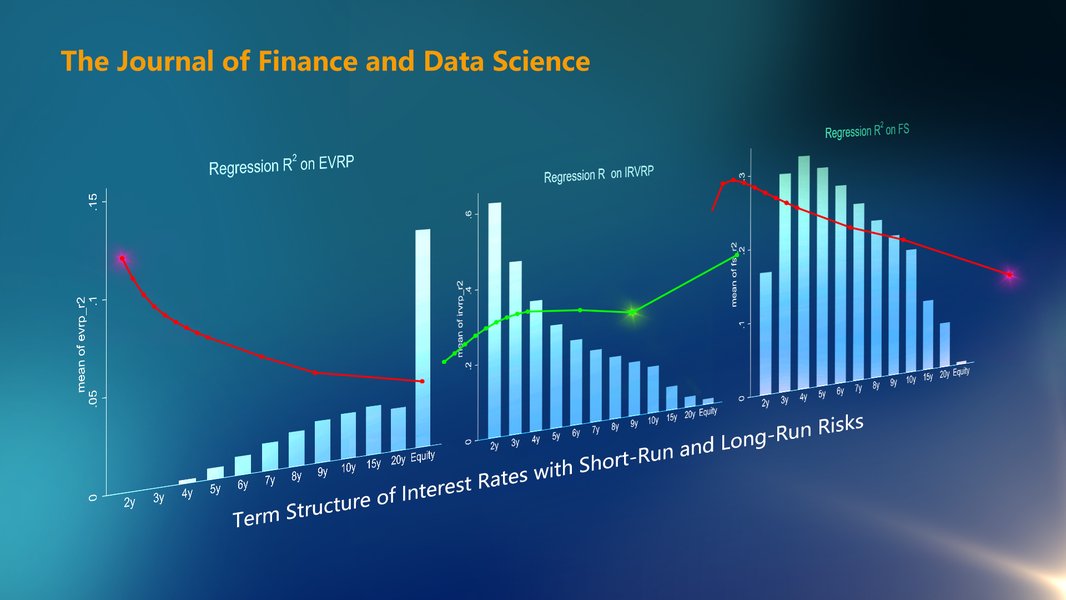
AI can analyze textual data from news and reports to identify potential market-moving themes.
1. Identifying Potential Catalysts from Lagged Data
Major events like significant product launches, M&A rumors/announcements, regulatory shifts, or impactful economic reports often have repercussions that unfold over days or weeks. Even with lagged internet access, the AI might pick up on these developments from news sites, press releases, or government publications shortly after they become public. While not real-time, identifying these potential catalysts early (even with a delay) can still be valuable.
2. Synthesizing Information into Themes
The AI can potentially connect dots between different pieces of information found online (e.g., multiple articles discussing supply chain issues in a specific sector, reports on changing consumer behavior impacting a certain industry). This synthesis can highlight emerging themes or narratives that might influence investor sentiment and, subsequently, market prices in the near term.
3. Leveraging Historical Context (Qualitative)
While unable to backtest numerically, the AI might access historical news archives or reports. The prompt encourages it to explain *why* certain information *might* be relevant, implicitly drawing on general knowledge about how similar past events (e.g., previous earnings beats by a company, historical sector reactions to specific economic data) have sometimes influenced markets.
4. Focusing on Qualitative Analysis
Short-term trading isn't solely about quantitative data; sentiment, news flow, and narrative play significant roles. The AI, guided by the prompt, focuses on this qualitative side – summarizing the 'story' behind a potential trade idea based on reported facts or developments.
5. Augmenting Human Research
The AI's output should be viewed as a "tip sheet" or a starting point. It might flag a development or theme that a human trader hadn't noticed yet, prompting them to conduct their own timely research and analysis using real-time data, charting tools, and risk management strategies. It acts as a research assistant, not a decision-maker.
The "probability" in this context isn't a statistical measure of success derived from backtesting. Instead, it refers to the likelihood that the identified catalyst or theme *is genuinely occurring* (based on public information) and *could plausibly* influence the market, making it worthy of a human trader's further investigation.
Visualizing the AI's Potential Information Sources
Assessing the Utility of Different Data Types for the AI
Given the AI's constraints, not all information sources it can access are equally valuable for generating short-term trading ideas. The radar chart below provides a conceptual assessment of various information types the AI might encounter via its lagged internet access, evaluating them based on factors like potential impact, accessibility (even if delayed), relevance, and the crucial need for human verification.
This chart illustrates that while sources like news and press releases are highly accessible (even with lag) and potentially relevant, they also carry a high need for verification due to the AI's limitations and the dynamic nature of markets. Historical patterns have less direct short-term relevance and accessibility and require the highest degree of scrutiny.
Mapping the Idea Generation Process
From AI Limitations to Human-Verified Insights
The following mindmap outlines the strategic process for using the limited AI to generate potential trading ideas, emphasizing the flow from identifying constraints to the crucial role of human analysis.
(Charts, Indicators, News)"] id4d["Conduct Risk Assessment"] id4e["Make Final Trading Decision"] id4f["Apply Own Strategy & Execution"]
This map highlights that the AI's role is confined to the initial stages of idea generation based on lagged, qualitative information. The subsequent, critical steps of verification, analysis, risk management, and decision-making rest entirely with the human trader.
Comparing AI-Generated Ideas vs. Traditional Analysis
Understanding the Differences in Approach
It's important to understand how the ideas generated by this constrained AI differ from those derived through traditional trading analysis methods that utilize real-time data and sophisticated tools. The table below contrasts these approaches:
| Feature | Constrained AI Idea Generation | Traditional Trading Analysis |
|---|---|---|
| Primary Data Source | Lagged Public Internet Text (News, Reports) | Real-Time Market Data (Price, Volume), News Feeds, Charts, Indicators |
| Timeliness | Delayed / Lagged | Real-Time / Near Real-Time |
| Nature of Output | Qualitative Catalysts, Themes, Information Summaries | Specific Trade Setups, Price Targets, Stop Losses, Quantitative Signals |
| Analysis Method | Information Synthesis, Basic Pattern Recognition (Qualitative) | Technical Analysis, Fundamental Analysis, Quantitative Modeling, Risk Assessment |
| Reliability | Low (prone to errors, requires heavy verification) | Variable (dependent on trader skill/strategy, but uses current data) |
| Risk Management | None Performed by AI | Integral Part of the Process |
| Backtesting | Not Possible | Often Used to Validate Strategies |
| Role | Idea Generator / Research Assistant | Complete Trading Decision Framework |
| Strengths | Broad Information Scanning (potential), Identifying Narrative Shifts | Precision, Timeliness, Data-Driven Decisions, Risk Control |
| Weaknesses | Lack of Timeliness, Inaccuracy Risk, No Predictive Power, No Risk Context | Can be complex, requires skill/tools, susceptible to market noise |
This comparison underscores that the AI, under these constraints, serves a fundamentally different purpose – sparking ideas based on possibly relevant but delayed information, which must then be rigorously processed through traditional, real-time analysis methods.
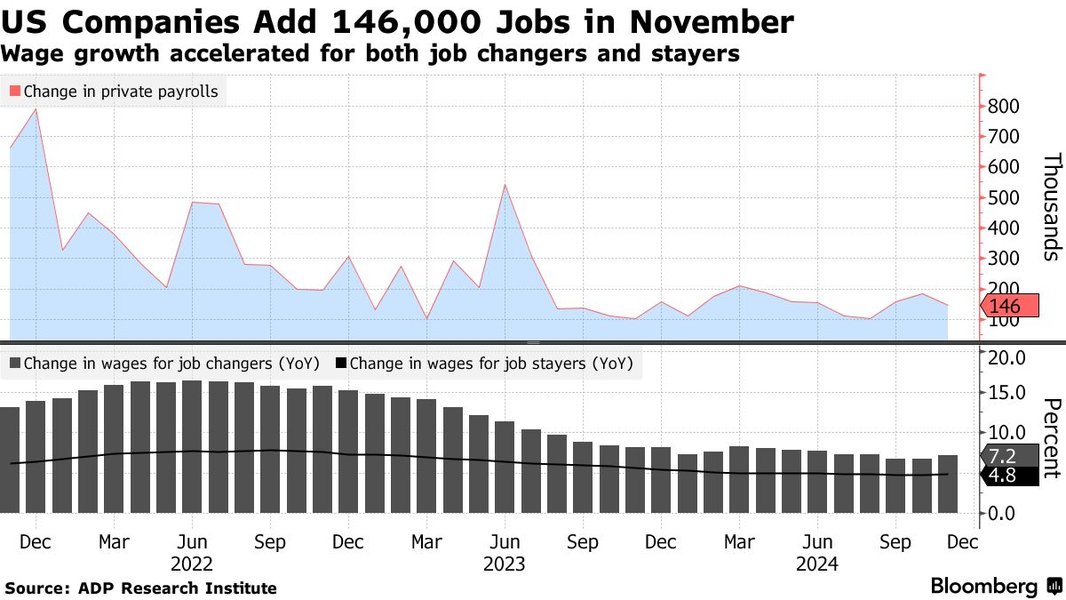
Traditional analysis relies on interpreting real-time data and charts, unlike the AI's qualitative approach.
Understanding AI Limitations in Trading
Insights on AI Trading Bot Challenges
The constraints you've described highlight common challenges faced when applying AI to trading, especially without access to robust data and analytical capabilities. This video discusses why many AI trading bots might fail private traders, touching upon limitations relevant to your situation, such as data quality, strategy adaptability, and the pitfalls of over-reliance on automated systems without understanding their constraints.
Understanding these limitations is crucial. The AI's inability to access real-time data means it cannot react to sudden market shifts. Its lack of risk modeling prevents it from assessing the potential downside of an idea. The tendency to fabricate information necessitates extreme caution and independent verification. The proposed prompt attempts to work within these boundaries by focusing on information gathering rather than flawed prediction.
Frequently Asked Questions (FAQ)
Can this AI *really* provide "high probability" ideas?
It's crucial to redefine "high probability" in this context. The AI cannot calculate statistical probabilities of success due to its limitations (no backtesting, no real-time data). Instead, the goal is to generate ideas based on identified catalysts or themes that have a *plausible* connection to potential short-term market interest, derived from publicly available (though lagged) information. The "probability" relates to the likelihood that the *information itself is relevant* and worth investigating further by a human, not the probability of the trade being profitable.
How does the prompt mitigate the AI's tendency to "make stuff up"?
The prompt employs several strategies:
- Focus on Summarization: It asks the AI to report on *information found* rather than predicting outcomes.
- Source Type Citation: Requiring the AI to mention the type of source (news, press release) encourages grounding in external information.
- Explicit Prohibitions: It directly forbids making predictions, recommendations, or fabricating connections.
- Uncertainty Statement: It mandates the AI to state when it's uncertain, acknowledging potential inaccuracies or gaps due to its limitations.
What kind of "trading ideas" can I realistically expect?
Expect qualitative suggestions pointing towards potential areas of interest, not fully formed trade setups. Examples might include:
- "Company Y recently announced a major product launch; news reports suggest initial positive reception. This *might* generate short-term interest." (Source: News Articles, Press Release)
- "Recent government reports indicate upcoming regulatory changes in the ABC sector. This *could* create volatility or opportunity for companies in this space." (Source: Government Reports)
- "Multiple news sources are discussing potential M&A activity involving Company Z. Increased speculation *sometimes* precedes price movement." (Source: Financial News Outlets)
Is it safe to trade based on this AI's output?
Absolutely not. Trading directly based on the output of this constrained AI would be extremely risky. Its information is lagged, it cannot assess risk, it cannot verify accuracy effectively, and it might fabricate details. The output should *only* be used as a potential starting point for your *own* independent research, analysis, and risk assessment using reliable, real-time data and tools. The AI acts as a low-fidelity information filter, not a trading advisor.
Recommended Further Exploration
Dive Deeper into Related Topics
- How can qualitative analysis identify short-term trading catalysts?
- What are the main challenges of using AI in financial trading?
- Strategies for verifying AI-generated financial information?
- Compare event-driven trading strategies vs trend-following strategies?
References
Sources Used for This Analysis
Last updated May 6, 2025