
Developing a Virtual AI Personal Tutor Powered by Specific Textbooks
Transforming Static Text into Dynamic and Personalized Learning Experiences
Key Highlights
- AI tutors can utilize specific textbooks: By integrating content from particular textbooks, AI tutors can offer tailored learning experiences directly aligned with course materials.
- Personalized and accessible learning: AI tutors provide 24/7 on-demand support, adapting to individual learning styles, paces, and preferences, and breaking down complex textbook concepts.
- Enhancing engagement through interactivity: AI-powered textbook tutors can incorporate interactive elements, simulations, quizzes, and even virtual reality to make learning more dynamic and effective.
The concept of developing a virtual AI personal tutor that leverages specific textbooks is not only feasible but is actively being explored and implemented in the field of educational technology. This approach aims to transform traditional, static textbook content into dynamic, interactive, and personalized learning experiences. By feeding AI models the information from specific textbooks, these virtual tutors can provide targeted assistance, answer questions directly related to the course material, and adapt their teaching style to the individual student's needs.
The Foundation: Integrating Textbook Content
How AI Accesses and Utilizes Textbook Information
The core of an AI personal tutor based on specific textbooks lies in its ability to access, process, and understand the content within those books. This typically involves several key steps:
Digital Text and Data Extraction
The textbooks need to be available in a digital format (e.g., PDF, ePub). Advanced AI tools and platforms can then process these digital files to extract text, images, diagrams, and other relevant information. This extraction process can involve techniques like Optical Character Recognition (OCR) for scanned documents and natural language processing (NLP) to understand the structure and meaning of the text.
Knowledge Representation and Organization
Once the content is extracted, it needs to be organized and represented in a way that the AI can easily access and utilize. This can involve creating a searchable database, building a knowledge graph that connects concepts and ideas within the textbook, or using embedding techniques to represent the semantic meaning of the text.
AI Model Training and Fine-tuning
Large Language Models (LLMs) can be trained or fine-tuned on the specific textbook content. This allows the AI to understand the nuances of the subject matter, the terminology used, and the way concepts are explained within that particular textbook. This fine-tuning is crucial for the AI to provide accurate and contextually relevant responses to student queries.
Functionality of a Textbook-Powered AI Tutor
Capabilities and Features
A virtual AI personal tutor developed using specific textbooks can offer a wide range of functionalities designed to enhance the learning process:
Answering Questions Directly from the Text
Students can ask the AI questions about specific passages, concepts, or examples from the textbook, and the AI can provide explanations based on the text's content. This is particularly helpful when students are struggling to understand a specific section.
Summarizing and Explaining Concepts
The AI can summarize chapters or sections of the textbook and explain complex concepts in simpler terms, tailoring the explanation to the student's level of understanding.
Generating Quizzes and Practice Questions
Based on the textbook content, the AI can create personalized quizzes and practice questions to help students test their knowledge and identify areas where they need more practice.
Providing Real-time Feedback
As students interact with the AI tutor, it can provide immediate feedback on their answers and understanding, guiding them towards the correct information and helping them learn from their mistakes.
Creating Personalized Study Plans
By analyzing a student's performance and interactions, the AI can suggest personalized study plans, recommending which sections of the textbook to focus on and suggesting additional resources.
Multilingual Support
Some advanced AI textbook tutors can even provide explanations and interact with students in multiple languages, making education more accessible to a wider range of learners.
Examples and Current Implementations
AI Tutors in Action
Several platforms and initiatives are already demonstrating the potential of AI-powered textbook tutors:
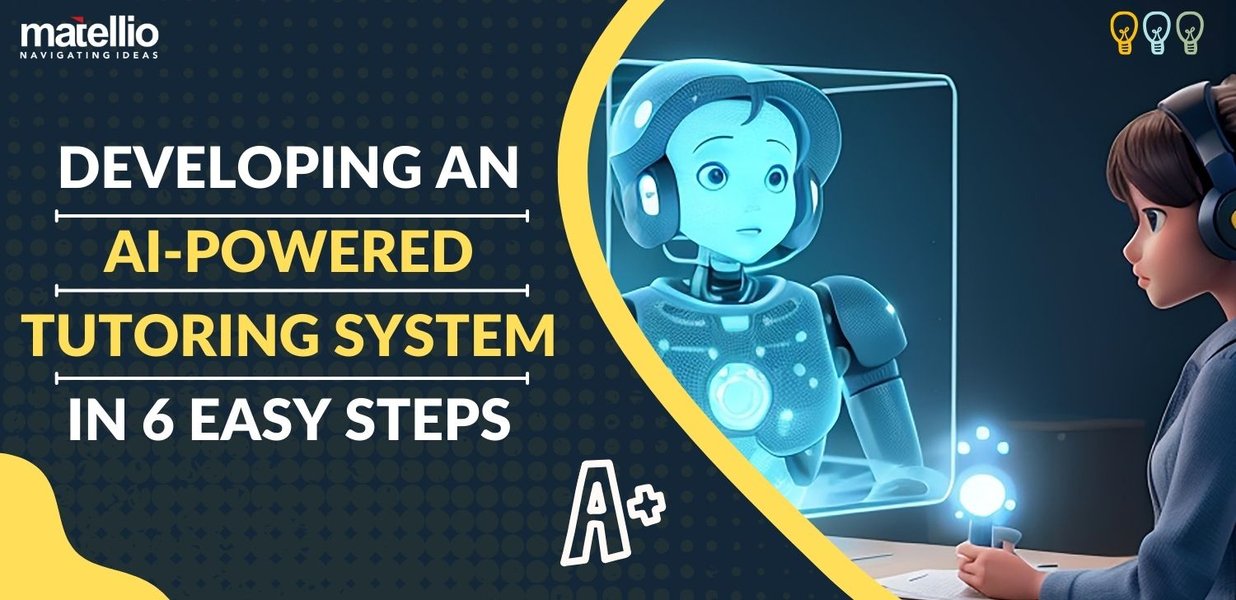
This image illustrates the various components and processes involved in developing an AI-powered tutoring system, highlighting the integration of AI into the educational landscape.
Khanmigo by Khan Academy
Khanmigo is an AI-powered guide integrated into Khan Academy's platform. While not strictly limited to specific textbooks, it interacts with learners on a wide range of topics and is being developed to mimic one-on-one tutoring experiences.
Pearson's AI-powered Study Tool
Pearson has introduced an AI-powered study tool for their eTextbooks. This tool pulls from the vetted content of the Pearson textbooks to help students with homework, understand concepts, and turn mistakes into learning opportunities. It provides support directly within the assigned textbook.
VictoryXR and Kendall Hunt Partnership
VictoryXR and Kendall Hunt are integrating personalized AI tutors onto textbook pages. These conversational AI tutors can explain passages, summarize pages, and read passages in different languages. They also have the potential to embed enriched 3D spatial learning experiences.
Flexi by CK-12
Flexi is a free AI tutor for science and math that adapts to individual learning styles and needs. It can help with homework, test prep, and explanations, and allows users to upload photos or draw equations.
Mindgrasp AI
Mindgrasp AI can process various academic materials, including textbooks, to turn them into study tools like notes, flashcards, and quizzes. It acts as a personal AI tutor to assist with understanding course material.
The Development Process
Key Steps in Building a Textbook-Specific AI Tutor
Developing an AI personal tutor based on specific textbooks involves a structured process:
Defining Learning Goals and Content Scope
Clearly defining what the AI tutor should teach and which parts of the textbook it will cover is the initial step. This sets the objectives and boundaries for the development.
Content Preparation and Integration
Converting the textbooks into a digital format and processing the content for AI consumption is crucial. This involves text extraction, data cleaning, and structuring the information.
Choosing or Building the AI Model
Selecting an appropriate AI model (e.g., a fine-tuned LLM) that can understand and generate human-like text based on the textbook content is essential.
Developing the User Interface and Interaction
Creating an intuitive and user-friendly interface where students can interact with the AI tutor is key to its adoption and effectiveness. This can include chat interfaces, interactive exercises, and progress tracking dashboards.
Testing and Iteration
Rigorous testing with students is necessary to evaluate the AI tutor's effectiveness, identify areas for improvement, and refine its responses and functionalities.
Integration with Learning Platforms (Optional but Recommended)
Integrating the AI tutor with existing Learning Management Systems (LMS) or educational platforms can provide a more seamless learning experience for students and educators.
Benefits and Challenges
Exploring the Impact and Hurdles
The development of AI personal tutors using textbooks offers significant benefits but also presents challenges:
| Benefits of Textbook-Powered AI Tutors | Challenges in Development and Implementation |
|---|---|
| Personalized learning tailored to individual needs and pace. | Ensuring accuracy and preventing the generation of incorrect information. |
| 24/7 availability for on-demand support and homework help. | Handling complex diagrams, figures, and non-textual content effectively. |
| Breaking down complex concepts into understandable explanations. | Addressing privacy concerns regarding student data and interactions. |
| Generating targeted practice questions and quizzes. | Ensuring equitable access for all students regardless of technological resources. |
| Providing immediate feedback and guidance. | Maintaining engagement and preventing over-reliance on the AI tutor. |
| Making learning more interactive and engaging through multimedia and simulations. | The cost and technical expertise required for development and maintenance. |
| Supporting diverse learning styles and language needs. | Integrating seamlessly with existing educational infrastructure. |
As illustrated in the table above, the potential benefits of personalized, accessible, and engaging learning are substantial. However, overcoming challenges related to accuracy, handling diverse content, privacy, and equitable access is crucial for the successful widespread adoption of these technologies.
The Future of AI in Education
Beyond the Textbook
The development of AI tutors using specific textbooks is just one facet of the broader impact of AI on education. The future holds the potential for even more sophisticated AI applications, including:
Adaptive Curriculum Design
AI could analyze student performance and learning patterns to dynamically adjust the curriculum and learning path for each individual.
Automated Grading and Feedback
AI can assist educators by automating the grading of assignments and providing detailed feedback to students, freeing up teacher time for more personalized interaction.
Identifying Learning Difficulties
AI algorithms can analyze student data to identify potential learning difficulties or areas where students might be struggling, allowing for early intervention and support.
Creating Immersive Learning Environments
Integrating AI with virtual and augmented reality can create highly immersive and interactive learning experiences, such as simulating historical events or conducting virtual science experiments.
Here is a relevant video discussing how to turn a book into a course with AI, which touches upon the underlying principles of using AI with existing content for educational purposes:
This video demonstrates the process of using AI to transform the content of a book into a structured course, showcasing the capability of AI to process and reorganize textual information for educational purposes.
The evolution of AI in education is moving towards creating highly personalized, accessible, and engaging learning environments that can complement and extend the traditional classroom experience. AI-powered textbook tutors are a significant step in this direction, making learning more effective and tailored to the individual student.
Frequently Asked Questions (FAQ)
Can an AI tutor truly replace a human tutor?
While AI tutors offer many benefits like 24/7 availability and personalized practice, they are currently best viewed as supplementary tools rather than replacements for human tutors. Human tutors provide emotional support, motivational guidance, and can adapt to complex, non-standard situations in ways that AI is not yet capable of.
How accurate is an AI tutor that uses textbooks?
The accuracy of an AI tutor heavily depends on the quality of the textbook content it is trained on and the sophistication of the AI model. While AI can provide accurate information from the text, there is always a potential for errors or misinterpretations, especially with nuanced or complex topics. Continuous testing and refinement are crucial.
What kind of textbooks can be used with an AI tutor?
Ideally, textbooks in a clean digital format are most suitable. The effectiveness can vary depending on the subject matter and the structure of the textbook. Textbooks with clear definitions, examples, and well-organized content are generally easier for AI to process and utilize effectively.
Is it expensive to develop a textbook-specific AI tutor?
Developing a sophisticated AI tutor, especially one tailored to specific textbooks, can be a complex and resource-intensive process. It requires expertise in AI development, natural language processing, and educational design. However, the cost can vary depending on the scope and features of the tutor.
How does a textbook-powered AI tutor handle updates or new editions of a textbook?
For an AI tutor to remain current, the underlying AI model and knowledge base would need to be updated to reflect changes in new editions of textbooks. This requires a process for integrating updated content and potentially retraining or fine-tuning the AI model.
References
Last updated April 21, 2025