
Artificial Insemination in Veterinary Animals
An engaging overview of techniques, species-specific applications, and ethical considerations
Highlights
- Comprehensive Techniques: Overview of AI techniques including transcervical, laparoscopic, and rectovaginal methods across different species.
- Species-Specific Applications: Detailed discussion of AI in cattle, dogs, small ruminants, equines, and other veterinary animals.
- Ethical and Welfare Considerations: Examination of benefits, potential challenges, and the impact on genetic diversity and animal welfare.
Slide 1: Introduction to Artificial Insemination
Understanding Assisted Reproductive Technology
Artificial insemination (AI) is a pivotal reproductive technology in veterinary medicine where semen is deliberately introduced into the female animal's reproductive tract. This technique has revolutionized breeding programs by allowing controlled breeding without the need for natural mating. AI has become essential not only in enhancing genetic diversity but also in the prevention of disease transmission and improving overall reproductive efficiency.
Across diverse animal species, AI is applied using tailored methods to account for anatomical and physiological differences. The integration of AI in veterinary practices has led to benefits such as increased conception rates, long-distance semen transport, and more precise genetic selection, effectively advancing animal husbandry.
Slide 2: Historical Development of AI in Veterinary Medicine
Key Milestones and Evolution
The history of artificial insemination dates back to the late 18th century when the first successful AI was performed on a dog in 1780. Since these early experiments, AI techniques have evolved significantly. Notable milestones include:
- Early Developments: Initial experiments that paved the way for modern AI, demonstrating the feasibility of semen transfer.
- Cryopreservation: The introduction of semen freezing methods which allowed long-term storage and expanded the geographical application of AI.
- Technique Diversification: The evolution of species-specific methods such as the rectovaginal technique in cattle and laparoscopic methods in small ruminants.
These advancements have resulted in AI being a central component of veterinary reproductive technology, promoting efficient breeding strategies and enhanced genetic management.
Slide 3: Overview of AI Techniques
Methods and Procedures
Diverse AI methods have been developed to optimize semen transfer in animals. The choice of technique depends on the species involved, as well as practical considerations such as the animal’s anatomy, semen quality, and timing relative to the reproductive cycle. Here are some of the commonly used techniques:
Transcervical Insemination
This method involves the insertion of a catheter through the cervix into the uterine body. It is particularly common in swine and dogs, where the method is effective in placing the sperm as close to the site of fertilization as possible.
Laparoscopic Artificial Insemination
Employed primarily in small ruminants like sheep and goats, the laparoscopic method allows direct deposition of sperm into the uterus. This technique bypasses the sometimes challenging anatomy of the cervix.
Rectovaginal Technique
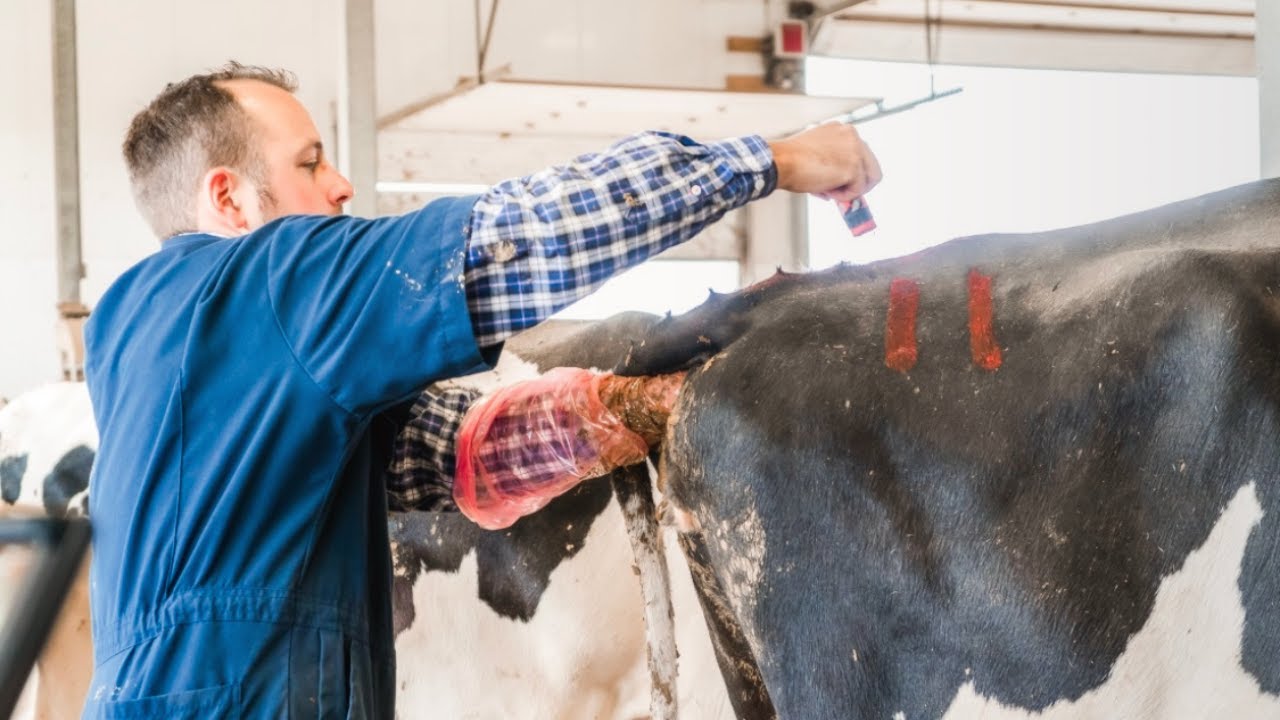
Predominantly used in cattle, this method involves placing a guiding hand rectally while accurately depositing semen into the reproductive tract via the vagina. It is one of the most popular and successful techniques in livestock breeding.
Slide 4: AI Techniques in Cattle
Enhancing Genetic Potential in Livestock
In cattle, AI is integral to breeding programs aimed at improving milk production, meat quality, and overall genetic traits. The two primary techniques include:
- Rectovaginal Technique: This method allows veterinarians to manually guide a catheter past the cervix to ensure that semen is placed correctly. The method requires skill and precision to maximize conception rates.
- Intrauterine Deposition through Transcervical Methods: Often used for high-value cattle, this method further refines the placement of semen directly into the uterine lumen.
Both techniques are supported by detailed management of the estrous cycle through synchronization protocols, ensuring that insemination occurs at the optimal time during ovulation.
Slide 5: AI Techniques in Swine
Practical Approaches in Pig Breeding
Swine breeding has benefited significantly from AI due to its efficiency and effectiveness in managing large herds. The techniques typically used in swine include:
- Transcervical Intrauterine AI: This method involves depositing semen directly into the uterine body, ensuring that a concentrated dose of sperm is available at the site of fertilization.
- Use of Fresh and Frozen Semen: Swine AI programs often rely on both fresh and cryopreserved semen, allowing for genetic material to be shared over long distances.
Rigorous attention to timing is essential in swine AI as the narrow window of ovulation demands precision for successful conception.
Slide 6: AI Techniques in Dogs and Felines
Customized Approaches for Companion Animals
Artificial Insemination in Dogs
In canine reproduction, AI offers alternatives when natural mating is impractical or when enhancing genetic selection is required. Techniques include:
- Fresh Semen AI: Employed when the breeding pair is in close proximity.
- Fresh-Chilled Semen AI: This method allows semen to be stored temporarily, extending the period during which breeding can occur.
- Frozen Semen AI: Used for long-term storage and to facilitate international genetic exchanges.
AI in Felines
Feline AI is more delicate due to the sensitive nature of the species’ reproductive systems. It often involves the careful use of frozen-thawed semen and, in some cases, surgical intervention to ensure proper deposition and improved conception rates.
Slide 7: AI Techniques in Small Ruminants and Equines
Adapting to Specific Anatomies
Small Ruminants
For sheep and goats, the laparoscopic AI technique is frequently used. This minimally invasive method allows direct intrauterine deposition, overcoming the challenges posed by the structure of the cervix.
Equines
In horses, AI is carried out using endoscopic techniques that guide the catheter to the uterotubal junction. This precise placement is crucial in equine reproduction where timing and technique directly influence fertility outcomes.
The use of advanced imaging and specialized equipment enhances the success of these procedures, promoting improved performance in equine breeding programs.
Slide 8: Comparative Table of AI Techniques by Species
| Species | Primary Technique | Key Considerations |
|---|---|---|
| Cattle | Rectovaginal & Transcervical Intrauterine | Proper timing, skilled catheter placement, estrus synchronization |
| Swine | Transcervical Intrauterine | Precision in timing, use of fresh/frozen semen, herd management |
| Dogs | Transcervical/Intrauterine using Fresh, Fresh-Chilled, or Frozen Semen | Health and timing considerations, semen quality |
| Felines | Surgical/Non-surgical AI | Delicate handling, use of frozen-thawed semen |
| Small Ruminants | Laparoscopic AI | Minimally invasive, bypassing challenging cervix |
| Equines | Endoscopic AI | Precise catheter placement; timing at the uterotubal junction |
Slide 9: Benefits of AI in Veterinary Medicine
Why Embrace Artificial Insemination?
There are several significant advantages associated with the application of AI in veterinary contexts:
- Genetic Improvement: Enables the wide dissemination of superior genetics, improving animal performance, production traits, and overall herd quality.
- Disease Control: Reduces the risk of sexually transmitted diseases by minimizing direct contact during mating.
- Increased Efficiency: Streamlines breeding programs and supports scheduled reproduction through estrus synchronization techniques.
- Global Genetic Exchange: Facilitates exchange of genetic material over long distances using frozen semen and cryopreservation technologies.
Slide 10: Ethical and Welfare Considerations
Balancing Technology with Responsibly Managed Breeding
Despite its many benefits, AI must be balanced with ethical and welfare considerations to maintain healthy and diverse animal populations. Some key considerations include:
- Genetic Diversity: Reliance on a limited number of superior sires can narrow the gene pool. Sustainable breeding programs involve periodic introduction of diverse genetics.
- Animal Welfare: AI procedures should be performed by trained professionals using appropriate techniques to minimize stress and discomfort.
- Quality Assurance: High standards in semen quality—measured by sperm motility, concentration, and morphology—are crucial for the success of AI and the welfare of the animals.
- Ethical Breeding Practices: Continuous monitoring for hereditary defects and adherence to ethical guidelines ensures long-term sustainability of breeding programs.
References
Supporting Sources and Further Reading
Below is a list of carefully selected references that provide further insights into the diverse aspects of artificial insemination in veterinary medicine:
- Frontiers in Veterinary Science - AI Techniques
- Animal Medical - AI for Pets
-
ScienceDirect - Artificial Insemination Overview
- The Kennel Club - AI in Dogs
- Veterinary Key - Assisted Reproductive Technologies
Recommended Related Queries
Further Exploration Topics
 cdn.intechopen.com
Last updated March 17, 2025