
How AI Transforms Weather Forecasting
Unlocking the Future of Meteorology with Advanced AI Techniques
Key Highlights
- Enhanced Accuracy and Speed: AI-driven models process massive data faster and with improved precision.
- Integration of Unconventional Data: AI assimilates diverse datasets from satellites, radars, social media, and sensors.
- Hybrid Modeling Approaches: The synergy of AI with traditional numerical models leads to more robust forecasting.
Introduction
The field of weather forecasting has experienced a revolutionary shift with the integration of Artificial Intelligence (AI). This convergence has led to enhanced predictive capabilities, refined accuracy, and improved speed in delivering weather forecasts. AI transforms the conventional methods by employing machine learning algorithms, deep learning models, and hybrid approaches, thereby not only optimizing existing numerical weather prediction (NWP) systems but also paving the way for advanced applications that were once considered unreachable.
Historically, weather forecasting relied heavily on physical simulation models and human interpretation of meteorological data. Today, AI-driven systems are capable of processing vast amounts of data—from historical records and satellite imagery to ground-based sensors and unconventional sources like social media—thereby identifying patterns, reducing uncertainties, and generating forecasts in real time. These innovations facilitate precise prediction of severe weather events and enable tailored, localized forecasts for better planning across sectors such as aviation, agriculture, urban planning, and emergency response.
Fundamental Components of AI in Weather Forecasting
Data Assimilation and Predictive Modeling
AI algorithms meticulously ingest enormous datasets that include historical weather records, real-time sensor outputs, satellite imagery, and radar data. By leveraging machine learning (ML) techniques, these models can identify complex meteorological patterns that might be overlooked by traditional NWP systems. This improved data assimilation provides a highly detailed and dynamic initialization for weather models, allowing forecasts to be tailored to specific geographic localities or specialized applications.
One of the central advantages of using AI is its ability to combine diverse sources of meteorological data and distill them into actionable insights. Machine learning models continuously adjust based on incoming data, leading to improved accuracy over time. Furthermore, sophisticated algorithms such as deep learning are adept at interpreting the non-linear interactions present in atmospheric phenomena, capturing subtle precursor signals of upcoming weather events.
Radar Data Interpretation and Image Analysis
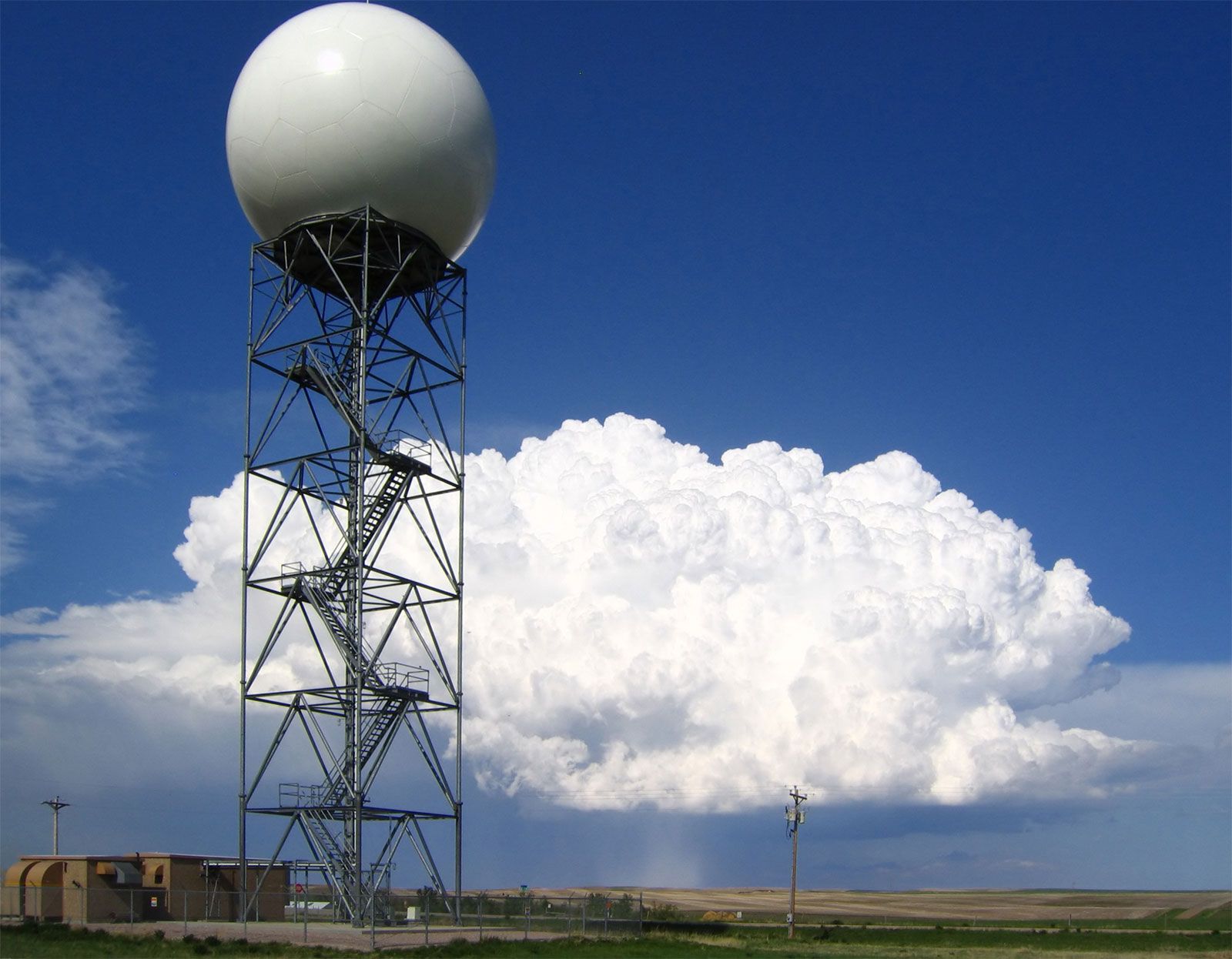
Radar data plays a crucial role in monitoring precipitation details and storm evolution, where the spatial and temporal resolutions are key. AI, particularly through convolutional neural networks (CNNs), enhances the interpretation of radar outputs by distinguishing between different types of precipitation and mitigating common noise interference. This leads to more precise identifications of storm formation and movement, assisting meteorologists in discerning potential severe weather patterns with higher confidence.
The reliable interpretation of radar imagery helps forecast various aspects such as rainfall intensities, thunderstorm developments, and even the likelihood of meteorological hazards like hail or lightning. AI’s ability to process these visual data streams in near-real time contributes significantly to operational meteorology and emergency preparedness.
Model Optimization and Hybrid Systems
Traditional numerical weather models, while robust in representing physical laws, are computationally intensive and often limited by uncertainties in parameterizations. AI enhances model optimization by fine-tuning these parameterizations based on historical error patterns and ongoing observational data. Hybrid systems, which combine AI techniques with physics-based models, leverage the strengths of both approaches. These systems yield forecasts that are both physically consistent and statistically refined to capture micro-scale phenomena.
One notable example is the use of AI to generate ensemble forecasts. By running multiple model simulations with varying inputs and assumptions, ensemble forecasting quantifies uncertainty. AI refines these ensembles by weighting different model outputs based on historical performance, thus providing nuanced probabilistic forecasts that are instrumental in decision-making processes during extreme weather events.
Advanced Prediction Capabilities through AI
High-Resolution and Hyper-Local Forecasting
AI models have made significant strides in delivering high-resolution, hyper-local weather predictions. This advancement is particularly beneficial for urban infrastructure planning, localized agriculture management, and effective emergency response. By training on localized datasets, AI systems capture microclimatic variations that are often lost in broader-scale weather models. This approach ensures that communities receive customized forecasts that reflect the specific environmental nuances of their regions.
The capability of AI to provide such tailored insights results from its sophisticated feature extraction methods, where subtle relationships in data are uncovered using advanced techniques such as deep learning and graph neural networks. These technologies facilitate forecasts that predict specific events like lightning strikes, flash floods, or localized temperature fluctuations, thereby enhancing the overall responsiveness of meteorological predictions.
Extreme Weather Event Prediction
One of the most crucial applications of AI in weather forecasting is the prediction of extreme weather events such as hurricanes, tornadoes, and storm surges. AI's pattern recognition and anomaly detection capabilities allow meteorologists to identify early signs of these catastrophic events, often with greater lead times than traditional models. By processing historical events and vast amounts of sensor data, AI can predict events with unprecedented precision, reducing both errors and false alarms.
Machine learning models focus on identifying subtle indicators that precede extreme conditions. These indicators include rapid changes in atmospheric pressure, unusual temperature gradients, or specific radar reflection patterns. By synthesizing these diverse signals, AI systems build robust predictive frameworks that optimize early warning systems, thus facilitating timely evacuations and effective disaster management strategies.
Probabilistic Forecasting and Uncertainty Quantification
Probabilistic forecasting involves generating a range of possible outcomes rather than a single deterministic forecast. This approach is critical for managing uncertainties inherent in weather prediction. AI excels in quantifying these uncertainties by running numerous simulations and applying statistical techniques to combine and interpret them. The probabilistic outputs provide decision-makers with confidence intervals and risk estimates, enabling more informed planning in sectors that are vulnerable to weather fluctuations.
Techniques such as ensemble forecasting augmented by machine learning facilitate improved probabilistic predictions. AI’s capacity to draw from historical weather patterns and apply dynamic weighting to multiple simulations ultimately enhances the quantification of uncertainty. This innovative approach not only improves the overall reliability of forecasts but also empowers governments and businesses to prepare for a spectrum of potential weather scenarios.
Innovative AI Technologies in Weather Forecasting
Deep Learning and Neural Networks
Deep learning, a subset of machine learning featuring multiple processing layers, has emerged as a transformative force in weather forecasting. Neural networks, including convolutional neural networks (CNNs) and recurrent neural networks (RNNs), are particularly effective at understanding the complex, non-linear relationships characteristic of atmospheric phenomena. By learning from extensive historical weather data, these models can capture dynamic temporal and spatial patterns, significantly enhancing forecasting accuracy.
Advanced deep learning models have demonstrated the ability to forecast weather conditions over extended periods, such as 10-day predictions, with unprecedented speed. For example, systems developed by global research teams are now delivering forecasts in a matter of minutes, substantially outperforming traditional simulation models that typically require several hours to run. The ability to update weather predictions in near real time is essential during fast-evolving situations, such as severe storms or rapidly developing cyclones.
Hybrid AI Models and Traditional NWP Integration
The integration of AI with conventional numerical weather prediction (NWP) models represents a hybrid approach that harnesses the strengths of both methodologies. Traditional models capture the underlying physics of the atmosphere based on established scientific principles. However, these models can be computationally intensive and limited by approximations in parameterizations. AI complements these traditional models by enhancing data assimilation, optimizing computations, and refining forecast outputs through machine learning techniques.
This hybrid approach results in comprehensive weather forecasting systems that are both efficient and highly accurate. The combination leads to improved forecasts, especially under conditions with inherent uncertainties such as extreme weather events. Additionally, this synergy allows for real-time adjustments and updates to predictions, ensuring that the forecasts remain valid even as new data becomes available.
Generative AI and Synthetic Data
Beyond traditional model-based forecasting, generative AI techniques such as Generative Adversarial Networks (GANs) are being leveraged to create synthetic weather data. These models simulate a wide range of possible weather scenarios and provide additional training datasets that help improve model robustness. By augmenting limited observational data with high-fidelity synthetic inputs, AI systems can operate more effectively in data-sparse regions, thereby enhancing global forecasting capabilities.
Generative AI not only boosts the accuracy of forecasts but also serves as a critical tool in testing and validating existing weather models. This approach leads to a more agile and adaptable forecasting system, capable of evolving with changes in climate patterns and available data.
Comparative Analysis: Traditional vs. AI-Enhanced Weather Forecasting
Table Overview
The table below provides a comparative overview of key differences between conventional weather forecasting techniques and modern, AI-enhanced methodologies:
| Aspect | Traditional Forecasting | AI-Enhanced Forecasting |
|---|---|---|
| Data Assimilation | Manual integration of sensor data, historical data, and satellite imagery | Automated integration of vast datasets from multiple sources with continuous updates |
| Processing Speed | Hours to days with large-scale supercomputers | Minutes to near real-time processing using optimized machine learning algorithms |
| Accuracy | Limited by computational constraints and simpler statistical models | Improved accuracy through pattern recognition, deep learning, and ensemble forecasting |
| Localization | General forecasts with coarse spatial resolution | High-resolution, hyper-local forecasting capabilities using tailored AI models |
| Extreme Events | Often under-predicted or delayed | Early detection with probabilistic estimates allowing for better risk management |
| Cost-Effectiveness | High operational costs due to intensive computational needs | Energy-efficient and cost-effective through advanced AI optimizations |
This comparative table illustrates that while traditional systems have laid the groundwork for modern meteorology, AI-enhanced forecasting represents not just an incremental improvement but a qualitative leap in both accuracy and efficiency.
Real-World Applications and Impact on Society
Operational Meteorology and Emergency Management
In operational meteorology, AI systems contribute significantly to the efficient dissemination of weather updates, especially under emergency conditions. Improved short-term forecasting through continuous learning algorithms allows agencies to issue timely warnings and alerts related to severe weather such as storms, floods, and hurricanes. The rapid processing abilities of AI enable real-time monitoring and dynamic forecast adjustments, which are critical for successful emergency preparedness and disaster mitigation.
Governments and disaster response teams now rely on these precise predictions to plan evacuations, mobilize resources, and alert the public. Additionally, sectors such as aviation and maritime transport benefit from accurate and timely forecasts that help in route planning and safety management during adverse weather conditions. The amalgamation of AI with conventional forecasting ensures that decision-makers have access to robust, up-to-date data during critical events.
Agricultural and Urban Planning Enhancements
Agriculture is particularly vulnerable to shifts in weather patterns and climate variability. AI-enhanced weather forecasting provides farmers with hyper-local predictions that allow for more precise scheduling of planting, irrigation, and harvesting operations. This not only optimizes resource usage but also minimizes the risk of crop damage due to unexpected weather events.
In urban planning, precise weather predictions help in designing resilient infrastructure and managing urban heat islands. Localized forecast data supports the planning of public transportation, energy distribution, and emergency services. The adoption of AI in these fields contributes to sustainable development and a greater resilience against climate-induced disruptions.
Economic and Environmental Impacts
Enhanced weather forecasting has a pronounced impact on economic sectors like energy, aviation, insurance, and logistics. By mitigating the uncertainties associated with unpredictable weather, businesses can optimize operational strategies, plan for contingencies, and minimize potential losses caused by extreme weather events.
Moreover, environmentally focused initiatives, such as renewable energy management, benefit from accurate predictions that optimize the balance between energy supply and demand. Wind and solar power production, for example, relies on reliable forecasts to maximize efficiency. Consequently, AI’s role in improving these forecasts contributes to broader environmental sustainability goals.
Challenges and Future Directions
Data Quality and Integration Issues
Despite its transformative impact, the integration of AI into weather forecasting is not without challenges. One of the primary obstacles is ensuring the quality and reliability of the input data. The performance of AI models is heavily dependent on the availability of high-quality, well-calibrated datasets. In regions where observational infrastructure is sparse or data quality is inconsistent, the models may face limitations. Continuous efforts to improve sensor networks and data standardization are essential in addressing these issues.
Interpretability and Trust in AI Models
As AI systems become more complex, interpretability—understanding how models arrive at specific forecasts—remains a significant concern. Meteorologists and stakeholders require a clear explanation of the reasoning behind predictions, particularly when it comes to extreme weather events. Consequently, researchers are focusing on developing explainable AI (XAI) methodologies that can illuminate the inner workings of these opaque models. Improved interpretability not only engenders trust among users but also enables fine-tuning and enhancements of the forecasting systems.
The future development of hybrid frameworks that integrate human expertise with machine learning outputs holds promise for overcoming these challenges. As models evolve, the continuing emphasis on transparency and accountability in AI systems is critical for long-term adoption in operational meteorology.
Ongoing Research and Technological Advancements
Research in AI-driven weather forecasting is rapidly evolving, with prominent technology companies and meteorological centers investing in advanced predictive models. The development of novel algorithms, such as graph-based neural networks and generative models, is broadening the horizon for weather prediction. Additionally, global collaborations and open-sourcing of model architectures are accelerating innovation, enabling a more democratic approach to tackling climate challenges.
The transformative impact of AI is widely recognized, paving the way for continuous improvements in the accuracy and reliability of weather forecasts. Upcoming generations of AI models are expected to incorporate emerging data sources, advanced computing architectures, and refined statistical techniques—thereby pushing the boundaries of prediction capabilities to unprecedented levels.
Conclusion and Final Thoughts
In summary, AI is redefining weather forecasting by merging vast datasets with advanced computational methods to enhance accuracy, speed, and efficiency. These transformative techniques are addressing the limitations of traditional forecasting systems by automating data assimilation, optimizing predictive models, and enabling real-time, hyper-local predictions. The use of deep learning, probabilistic forecasting, and hybrid model integration is not only improving the reliability of forecasts but is also enhancing our preparedness for extreme weather events.
The impact of these advancements spans multiple sectors, including emergency management, agriculture, urban planning, and economic forecasting. As meteorological agencies and research institutions continue to refine AI methods, we can expect weather predictions to become even more precise and accessible. Future directions focus on addressing challenges related to data quality, model interpretability, and system integration. By overcoming these hurdles, the next generation of AI-enhanced weather forecasting systems will stand as a testament to the power of innovation in mitigating climate risks and promoting sustainable development.
References
- 10 ways AI is being used in Weather Forecasting - Digital Defynd
- How Artificial Intelligence Will Improve Weather Forecasts in 2025 - Weather and Climate Expert
- Scientific Paper on AI in Weather Forecasting - IJSAT
- Probabilistic weather forecasting with machine learning - Nature
- Machine Learning Could Improve Extreme Weather Warnings - Eos
-
Applying Machine learning to Operational Meteorology - RMETS
- GraphCast AI Model For Faster And More Accurate Global Weather Forecasting - DeepMind
- How AI Models Are Transforming Weather Forecasting - ECMWF
- AI Forecasting Development Overview - Nature
Recommended Queries
Last updated February 20, 2025